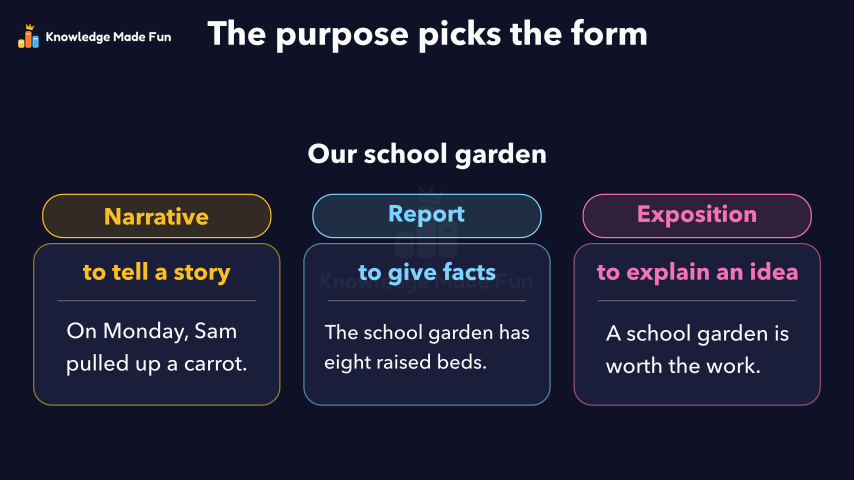
 1 min 7 s
Lessons · Grade 7 · English Language Arts
Grade 7 English Language Arts lessons
33 short narrated lessons for Grade 7 English Language Arts in British Columbia's curriculum, in the order the curriculum lists them. Each page has the lesson's full transcript, where it fits, and practice questions on lessons that have them. Two lessons are free to watch on the website without an account; signing in is free, no payment and no card.
Strand
Story/text
12 lessons
- 1 min 7 s
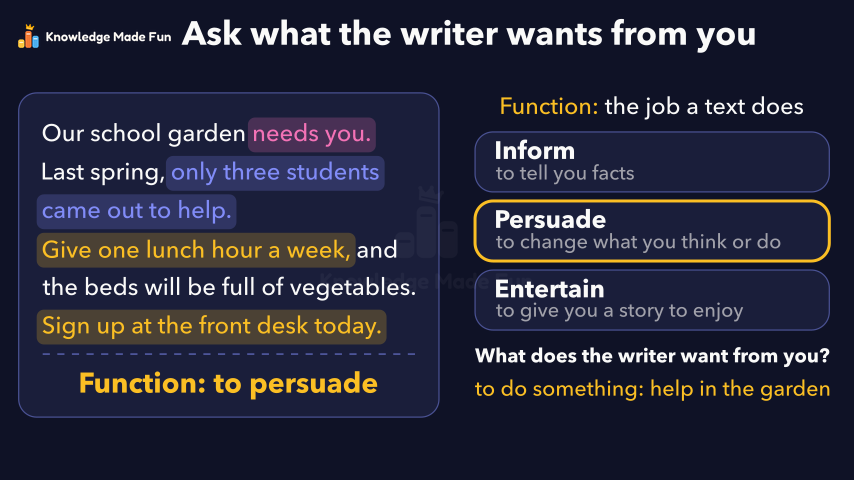 1 min 17 s
Why a Text Was Written: Finding Its Function
1 min 17 s · BC7-EN-02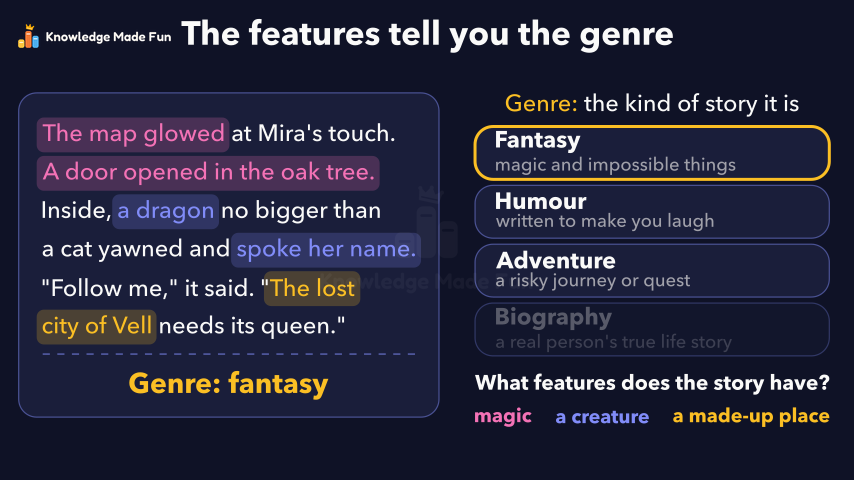 1 min 26 s
Genres: What Kind of Story Is This?
1 min 26 s · BC7-EN-03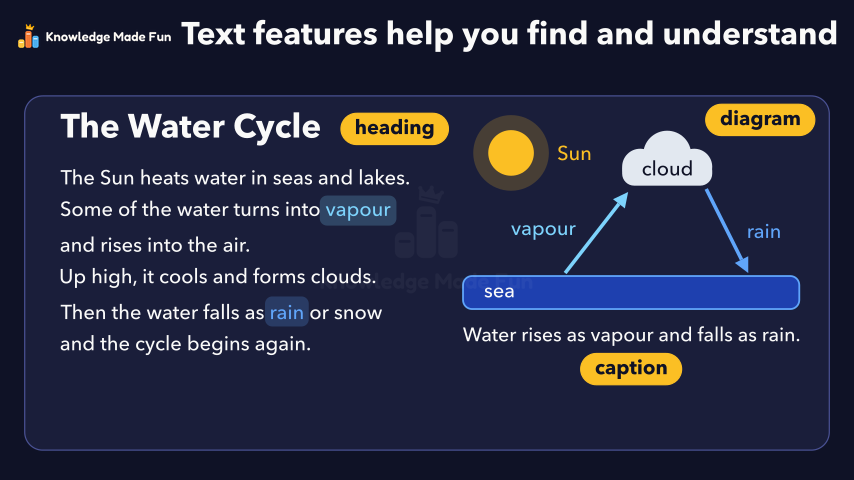 1 min 7 s
Text Features: Headings, Captions and Diagrams
1 min 7 s · BC7-EN-04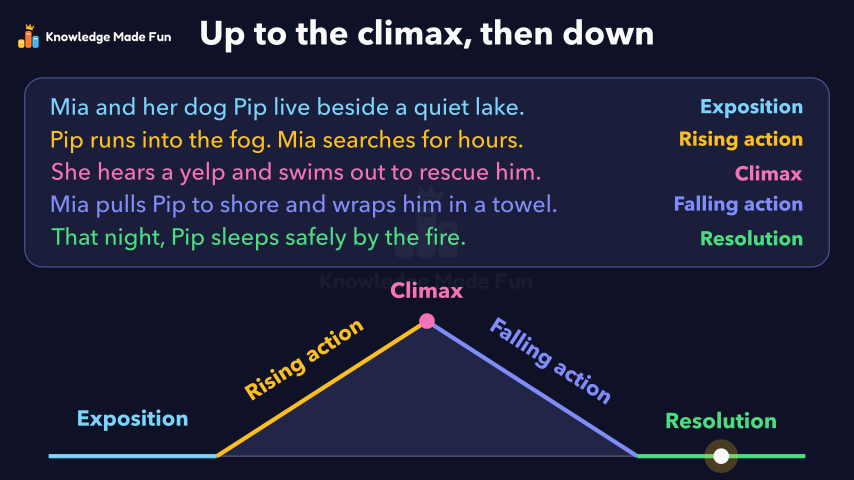 1 min 5 s
Story structure: the plot mountain
1 min 5 s · BC7-EN-05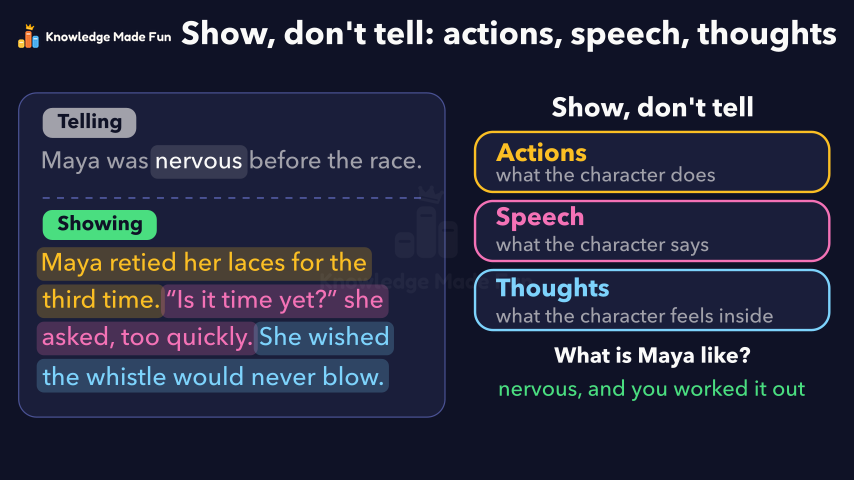 1 min
How Writers Show a Character
1 min · BC7-EN-06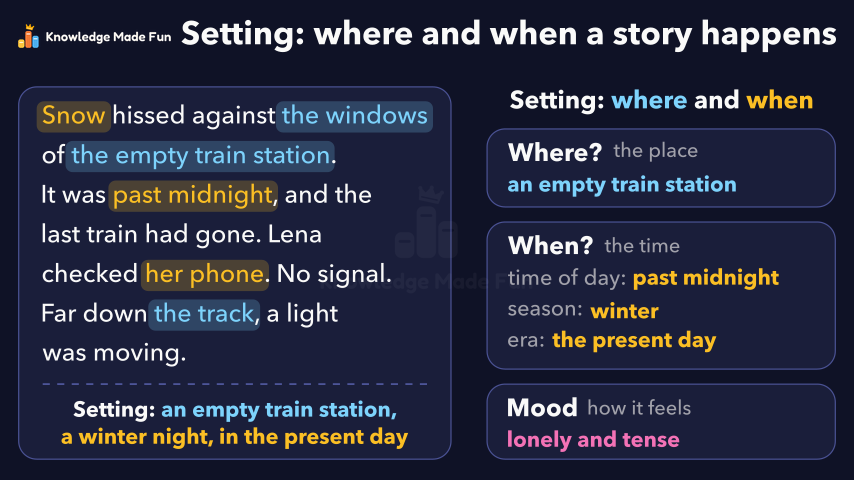 1 min 11 s
Setting: where and when a story happens
1 min 11 s · BC7-EN-07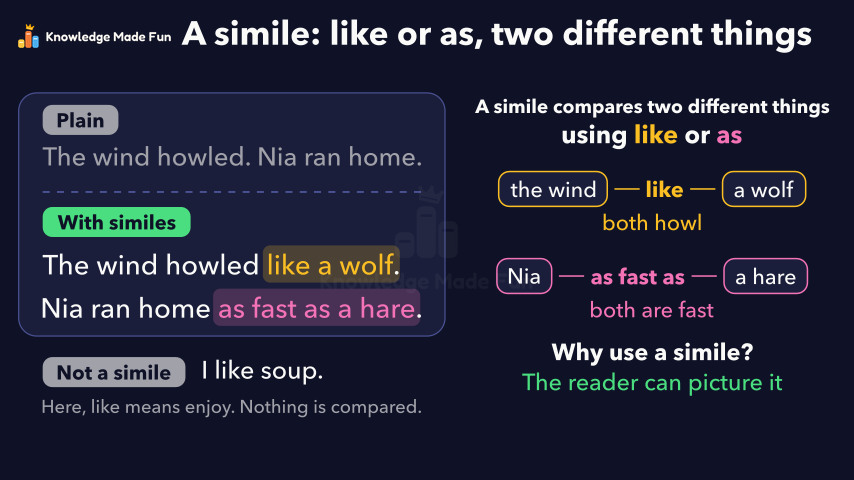 1 min 10 s
Simile: comparing two different things with like or as
1 min 10 s · BC7-EN-08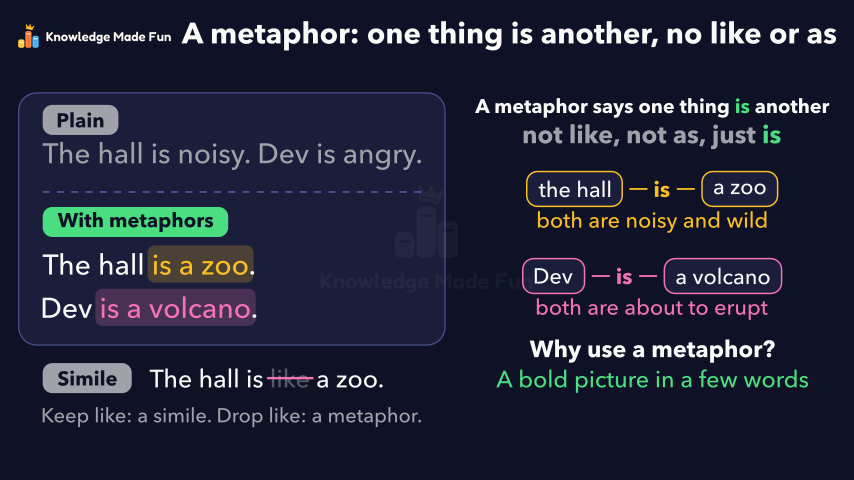 1 min 17 s
Metaphor: saying one thing is another
1 min 17 s · BC7-EN-09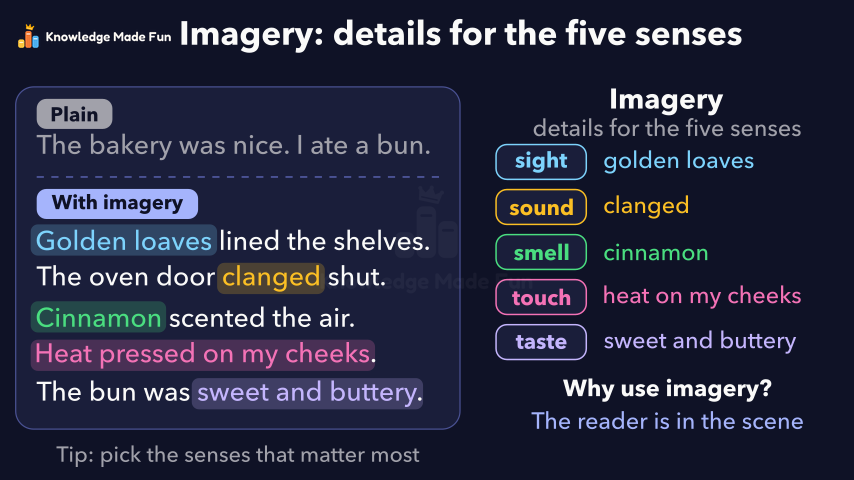 1 min 12 s
Imagery: Writing for the Five Senses
1 min 12 s · BC7-EN-10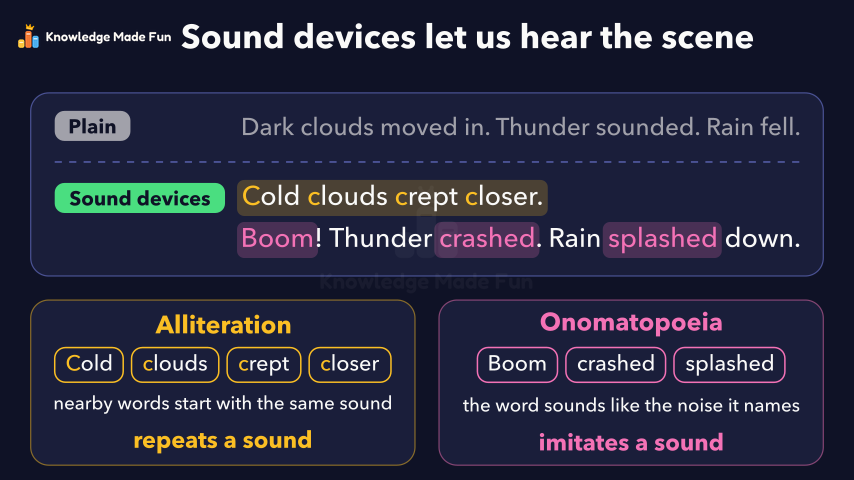 1 min 13 s
Sound Devices: Alliteration and Onomatopoeia
1 min 13 s · BC7-EN-11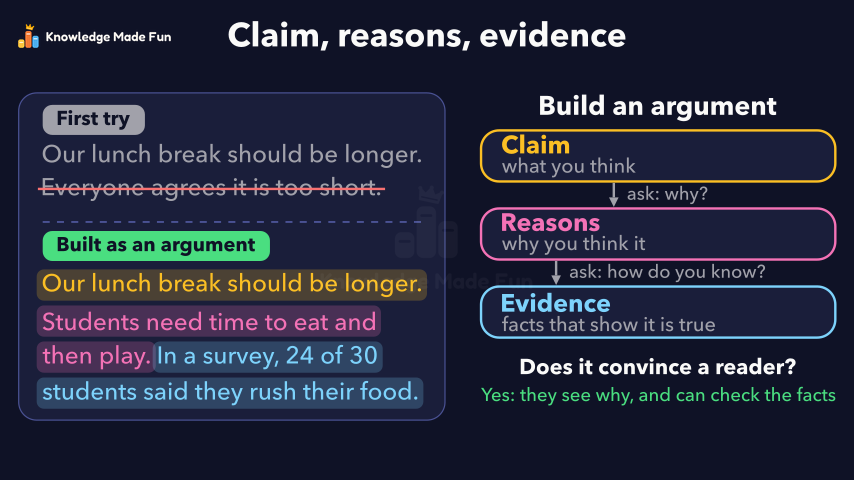 1 min 13 s
Building an Argument: Claim, Reasons, Evidence
1 min 13 s · BC7-EN-12
Strand
Strategies and processes
6 lessons
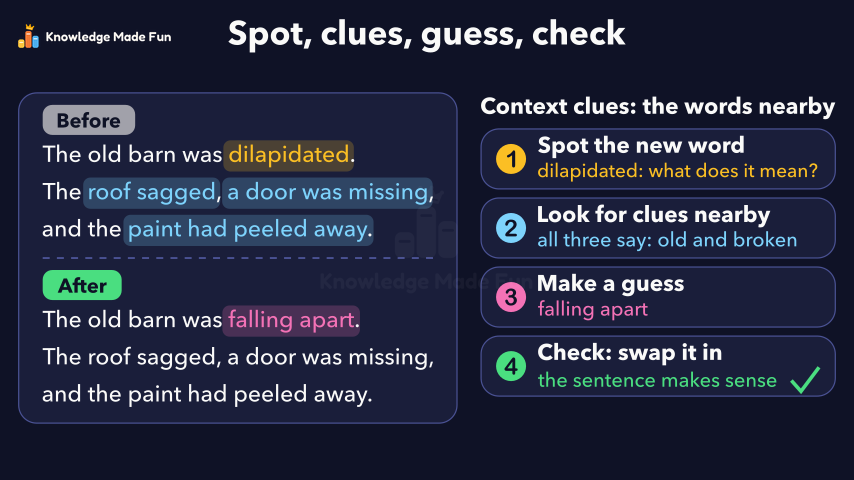 1 min 15 s
Using Context Clues for a New Word
1 min 15 s · BC7-EN-13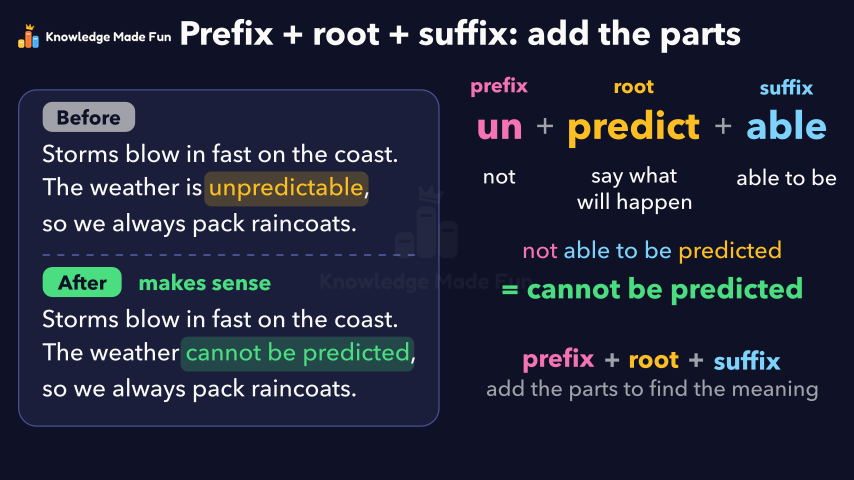 1 min 11 s
Word parts: prefixes, roots and suffixes
1 min 11 s · BC7-EN-14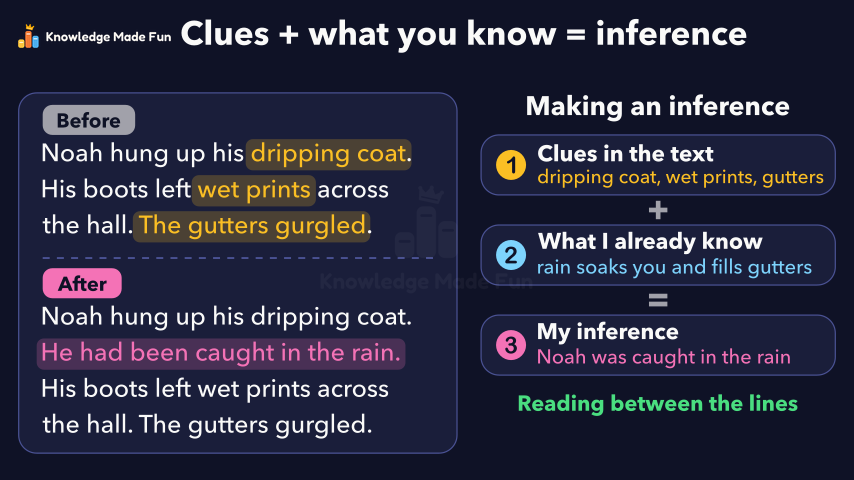 1 min 4 s
Making an Inference: Reading Between the Lines
1 min 4 s · BC7-EN-15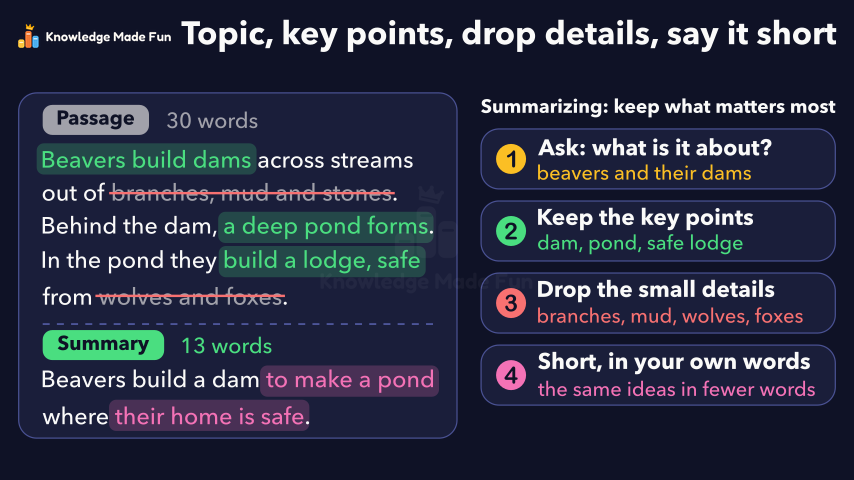 1 min 8 s
Summarizing: Keep What Matters Most
1 min 8 s · BC7-EN-16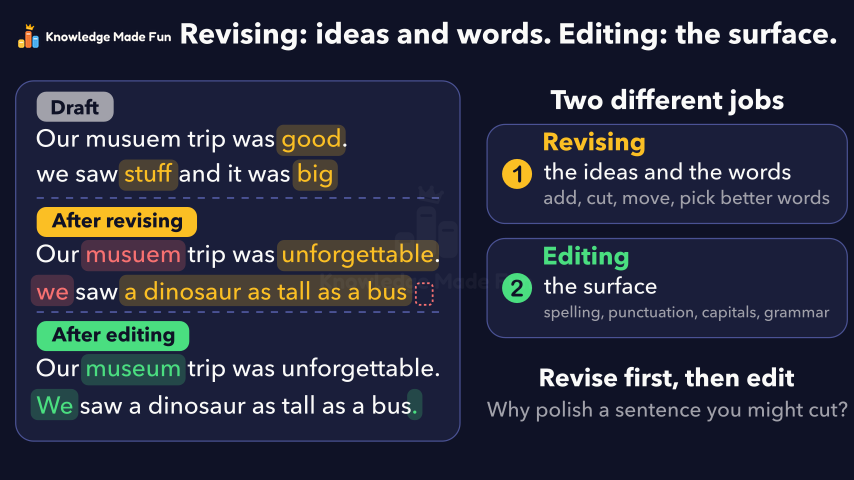 1 min 18 s
Revising and Editing: What Is the Difference?
1 min 18 s · BC7-EN-17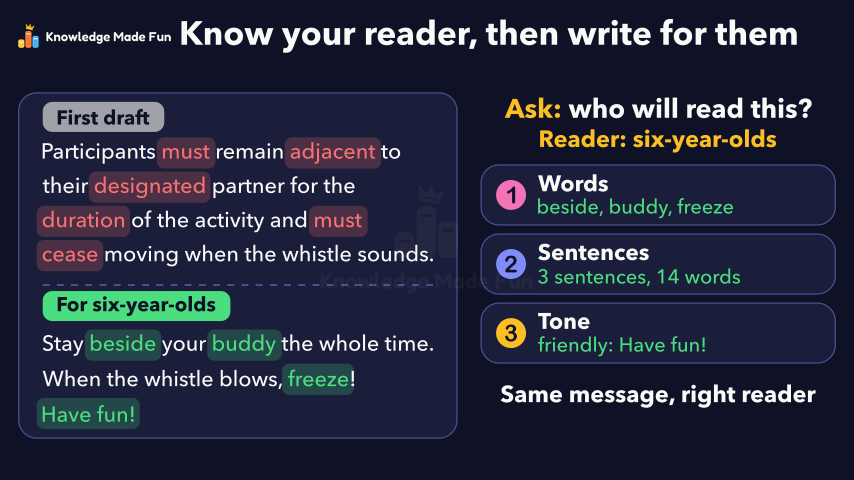 1 min 21 s
Writing for Your Audience
1 min 21 s · BC7-EN-18
Strand
Language features, structures, and conventions
15 lessons
 1 min 17 s
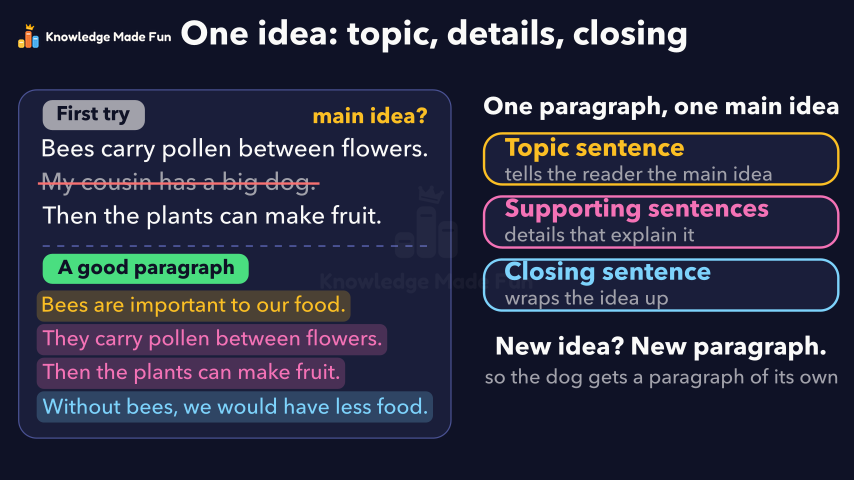
What Makes a Good Paragraph
1 min 17 s · BC7-EN-22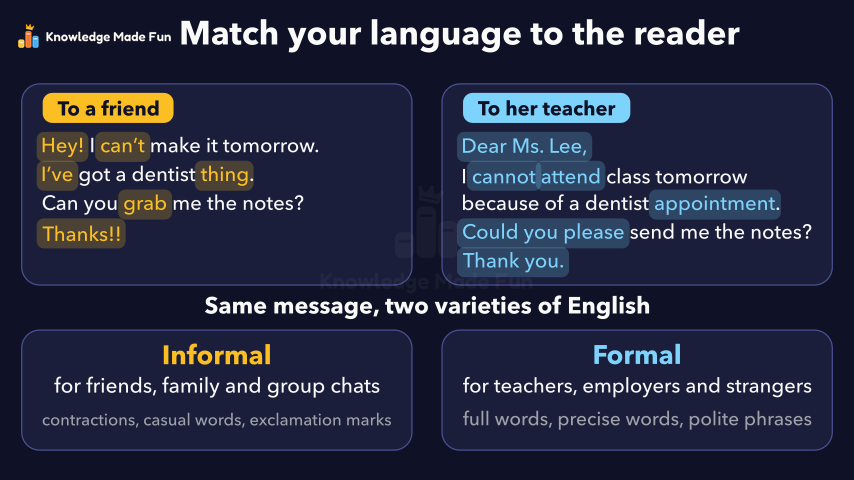 1 min 12 s
Formal and Informal Language
1 min 12 s · BC7-EN-23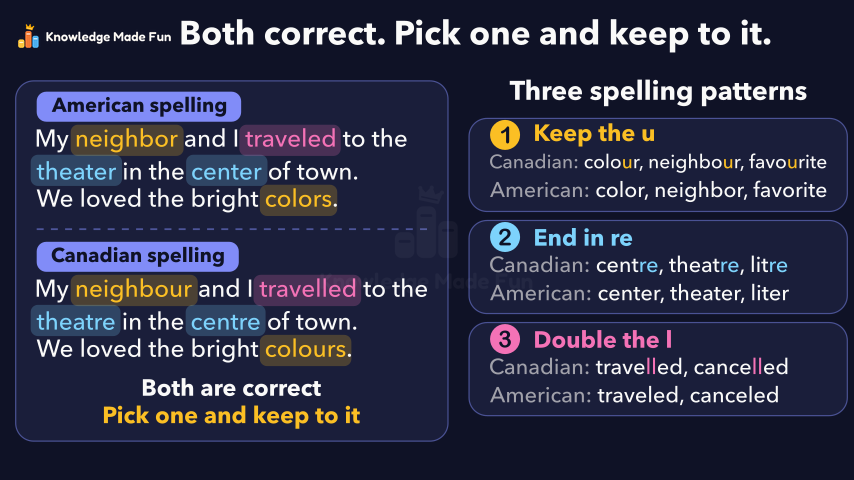 1 min 5 s
Canadian and American Spelling: Two Ways, Both Correct
1 min 5 s · BC7-EN-24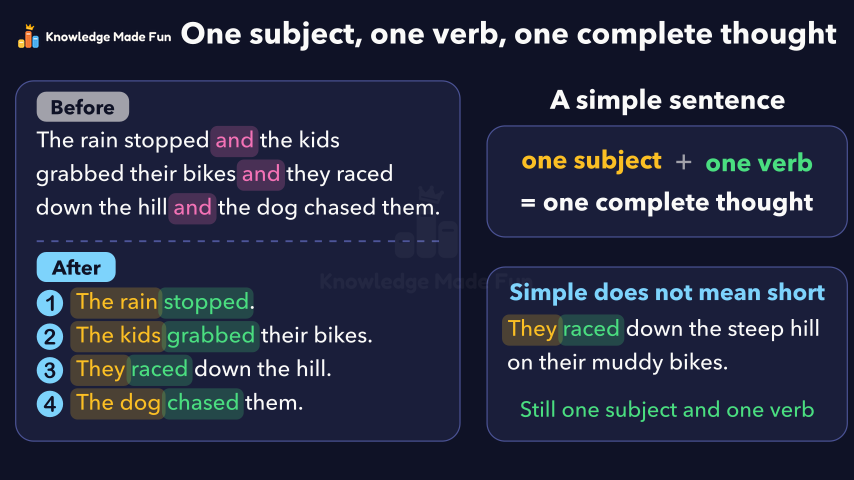 1 min 7 s
Simple Sentences: One Subject, One Verb, One Complete Thought
1 min 7 s · BC7-EN-25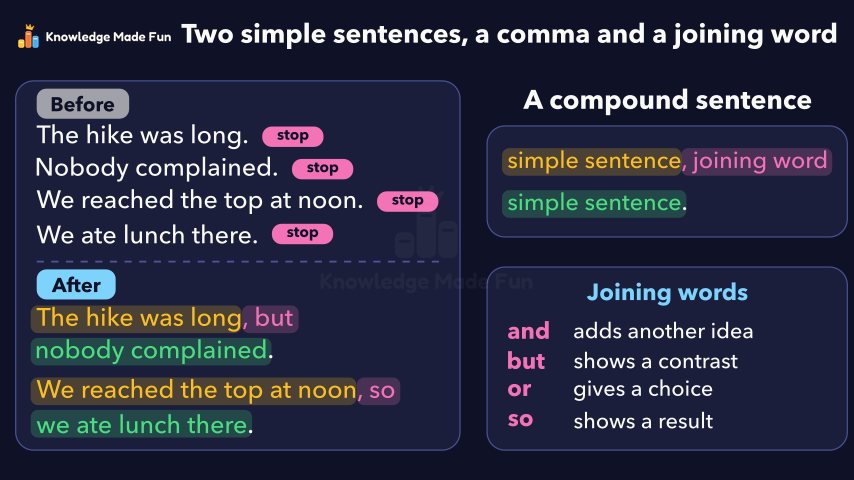 1 min 6 s
Compound Sentences: Joining Two Ideas with a Comma and a Joining Word
1 min 6 s · BC7-EN-26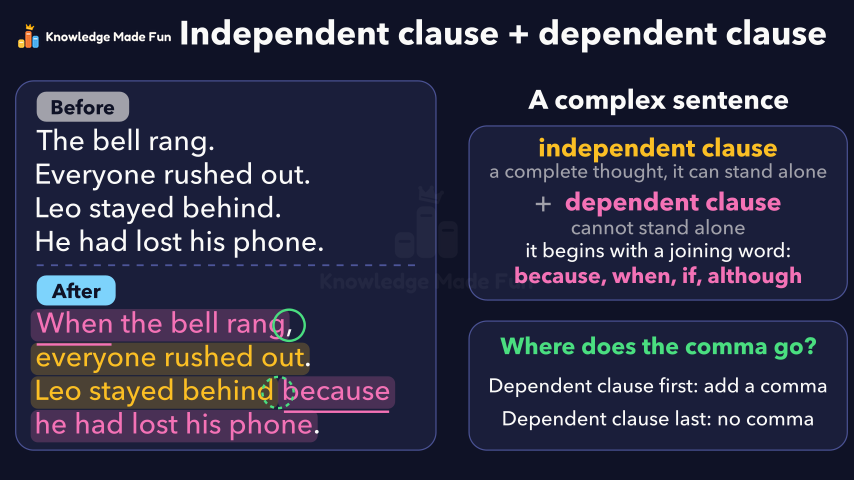 1 min 22 s
Complex Sentences: Joining an Independent Clause to a Dependent Clause
1 min 22 s · BC7-EN-27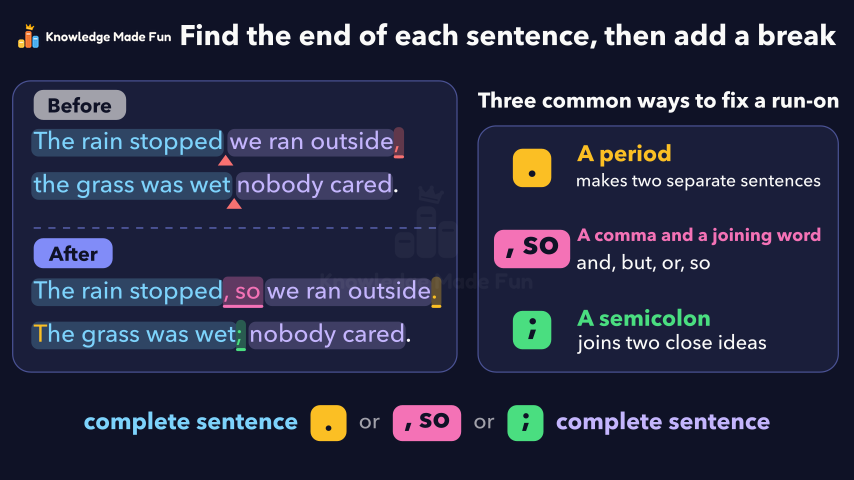 1 min 22 s
Fixing Run-On Sentences
1 min 22 s · BC7-EN-28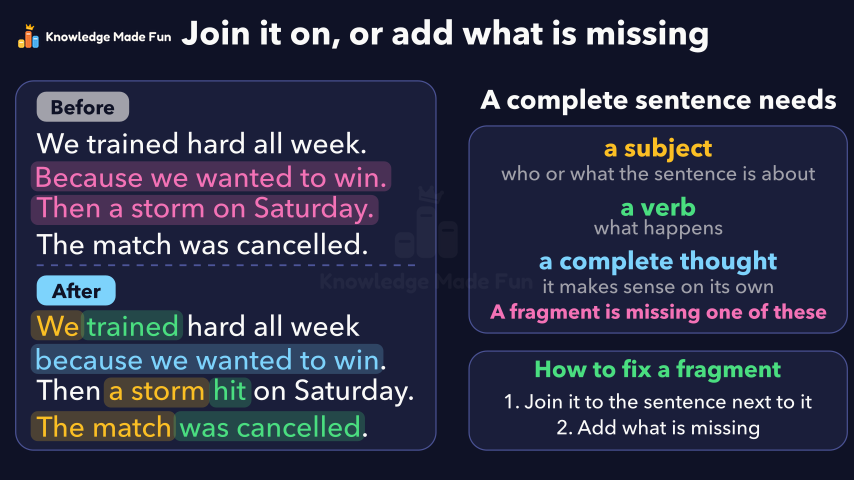 1 min 17 s
Fixing Sentence Fragments
1 min 17 s · BC7-EN-29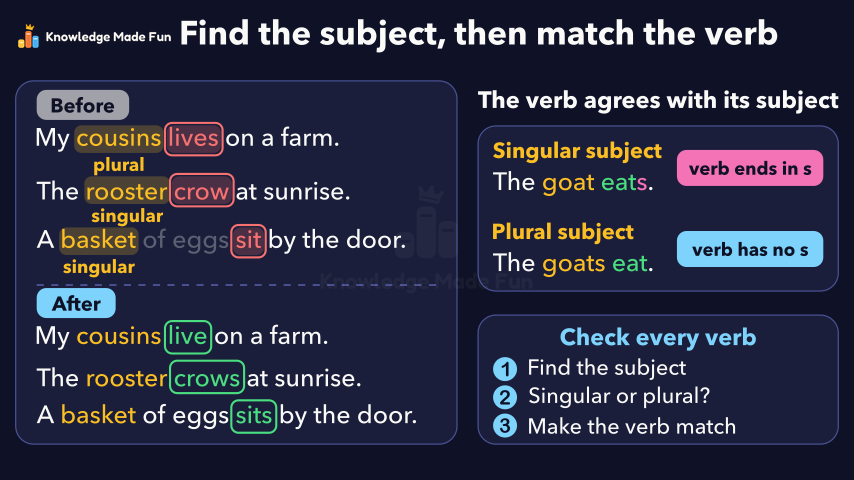 1 min 25 s
Subject-Verb Agreement: Make the Verb Match Its Subject
1 min 25 s · BC7-EN-30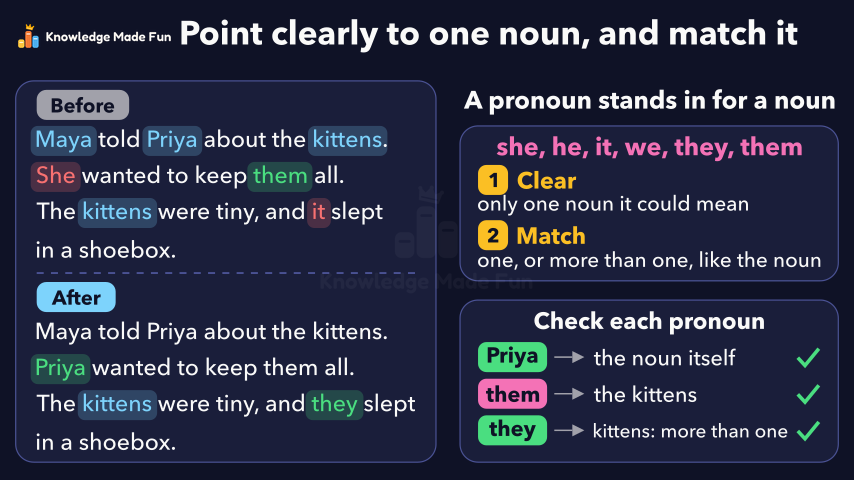 1 min 22 s
Using Pronouns Correctly: Point Clearly to One Noun, and Match It
1 min 22 s · BC7-EN-31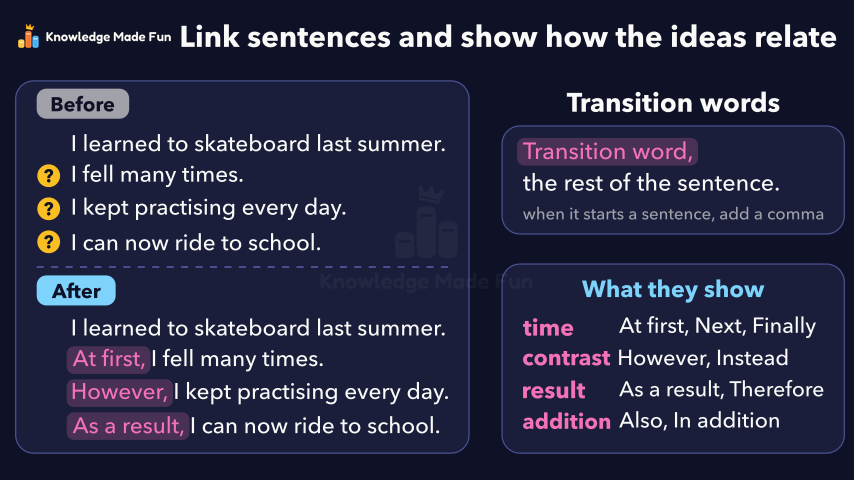 1 min 13 s
Transition words: link your sentences
1 min 13 s · BC7-EN-32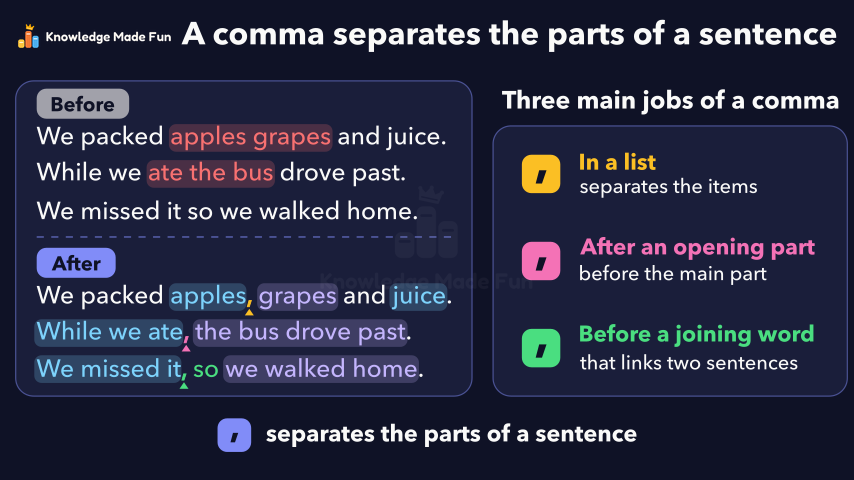 1 min 22 s
Commas: a small pause that separates the parts of a sentence
1 min 22 s · BC7-EN-33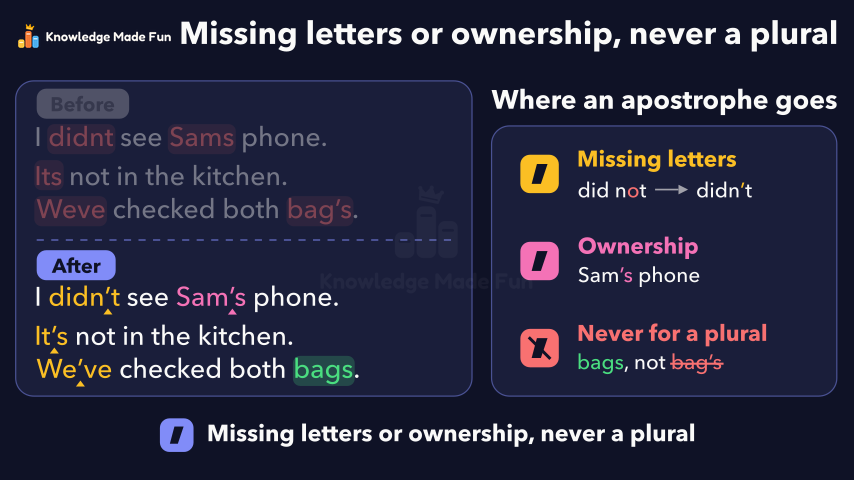 1 min 45 s
Apostrophes: Missing Letters or Ownership, Never a Plural
1 min 45 s · BC7-EN-34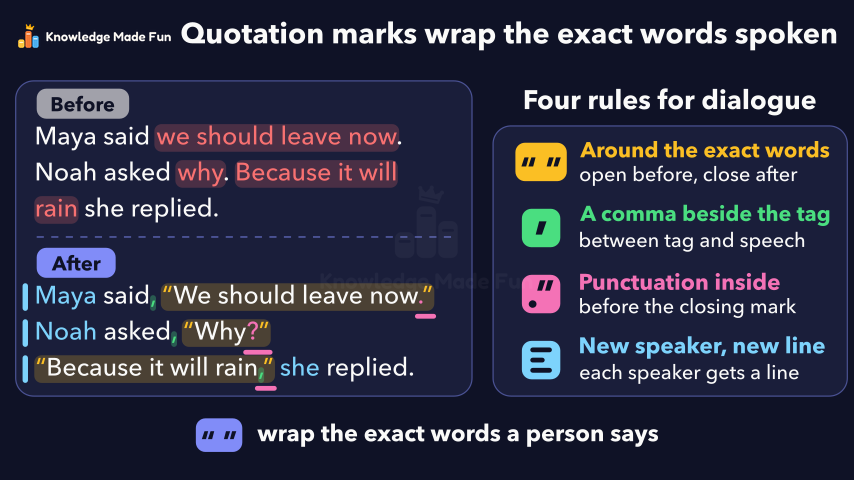 1 min 32 s
Quotation Marks and Dialogue
1 min 32 s · BC7-EN-35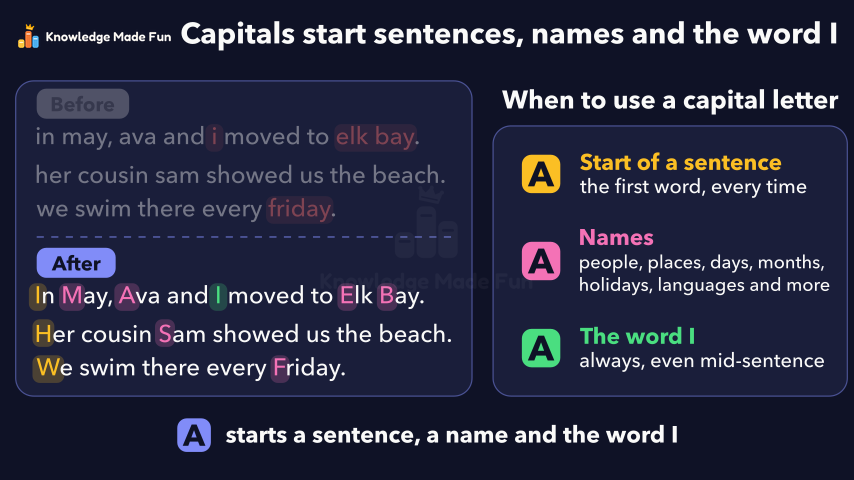 1 min 26 s
Capital Letters: Sentences, Names and the Word I
1 min 26 s · BC7-EN-36
Two lessons free on the website, three a day with a free account.
Every lesson's text is open to read. Watch any two lessons without an account; then sign in free, no payment and no card, for three a day. Plus has no limit.