Lesson · Grade 5 · English Language Arts
Word parts: prefixes, roots and suffixes
- Grade 5
- English Language Arts
- 1 min 11 s
- British Columbia
- BC5-EN-12
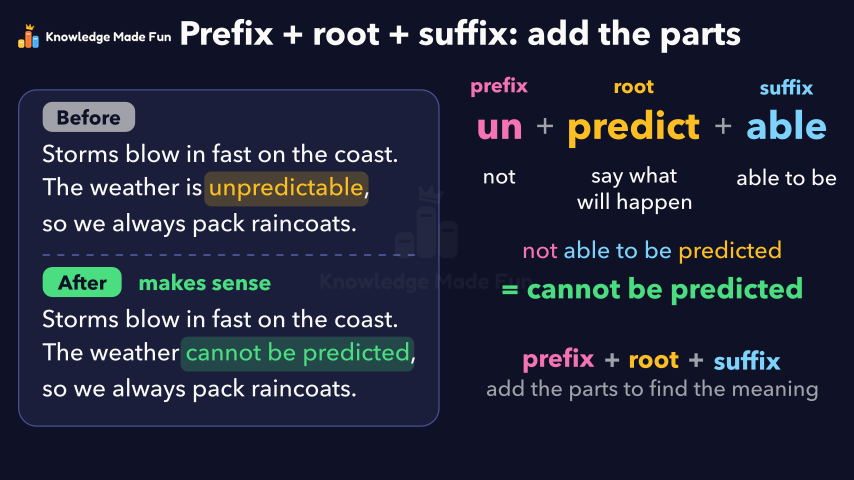
A short text about coastal weather contains the long word "unpredictable", which lifts out and is pulled apart into un (prefix, not), predict (root, say what will happen) and able (suffix, able to be), and the three meanings are added up to give "cannot be predicted". The text is then shown again with that meaning in the word's place to check it makes sense, and the video ends on the recap: split a long word into prefix, root and suffix, and add the parts to find its meaning.
Anyone can watch two lessons on the website without an account. Signing in is free, no payment and no card, and opens three a day; Plus has no limit.
Loading
In one sentence
The question this lesson answers
What can you do when a long word stops you while reading?
Read this short text and see where you get stuck.
Transcript
What the lesson says
What can you do when a long word stops you while reading?
Read this short text and see where you get stuck.
Unpredictable is a long word, but it is built from smaller parts.
Break it into three parts, and look for a word you already know inside it.
The first part is a prefix, added at the start, and un means not.
The middle part is the root, the main part, and predict means to say what will happen.
The last part is a suffix, added at the end, and able means able to be.
Now add the meanings together: not able to be predicted.
So unpredictable means something that cannot be predicted.
Check it in the text by swapping the word for its meaning.
The weather cannot be predicted, so we always pack raincoats, and that makes sense.
When a long word stops you, split it into prefix, root and suffix, and add the parts to find its meaning.
Curriculum
Where this fits
- British Columbia, Grade 5
English Language Arts, Strategies and processes: reading strategiesBC5-EN-12
Previous: Using Context Clues for a New WordNext: Making an Inference: Reading Between the Lines
- British Columbia, Grade 6
English Language Arts, Strategies and processes: reading strategiesBC6-EN-14
Previous: Using Context Clues for a New WordNext: Making an Inference: Reading Between the Lines
- British Columbia, Grade 7
English Language Arts, Strategies and processes: reading strategiesBC7-EN-14
Previous: Using Context Clues for a New WordNext: Making an Inference: Reading Between the Lines
This lesson is also listed in Grade 6 and Grade 7.
The outcomes and strands follow the British Columbia curriculum.
Keep going
 54 s
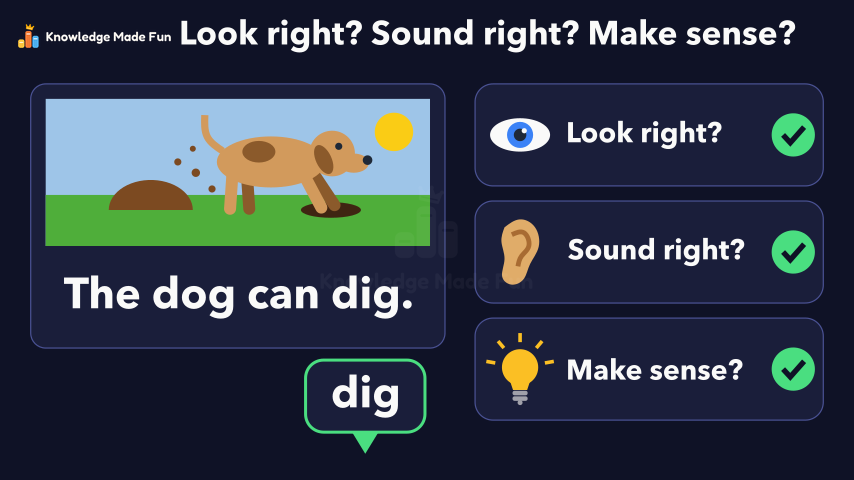
Check Your Reading: Look Right, Sound Right, Make Sense
Grade 1 · 54 s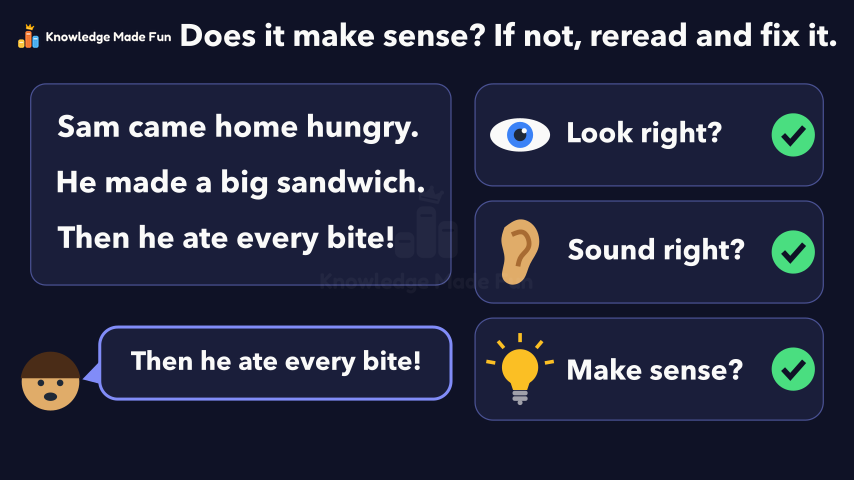 1 min 12 s
Does It Make Sense? Checking as You Read
Grade 3 · 1 min 12 s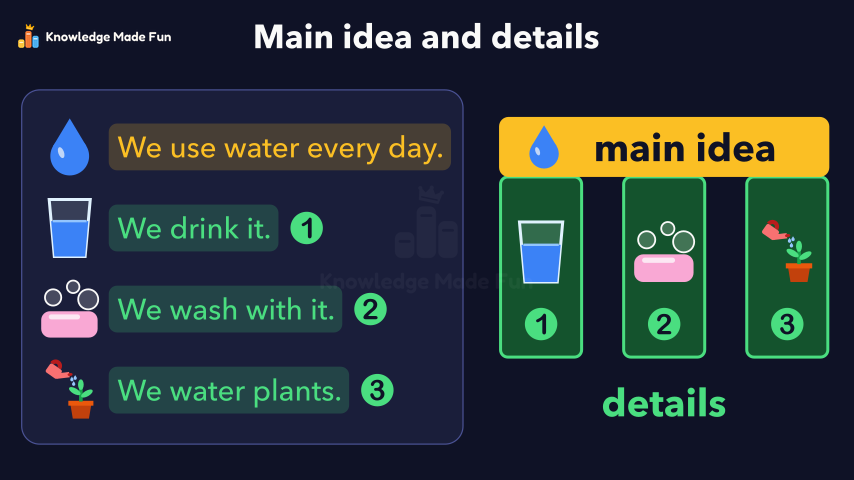 47 s
Main Idea and Details
Grade 2 · 47 s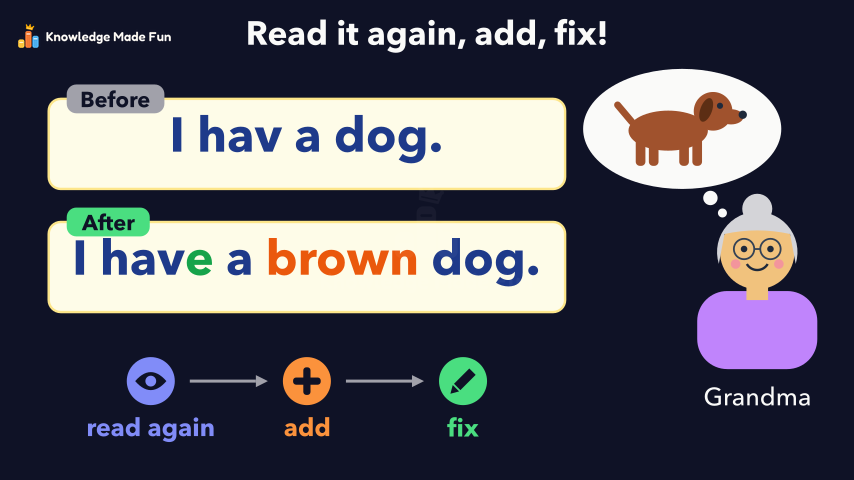 50 s
Make Your Writing Better: Read It Again, Add, Fix
Grade 1 · 50 s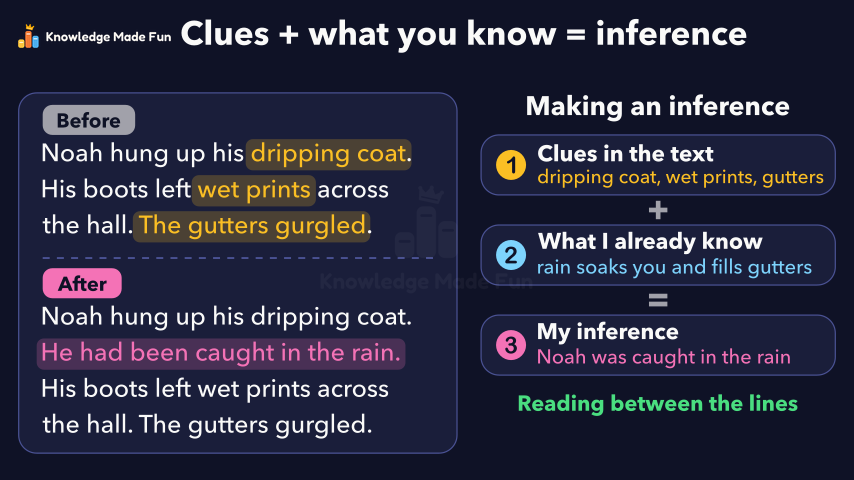 1 min 4 s
Making an Inference: Reading Between the Lines
Grade 4 · 1 min 4 s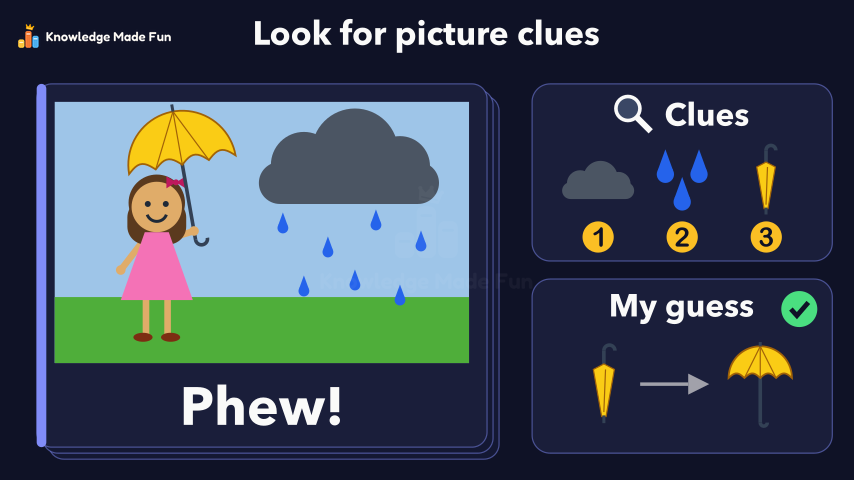 55 s
Picture Clues: What Happens Next?
Kindergarten · 55 s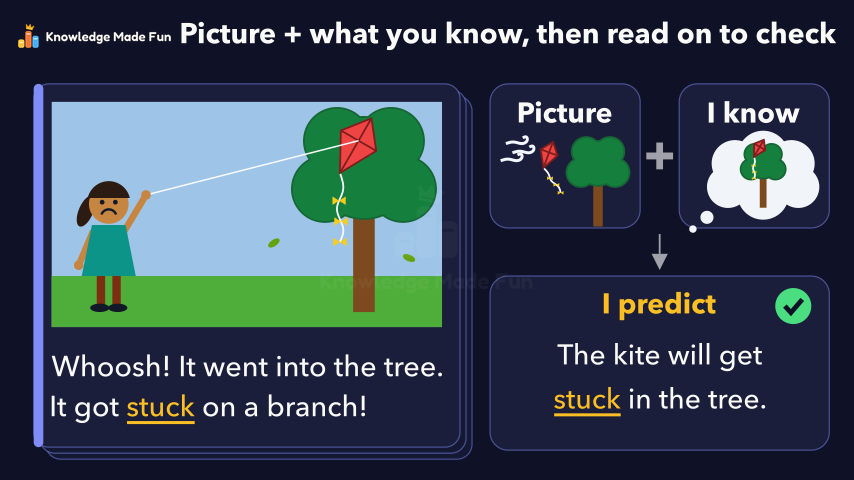 53 s
Predict, Then Read On: Mia's Kite
Grade 3 · 53 s 48 s
Predicting what will happen
Grade 2 · 48 s
- All Grade 5 English Language Arts lessons
- Create a free account to watch three lessons a day, no payment and no card.