Lesson · Grade 4 · English Language Arts
Making an Inference: Reading Between the Lines
- Grade 4
- English Language Arts
- 1 min 4 s
- British Columbia
- BC4-EN-12
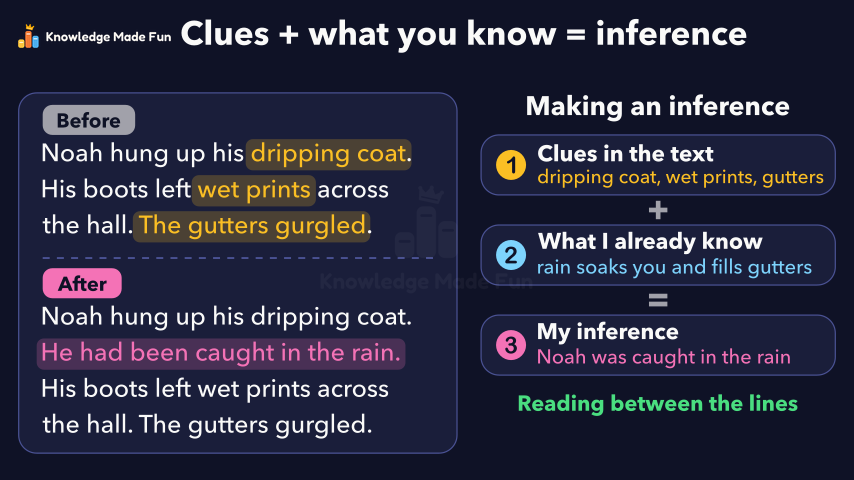
A three-sentence passage about Noah never says what happened to him, and the video shows how a reader works it out: three clues in the text (a dripping coat, wet prints, gurgling gutters) are added to what the reader already knows about rain to make the inference that Noah was caught in the rain. The passage is then written again with that inferred sentence slipped in between the lines, and the video ends on the recap "Clues + what you know = inference".
Concept: Making an inference
Anyone can watch two lessons on the website without an account. Signing in is free, no payment and no card, and opens three a day; Plus has no limit.
Loading
In one sentence
The question this lesson answers
Writers do not tell you everything.
Read this short passage.
Transcript
What the lesson says
Writers do not tell you everything.
Read this short passage.
What happened to Noah? The text never says.
Working it out from clues is called making an inference.
Step one: find clues in the text.
Clue one: a dripping coat.
Clue two: wet prints across the hall.
Clue three: the gutters gurgled.
Step two: add what you already know.
You know that rain soaks you and fills the gutters.
Step three: put the clues and what you know together.
So Noah was caught in the rain.
Here is the passage with your inference written in.
The writer never said it, but you read between the lines.
Clues in the text plus what you know make an inference.
Curriculum
Where this fits
- British Columbia, Grade 4
English Language Arts, Strategies and processes: reading strategiesBC4-EN-12
Previous: Prefixes and Suffixes: Reading a Long Word in PartsNext: Summarizing: Keep What Matters Most
- British Columbia, Grade 5
English Language Arts, Strategies and processes: reading strategiesBC5-EN-13
Previous: Word parts: prefixes, roots and suffixesNext: Summarizing: Keep What Matters Most
- British Columbia, Grade 6
English Language Arts, Strategies and processes: reading strategiesBC6-EN-15
Previous: Word parts: prefixes, roots and suffixesNext: Summarizing: Keep What Matters Most
- British Columbia, Grade 7
English Language Arts, Strategies and processes: reading strategiesBC7-EN-15
Previous: Word parts: prefixes, roots and suffixesNext: Summarizing: Keep What Matters Most
This lesson is also listed in Grade 5, Grade 6 and Grade 7.
The outcomes and strands follow the British Columbia curriculum.
Keep going
 54 s
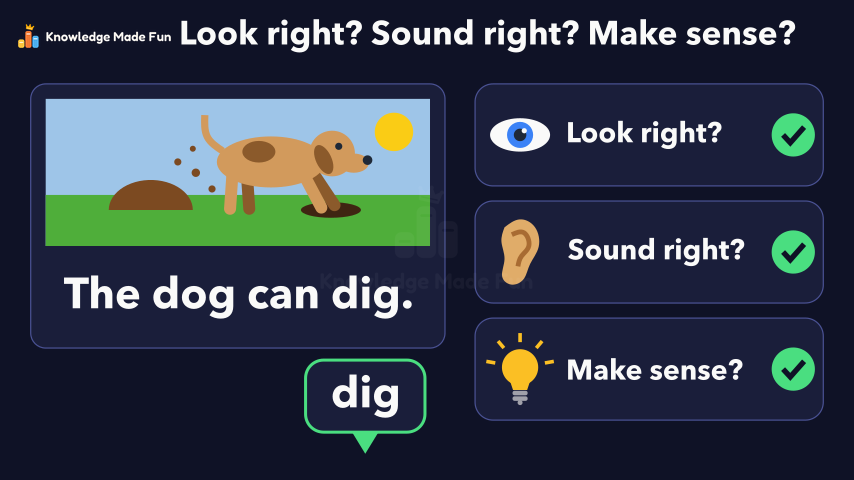
Check Your Reading: Look Right, Sound Right, Make Sense
Grade 1 · 54 s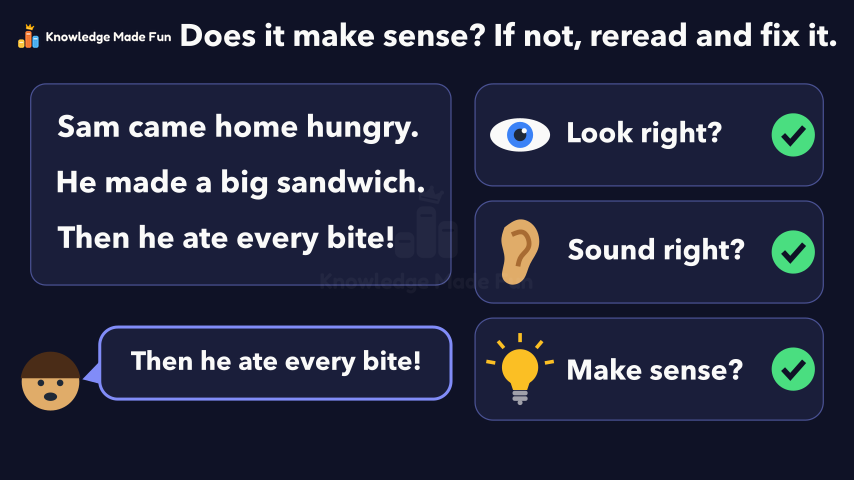 1 min 12 s
Does It Make Sense? Checking as You Read
Grade 3 · 1 min 12 s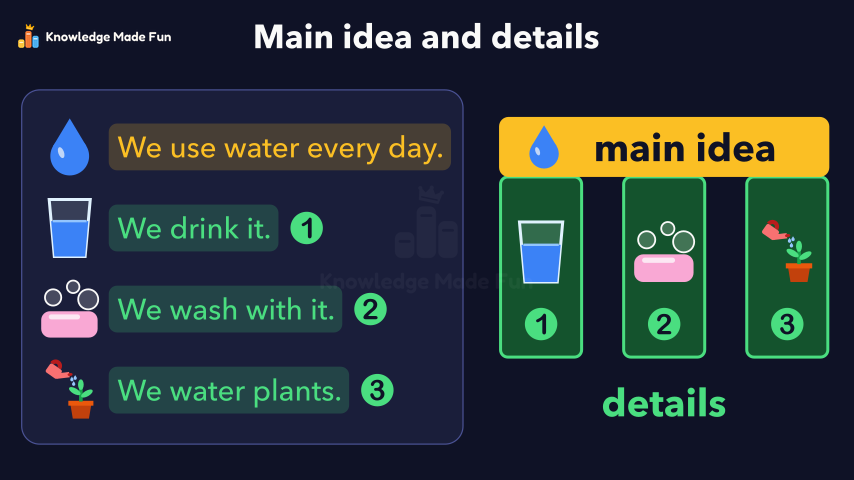 47 s
Main Idea and Details
Grade 2 · 47 s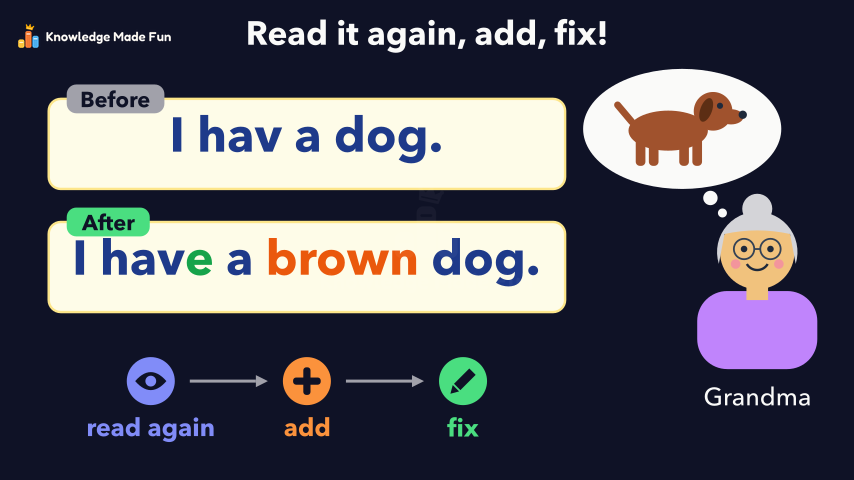 50 s
Make Your Writing Better: Read It Again, Add, Fix
Grade 1 · 50 s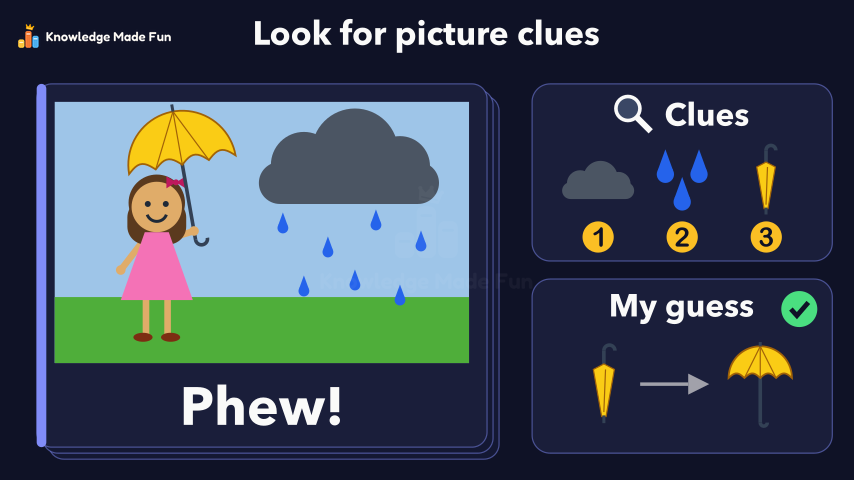 55 s
Picture Clues: What Happens Next?
Kindergarten · 55 s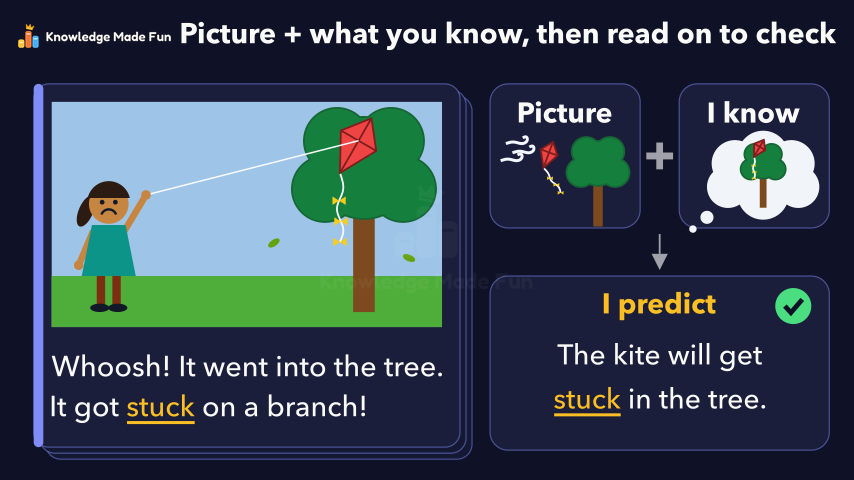 53 s
Predict, Then Read On: Mia's Kite
Grade 3 · 53 s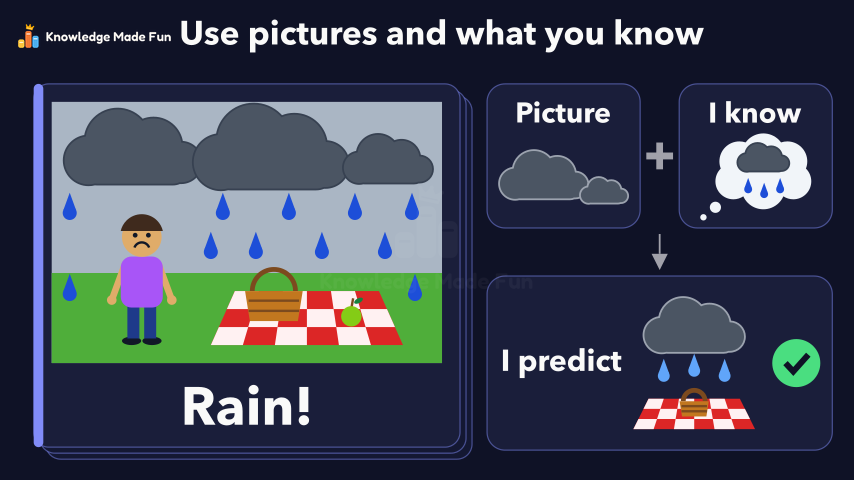 48 s
Predicting what will happen
Grade 2 · 48 s 1 min 20 s
Prefixes and Suffixes: Reading a Long Word in Parts
Grade 4 · 1 min 20 s
- All Grade 4 English Language Arts lessons
- Create a free account to watch three lessons a day, no payment and no card.