Lesson · Grade 4 · English Language Arts
Summarizing: Keep What Matters Most
- Grade 4
- English Language Arts
- 1 min 8 s
- British Columbia
- BC4-EN-13
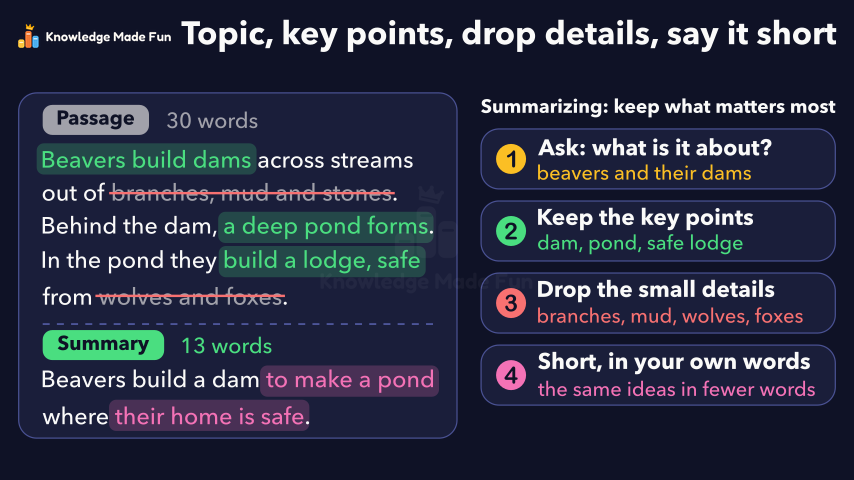
A short passage about beavers is shown on a card, and four steps build up beside it: ask what the text is about, keep the key points, drop the small details, and say it short in your own words. The key points light up, the details are struck out, and a 13-word summary appears under the 30-word passage, ending on the recap that a summary keeps the main ideas in fewer words.
Concept: Summarizing
Anyone can watch two lessons on the website without an account. Signing in is free, no payment and no card, and opens three a day; Plus has no limit.
Loading
In one sentence
The question this lesson answers
How do you sum up something you have just read?
Here is a short passage about beavers.
Transcript
What the lesson says
How do you sum up something you have just read?
Here is a short passage about beavers.
A summary is much shorter, and it keeps only what matters most.
Step one: ask what the text is mostly about. Here, it is beavers and their dams.
Step two: keep the key points.
Beavers build dams, a deep pond forms, and their lodge is safe.
Step three: drop the small details.
What the dam is made of, and which animals it keeps out, are details.
Step four: say it short, in your own words.
Beavers build a dam to make a pond where their home is safe.
To make a pond, and their home is safe, are your words, not the writer's.
Thirty words have become thirteen, and nothing important is lost.
Find the topic, keep the key points, drop the details, and say it short in your own words.
Curriculum
Where this fits
- British Columbia, Grade 4
English Language Arts, Strategies and processes: reading strategiesBC4-EN-13
Previous: Making an Inference: Reading Between the LinesNext: Revising and Editing: What Is the Difference?
- British Columbia, Grade 5
English Language Arts, Strategies and processes: reading strategiesBC5-EN-14
Previous: Making an Inference: Reading Between the LinesNext: Revising and Editing: What Is the Difference?
- British Columbia, Grade 6
English Language Arts, Strategies and processes: reading strategiesBC6-EN-16
Previous: Making an Inference: Reading Between the LinesNext: Revising and Editing: What Is the Difference?
- British Columbia, Grade 7
English Language Arts, Strategies and processes: reading strategiesBC7-EN-16
Previous: Making an Inference: Reading Between the LinesNext: Revising and Editing: What Is the Difference?
This lesson is also listed in Grade 5, Grade 6 and Grade 7.
The outcomes and strands follow the British Columbia curriculum.
Keep going
 54 s
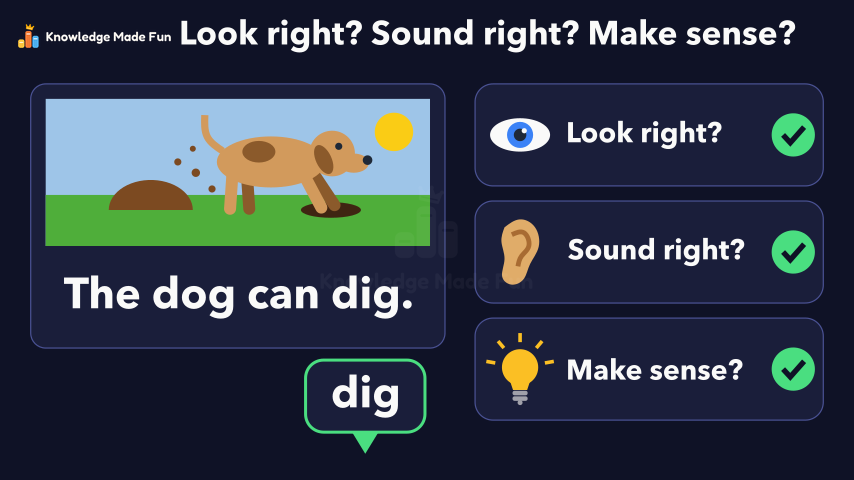
Check Your Reading: Look Right, Sound Right, Make Sense
Grade 1 · 54 s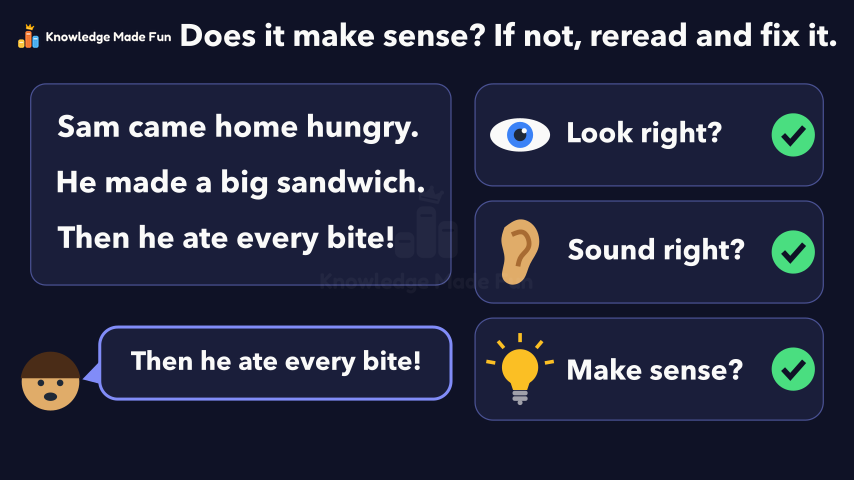 1 min 12 s
Does It Make Sense? Checking as You Read
Grade 3 · 1 min 12 s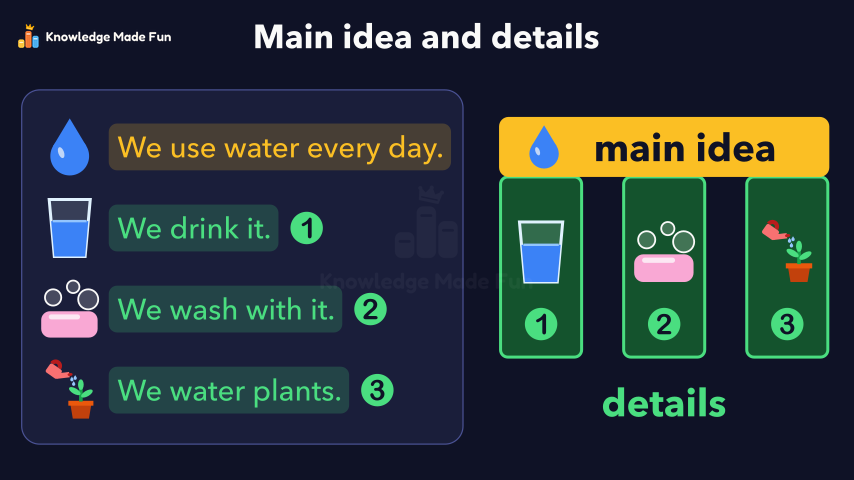 47 s
Main Idea and Details
Grade 2 · 47 s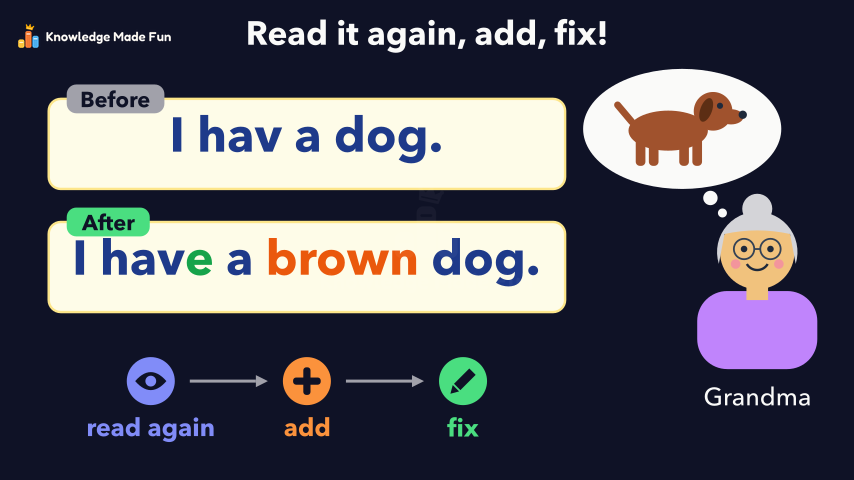 50 s
Make Your Writing Better: Read It Again, Add, Fix
Grade 1 · 50 s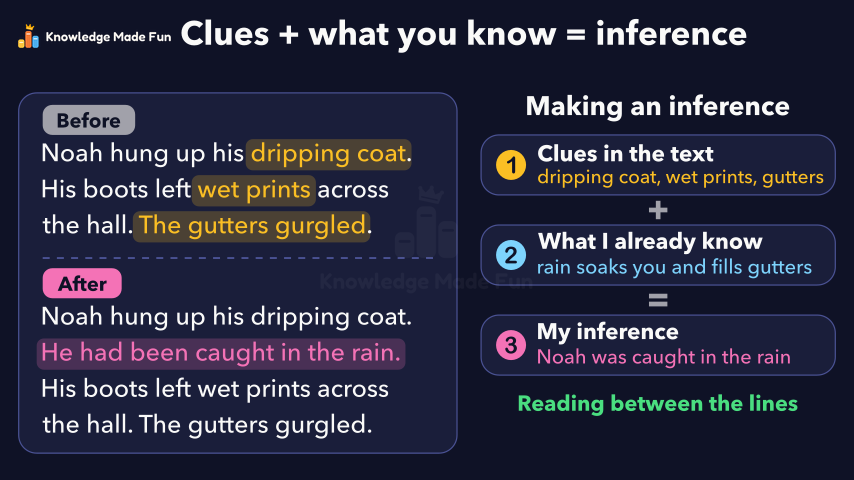 1 min 4 s
Making an Inference: Reading Between the Lines
Grade 4 · 1 min 4 s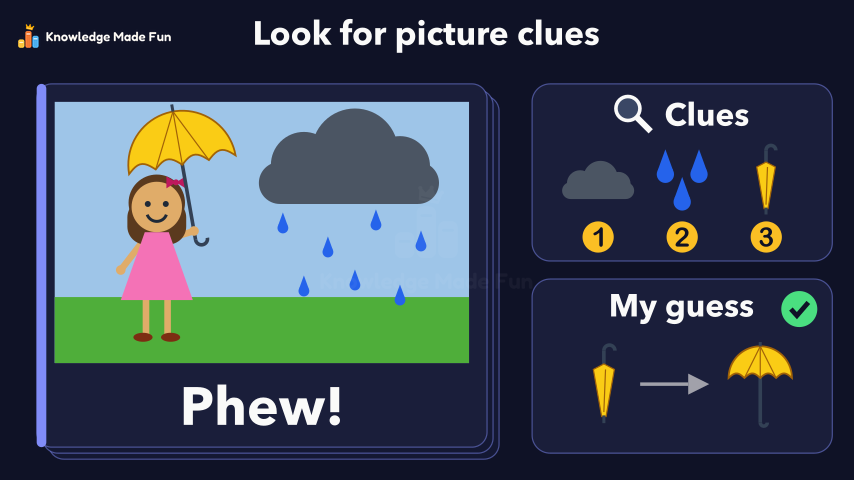 55 s
Picture Clues: What Happens Next?
Kindergarten · 55 s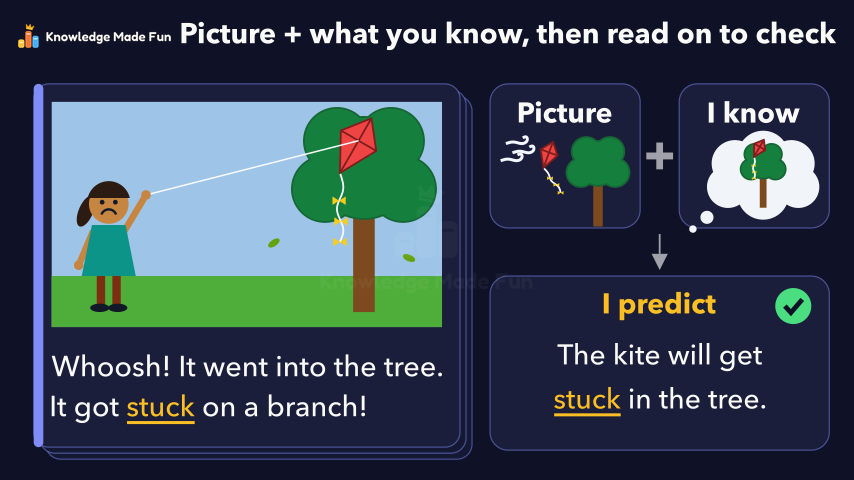 53 s
Predict, Then Read On: Mia's Kite
Grade 3 · 53 s 48 s
Predicting what will happen
Grade 2 · 48 s
- All Grade 4 English Language Arts lessons
- Create a free account to watch three lessons a day, no payment and no card.