Lesson · Grade 4 · English Language Arts
Using Context Clues for a New Word
- Grade 4
- English Language Arts
- 1 min 15 s
- British Columbia
- BC4-EN-10
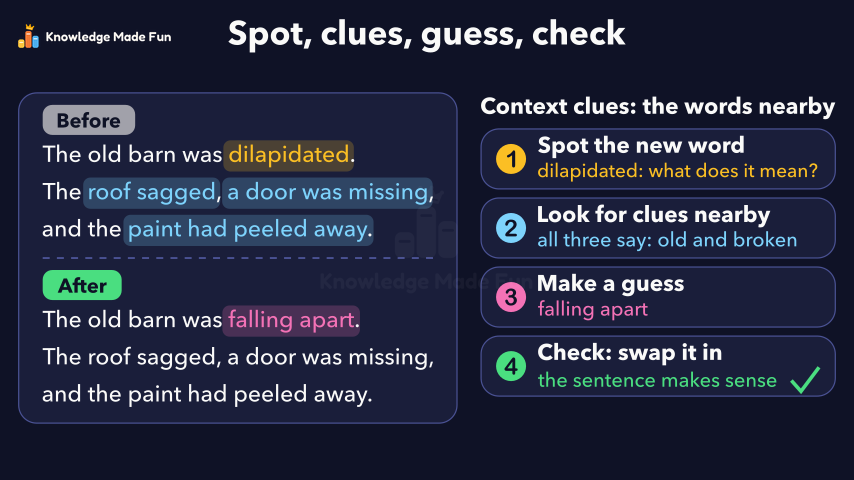
A short passage about an old barn contains the unfamiliar word "dilapidated", and the video walks through four steps on the right: spot the new word, look for clues nearby (the sagging roof, the missing door, the peeled paint), make a guess ("falling apart"), and check it by swapping the guess into the sentence. The passage is shown again with the guess in place so students see it reads sensibly, and the video ends on the one-line recap: spot, clues, guess, check.
Anyone can watch two lessons on the website without an account. Signing in is free, no payment and no card, and opens three a day; Plus has no limit.
Loading
In one sentence
The question this lesson answers
You are reading, and you meet a word you do not know. What do you do?
Here is a short passage. One word in it may be new to you.
Transcript
What the lesson says
You are reading, and you meet a word you do not know. What do you do?
Here is a short passage. One word in it may be new to you.
Step one: spot the new word. Here it is: dilapidated.
Do not stop there. The words around it are clues to what it means.
Step two: look for clues in the words nearby.
The first clue: the roof sagged.
The second clue: a door was missing.
The third clue: the paint had peeled away.
All three clues say the same thing: the barn is old and broken.
Step three: make a guess. Dilapidated probably means falling apart.
Step four: check the guess. Swap it into the sentence in place of the new word.
The old barn was falling apart. That makes sense, so the guess is a good one.
If the sentence did not make sense, you would go back and try another guess.
Spot the new word, find the clues, make a guess, then check that it fits.
Curriculum
Where this fits
- British Columbia, Grade 4
English Language Arts, Strategies and processes: reading strategiesBC4-EN-10
- British Columbia, Grade 5
English Language Arts, Strategies and processes: reading strategiesBC5-EN-11
- British Columbia, Grade 6
English Language Arts, Strategies and processes: reading strategiesBC6-EN-13
- British Columbia, Grade 7
English Language Arts, Strategies and processes: reading strategiesBC7-EN-13
This lesson is also listed in Grade 5, Grade 6 and Grade 7.
The outcomes and strands follow the British Columbia curriculum.
Keep going
 54 s
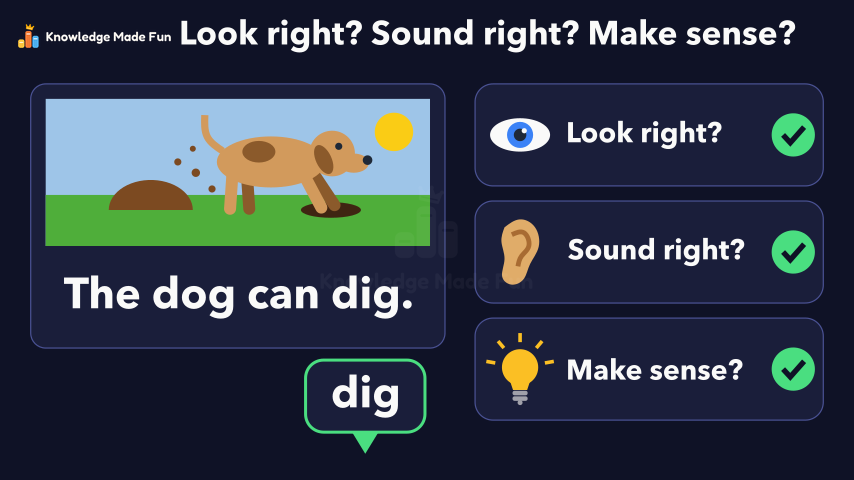
Check Your Reading: Look Right, Sound Right, Make Sense
Grade 1 · 54 s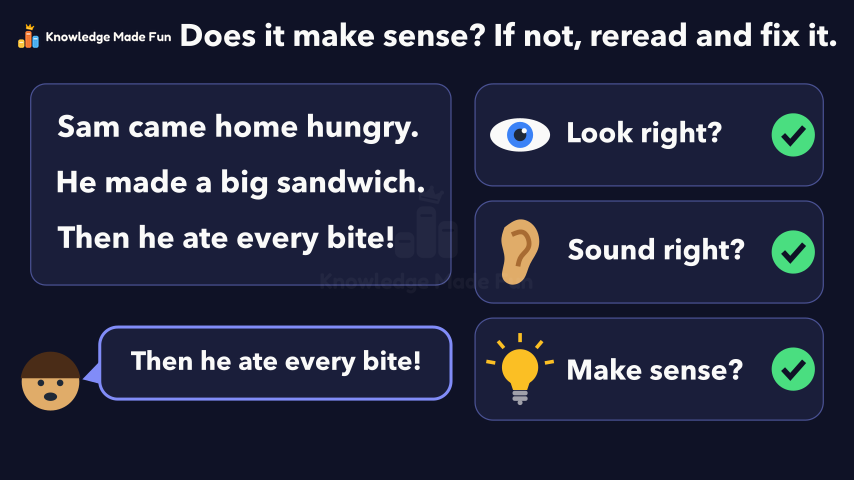 1 min 12 s
Does It Make Sense? Checking as You Read
Grade 3 · 1 min 12 s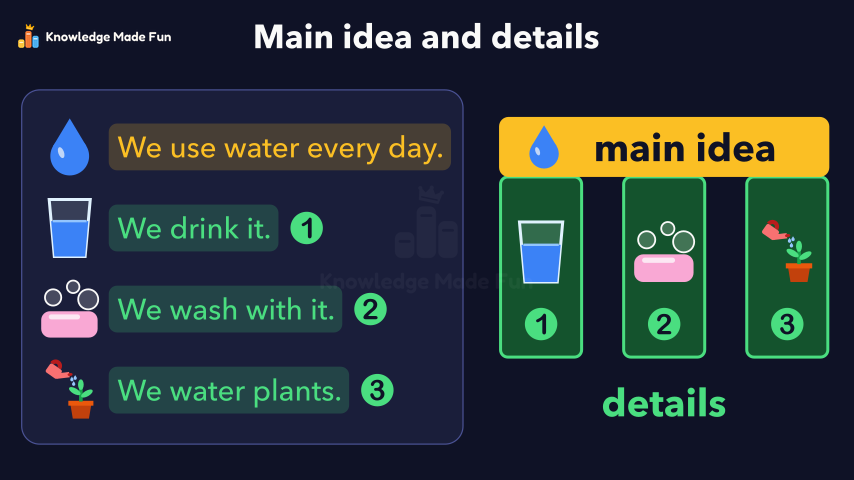 47 s
Main Idea and Details
Grade 2 · 47 s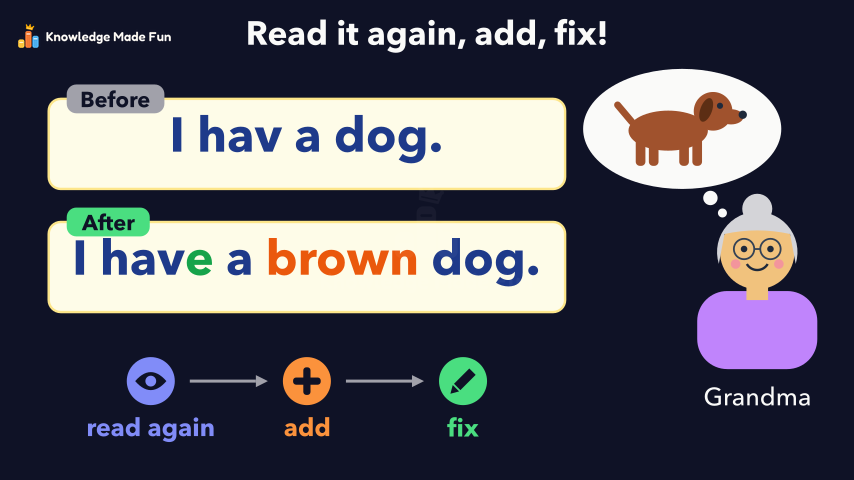 50 s
Make Your Writing Better: Read It Again, Add, Fix
Grade 1 · 50 s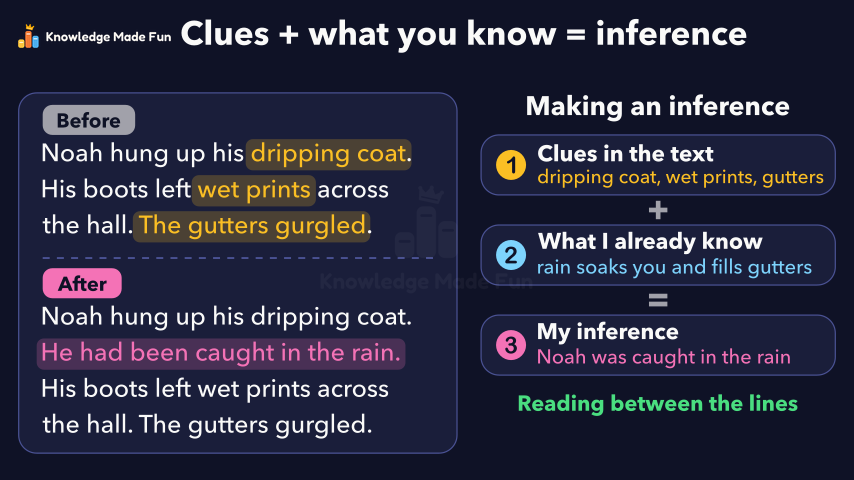 1 min 4 s
Making an Inference: Reading Between the Lines
Grade 4 · 1 min 4 s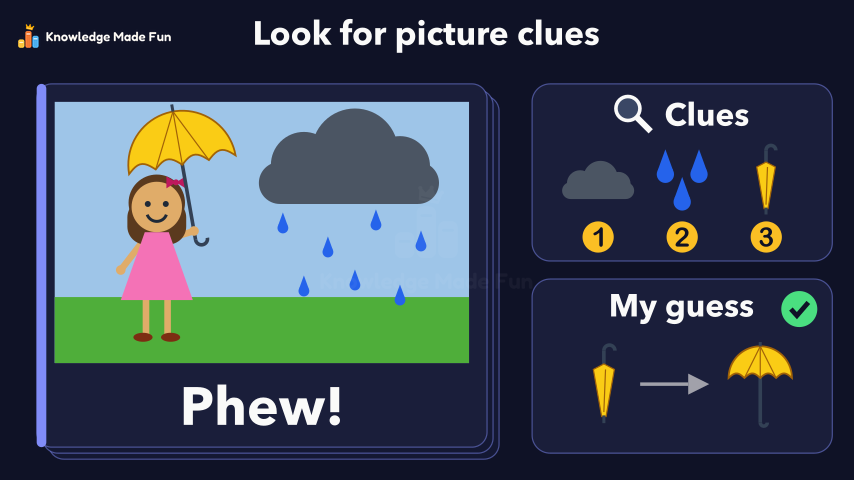 55 s
Picture Clues: What Happens Next?
Kindergarten · 55 s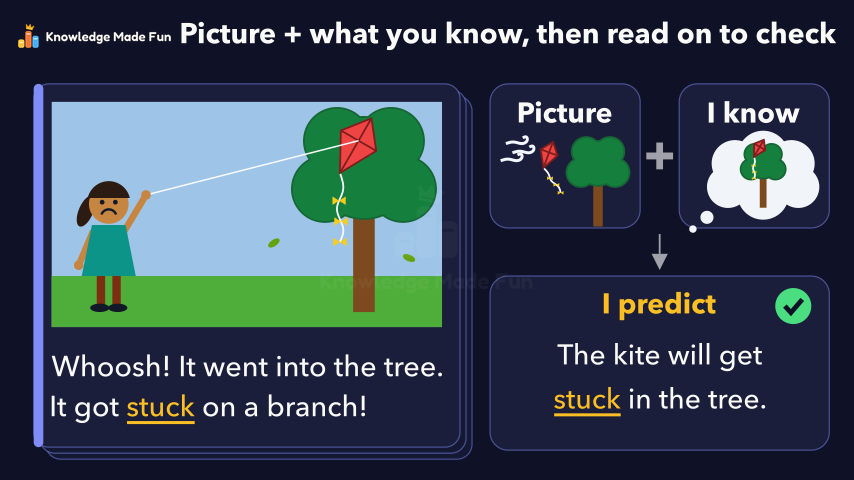 53 s
Predict, Then Read On: Mia's Kite
Grade 3 · 53 s 48 s
Predicting what will happen
Grade 2 · 48 s
- All Grade 4 English Language Arts lessons
- Create a free account to watch three lessons a day, no payment and no card.