Lesson · Grade 4 · English Language Arts
Story structure: the plot mountain
- Grade 4
- English Language Arts
- 1 min 5 s
- British Columbia
- BC4-EN-04
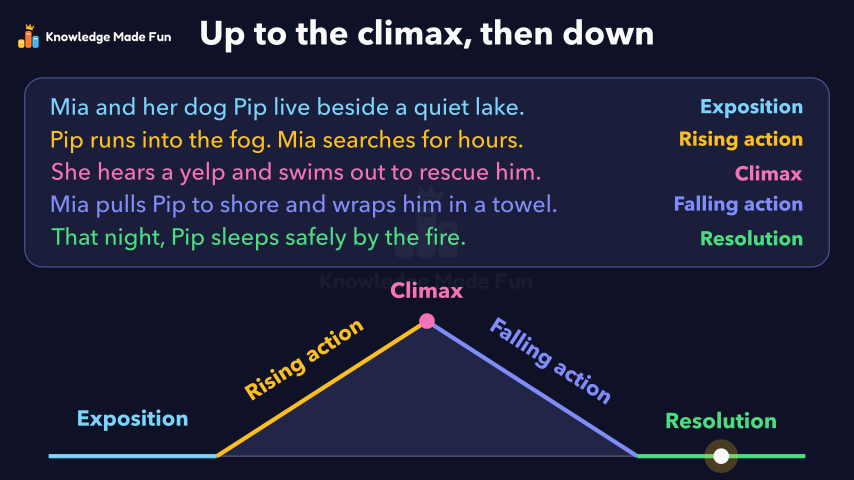
A five-sentence story about Mia and her lost dog Pip is shown plain, then a plot mountain is drawn beneath it and a bright dot climbs the path while each part is named: exposition, rising action, climax, falling action and resolution. As each part is reached, its stretch of the mountain and its matching sentence take the same colour and the part's name appears beside the line, ending with the recap that a story climbs up to its climax and then comes down the other side.
Anyone can watch two lessons on the website without an account. Signing in is free, no payment and no card, and opens three a day; Plus has no limit.
Loading
In one sentence
The question this lesson answers
Can you see the shape hiding in this tiny story?
Writers call that shape the plot mountain, and it has five parts.
Transcript
What the lesson says
Can you see the shape hiding in this tiny story?
Writers call that shape the plot mountain, and it has five parts.
First comes the exposition, which introduces the characters and the setting.
Next is the rising action, where a problem appears and the tension grows.
Pip is lost, and the longer Mia searches, the more we worry.
At the top is the climax, the most exciting moment, where the story turns.
Here it is the yelp from the lake and the rescue.
Then comes the falling action, where the danger is over and the tension drops.
Finally, the resolution shows how things end up.
It is the same story, but now you can see its five parts.
Use the mountain to map a story you read, or to plan one you write.
A story climbs up to its climax, and then comes down the other side.
Curriculum
Where this fits
- British Columbia, Grade 4
English Language Arts, Story/text: literary elementsBC4-EN-04
Previous: Text Features: Headings, Captions and DiagramsNext: Theme: The Big Lesson of a Story
- British Columbia, Grade 5
English Language Arts, Story/text: literary elementsBC5-EN-05
Previous: Text Features: Headings, Captions and DiagramsNext: How Writers Show a Character
- British Columbia, Grade 6
English Language Arts, Story/text: literary elementsBC6-EN-05
Previous: Text Features: Headings, Captions and DiagramsNext: How Writers Show a Character
- British Columbia, Grade 7
English Language Arts, Story/text: literary elementsBC7-EN-05
Previous: Text Features: Headings, Captions and DiagramsNext: How Writers Show a Character
This lesson is also listed in Grade 5, Grade 6 and Grade 7.
The outcomes and strands follow the British Columbia curriculum.
Keep going
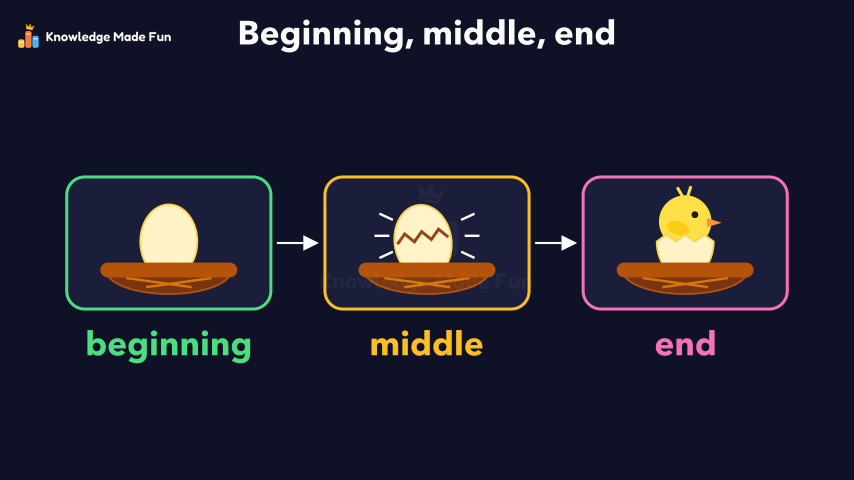 51 s
A Story Has a Beginning, a Middle and an End
Kindergarten · 51 s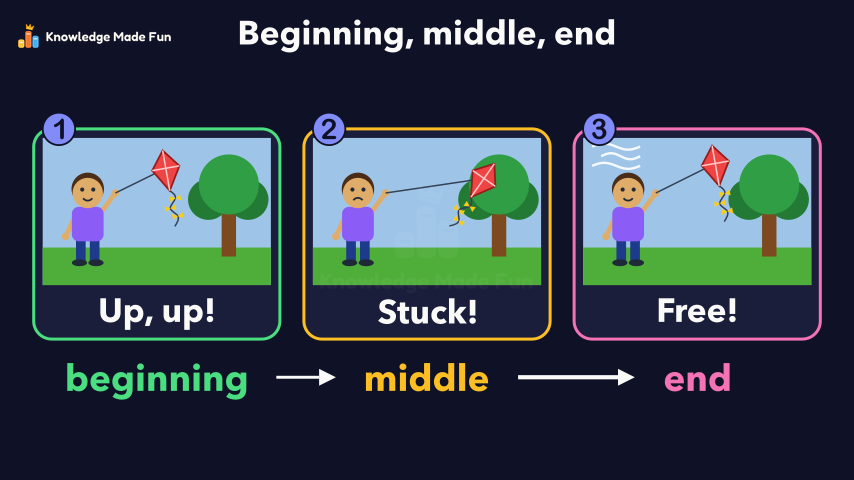 54 s
Beginning, Middle and End: Sam's Kite
Grade 2 · 54 s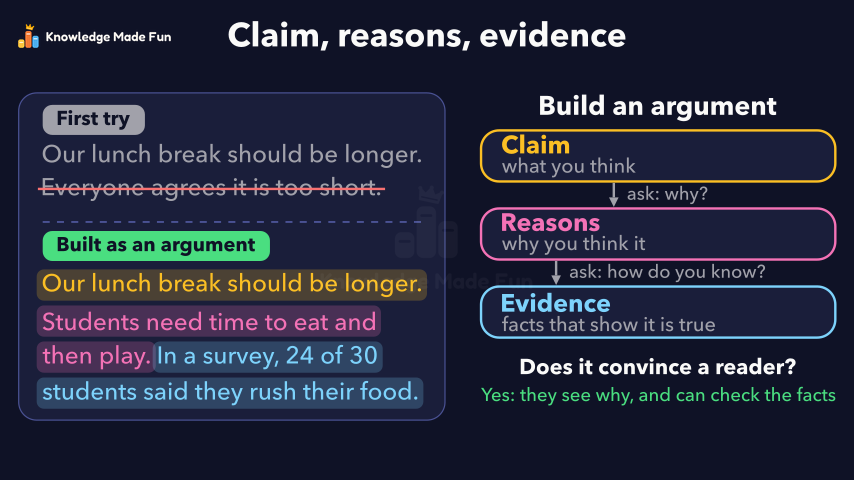 1 min 13 s
Building an Argument: Claim, Reasons, Evidence
Grade 7 · 1 min 13 s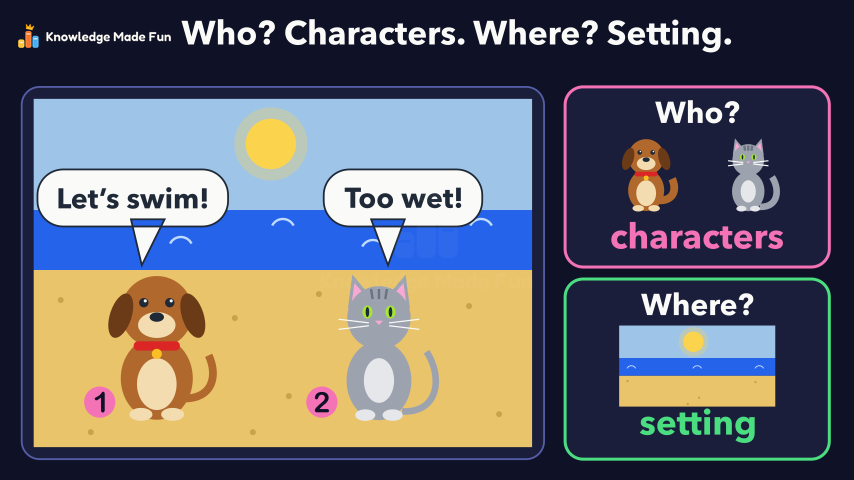 55 s
Characters and Setting: Who and Where
Grade 2 · 55 s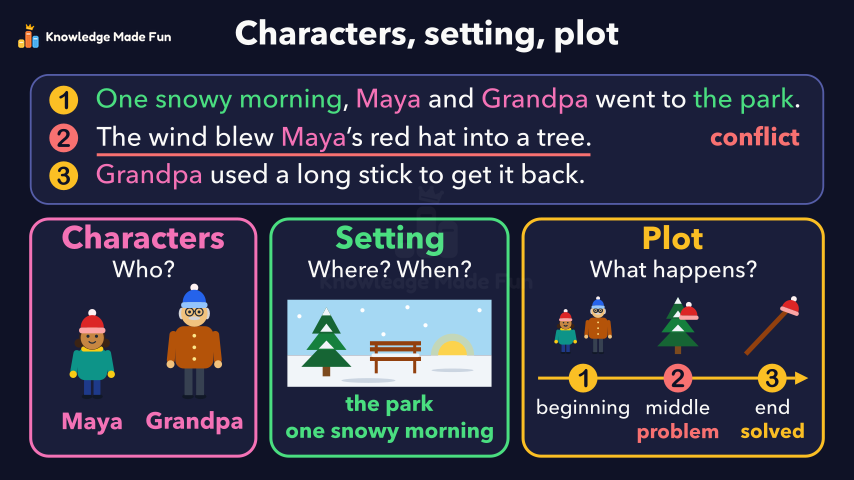 1 min 4 s
Characters, Setting and Plot: The Parts of a Story
Grade 3 · 1 min 4 s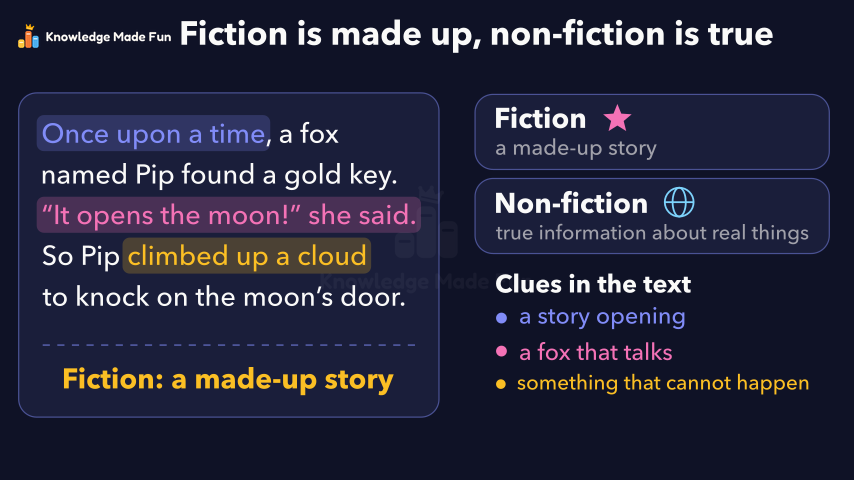 55 s
Fiction and Non-fiction: Made Up or True?
Grade 3 · 55 s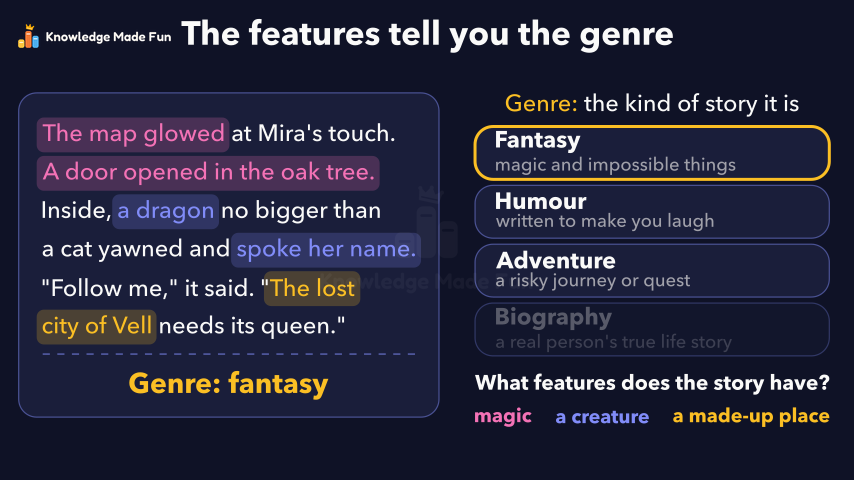 1 min 26 s
Genres: What Kind of Story Is This?
Grade 4 · 1 min 26 s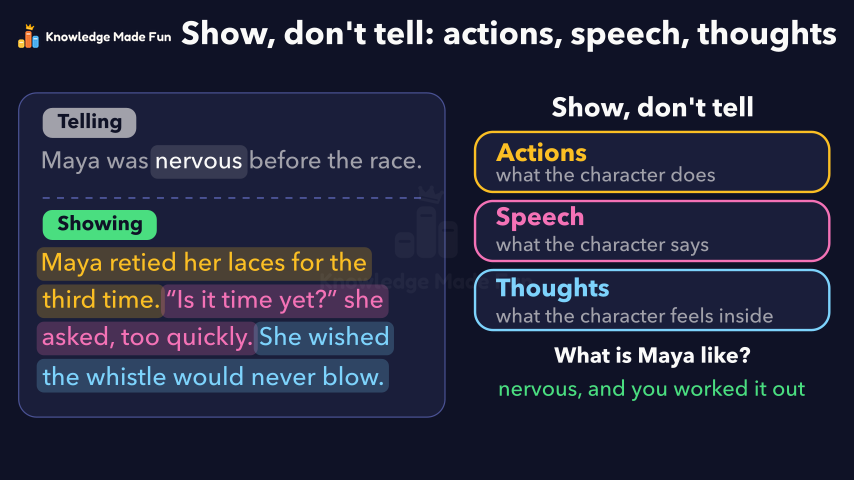 1 min
How Writers Show a Character
Grade 5 · 1 min
- All Grade 4 English Language Arts lessons
- Create a free account to watch three lessons a day, no payment and no card.