Lesson · Grade 7 · English Language Arts
Building an Argument: Claim, Reasons, Evidence
- Grade 7
- English Language Arts
- 1 min 13 s
- British Columbia
- BC7-EN-12
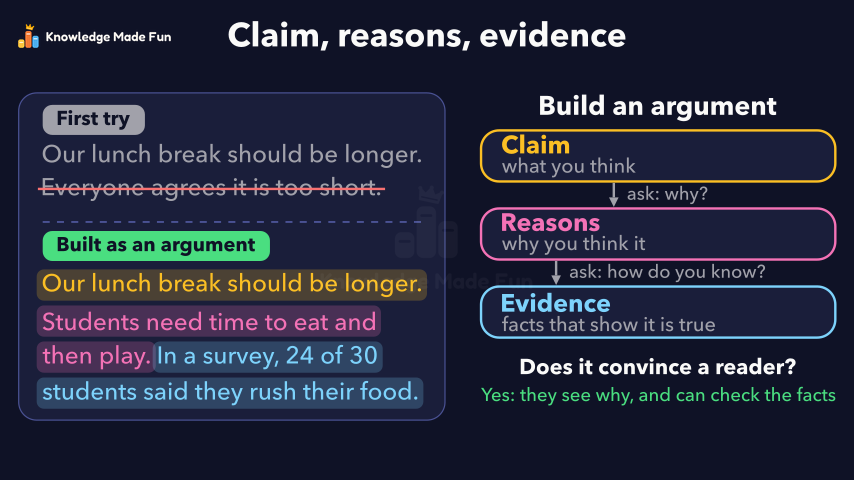
A student's first try, "Our lunch break should be longer. Everyone agrees it is too short.", is shown on a card and the second line is struck out because it proves nothing, then three boxes on the right introduce the parts of an argument: a claim (what you think), reasons (why you think it, found by asking why) and evidence (facts that show it is true, found by asking how do you know). The same idea is then rewritten as a full argument and each part is lit in its own colour, with "In a survey, 24 of 30 students said they rush their food" as the evidence, ending on the recap that a reader can now see why and check the facts: claim, reasons, evidence.
Anyone can watch two lessons on the website without an account. Signing in is free, no payment and no card, and opens three a day; Plus has no limit.
Loading
In one sentence
The question this lesson answers
How do you build an argument that will convince a reader?
Here is a student's first try: an opinion about the lunch break.
Transcript
What the lesson says
How do you build an argument that will convince a reader?
Here is a student's first try: an opinion about the lunch break.
Saying that everyone agrees is not proof, so nothing here backs up the opinion.
A strong argument has three parts: a claim, reasons and evidence.
The claim is what you think, stated clearly in one sentence.
Reasons answer the question why: why do you think that?
Evidence answers the question how do you know, with facts, numbers or examples that back up each reason.
Here is the same idea, built as a full argument.
The claim: our lunch break should be longer.
The reason: students need time to eat and then play.
The evidence: in a survey, 24 of 30 students said they rush their food.
Now a reader can see why you think it, and can check the facts.
To build an argument, make a claim, give reasons, and back each reason with evidence.
Curriculum
Where this fits
- British Columbia, Grade 7
English Language Arts, Story/text: argumentBC7-EN-12
The outcomes and strands follow the British Columbia curriculum.
Keep going
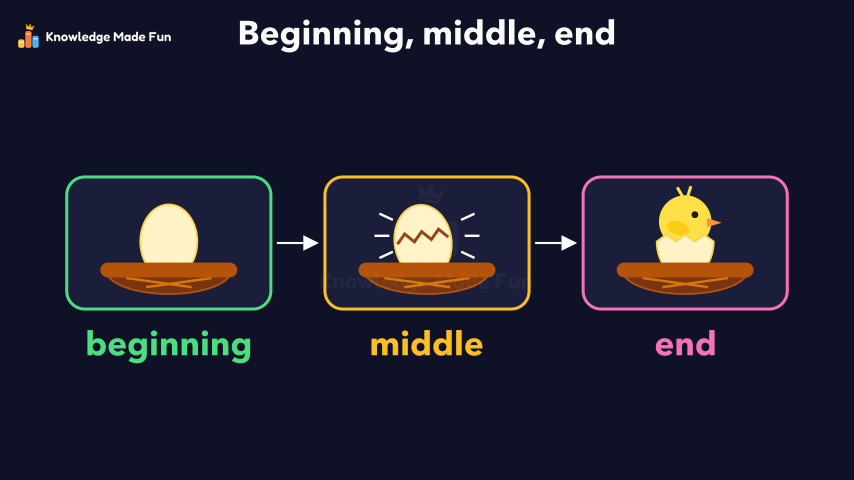 51 s
A Story Has a Beginning, a Middle and an End
Kindergarten · 51 s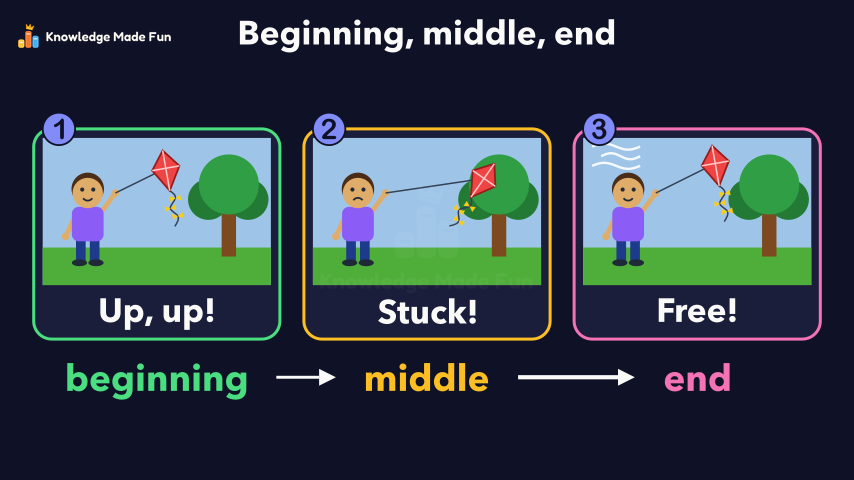 54 s
Beginning, Middle and End: Sam's Kite
Grade 2 · 54 s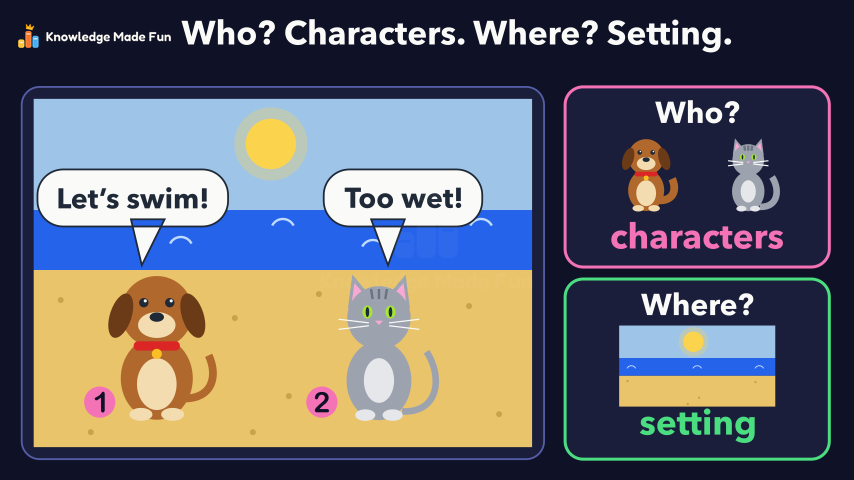 55 s
Characters and Setting: Who and Where
Grade 2 · 55 s 1 min 4 s
Characters, Setting and Plot: The Parts of a Story
Grade 3 · 1 min 4 s 55 s
Fiction and Non-fiction: Made Up or True?
Grade 3 · 55 s 1 min 26 s
Genres: What Kind of Story Is This?
Grade 4 · 1 min 26 s 1 min
How Writers Show a Character
Grade 5 · 1 min 1 min 12 s
Imagery: Writing for the Five Senses
Grade 3 · 1 min 12 s
- All Grade 7 English Language Arts lessons
- Create a free account to watch three lessons a day, no payment and no card.