Lesson · Grade 3 · English Language Arts
Imagery: Writing for the Five Senses
- Grade 3
- English Language Arts
- 1 min 12 s
- British Columbia
- BC3-EN-06
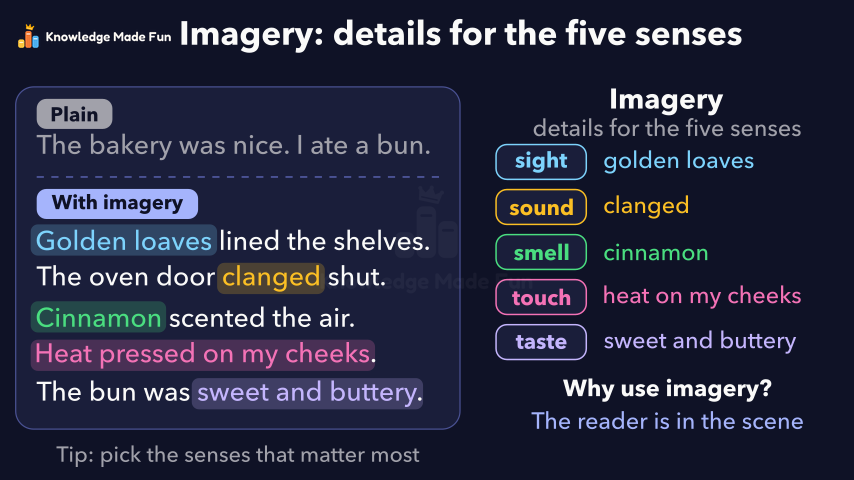
A plain two-sentence passage about a bakery is shown on a card, then rewritten with one detail for each of the five senses: golden loaves, a clanging oven door, cinnamon in the air, heat on the cheeks and a sweet, buttery bun. Each detail lights up in the text and is matched to its sense on the right, ending with why imagery works (the reader is in the scene), a tip to pick the senses that matter most, and the one-line recap that imagery is detail for the five senses.
Anyone can watch two lessons on the website without an account. Signing in is free, no payment and no card, and opens three a day; Plus has no limit.
Loading
In one sentence
The question this lesson answers
What is imagery, and why do writers use it?
Here is a plain piece of writing about a bakery.
Transcript
What the lesson says
What is imagery, and why do writers use it?
Here is a plain piece of writing about a bakery.
It is correct, but the reader cannot see, hear, smell, feel or taste anything.
Here is the same moment again, written with imagery.
Imagery is detail that appeals to the five senses: sight, sound, smell, touch and taste.
Sight first: the reader can see the golden loaves.
Sound: the reader can hear the oven door clang.
Smell: the reader can breathe in the cinnamon.
Touch: the reader can feel the heat on their cheeks.
Taste: the reader can taste the sweet, buttery bun.
Now the reader stands inside the bakery, and that is what imagery is for.
You do not need all five every time, so pick the senses that matter most for your scene.
Imagery gives details for the five senses, so the reader feels right there in the scene.
Curriculum
Where this fits
- British Columbia, Grade 3
English Language Arts, Story/text: literary elements and devicesBC3-EN-06
Previous: Text Features: Headings, Captions and DiagramsNext: Simile: comparing two different things with like or as
- British Columbia, Grade 4
English Language Arts, Story/text: literary devicesBC4-EN-06
Previous: Theme: The Big Lesson of a StoryNext: Simile: comparing two different things with like or as
- British Columbia, Grade 5
English Language Arts, Story/text: literary devicesBC5-EN-07
Previous: How Writers Show a CharacterNext: Simile: comparing two different things with like or as
- British Columbia, Grade 6
English Language Arts, Story/text: literary devicesBC6-EN-10
Previous: Metaphor: saying one thing is anotherNext: Sound Devices: Alliteration and Onomatopoeia
- British Columbia, Grade 7
English Language Arts, Story/text: literary devicesBC7-EN-10
Previous: Metaphor: saying one thing is anotherNext: Sound Devices: Alliteration and Onomatopoeia
This lesson is also listed in Grade 4, Grade 5, Grade 6 and Grade 7.
The outcomes and strands follow the British Columbia curriculum.
Keep going
 51 s
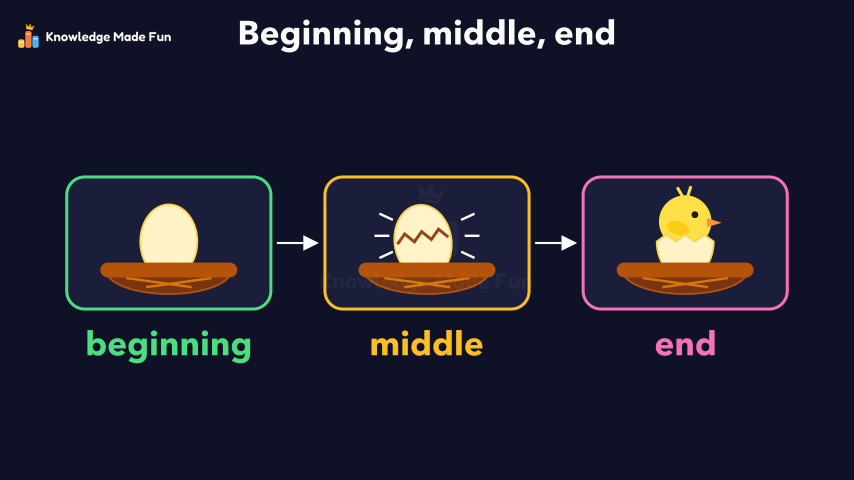
A Story Has a Beginning, a Middle and an End
Kindergarten · 51 s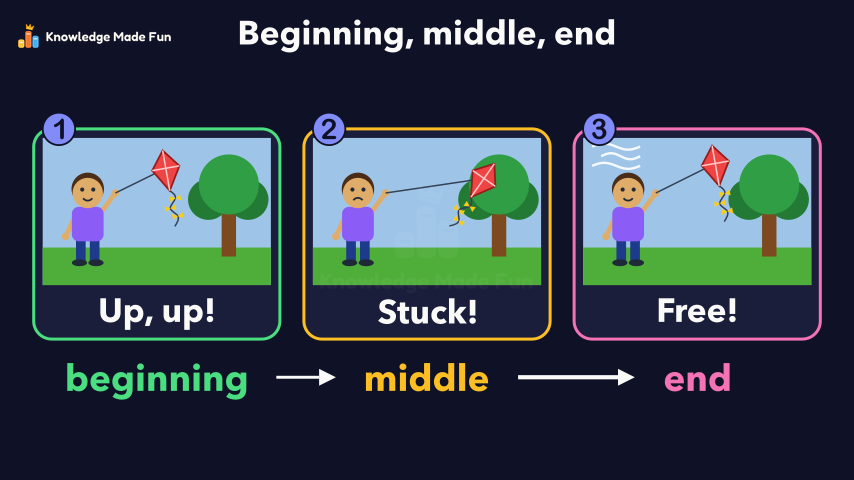 54 s
Beginning, Middle and End: Sam's Kite
Grade 2 · 54 s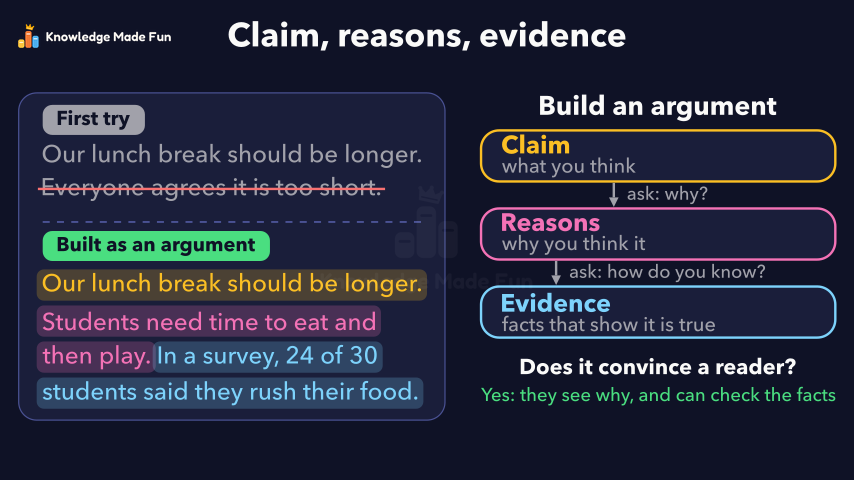 1 min 13 s
Building an Argument: Claim, Reasons, Evidence
Grade 7 · 1 min 13 s 55 s
Characters and Setting: Who and Where
Grade 2 · 55 s 1 min 4 s
Characters, Setting and Plot: The Parts of a Story
Grade 3 · 1 min 4 s 55 s
Fiction and Non-fiction: Made Up or True?
Grade 3 · 55 s 1 min 26 s
Genres: What Kind of Story Is This?
Grade 4 · 1 min 26 s 1 min
How Writers Show a Character
Grade 5 · 1 min
- All Grade 3 English Language Arts lessons
- Create a free account to watch three lessons a day, no payment and no card.