Lesson · Grade 6 · English Language Arts
Sound Devices: Alliteration and Onomatopoeia
- Grade 6
- English Language Arts
- 1 min 13 s
- British Columbia
- BC6-EN-11
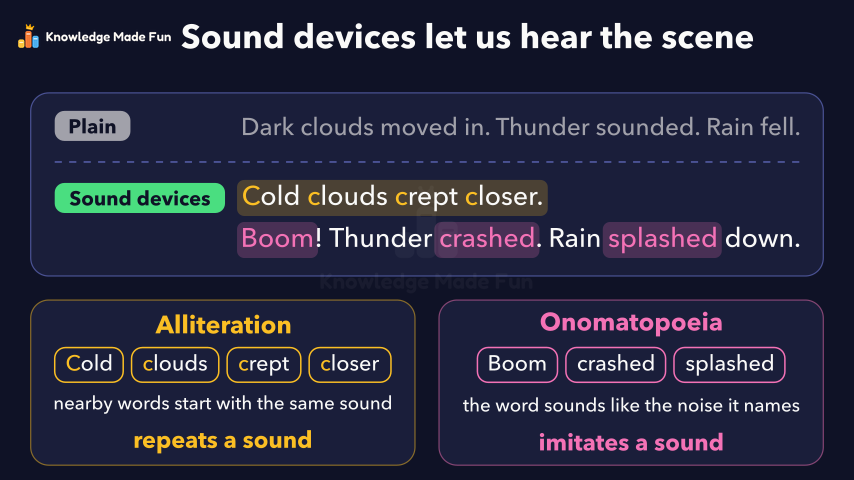
A plain three-sentence storm is rewritten with two sound devices, and each one lights up in the text: four words starting with the same hard c sound for alliteration, and boom, crashed and splashed for onomatopoeia. Two panels lift the words out, state each rule in one line, and end with the recap that alliteration repeats a sound while onomatopoeia imitates one, so the reader hears the scene.
Anyone can watch two lessons on the website without an account. Signing in is free, no payment and no card, and opens three a day; Plus has no limit.
Loading
In one sentence
The question this lesson answers
What are sound devices, and why do writers use them?
Here is a plain piece of writing about a storm.
Transcript
What the lesson says
What are sound devices, and why do writers use them?
Here is a plain piece of writing about a storm.
It is correct, but it is silent. The reader hears nothing.
Here is the same storm again, with two sound devices added.
The first device is alliteration: cold clouds crept closer.
Nearby words start with the same sound. Here, four words in a row begin with a hard c.
The second device is onomatopoeia: boom, crashed, splashed.
An onomatopoeia is a word that sounds like the noise it names.
Say them aloud. Boom sounds like thunder, and splash sounds like water.
Now the reader hears the storm. That is what sound devices are for.
To tell them apart: alliteration repeats a sound, and onomatopoeia imitates a sound.
Alliteration repeats a starting sound, onomatopoeia imitates a noise, and both let the reader hear the scene.
Curriculum
Where this fits
- British Columbia, Grade 6
English Language Arts, Story/text: literary devicesBC6-EN-11
Previous: Imagery: Writing for the Five SensesNext: Persuasion: Appealing to Feelings and to Reason
- British Columbia, Grade 7
English Language Arts, Story/text: literary devicesBC7-EN-11
Previous: Imagery: Writing for the Five SensesNext: Building an Argument: Claim, Reasons, Evidence
This lesson is also listed in Grade 7.
The outcomes and strands follow the British Columbia curriculum.
Keep going
 51 s
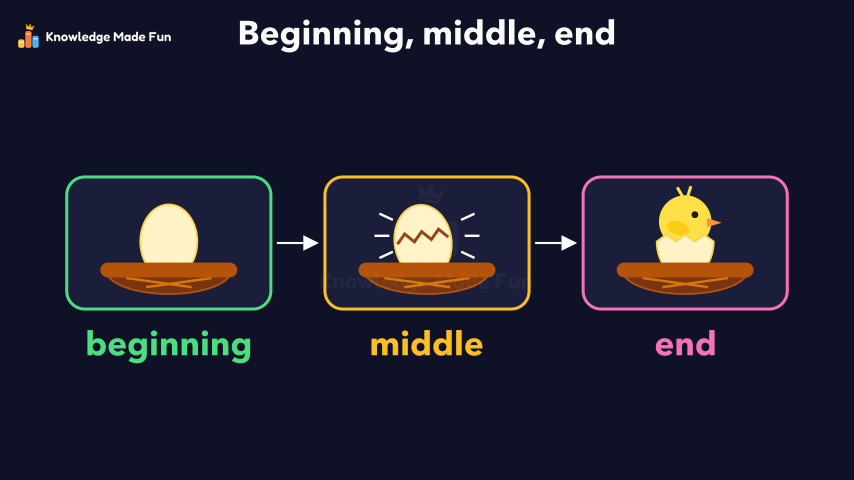
A Story Has a Beginning, a Middle and an End
Kindergarten · 51 s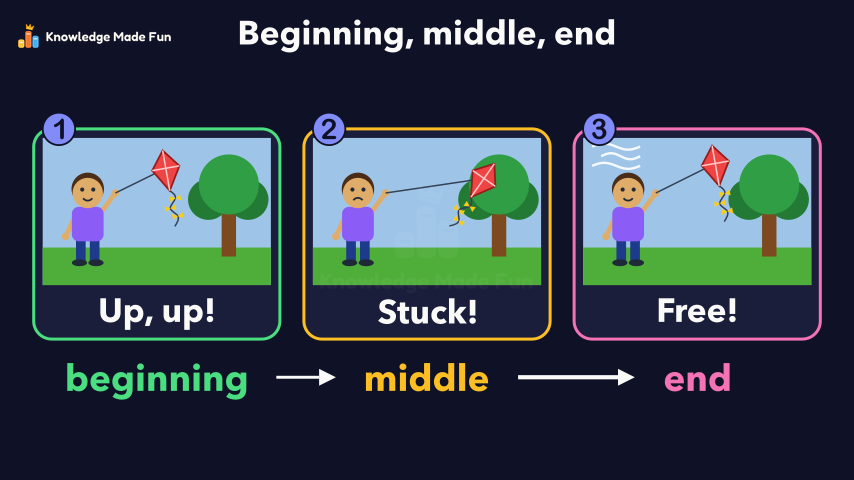 54 s
Beginning, Middle and End: Sam's Kite
Grade 2 · 54 s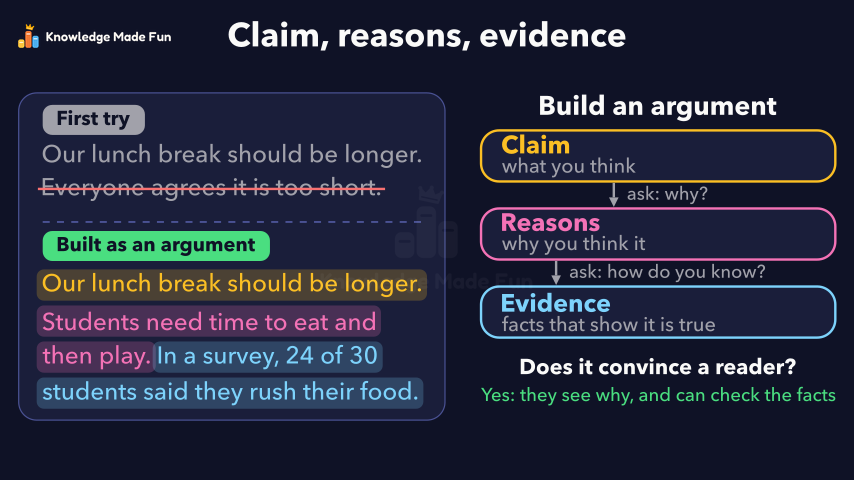 1 min 13 s
Building an Argument: Claim, Reasons, Evidence
Grade 7 · 1 min 13 s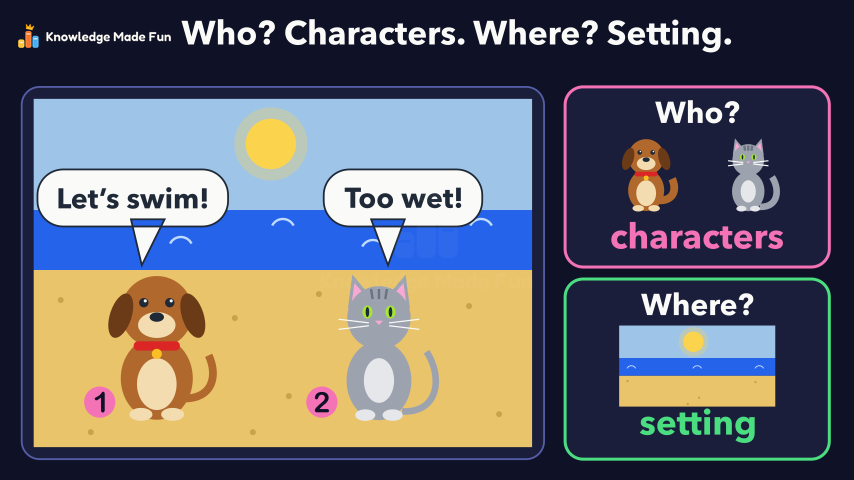 55 s
Characters and Setting: Who and Where
Grade 2 · 55 s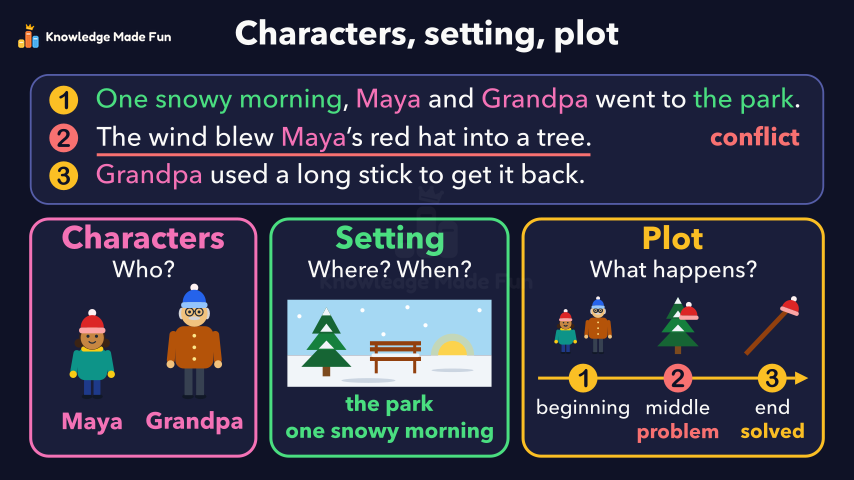 1 min 4 s
Characters, Setting and Plot: The Parts of a Story
Grade 3 · 1 min 4 s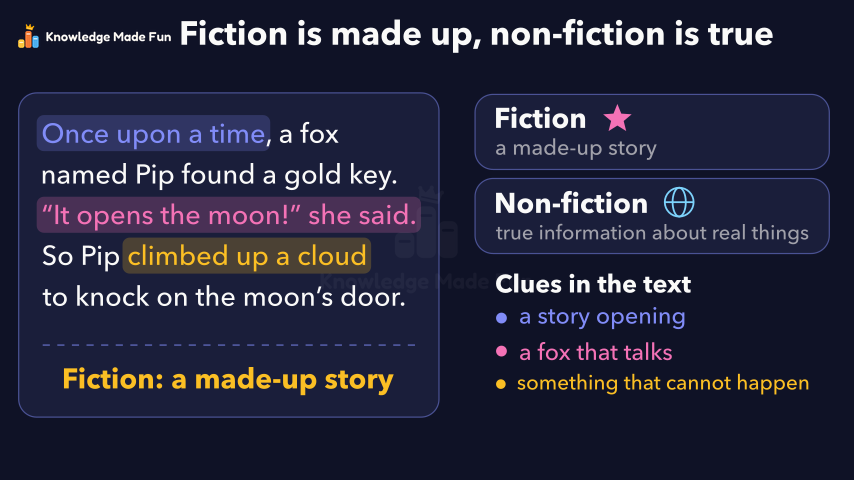 55 s
Fiction and Non-fiction: Made Up or True?
Grade 3 · 55 s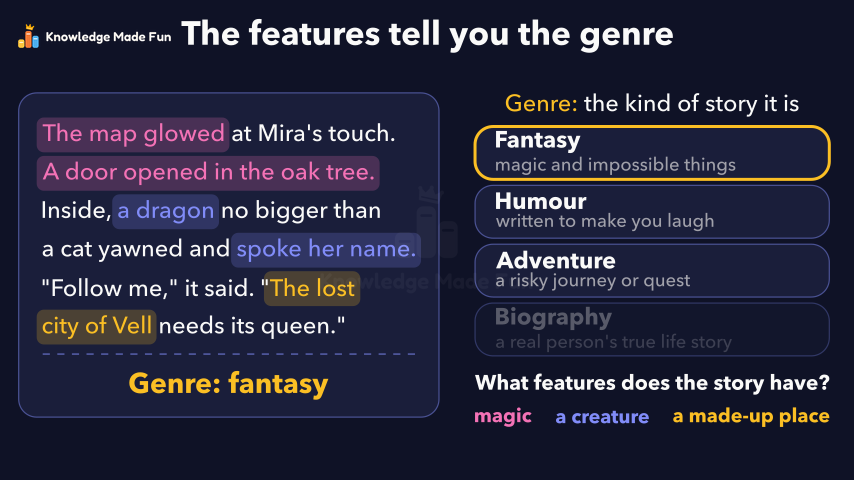 1 min 26 s
Genres: What Kind of Story Is This?
Grade 4 · 1 min 26 s 1 min
How Writers Show a Character
Grade 5 · 1 min
- All Grade 6 English Language Arts lessons
- Create a free account to watch three lessons a day, no payment and no card.