Lesson · Grade 6 · English Language Arts
Persuasion: Appealing to Feelings and to Reason
- Grade 6
- English Language Arts
- 58 s
- British Columbia
- BC6-EN-12
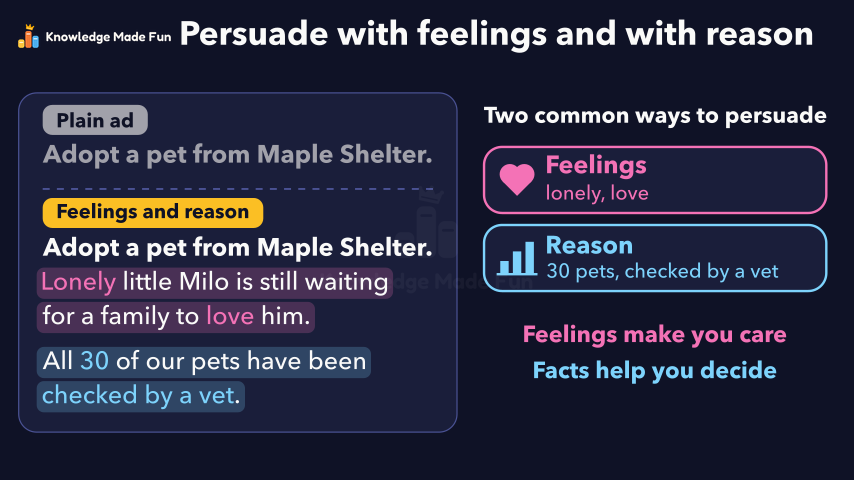
A made-up animal shelter ad starts as a plain line, "Adopt a pet from Maple Shelter.", which tells readers what to do but not why. It is then written again with a feelings sentence about lonely Milo and a reason sentence giving a number and a fact (30 pets, all checked by a vet), each lit in its own colour to show that feelings make you care, facts help you decide, and persuasive writers often use both.
Anyone can watch two lessons on the website without an account. Signing in is free, no payment and no card, and opens three a day; Plus has no limit.
Loading
In one sentence
The question this lesson answers
How does an ad try to change your mind?
Here is a plain ad for an animal shelter.
Transcript
What the lesson says
How does an ad try to change your mind?
Here is a plain ad for an animal shelter.
It tells you what to do, but not why you should.
Two common ways to persuade are to appeal to feelings and to appeal to reason.
An appeal to feelings uses words that stir up your feelings.
An appeal to reason uses facts, numbers and reasons.
Here is the same ad, written again to use both.
Words like lonely and love appeal to your feelings, so you feel sorry for Milo.
The number 30 and the vet check are facts, and they appeal to your reason.
Feelings make you care, and facts help you decide.
To persuade, appeal to your reader's feelings and to their reason.
Curriculum
Where this fits
- British Columbia, Grade 6
English Language Arts, Story/text: techniques of persuasionBC6-EN-12
The outcomes and strands follow the British Columbia curriculum.
Keep going
 51 s
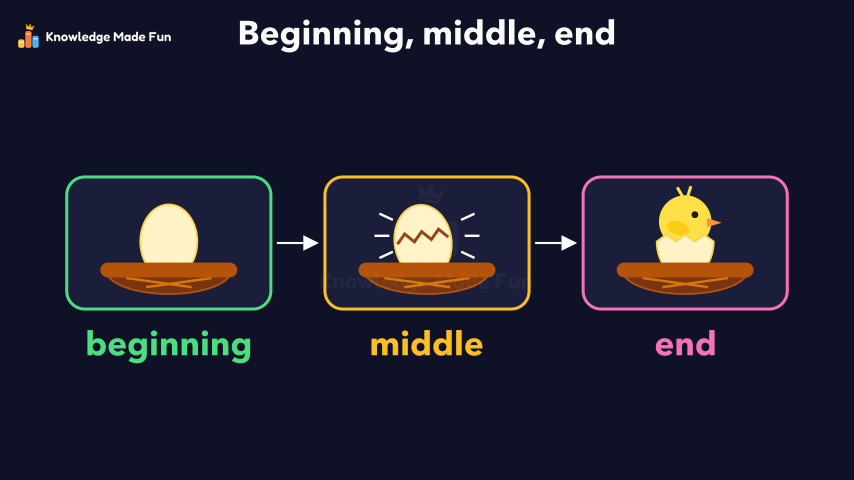
A Story Has a Beginning, a Middle and an End
Kindergarten · 51 s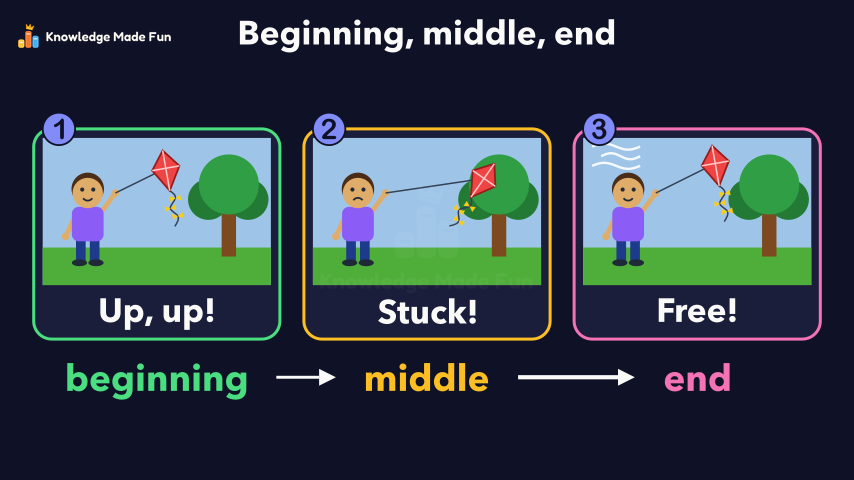 54 s
Beginning, Middle and End: Sam's Kite
Grade 2 · 54 s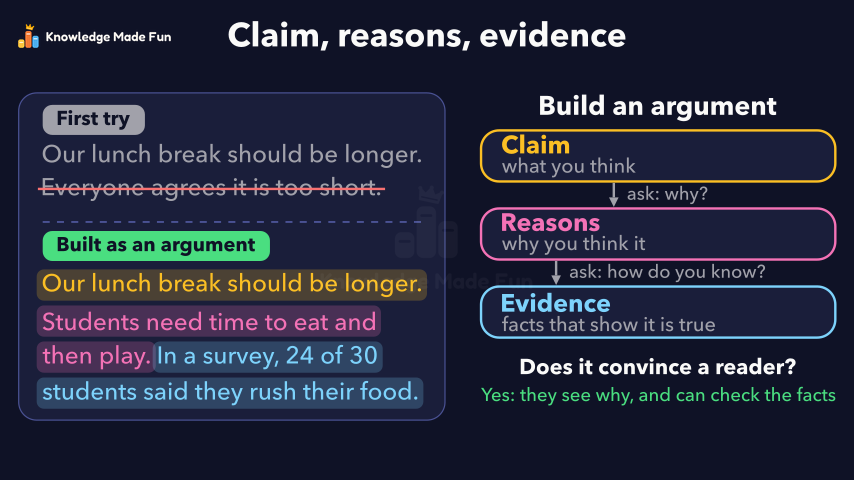 1 min 13 s
Building an Argument: Claim, Reasons, Evidence
Grade 7 · 1 min 13 s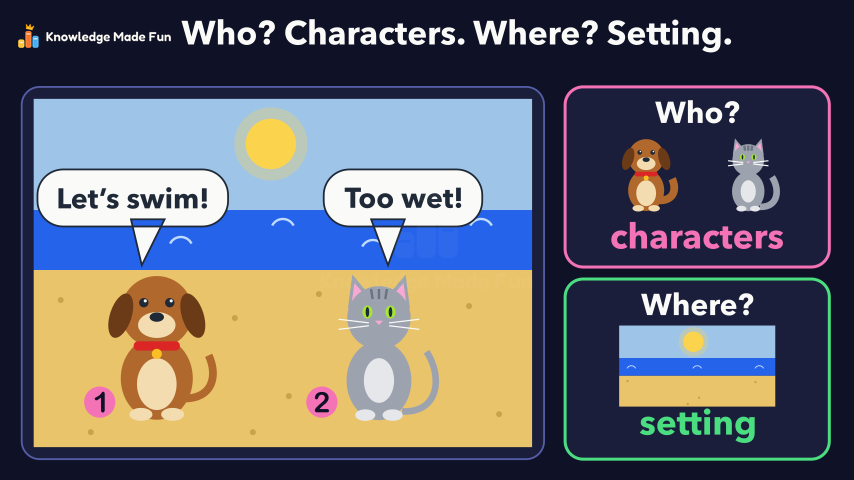 55 s
Characters and Setting: Who and Where
Grade 2 · 55 s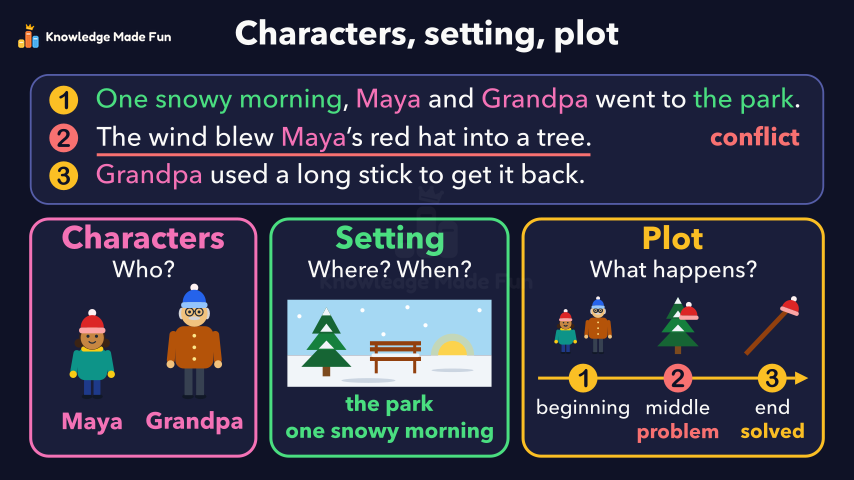 1 min 4 s
Characters, Setting and Plot: The Parts of a Story
Grade 3 · 1 min 4 s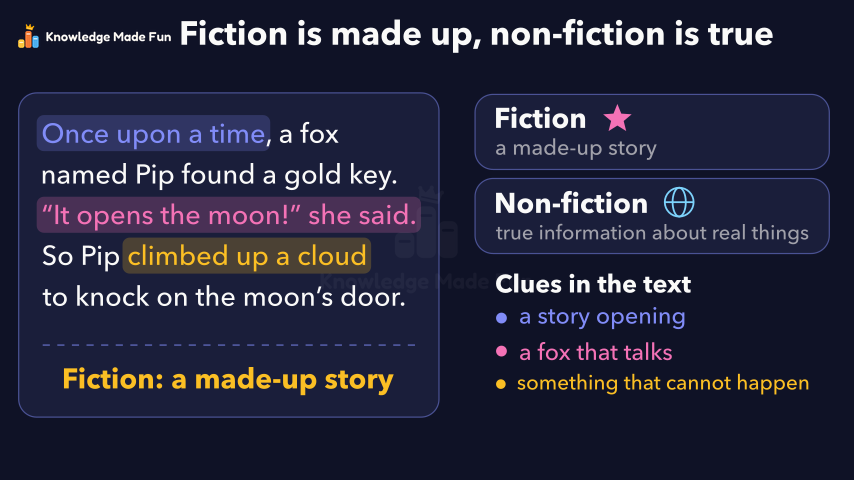 55 s
Fiction and Non-fiction: Made Up or True?
Grade 3 · 55 s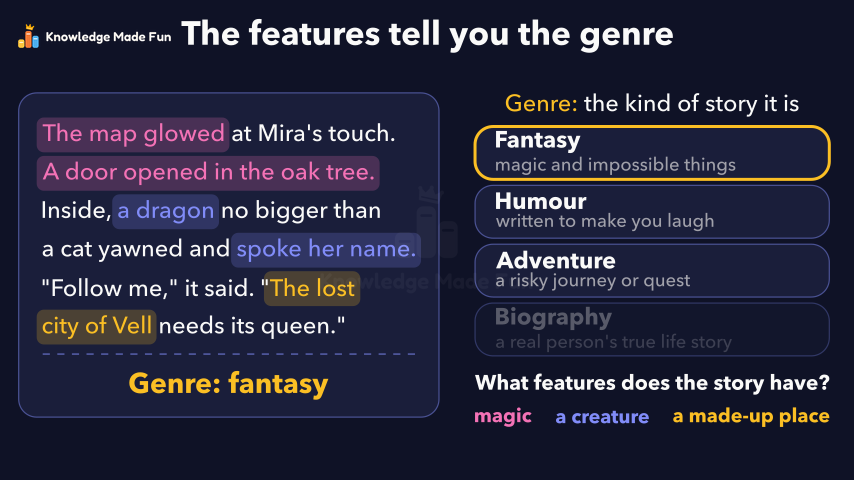 1 min 26 s
Genres: What Kind of Story Is This?
Grade 4 · 1 min 26 s 1 min
How Writers Show a Character
Grade 5 · 1 min
- All Grade 6 English Language Arts lessons
- Create a free account to watch three lessons a day, no payment and no card.