Lesson · Grade 4 · English Language Arts
Metaphor: saying one thing is another
- Grade 4
- English Language Arts
- 1 min 17 s
- British Columbia
- BC4-EN-08
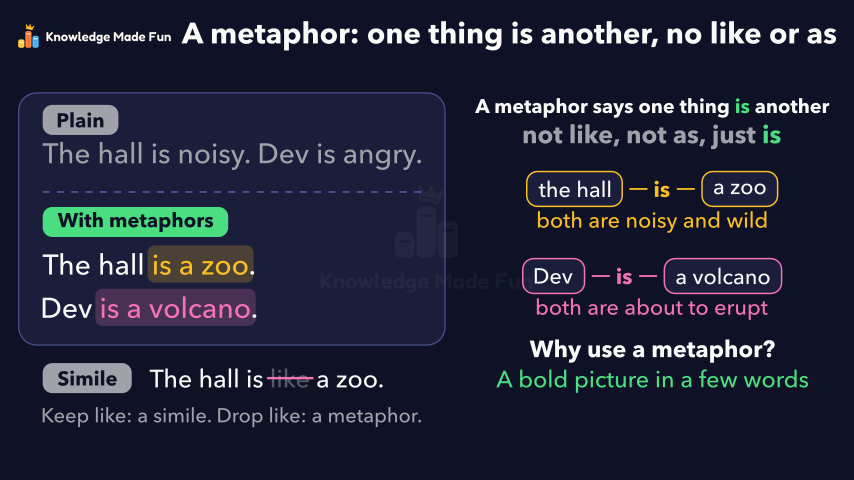
A plain two-sentence text, "The hall is noisy. Dev is angry.", is rewritten with two metaphors, "The hall is a zoo. Dev is a volcano.", and each metaphor lights up in the text while the right side shows the two things it joins through the word "is" and the one quality they share. A final note puts the simile "The hall is like a zoo." beside it and strikes out "like", so students see that a metaphor says one thing is another with no like or as, before a one-line recap.
Concept: Metaphor
Anyone can watch two lessons on the website without an account. Signing in is free, no payment and no card, and opens three a day; Plus has no limit.
Loading
In one sentence
The question this lesson answers
What is a metaphor, and why do writers use one?
Here is a plain piece of writing.
Transcript
What the lesson says
What is a metaphor, and why do writers use one?
Here is a plain piece of writing.
It is correct, but it gives the reader nothing to picture.
Here is the same moment again, with two metaphors added.
A metaphor says that one thing is another thing. It does not use like or as.
The first metaphor: the hall is a zoo.
The hall is not really a zoo, but they share one thing: both are noisy and wild.
The second metaphor: Dev is a volcano.
Dev is not really a volcano, but they share one thing: both are about to erupt.
Now the reader hears the hall and feels Dev's anger, all in a few words. That is what a metaphor is for.
Compare a simile: the hall is like a zoo. The word like makes it a simile.
Drop the word like, and it is a metaphor: the hall is a zoo.
A metaphor says one thing is another, with no like or as, so the reader can picture it.
Curriculum
Where this fits
- British Columbia, Grade 4
English Language Arts, Story/text: literary devicesBC4-EN-08
Previous: Simile: comparing two different things with like or asNext: Prove It! Using Evidence from the Text
- British Columbia, Grade 5
English Language Arts, Story/text: literary devicesBC5-EN-09
Previous: Simile: comparing two different things with like or asNext: Point of View: Who Is Telling the Story?
- British Columbia, Grade 6
English Language Arts, Story/text: literary devicesBC6-EN-09
Previous: Simile: comparing two different things with like or asNext: Imagery: Writing for the Five Senses
- British Columbia, Grade 7
English Language Arts, Story/text: literary devicesBC7-EN-09
Previous: Simile: comparing two different things with like or asNext: Imagery: Writing for the Five Senses
This lesson is also listed in Grade 5, Grade 6 and Grade 7.
The outcomes and strands follow the British Columbia curriculum.
Keep going
 51 s
A Story Has a Beginning, a Middle and an End
Kindergarten · 51 s 54 s
Beginning, Middle and End: Sam's Kite
Grade 2 · 54 s 1 min 13 s
Building an Argument: Claim, Reasons, Evidence
Grade 7 · 1 min 13 s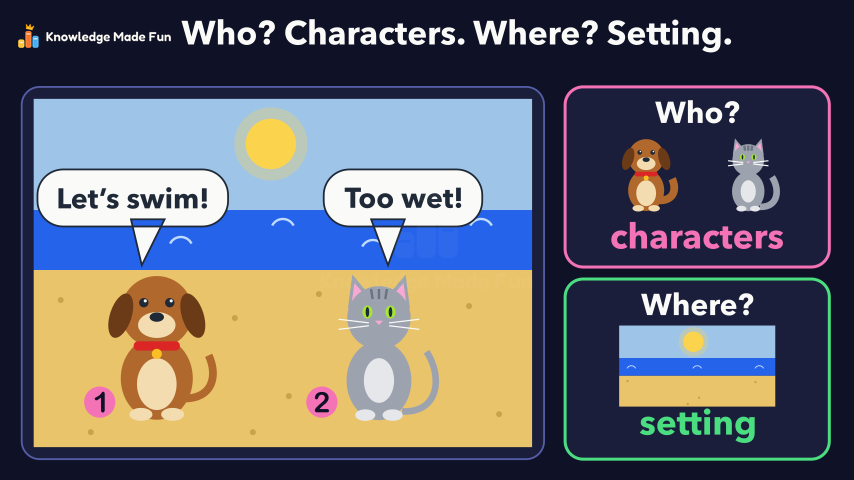 55 s
Characters and Setting: Who and Where
Grade 2 · 55 s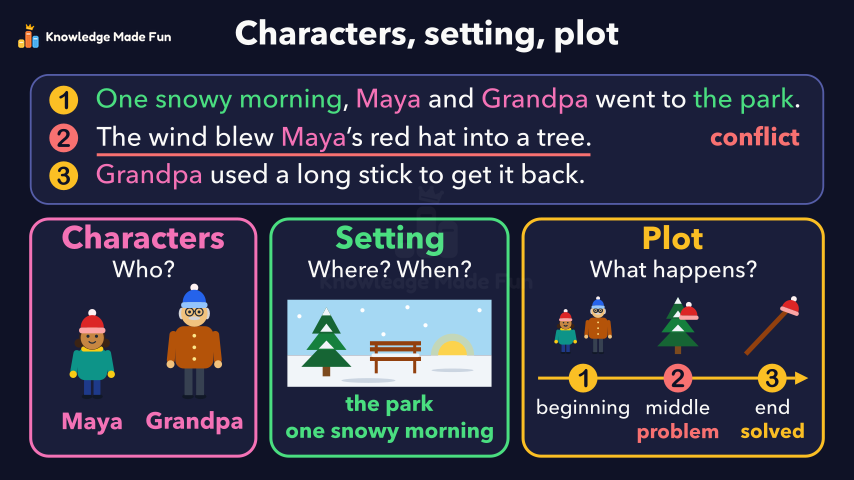 1 min 4 s
Characters, Setting and Plot: The Parts of a Story
Grade 3 · 1 min 4 s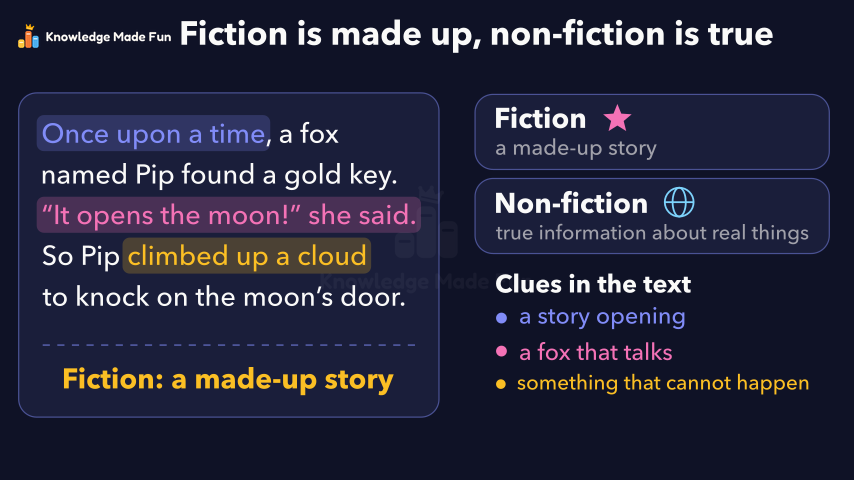 55 s
Fiction and Non-fiction: Made Up or True?
Grade 3 · 55 s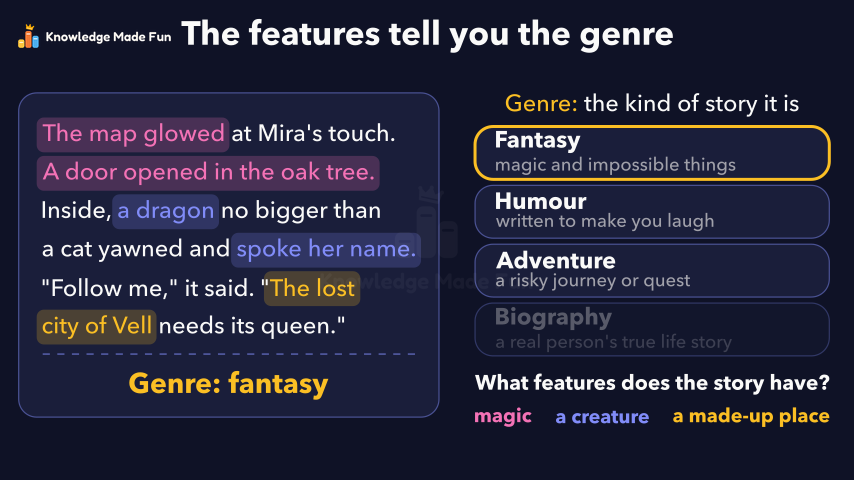 1 min 26 s
Genres: What Kind of Story Is This?
Grade 4 · 1 min 26 s 1 min
How Writers Show a Character
Grade 5 · 1 min
- All Grade 4 English Language Arts lessons
- Create a free account to watch three lessons a day, no payment and no card.