Lesson · Grade 4 · English Language Arts
What Makes a Good Paragraph
- Grade 4
- English Language Arts
- 1 min 17 s
- British Columbia
- BC4-EN-18
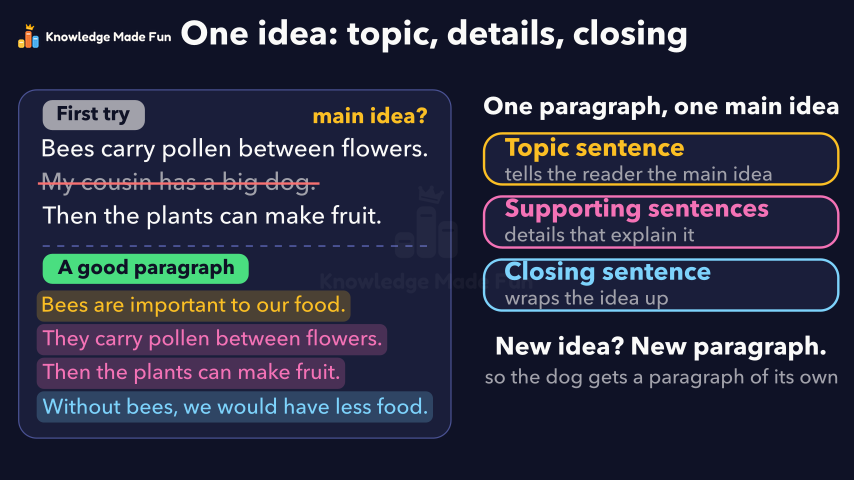
A short student paragraph about bees is shown first as a muddled draft that opens with a detail, has a stray sentence about a dog, and simply stops, then rebuilt as a good paragraph with a topic sentence, two supporting sentences and a closing sentence, each lit in its own colour. Three boxes on the right name the parts under the rule "one paragraph, one main idea", and a final line explains that the dog is a new idea and so gets a new paragraph of its own.
Anyone can watch two lessons on the website without an account. Signing in is free, no payment and no card, and opens three a day; Plus has no limit.
Loading
In one sentence
The question this lesson answers
What makes a good paragraph?
Here is a student's first try at a paragraph about bees.
Transcript
What the lesson says
What makes a good paragraph?
Here is a student's first try at a paragraph about bees.
It is hard to follow, because no sentence tells the reader the main point.
And the dog is a different idea, so it does not belong in this paragraph.
A good paragraph is about one main idea.
And it usually has three parts.
A topic sentence tells the reader the main idea, usually first.
Supporting sentences give details that explain or prove it.
A closing sentence wraps the idea up.
Here is the same paragraph, rebuilt.
The topic sentence comes first: bees are important to our food.
Two supporting sentences explain how: they carry pollen, and then the plants can make fruit.
The closing sentence wraps it up: without bees, we would have less food.
The dog is a new idea, so it gets a new paragraph of its own.
A good paragraph has one main idea, with a topic sentence, supporting details and a closing sentence.
Curriculum
Where this fits
- British Columbia, Grade 4
English Language Arts, Language features, structures, and conventions: paragraph structureBC4-EN-18
- British Columbia, Grade 5
English Language Arts, Language features, structures, and conventions: paragraphingBC5-EN-20
- British Columbia, Grade 6
English Language Arts, Language features, structures, and conventions: paragraphingBC6-EN-19
- British Columbia, Grade 7
English Language Arts, Language features, structures, and conventions: paragraphingBC7-EN-22
This lesson is also listed in Grade 5, Grade 6 and Grade 7.
The outcomes and strands follow the British Columbia curriculum.
Keep going
 42 s
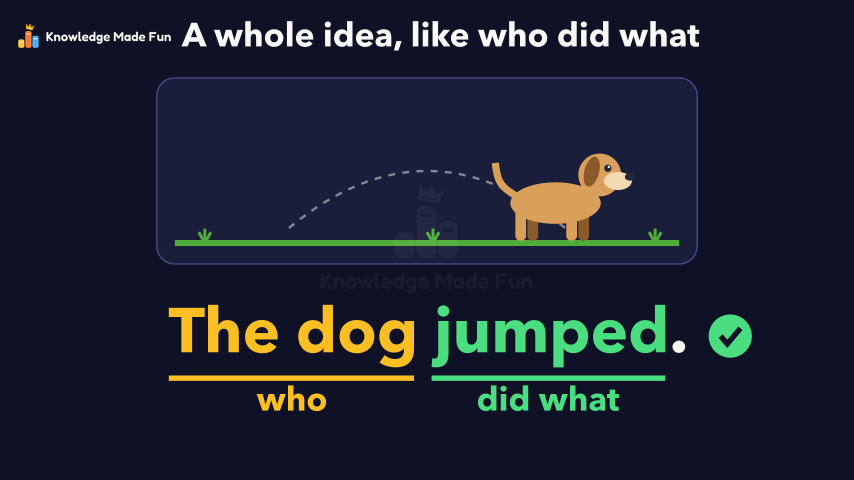
A Sentence Tells a Whole Idea: Who Did What
Grade 1 · 42 s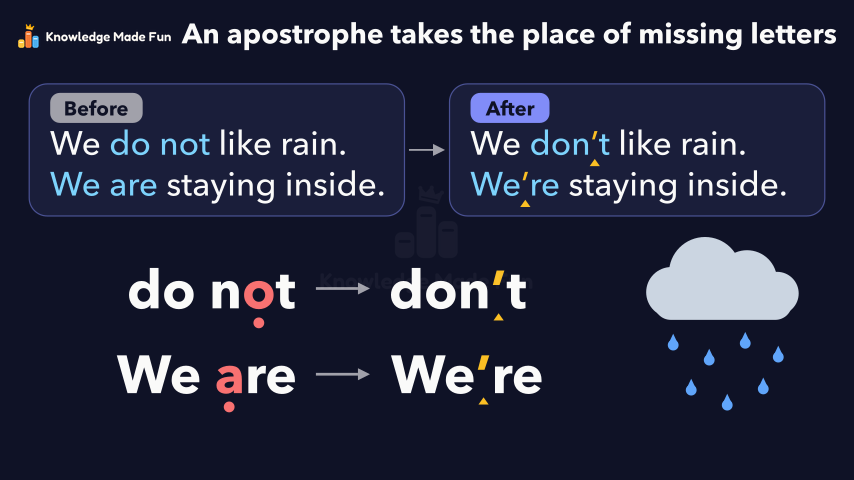 1 min 1 s
Apostrophes in Contractions: Do Not Becomes Don't
Grade 3 · 1 min 1 s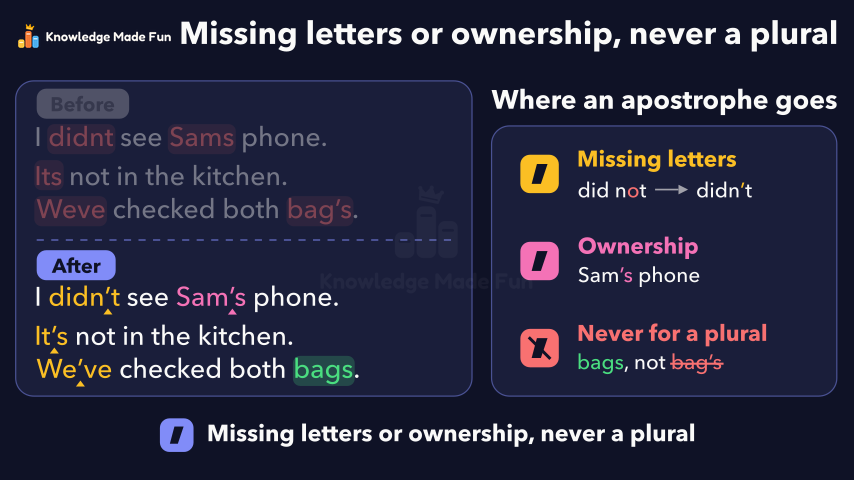 1 min 45 s
Apostrophes: Missing Letters or Ownership, Never a Plural
Grade 4 · 1 min 45 s 54 s
Blending and Splitting Sounds: c, a, t Makes cat
Grade 1 · 54 s 54 s
Blending Sounds: c, a, t Makes cat
Kindergarten · 54 s 1 min 5 s
Canadian and American Spelling: Two Ways, Both Correct
Grade 5 · 1 min 5 s 53 s
Capital Letters and End Marks
Grade 2 · 53 s 1 min 12 s
Capital Letters in Titles and Headings
Grade 5 · 1 min 12 s
- All Grade 4 English Language Arts lessons
- Create a free account to watch three lessons a day, no payment and no card.