Lesson · Grade 5 · English Language Arts
Canadian and American Spelling: Two Ways, Both Correct
- Grade 5
- English Language Arts
- 1 min 5 s
- British Columbia
- BC5-EN-28
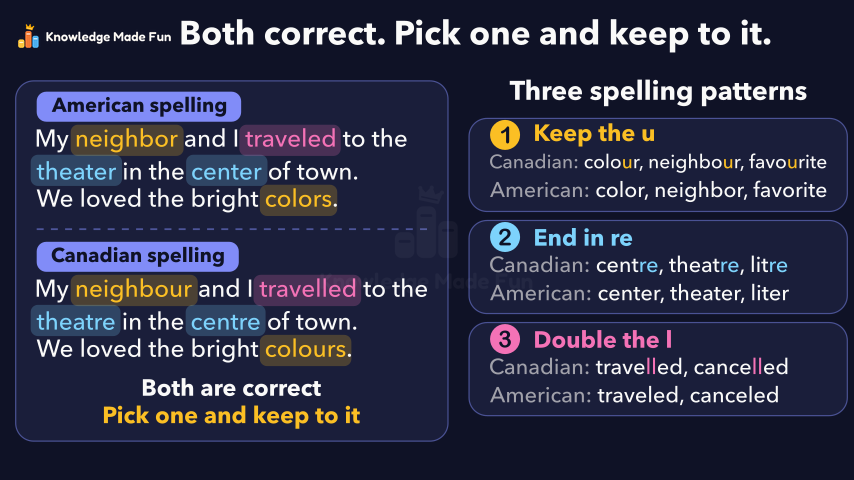
One short note appears twice on a card, first in American spelling and then in Canadian spelling, and the five words that change are underlined and then coloured to show three patterns: keep the u (colour, neighbour), end in re (centre, theatre) and double the l (travelled). Boxes on the right list examples of each pattern in both varieties, and the video ends by saying both spellings are correct, so pick one and keep to it through the whole text.
Concept: Canadian and American spelling
Anyone can watch two lessons on the website without an account. Signing in is free, no payment and no card, and opens three a day; Plus has no limit.
Loading
In one sentence
The question this lesson answers
Colour with a u, or color without: which spelling is right?
Here is a short note, written in American spelling.
Transcript
What the lesson says
Colour with a u, or color without: which spelling is right?
Here is a short note, written in American spelling.
Here is the same note in Canadian spelling.
Only five words changed, and every change follows a pattern.
First, Canadian spelling keeps the u in words like colour, neighbour and favourite.
Second, Canadian spelling puts the r before the e in words like centre and theatre.
Third, Canadian spelling doubles the l in words like travelled and cancelled.
Neither spelling is wrong, because each one is the standard in its own country.
The real rule is to pick one variety and keep to it through the whole text.
Use the variety your reader expects, and set your spell checker to match.
Canadian and American spelling are both correct, so pick one and keep to it.
Curriculum
Where this fits
- British Columbia, Grade 5
English Language Arts, Language features, structures, and conventions: conventionsBC5-EN-28
- British Columbia, Grade 6
English Language Arts, Language features, structures, and conventions: language varietiesBC6-EN-21
Previous: Formal and Informal LanguageNext: Compound Sentences: Joining Two Ideas with a Comma and a Joining Word
- British Columbia, Grade 7
English Language Arts, Language features, structures, and conventions: language varietiesBC7-EN-24
Previous: Formal and Informal LanguageNext: Simple Sentences: One Subject, One Verb, One Complete Thought
This lesson is also listed in Grade 6 and Grade 7.
The outcomes and strands follow the British Columbia curriculum.
Keep going
 42 s
A Sentence Tells a Whole Idea: Who Did What
Grade 1 · 42 s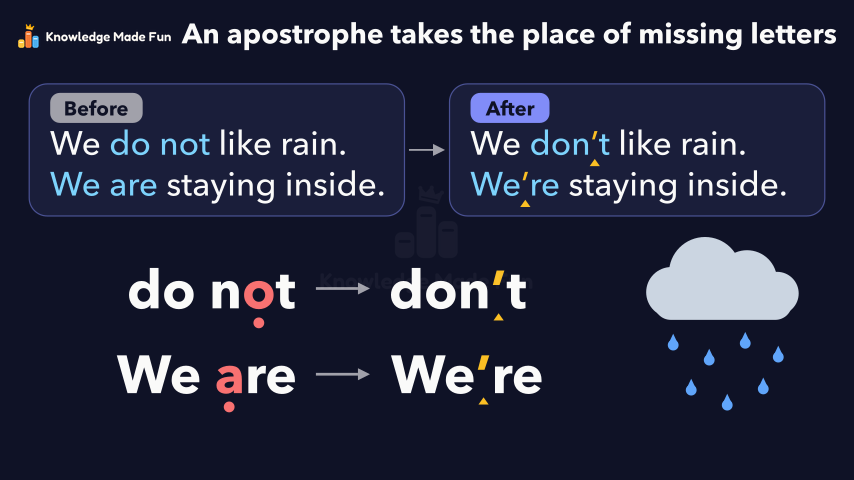 1 min 1 s
Apostrophes in Contractions: Do Not Becomes Don't
Grade 3 · 1 min 1 s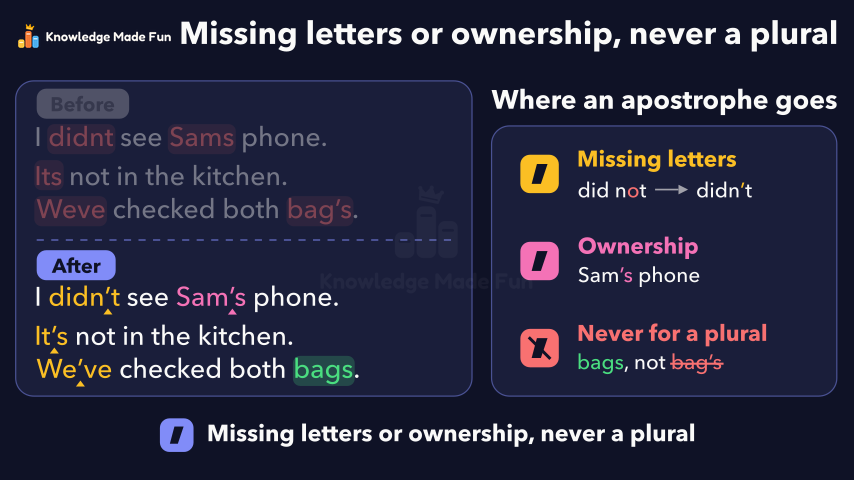 1 min 45 s
Apostrophes: Missing Letters or Ownership, Never a Plural
Grade 4 · 1 min 45 s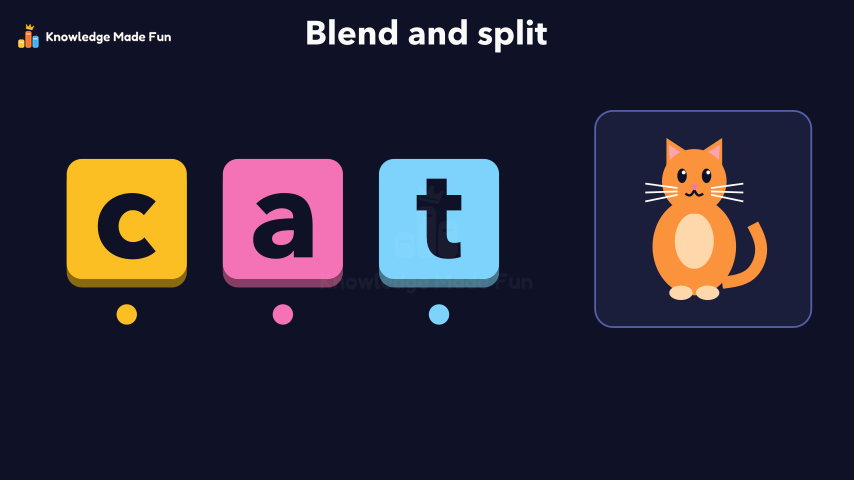 54 s
Blending and Splitting Sounds: c, a, t Makes cat
Grade 1 · 54 s 54 s
Blending Sounds: c, a, t Makes cat
Kindergarten · 54 s 53 s
Capital Letters and End Marks
Grade 2 · 53 s 1 min 12 s
Capital Letters in Titles and Headings
Grade 5 · 1 min 12 s 1 min 26 s
Capital Letters: Sentences, Names and the Word I
Grade 6 · 1 min 26 s
- All Grade 5 English Language Arts lessons
- Create a free account to watch three lessons a day, no payment and no card.