Lesson · Grade 6 · English Language Arts
Complex Sentences: Joining an Independent Clause to a Dependent Clause
- Grade 6
- English Language Arts
- 1 min 22 s
- British Columbia
- BC6-EN-23
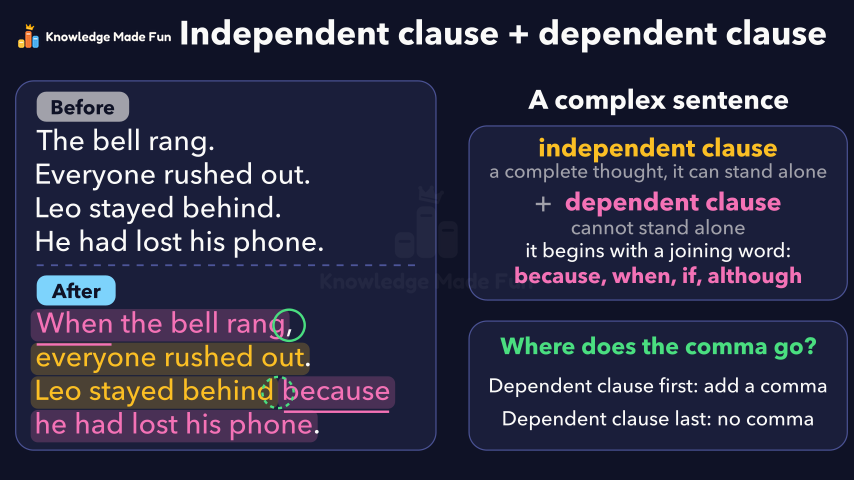
Four choppy sentences about a school bell and a lost phone are rewritten as two complex sentences, and the video lights up the joining words, the dependent clauses that cannot stand alone, and the independent clauses that can. A rule box names the two kinds of clause, and a comma box shows that a dependent clause gets a comma after it when it comes first and none when it comes last.
Concept: Complex sentences
Anyone can watch two lessons on the website without an account. Signing in is free, no payment and no card, and opens three a day; Plus has no limit.
Loading
In one sentence
The question this lesson answers
What is a complex sentence, and why do writers use them?
Here is a short passage from a story about the end of a school day.
Transcript
What the lesson says
What is a complex sentence, and why do writers use them?
Here is a short passage from a story about the end of a school day.
Four short sentences in a row, and nothing shows how the ideas connect.
A complex sentence joins an independent clause to a dependent clause.
The independent clause, also called the main clause, is a complete thought that can stand alone.
The dependent clause begins with a joining word, a subordinating conjunction, and it cannot stand alone.
Let us join the short sentences into two complex sentences.
Each one has a joining word: when in the first, and because in the second.
The dependent clauses leave us waiting for more, so they cannot stand alone.
The independent clauses are complete thoughts, and each one could still stand alone.
When the dependent clause comes first, put a comma after it.
When the dependent clause comes last, you usually do not need a comma.
Now the reader can see how the ideas connect: when things happened, and why.
A complex sentence joins an independent clause to a dependent clause with a joining word.
Curriculum
Where this fits
- British Columbia, Grade 6
English Language Arts, Language features, structures, and conventions: sentence structure and grammarBC6-EN-23
Previous: Compound Sentences: Joining Two Ideas with a Comma and a Joining WordNext: Fixing Run-On Sentences
- British Columbia, Grade 7
English Language Arts, Language features, structures, and conventions: syntax and sentence fluencyBC7-EN-27
Previous: Compound Sentences: Joining Two Ideas with a Comma and a Joining WordNext: Fixing Run-On Sentences
This lesson is also listed in Grade 7.
The outcomes and strands follow the British Columbia curriculum.
Keep going
 42 s
A Sentence Tells a Whole Idea: Who Did What
Grade 1 · 42 s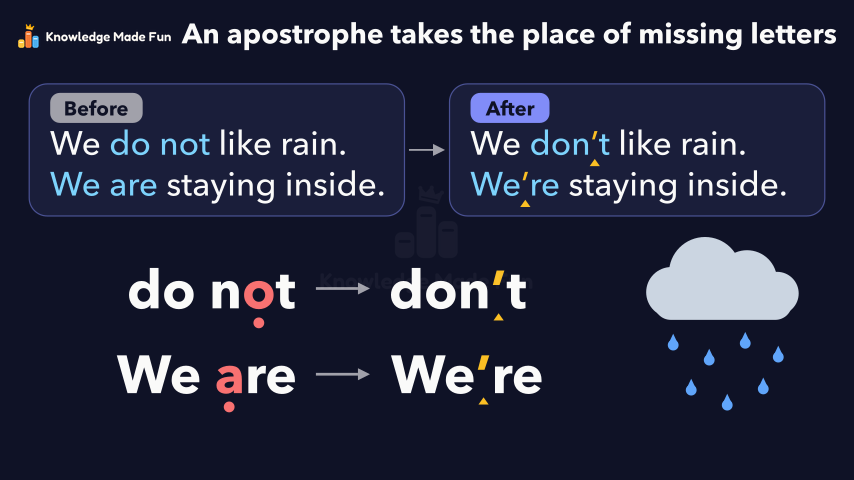 1 min 1 s
Apostrophes in Contractions: Do Not Becomes Don't
Grade 3 · 1 min 1 s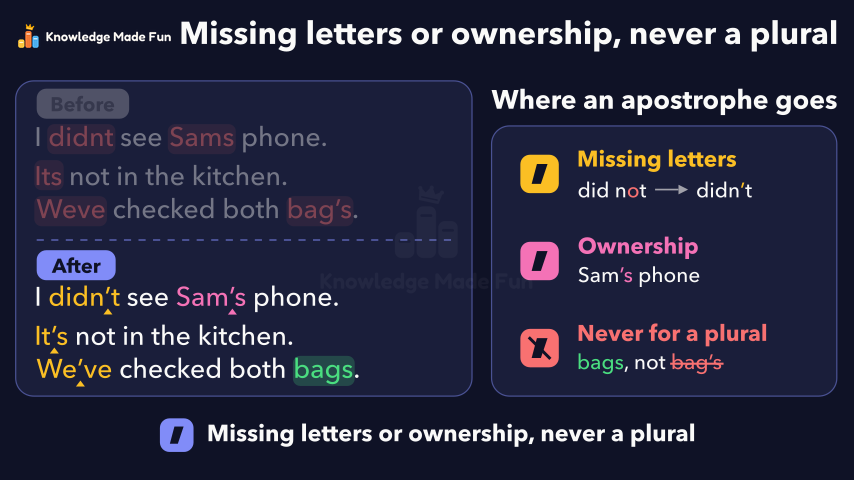 1 min 45 s
Apostrophes: Missing Letters or Ownership, Never a Plural
Grade 4 · 1 min 45 s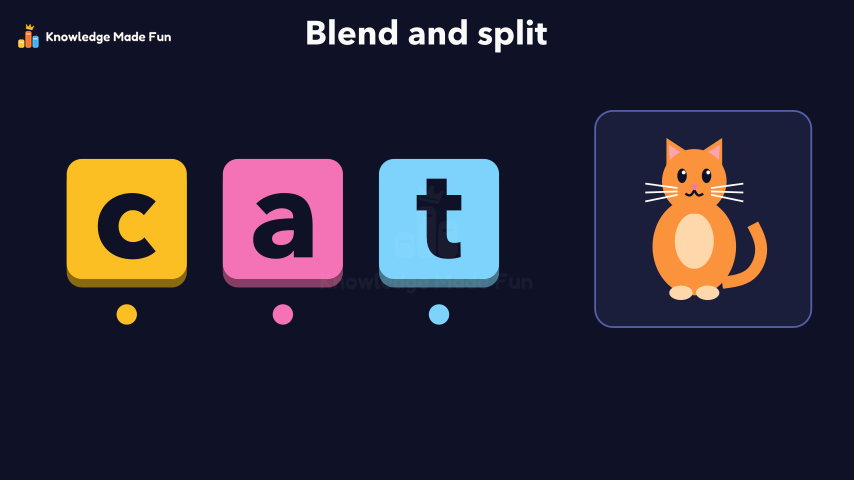 54 s
Blending and Splitting Sounds: c, a, t Makes cat
Grade 1 · 54 s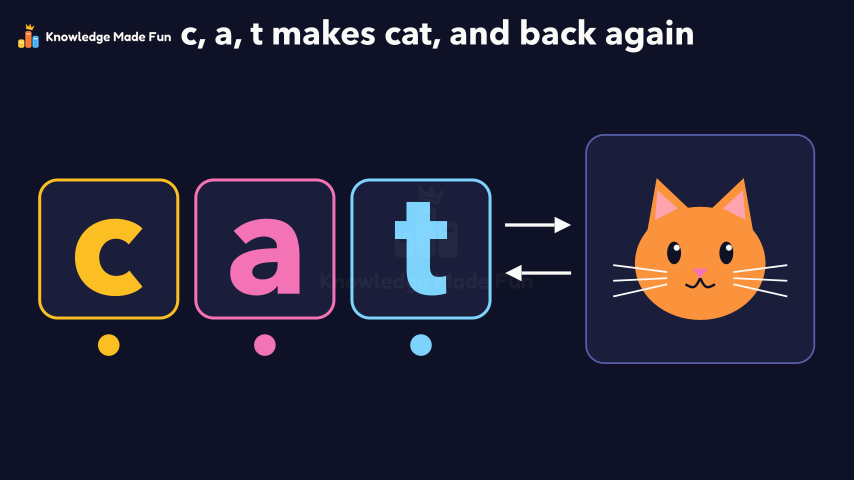 54 s
Blending Sounds: c, a, t Makes cat
Kindergarten · 54 s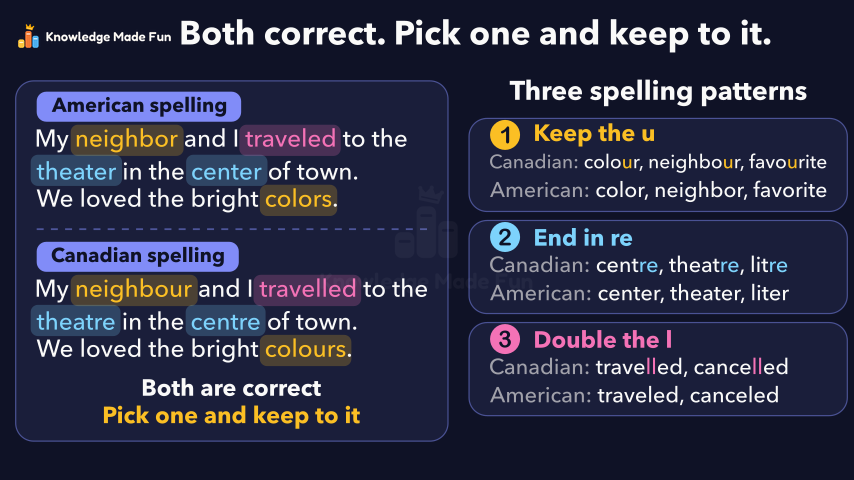 1 min 5 s
Canadian and American Spelling: Two Ways, Both Correct
Grade 5 · 1 min 5 s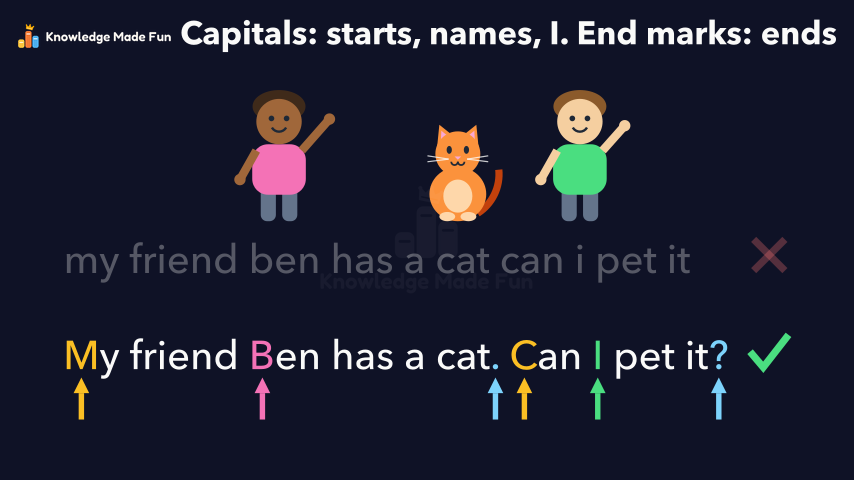 53 s
Capital Letters and End Marks
Grade 2 · 53 s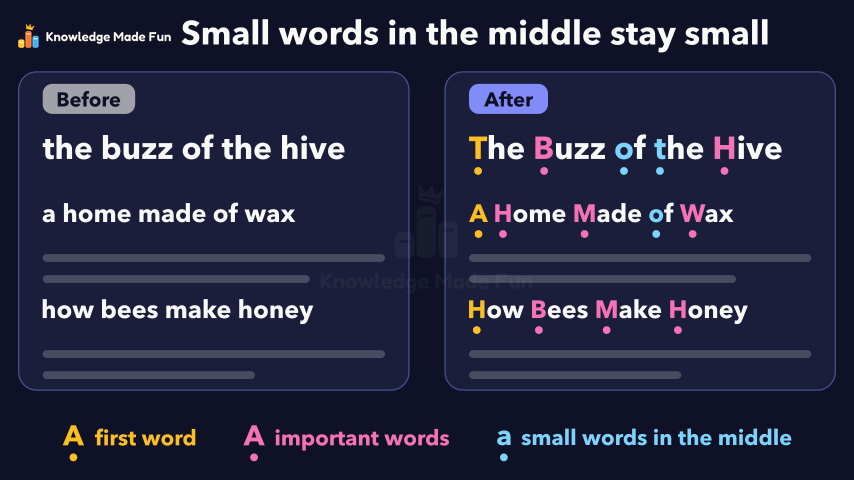 1 min 12 s
Capital Letters in Titles and Headings
Grade 5 · 1 min 12 s
- All Grade 6 English Language Arts lessons
- Create a free account to watch three lessons a day, no payment and no card.