Lesson · Grade 3 · English Language Arts
Why a Text Was Written: Finding Its Function
- Grade 3
- English Language Arts
- 1 min 17 s
- British Columbia
- BC3-EN-03
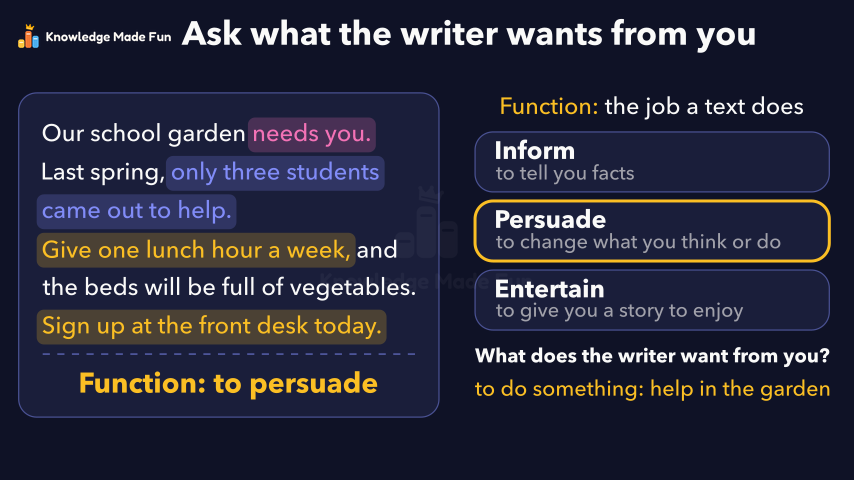
A short school garden notice is shown plain, then its clues are highlighted one by one: it speaks straight to the reader, it gives a fact as a reason, and it asks the reader to act. Beside it the three common functions of a text (to inform, to persuade, to entertain) are named, and the video shows that asking what the writer wants from you reveals this text's function is to persuade, ending on that one-line recap.
Concept: Why a text was written
Anyone can watch two lessons on the website without an account. Signing in is free, no payment and no card, and opens three a day; Plus has no limit.
Loading
In one sentence
The question this lesson answers
Why was this short text written?
Every text is written to do a job, and that job is called its function.
Transcript
What the lesson says
Why was this short text written?
Every text is written to do a job, and that job is called its function.
There are three common jobs: to inform, to persuade and to entertain.
A text that informs tells you facts, like a news report.
A text that persuades tries to change what you think or do, like an advertisement.
A text that entertains gives you a story or a joke to enjoy.
To find the job, ask what the writer wants from you.
Look for clues: this text speaks straight to you.
It gives a fact as a reason: only three students came out to help.
And it asks you to act: give one lunch hour, and sign up today.
So the writer wants you to do something: help in the garden.
That is the job of this text, so its function is to persuade.
The fact is only there to back up the ask, so the text still persuades rather than informs.
To find why a text was written, ask what the writer wants from you.
Curriculum
Where this fits
- British Columbia, Grade 3
English Language Arts, Story/text: functions and genres of stories and other textsBC3-EN-03
Previous: Theme: The Lesson a Story TeachesNext: Fiction and Non-fiction: Made Up or True?
- British Columbia, Grade 5
English Language Arts, Story/text: forms, functions, and genres of textBC5-EN-02
Previous: Narrative, Report or Exposition: The Purpose Picks the FormNext: Genres: What Kind of Story Is This?
- British Columbia, Grade 6
English Language Arts, Story/text: forms, functions, and genres of textBC6-EN-02
Previous: Narrative, Report or Exposition: The Purpose Picks the FormNext: Genres: What Kind of Story Is This?
- British Columbia, Grade 7
English Language Arts, Story/text: functionsBC7-EN-02
Previous: Narrative, Report or Exposition: The Purpose Picks the FormNext: Genres: What Kind of Story Is This?
This lesson is also listed in Grade 5, Grade 6 and Grade 7.
The outcomes and strands follow the British Columbia curriculum.
Keep going
 51 s
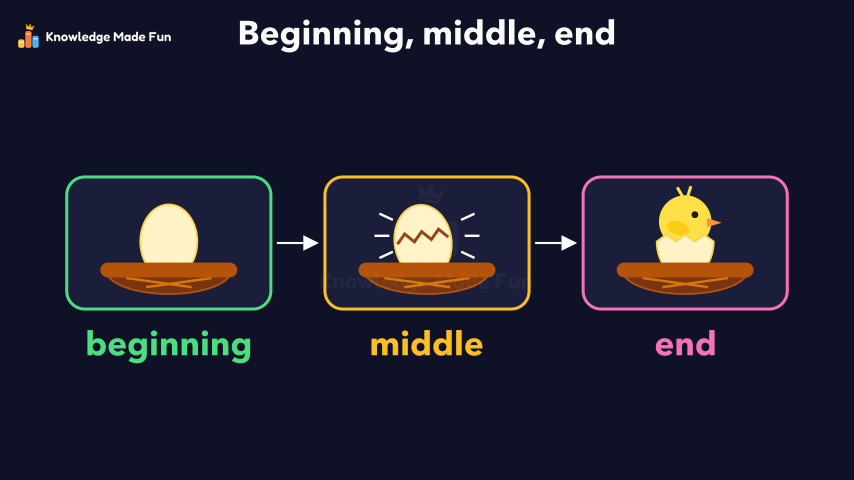
A Story Has a Beginning, a Middle and an End
Kindergarten · 51 s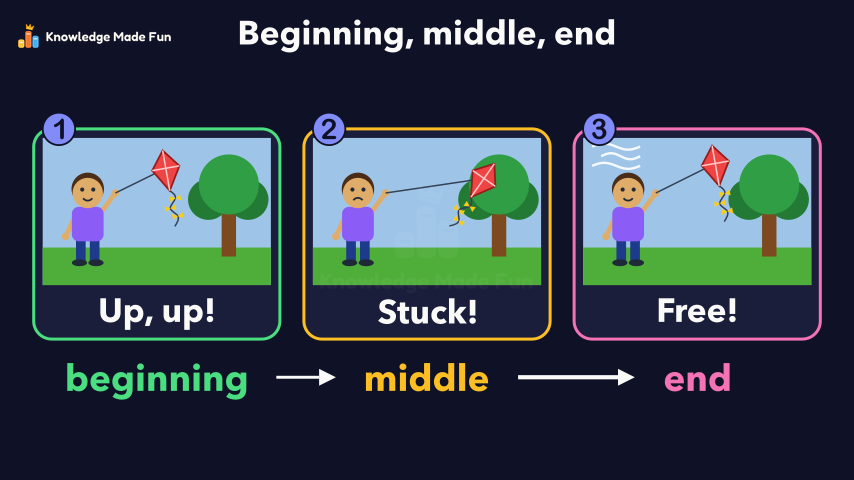 54 s
Beginning, Middle and End: Sam's Kite
Grade 2 · 54 s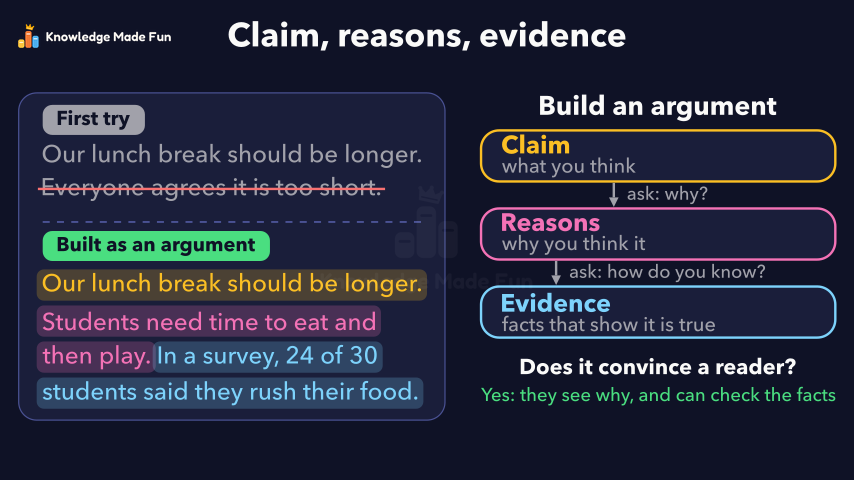 1 min 13 s
Building an Argument: Claim, Reasons, Evidence
Grade 7 · 1 min 13 s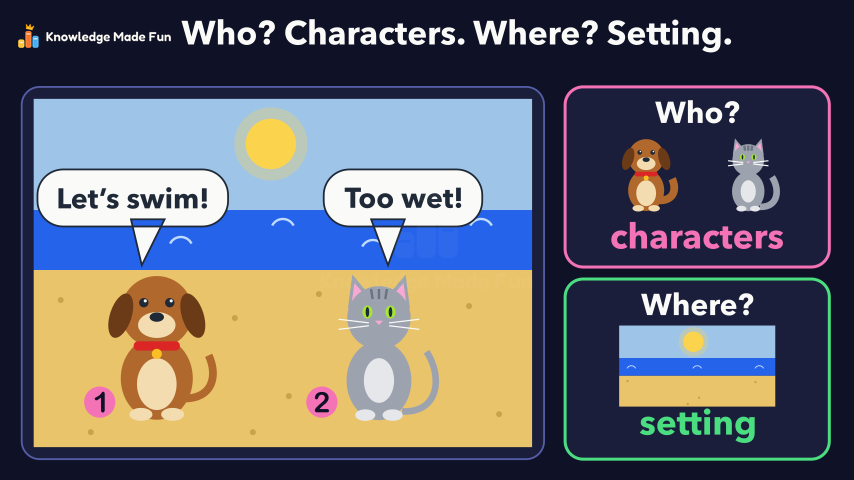 55 s
Characters and Setting: Who and Where
Grade 2 · 55 s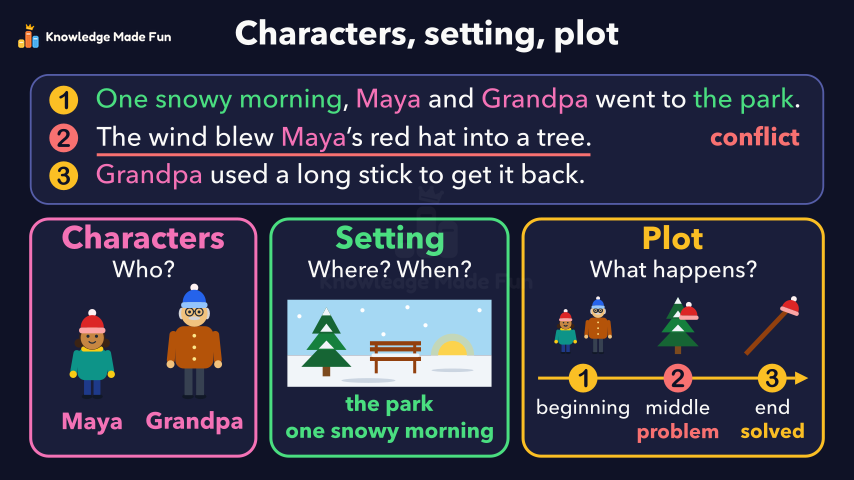 1 min 4 s
Characters, Setting and Plot: The Parts of a Story
Grade 3 · 1 min 4 s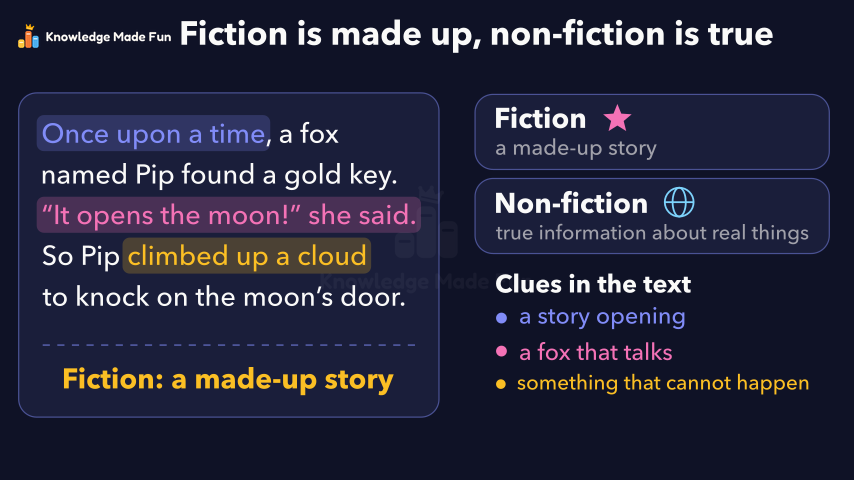 55 s
Fiction and Non-fiction: Made Up or True?
Grade 3 · 55 s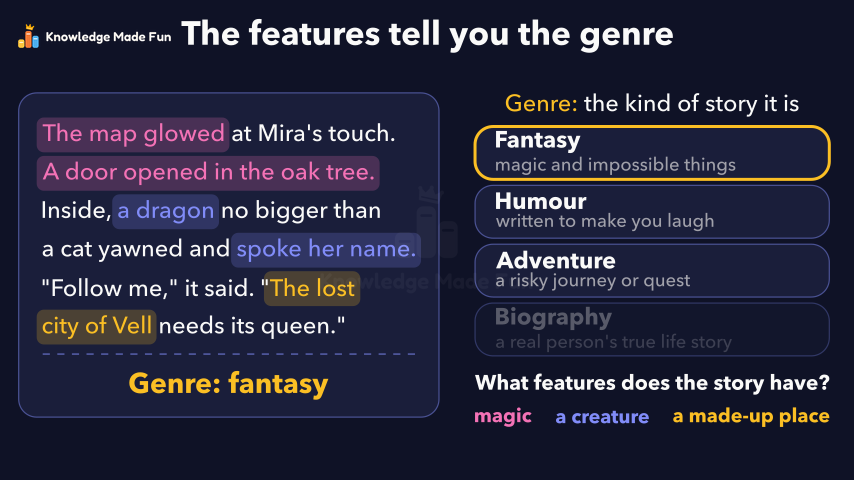 1 min 26 s
Genres: What Kind of Story Is This?
Grade 4 · 1 min 26 s 1 min
How Writers Show a Character
Grade 5 · 1 min
- All Grade 3 English Language Arts lessons
- Create a free account to watch three lessons a day, no payment and no card.