Lesson · Grade 4 · English Language Arts
Quotation Marks and Dialogue
- Grade 4
- English Language Arts
- 1 min 32 s
- British Columbia
- BC4-EN-23
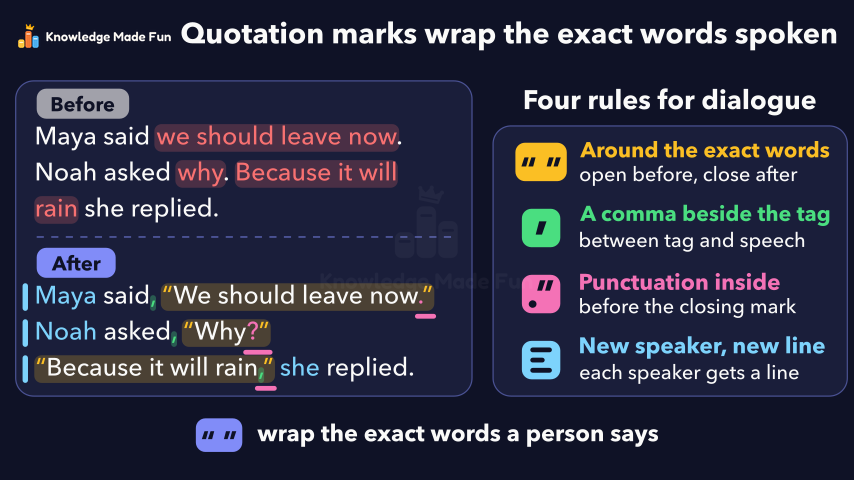
A short passage about two friends deciding to leave before the rain is shown first with no quotation marks, so nothing tells the reader where the spoken words start and stop, and then again as three lines of dialogue. Four colour-coded rules build up in a box on the right and light up on the dialogue where each applies: marks around the exact words spoken, a comma beside the speech tag, punctuation inside the closing mark, and a new line for each new speaker, ending on the recap that quotation marks wrap the exact words a person says.
Anyone can watch two lessons on the website without an account. Signing in is free, no payment and no card, and opens three a day; Plus has no limit.
Loading
In one sentence
The question this lesson answers
What do quotation marks do, and how do we write down what people say?
Here is a short passage about two friends, written with no quotation marks.
Transcript
What the lesson says
What do quotation marks do, and how do we write down what people say?
Here is a short passage about two friends, written with no quotation marks.
Maya and Noah each say something, but nothing shows where their words start and stop.
Quotation marks go around the exact words a person says. Four rules make dialogue clear.
Open the marks right before the first spoken word, and close them right after the last one.
A comma separates the speech tag, such as Maya said, from the words that were spoken, unless the speech comes first and ends with a question mark or an exclamation mark.
The period, question mark or comma at the end of the speech goes inside the closing mark.
Each time a new person speaks, start a new line.
Here is the same passage written as dialogue.
The marks wrap only the words that were spoken, and each speech begins with a capital letter.
A comma follows Maya said and Noah asked. In the last line, the comma comes before she replied.
The period, the question mark and the comma all sit inside the closing marks.
Each time the speaker changes, the dialogue moves to a new line.
Quotation marks wrap the exact words a person says, with the punctuation tucked inside.
Curriculum
Where this fits
- British Columbia, Grade 4
English Language Arts, Language features, structures, and conventions: conventionsBC4-EN-23
Previous: Commas in a ListNext: Apostrophes: Missing Letters or Ownership, Never a Plural
- British Columbia, Grade 5
English Language Arts, Language features, structures, and conventions: conventionsBC5-EN-25
Previous: Commas: a small pause that separates the parts of a sentenceNext: Apostrophes: Missing Letters or Ownership, Never a Plural
- British Columbia, Grade 6
English Language Arts, Language features, structures, and conventions: conventionsBC6-EN-31
Previous: Apostrophes: Missing Letters or Ownership, Never a PluralNext: Capital Letters: Sentences, Names and the Word I
- British Columbia, Grade 7
English Language Arts, Language features, structures, and conventions: conventionsBC7-EN-35
Previous: Apostrophes: Missing Letters or Ownership, Never a PluralNext: Capital Letters: Sentences, Names and the Word I
This lesson is also listed in Grade 5, Grade 6 and Grade 7.
The outcomes and strands follow the British Columbia curriculum.
Keep going
 42 s
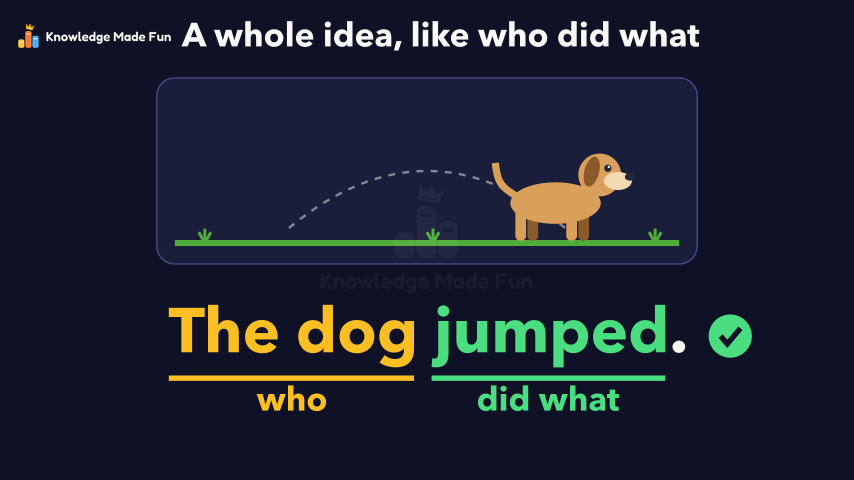
A Sentence Tells a Whole Idea: Who Did What
Grade 1 · 42 s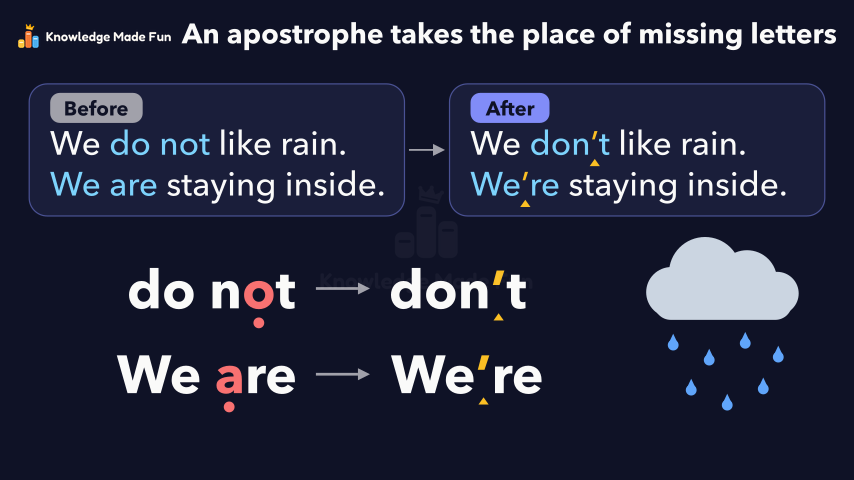 1 min 1 s
Apostrophes in Contractions: Do Not Becomes Don't
Grade 3 · 1 min 1 s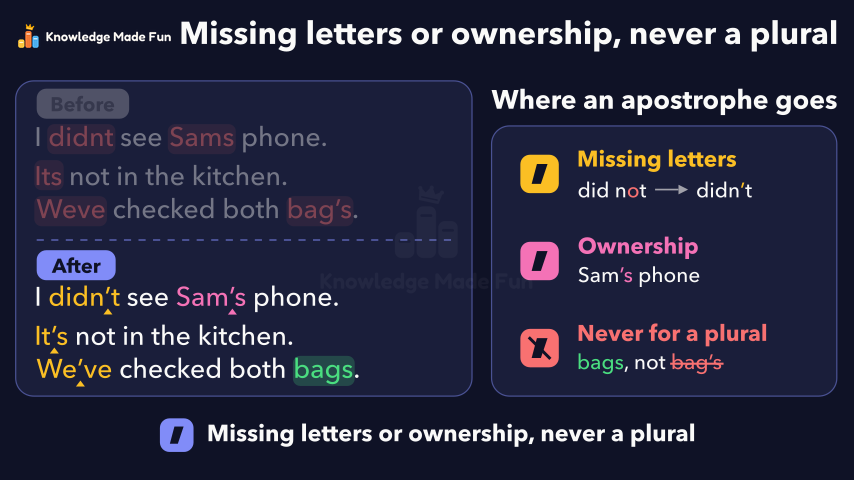 1 min 45 s
Apostrophes: Missing Letters or Ownership, Never a Plural
Grade 4 · 1 min 45 s 54 s
Blending and Splitting Sounds: c, a, t Makes cat
Grade 1 · 54 s 54 s
Blending Sounds: c, a, t Makes cat
Kindergarten · 54 s 1 min 5 s
Canadian and American Spelling: Two Ways, Both Correct
Grade 5 · 1 min 5 s 53 s
Capital Letters and End Marks
Grade 2 · 53 s 1 min 12 s
Capital Letters in Titles and Headings
Grade 5 · 1 min 12 s
- All Grade 4 English Language Arts lessons
- Create a free account to watch three lessons a day, no payment and no card.