Lesson · Grade 10 · Science
Genetic Engineering: Moving a Gene into Another Organism
- Grade 10
- Science
- 1 min 50 s
- British Columbia
- BC10-SC-15
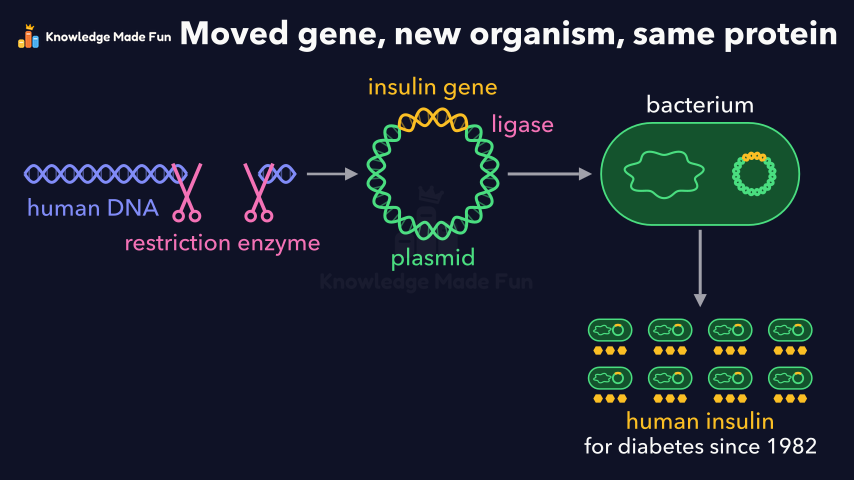
One labelled diagram builds up step by step: a restriction enzyme cuts the human insulin gene out, the same enzyme cuts a bacterial plasmid open, ligase joins the gene in, and the bacteria multiply and make human insulin, which has been used for diabetes since 1982. The video then shows insect-resistant corn and CRISPR, corrects the myth that only GM food contains genes, and sets out the benefits and concerns people weigh without taking a side.
Anyone can watch two lessons on the website without an account. Signing in is free, no payment and no card, and opens three a day; Plus has no limit.
Loading
In one sentence
The question this lesson answers
How can bacteria make human insulin, a medicine for people with diabetes?
A gene is a section of DNA with the instructions for one protein, like insulin.
Transcript
What the lesson says
How can bacteria make human insulin, a medicine for people with diabetes?
A gene is a section of DNA with the instructions for one protein, like insulin.
Genetic engineering moves a gene from one organism into another.
First, a restriction enzyme, which cuts DNA at a particular sequence, cuts the gene out.
Bacteria also carry plasmids, small rings of DNA separate from their main DNA.
The same enzyme cuts a plasmid open, so its ends match the ends of the gene.
The gene fits into the gap, and an enzyme called ligase joins the ends.
The plasmid goes into a bacterium, which divides: one becomes two, then four, then eight.
Each one uses the gene to make human insulin, a medicine for diabetes since 1982.
Corn given a gene from a soil bacterium makes its own insecticide, a protein that kills some insect pests.
A common myth: GM, or genetically modified, food has genes and other food does not.
In fact, any food made of cells has genes. GM food just has a few genes added or changed.
Newer tools such as CRISPR can edit a chosen gene more precisely.
Possible benefits: medicines like insulin, crops that resist pests, and bigger harvests.
People weigh these against concerns: effects on wildlife, long-term safety, and who owns the seeds.
Genetic engineering moves a gene into another organism, which then makes the same protein.
Curriculum
Where this fits
- British Columbia, Grade 10
Science 10, Biology: applied genetics and ethical considerationsBC10-SC-15
Previous: Monoculture and Polyculture: Why Food Crops Need VarietyNext: DNA profiling: matching DNA in forensic science
- British Columbia, Grade 11
Life Sciences 11, Evolution and genetics: artificial selection and genetic modificationsBC11-SC-167
Previous: Artificial selection: people choose the traitsNext: Gene therapy: fixing a faulty gene
- British Columbia, Grade 12
Anatomy and Physiology 12, Genetics: genomics and biotechnologyBC12-SC-21
Previous: DNA: the double helix and its four basesNext: Gene therapy: fixing a faulty gene
This lesson is also listed in Grade 11 and Grade 12.
The outcomes and strands follow the British Columbia curriculum.
Keep going
 1 min 3 s
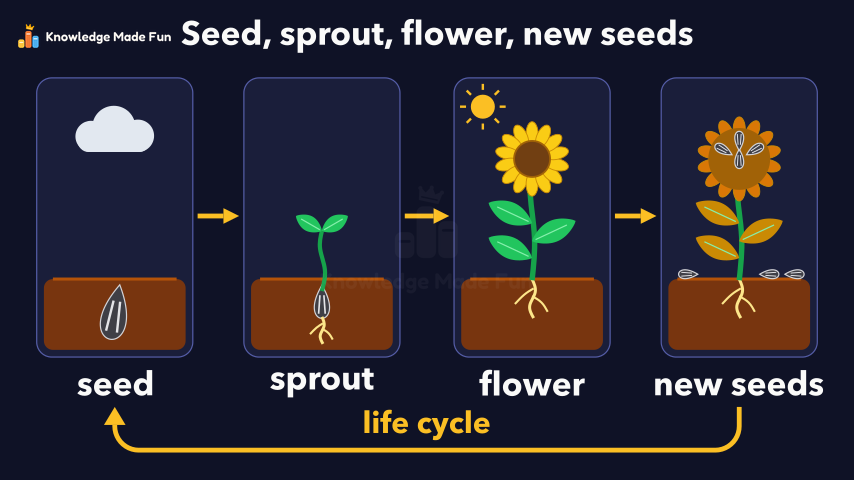
A Sunflower's Life Cycle: Seed, Sprout, Flower, Seed
Kindergarten · 1 min 3 s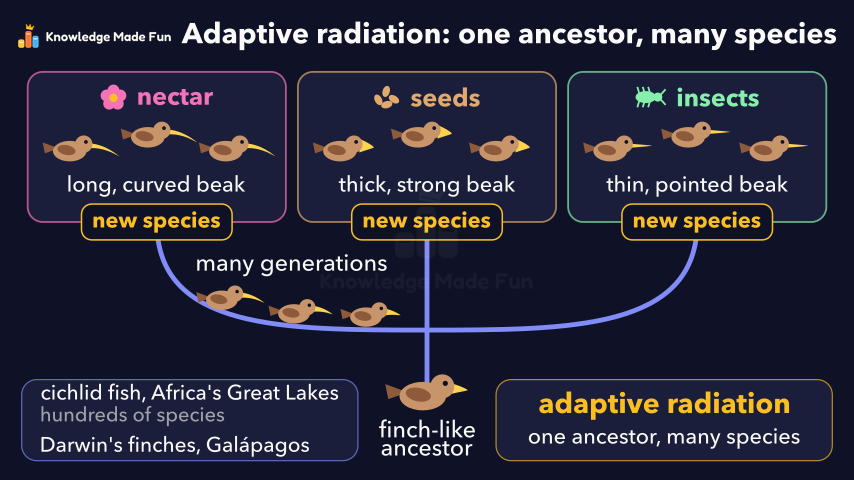 1 min 48 s
Adaptive radiation: one ancestor, many species
Grade 10 · 1 min 48 s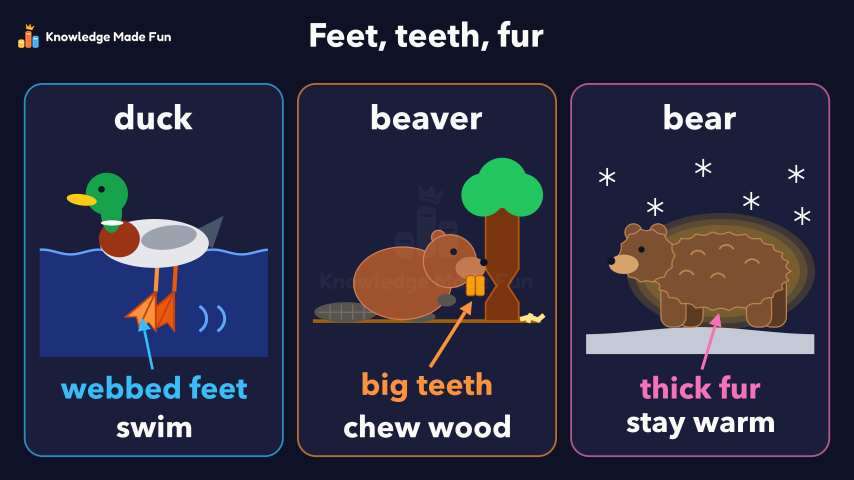 52 s
Animal Bodies That Help Them Live: Feet, Teeth and Fur
Kindergarten · 52 s 1 min 3 s
Animal senses beyond ours: echolocation, ultraviolet light, heat and magnetism
Grade 4 · 1 min 3 s 1 min 44 s
Antibodies and Memory Cells: The Body's Targeted Defence
Grade 8 · 1 min 44 s 1 min 44 s
Artificial selection: people choose the traits
Grade 10 · 1 min 44 s 1 min 4 s
Biodiversity: The Variety of Living Things
Grade 3 · 1 min 4 s 1 min 8 s
Biomes: Sorted by Temperature and Precipitation
Grade 4 · 1 min 8 s
- All Grade 10 Science lessons
- Create a free account to watch three lessons a day, no payment and no card.