Lesson · Grade 10 · Science
Gene therapy: fixing a faulty gene
- Grade 10
- Science
- 1 min 53 s
- British Columbia
- BC10-SC-17
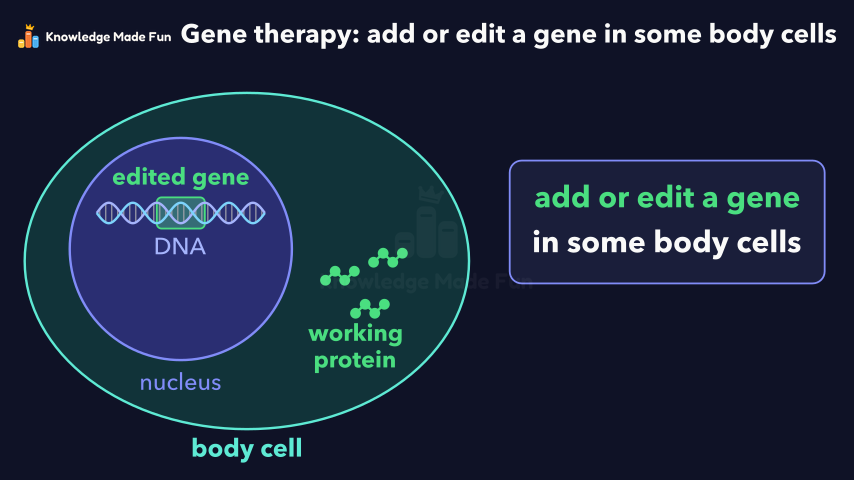
One labelled body cell builds up step by step: its nucleus, DNA and a gene; a mutation stops the working protein being made; then the two main ways to treat this, a harmless virus (a vector) adding a working copy, or an editing tool changing the faulty gene itself. Beside the cell, the video shows the approved treatments from 2017 (a form of inherited blindness) and 2023 (sickle cell disease, with blood stem cells edited in a lab and put back), shows that only treated body cells change and that egg and sperm cells do not, so nothing is passed on to children, then covers cost, risks and the ethical questions before ending on a one-line recap.
Concept: Gene therapy: treating disease by fixing a faulty gene
Anyone can watch two lessons on the website without an account. Signing in is free, no payment and no card, and opens three a day; Plus has no limit.
Loading
In one sentence
The question this lesson answers
Some diseases are caused by one faulty gene. Can we treat them by fixing it?
Inside the nucleus is DNA. A gene is a section of DNA with the instructions for making a protein.
Transcript
What the lesson says
Some diseases are caused by one faulty gene. Can we treat them by fixing it?
Inside the nucleus is DNA. A gene is a section of DNA with the instructions for making a protein.
A change in a gene is a mutation. A faulty gene can stop the cell making a working protein, causing disease.
Gene therapy changes genes in some of the patient's cells, in two main ways.
One way adds a working copy of the gene, often carried by a harmless virus called a vector.
The virus delivers the working copy to the nucleus, so now the cell can make the working protein.
The other way is gene editing: a tool cuts the DNA at the faulty gene and changes it.
In 2017, a gene therapy using a virus was approved for one form of inherited blindness.
In 2023, gene editing was approved for sickle cell disease, an inherited blood disorder.
The patient's own blood stem cells, which make new blood cells, are taken out, edited in a lab and put back.
Gene therapy does not change every cell in the body, only the treated cells and the new cells they make.
These are body cells, not egg or sperm cells, so the change is not passed on to children.
A treatment can cost over a million dollars, and there are risks, such as an immune reaction or an edit in the wrong place.
This raises ethical questions: who should get these treatments, and who should pay?
Gene therapy treats disease by adding or editing a gene in some body cells.
Curriculum
Where this fits
- British Columbia, Grade 10
Science 10, Biology: applied genetics and ethical considerationsBC10-SC-17
Previous: DNA profiling: matching DNA in forensic scienceNext: Stem Cells: Same DNA, Different Genes Switched On
- British Columbia, Grade 11
Life Sciences 11, Evolution and genetics: artificial selection and genetic modificationsBC11-SC-168
Previous: Genetic Engineering: Moving a Gene into Another Organism
- British Columbia, Grade 12
Anatomy and Physiology 12, Genetics: genomics and biotechnologyBC12-SC-23
Previous: Genetic Engineering: Moving a Gene into Another Organism
This lesson is also listed in Grade 11 and Grade 12.
The outcomes and strands follow the British Columbia curriculum.
Keep going
 1 min 3 s
A Sunflower's Life Cycle: Seed, Sprout, Flower, Seed
Kindergarten · 1 min 3 s 1 min 48 s
Adaptive radiation: one ancestor, many species
Grade 10 · 1 min 48 s 52 s
Animal Bodies That Help Them Live: Feet, Teeth and Fur
Kindergarten · 52 s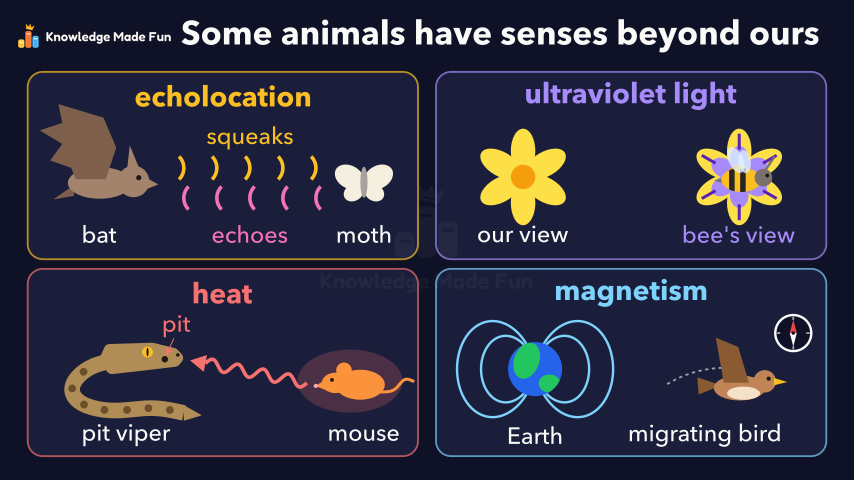 1 min 3 s
Animal senses beyond ours: echolocation, ultraviolet light, heat and magnetism
Grade 4 · 1 min 3 s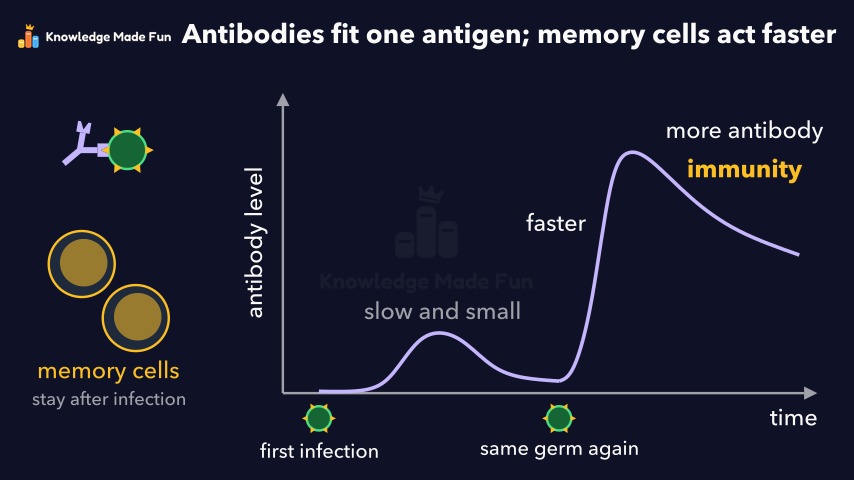 1 min 44 s
Antibodies and Memory Cells: The Body's Targeted Defence
Grade 8 · 1 min 44 s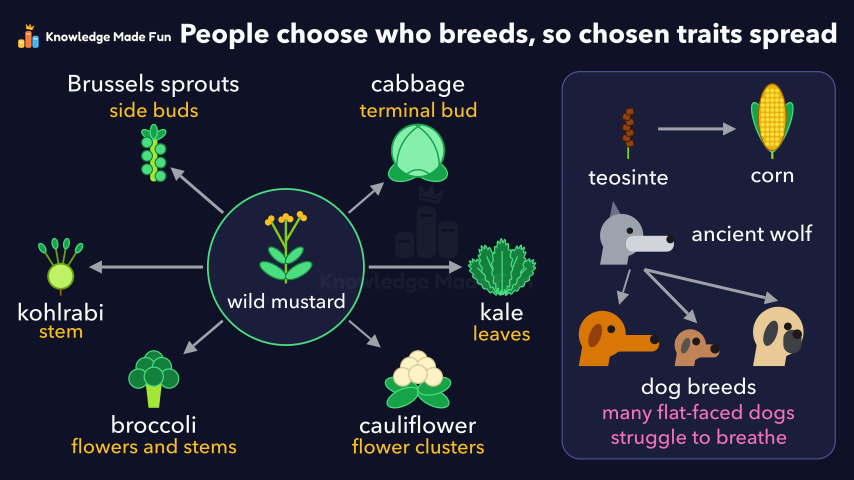 1 min 44 s
Artificial selection: people choose the traits
Grade 10 · 1 min 44 s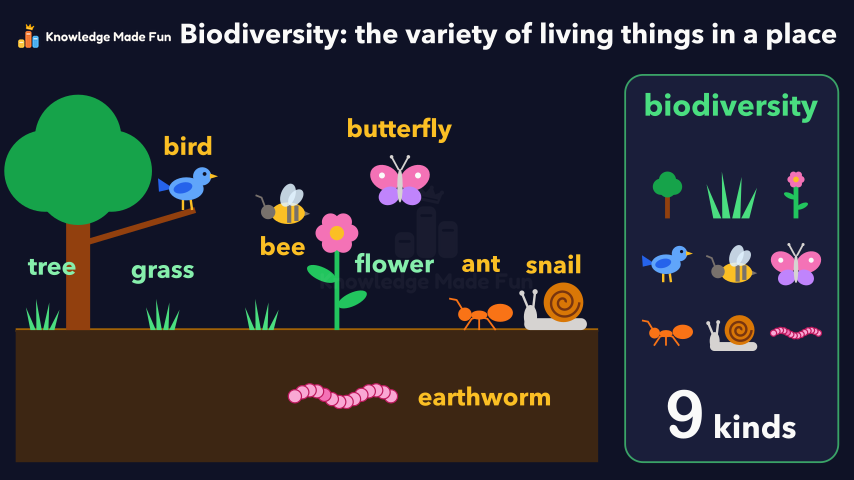 1 min 4 s
Biodiversity: The Variety of Living Things
Grade 3 · 1 min 4 s 1 min 8 s
Biomes: Sorted by Temperature and Precipitation
Grade 4 · 1 min 8 s
- All Grade 10 Science lessons
- Create a free account to watch three lessons a day, no payment and no card.