Lesson · Grade 3 · Science
Biodiversity: The Variety of Living Things
- Grade 3
- Science
- 1 min 4 s
- British Columbia
- BC3-SC-01
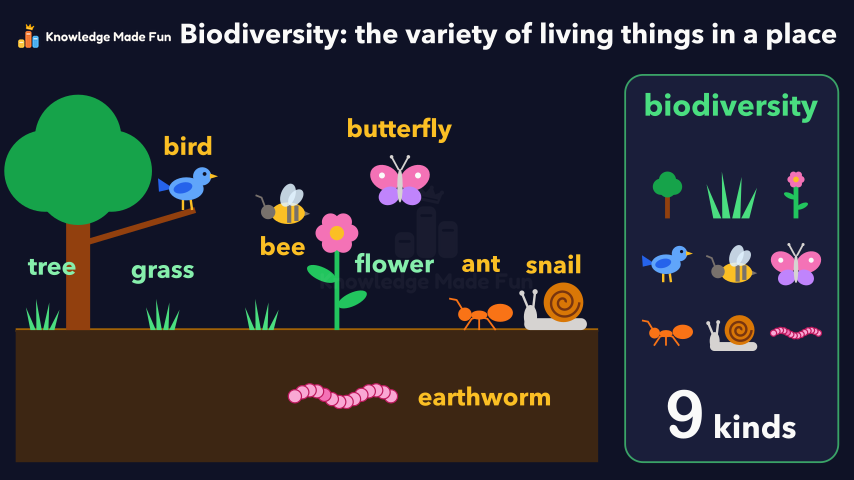
A park fills up one place at a time: a tree, grass and a flower, then a bird in the tree, a bee and a butterfly on the flower, an ant and a snail on the ground, and an earthworm in the soil. Each kind goes into a card that counts nine kinds and names this variety biodiversity ("bio" means life, "diversity" means variety), ending on the recap that biodiversity is the variety of living things in a place.
Anyone can watch two lessons on the website without an account. Signing in is free, no payment and no card, and opens three a day; Plus has no limit.
Loading
In one sentence
The question this lesson answers
How many kinds of living things live near you?
Let's explore a park and find out.
Transcript
What the lesson says
How many kinds of living things live near you?
Let's explore a park and find out.
First, we find plants: a tree, grass and a flower.
In the tree, we find a bird.
On the flower, we find a bee and a butterfly.
On the ground, we find an ant and a snail.
In the soil, we find an earthworm.
We found nine different kinds of living things.
This variety of living things is called biodiversity.
Bio means life, and diversity means variety.
A place with more kinds of living things has more biodiversity.
Look for biodiversity near your home and school.
Biodiversity is the variety of living things in a place.
Curriculum
Where this fits
The outcomes and strands follow the British Columbia curriculum.
Keep going
 1 min 3 s
A Sunflower's Life Cycle: Seed, Sprout, Flower, Seed
Kindergarten · 1 min 3 s 1 min 48 s
Adaptive radiation: one ancestor, many species
Grade 10 · 1 min 48 s 52 s
Animal Bodies That Help Them Live: Feet, Teeth and Fur
Kindergarten · 52 s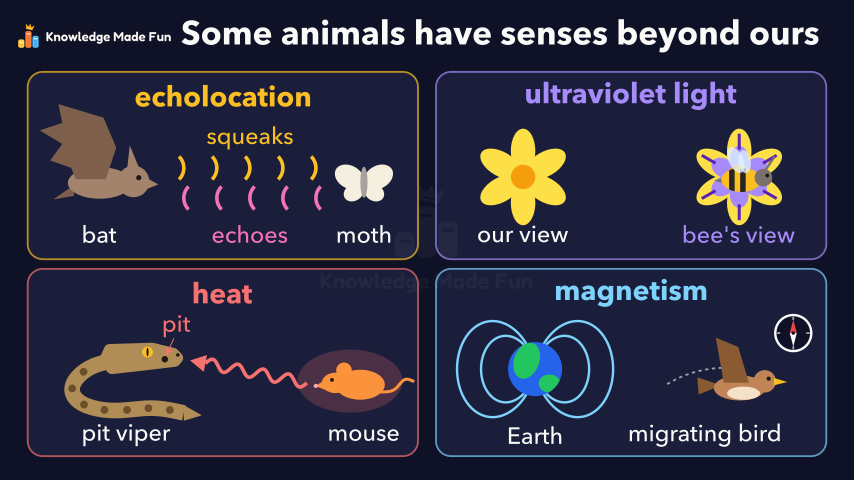 1 min 3 s
Animal senses beyond ours: echolocation, ultraviolet light, heat and magnetism
Grade 4 · 1 min 3 s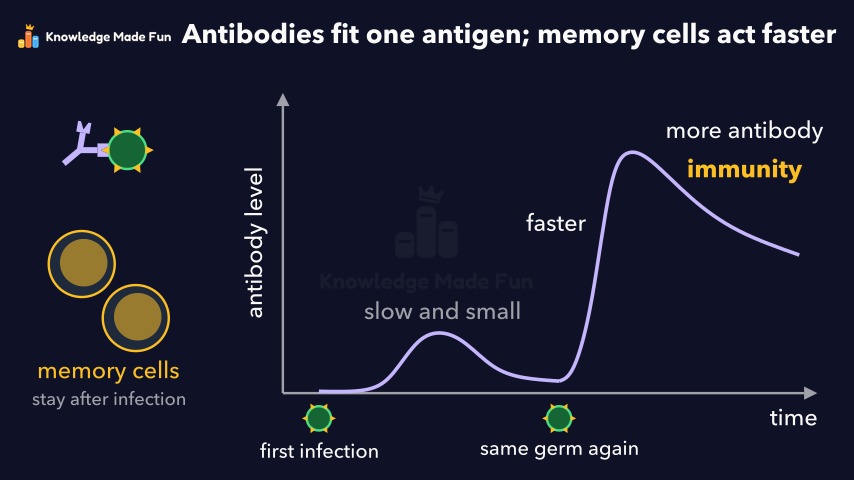 1 min 44 s
Antibodies and Memory Cells: The Body's Targeted Defence
Grade 8 · 1 min 44 s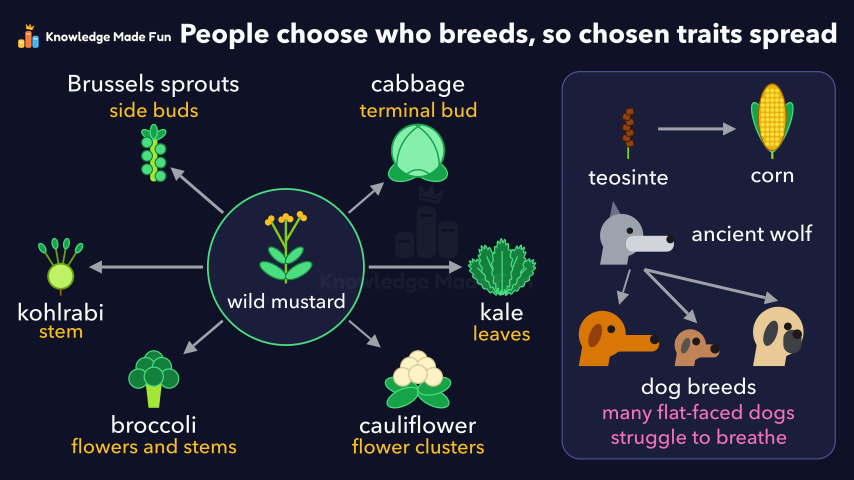 1 min 44 s
Artificial selection: people choose the traits
Grade 10 · 1 min 44 s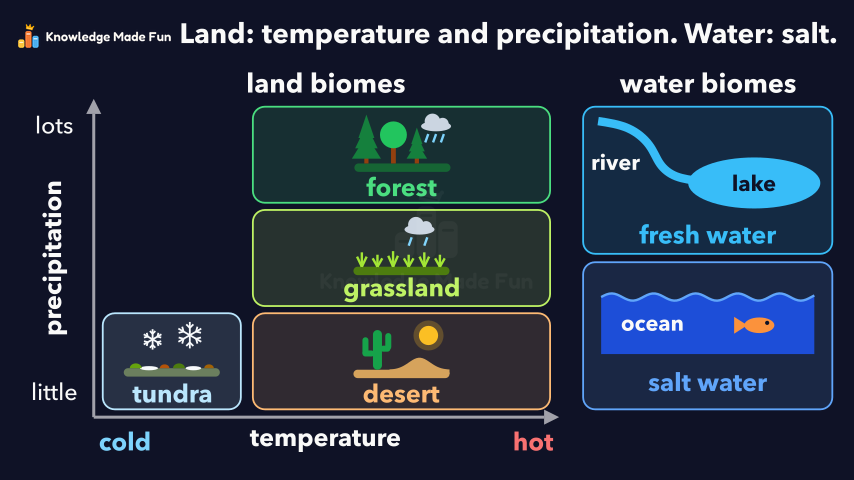 1 min 8 s
Biomes: Sorted by Temperature and Precipitation
Grade 4 · 1 min 8 s 1 min 6 s
Bones and Muscles: How Muscles Pull in Pairs
Grade 5 · 1 min 6 s
- All Grade 3 Science lessons
- Create a free account to watch three lessons a day, no payment and no card.