Lesson · Grade 8 · Science
Antibodies and Memory Cells: The Body's Targeted Defence
- Grade 8
- Science
- 1 min 44 s
- British Columbia
- BC8-SC-13
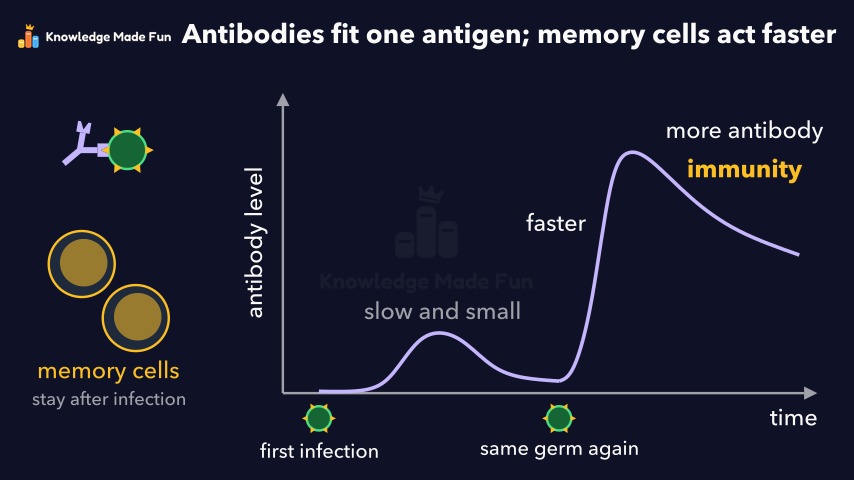
A lymphocyte makes Y-shaped antibodies that fit one germ's antigens like a key in a lock but not the antigens of a different germ, and they clump the germs together so a phagocyte can engulf and digest them. Memory cells stay after the infection, and a graph of antibody level over time shows that a second meeting with the same germ brings a faster, much bigger response, which is immunity.
Anyone can watch two lessons on the website without an account. Signing in is free, no payment and no card, and opens three a day; Plus has no limit.
Loading
In one sentence
The question this lesson answers
When germs get into your body, how does your immune system target them?
Every germ carries molecules called antigens on its surface, and each kind of germ has its own antigen shape.
Transcript
What the lesson says
When germs get into your body, how does your immune system target them?
Every germ carries molecules called antigens on its surface, and each kind of germ has its own antigen shape.
White blood cells called lymphocytes respond by making antibodies.
An antibody is a Y-shaped protein. The tips of its two arms fit one antigen shape.
It fits its antigen like a key in a lock, and sticks to the germ.
But this antibody does not fit a different germ, whose antigens have another shape.
So one antibody does not work against every germ. Each kind of germ needs its own antibody.
With two arms, an antibody can hold two germs at once, so antibodies clump germs together.
Then phagocytes, another kind of white blood cell, engulf the clump and digest the germs.
After the infection, some lymphocytes stay in the body as memory cells.
This graph shows the level of antibodies in the blood over time.
The first time you meet a germ, antibodies take several days to build up, so you may feel ill.
If the same germ comes back, memory cells make the matching antibodies faster, and far more of them.
So the germs are usually destroyed before you feel ill. This is called immunity.
Each antibody fits one antigen like a key in a lock, and memory cells make the response to the same germ faster and bigger.
Curriculum
Where this fits
- British Columbia, Grade 8
Science, Biology: the relationship of micro-organisms with living things: basic functions of the immune systemBC8-SC-13
Previous: The Body's First Defences: Barriers, Inflammation and FeverNext: How Vaccines Train the Immune System
The outcomes and strands follow the British Columbia curriculum.
Keep going
 1 min 3 s
A Sunflower's Life Cycle: Seed, Sprout, Flower, Seed
Kindergarten · 1 min 3 s 1 min 48 s
Adaptive radiation: one ancestor, many species
Grade 10 · 1 min 48 s 52 s
Animal Bodies That Help Them Live: Feet, Teeth and Fur
Kindergarten · 52 s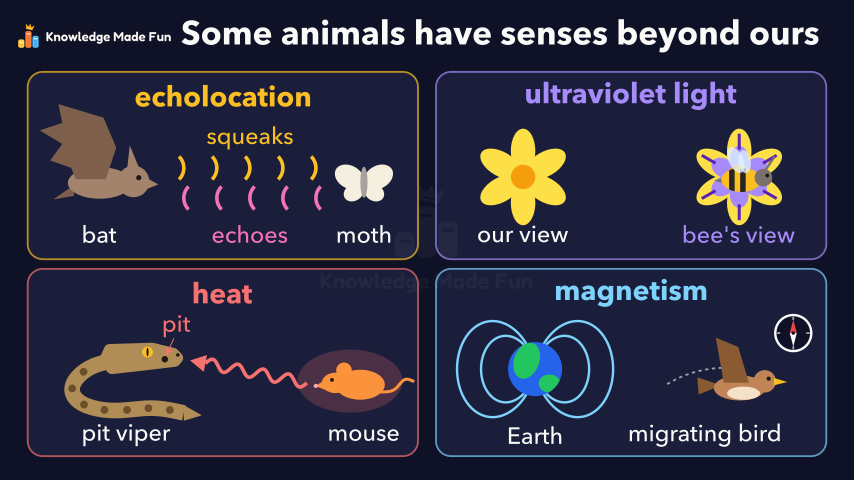 1 min 3 s
Animal senses beyond ours: echolocation, ultraviolet light, heat and magnetism
Grade 4 · 1 min 3 s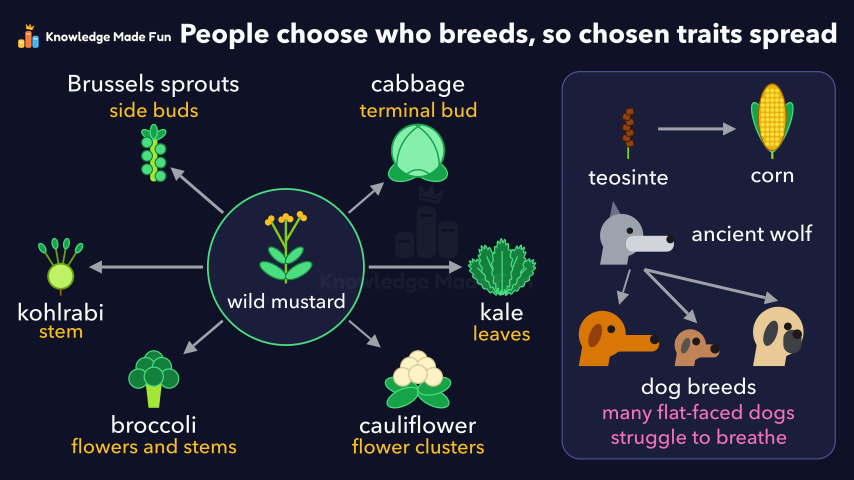 1 min 44 s
Artificial selection: people choose the traits
Grade 10 · 1 min 44 s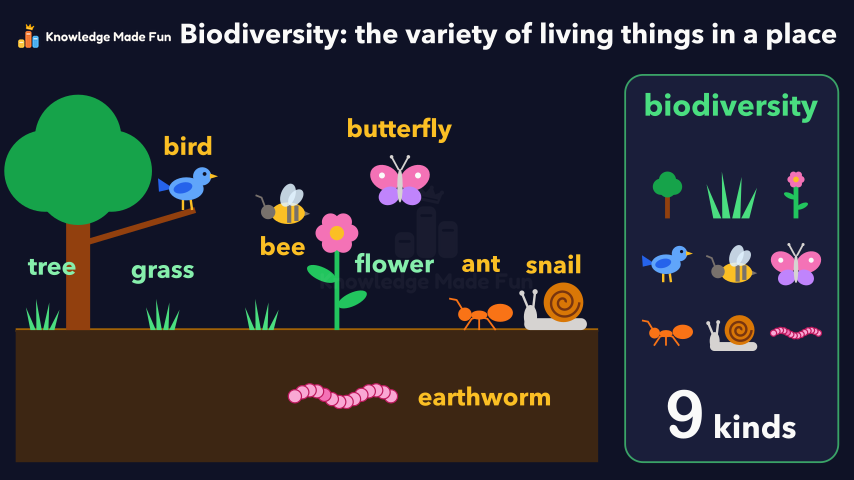 1 min 4 s
Biodiversity: The Variety of Living Things
Grade 3 · 1 min 4 s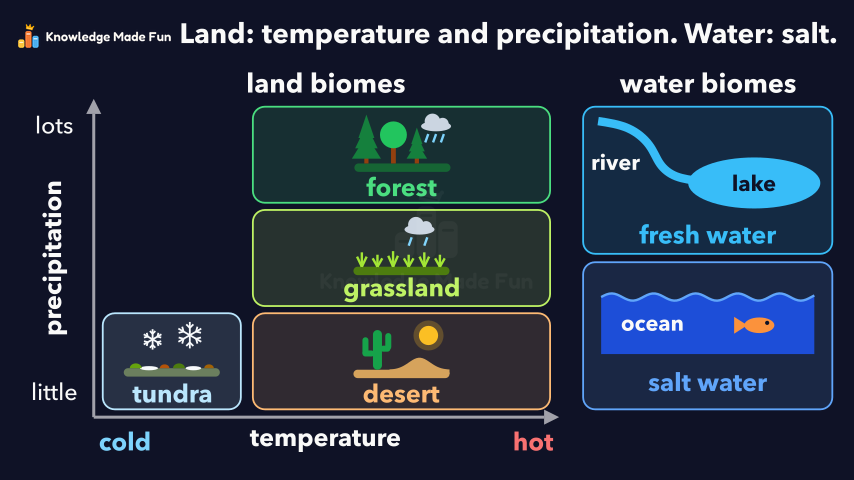 1 min 8 s
Biomes: Sorted by Temperature and Precipitation
Grade 4 · 1 min 8 s 1 min 6 s
Bones and Muscles: How Muscles Pull in Pairs
Grade 5 · 1 min 6 s
- All Grade 8 Science lessons
- Create a free account to watch three lessons a day, no payment and no card.