Lesson · Grade 8 · Science
The Body's First Defences: Barriers, Inflammation and Fever
- Grade 8
- Science
- 1 min 44 s
- British Columbia
- BC8-SC-12
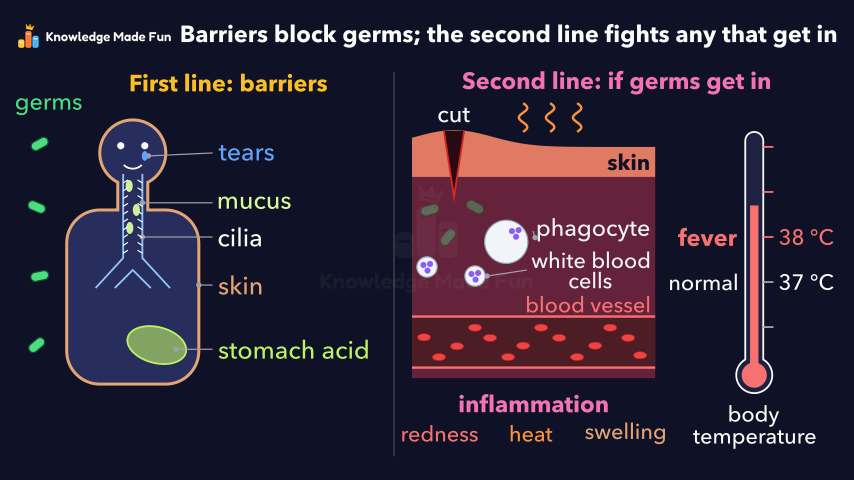
A labelled diagram builds up from the outside in. First a person with the first line of defence: unbroken skin, mucus and cilia in the airways, stomach acid and tears. Then a close-up of a cut, where inflammation widens a blood vessel and brings white blood cells, causing redness, heat and swelling, and a phagocyte engulfs and digests a germ. A thermometer rising from a normal 37 °C to a fever of 38 °C or more shows that a fever is not the illness but part of the body's defence, and the video ends by naming all of these as non-specific defences that work against any germ.
Anyone can watch two lessons on the website without an account. Signing in is free, no payment and no card, and opens three a day; Plus has no limit.
Loading
In one sentence
The question this lesson answers
How does your body stop germs from making you sick?
Germs are micro-organisms that can cause disease.
Transcript
What the lesson says
How does your body stop germs from making you sick?
Germs are micro-organisms that can cause disease.
The first line of defence is a set of barriers that keep germs out.
Unbroken skin is a tough layer that most germs cannot get through.
Sticky mucus in your airways traps germs, and tiny hairs called cilia sweep it out.
Stomach acid kills most germs in the food and drink you swallow.
Tears wash germs out of your eyes and contain a chemical that kills some bacteria.
But a cut lets germs get inside, and the second line of defence takes over.
First comes inflammation: blood vessels near the cut widen, so more blood flows there.
The extra blood brings white blood cells to fight the germs.
Inflammation causes redness, heat and swelling around the cut.
Phagocytes are white blood cells that engulf germs: they surround them, take them in and digest them.
Normal body temperature is about 37 degrees Celsius.
When you have an infection, your body can raise its temperature to 38 degrees or more: a fever.
A fever is not the illness itself. It is part of the body's defence.
The higher temperature slows down many germs and helps white blood cells work.
Barriers, inflammation, phagocytes and fever work against any germ, so they are called non-specific defences.
Barriers block germs, and the second line of defence fights any that get in.
Curriculum
Where this fits
- British Columbia, Grade 8
Science, Biology: the relationship of micro-organisms with living things: basic functions of the immune systemBC8-SC-12
Previous: Helpful and Harmful MicrobesNext: Antibodies and Memory Cells: The Body's Targeted Defence
The outcomes and strands follow the British Columbia curriculum.
Keep going
 1 min 3 s
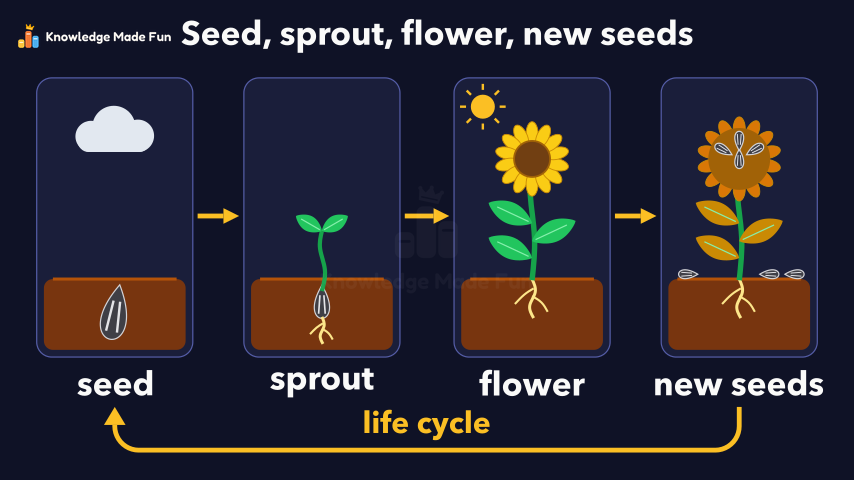
A Sunflower's Life Cycle: Seed, Sprout, Flower, Seed
Kindergarten · 1 min 3 s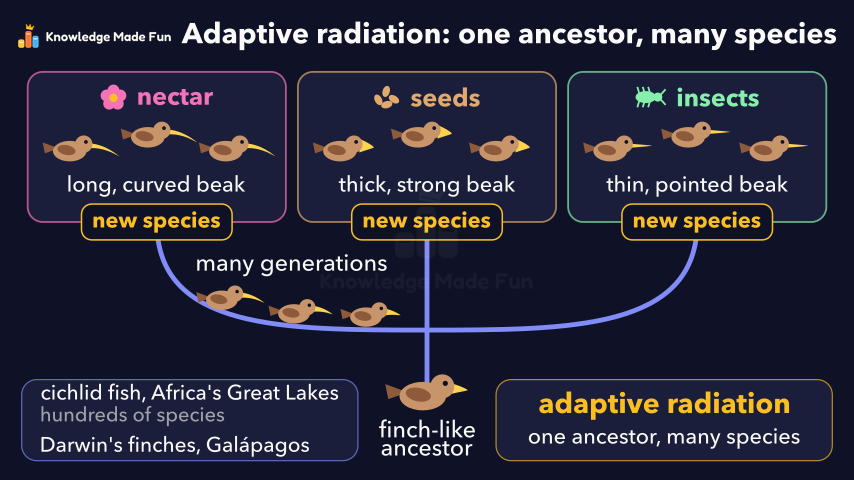 1 min 48 s
Adaptive radiation: one ancestor, many species
Grade 10 · 1 min 48 s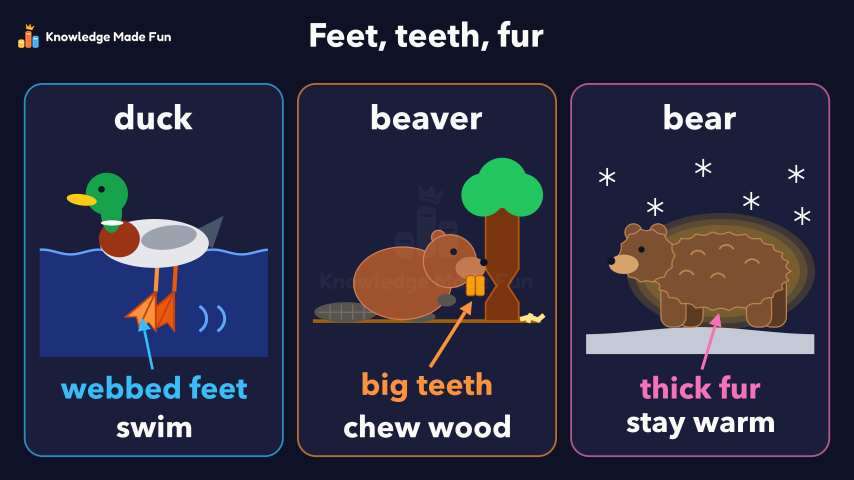 52 s
Animal Bodies That Help Them Live: Feet, Teeth and Fur
Kindergarten · 52 s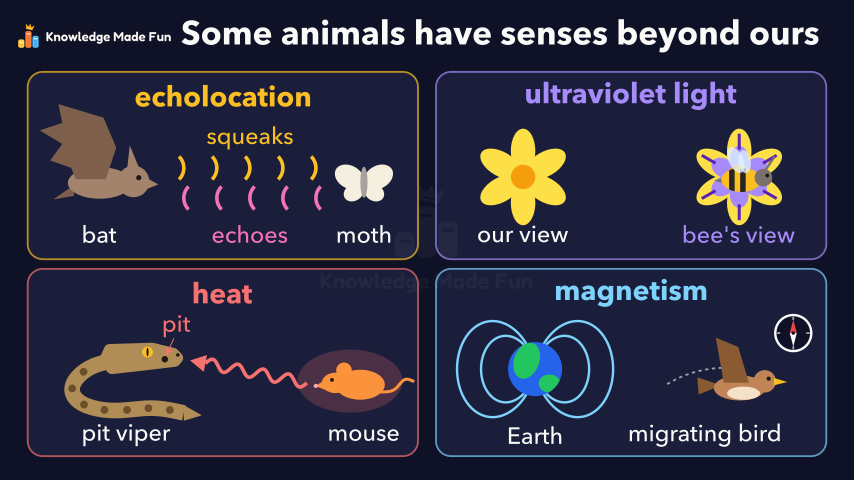 1 min 3 s
Animal senses beyond ours: echolocation, ultraviolet light, heat and magnetism
Grade 4 · 1 min 3 s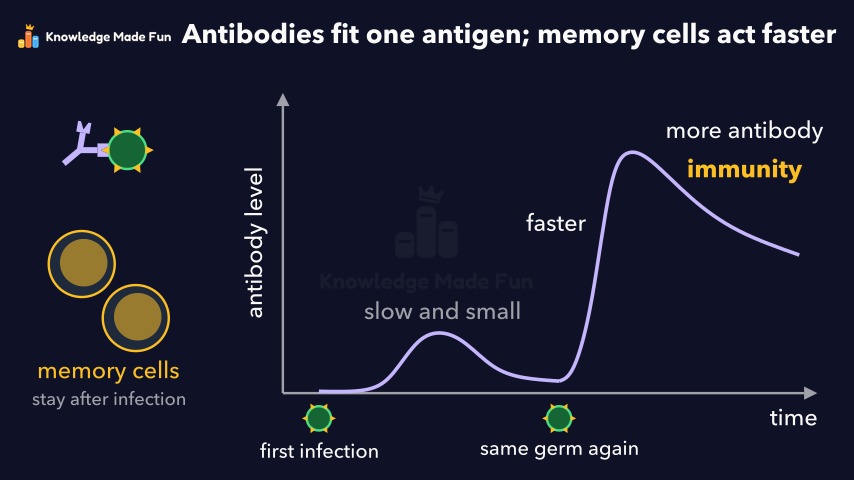 1 min 44 s
Antibodies and Memory Cells: The Body's Targeted Defence
Grade 8 · 1 min 44 s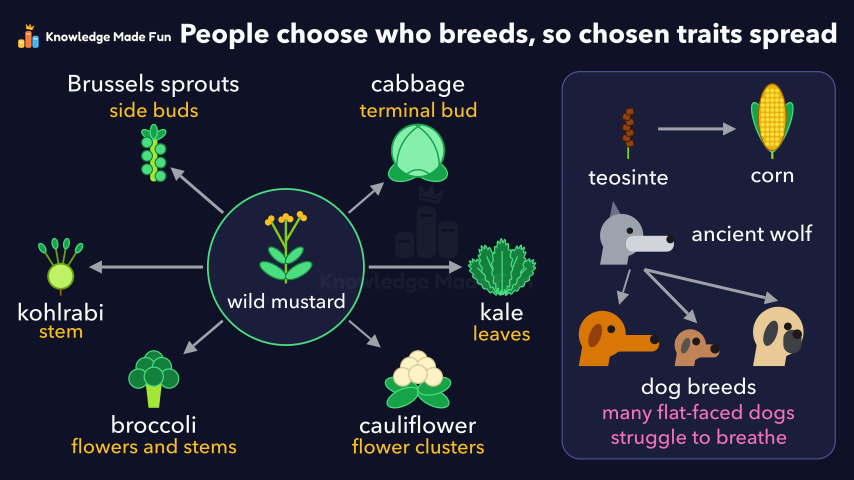 1 min 44 s
Artificial selection: people choose the traits
Grade 10 · 1 min 44 s 1 min 4 s
Biodiversity: The Variety of Living Things
Grade 3 · 1 min 4 s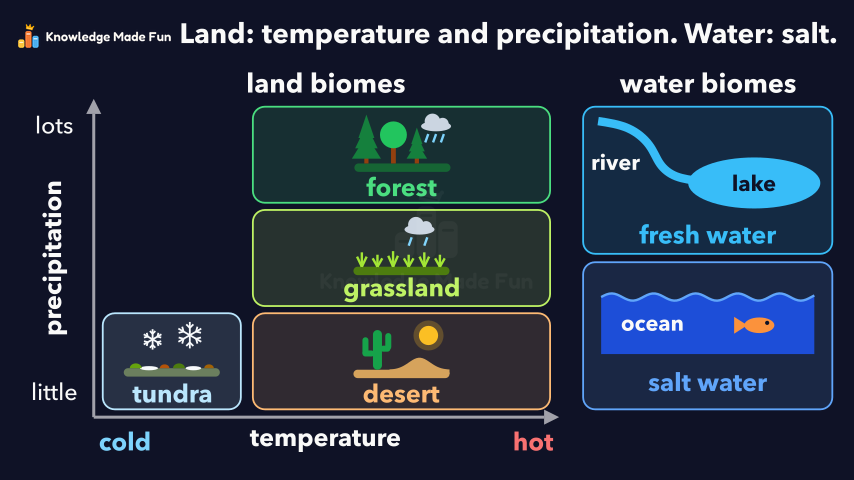 1 min 8 s
Biomes: Sorted by Temperature and Precipitation
Grade 4 · 1 min 8 s
- All Grade 8 Science lessons
- Create a free account to watch three lessons a day, no payment and no card.