Lesson · Grade 8 · Science
Helpful and Harmful Microbes
- Grade 8
- Science
- 1 min 44 s
- British Columbia
- BC8-SC-11
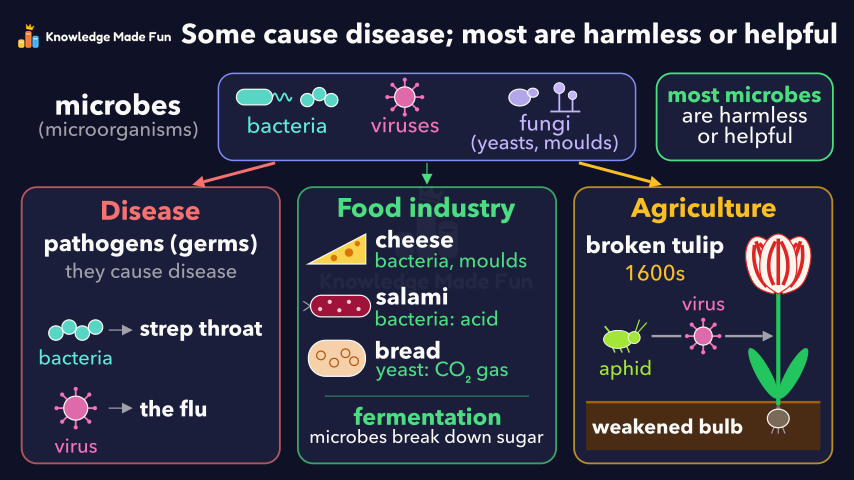
One diagram builds up from the main kinds of microbes (bacteria, viruses, and fungi such as yeasts and moulds) into three panels: disease (pathogens: strep throat and the flu), the food industry (cheese, salami, and bread made by fermentation), and agriculture (the striped "broken" tulips of the 1600s, coloured by a virus that aphids spread). It ends on the common mistake: only some microbes cause disease, and most are harmless or helpful.
Concept: Helpful and harmful microbes: disease, cheese and striped tulips
Anyone can watch two lessons on the website without an account. Signing in is free, no payment and no card, and opens three a day; Plus has no limit.
Loading
In one sentence
The question this lesson answers
Are all microbes harmful germs, or can some of them help us?
Microbes, short for microorganisms, are so tiny that most can only be seen with a microscope.
Transcript
What the lesson says
Are all microbes harmful germs, or can some of them help us?
Microbes, short for microorganisms, are so tiny that most can only be seen with a microscope.
They include bacteria, viruses, and fungi such as yeasts and moulds.
Some bacteria and viruses cause disease. Microbes like these are called pathogens, or germs.
For example, strep throat is caused by bacteria, and the flu is caused by a virus.
But many microbes are helpful, and the food industry puts them to work.
Bacteria and moulds ripen cheese, giving it its flavour and texture.
Bacteria also ferment salami. Fermentation is when microbes break down sugar; here they make an acid that gives salami its tang.
In bread dough, yeast ferments sugar and gives off carbon dioxide gas, which makes the dough rise.
Microbes matter in agriculture too. In the 1600s, striped tulips called broken tulips were rare and very valuable.
Their stripes came from a virus, spread from plant to plant by small insects called aphids.
The virus also weakened the bulbs, so it harmed the plants even though people loved the flowers.
In fact, most microbes are not germs. Only some cause disease, and most are harmless or even helpful.
Some microbes cause disease in people and plants, but most are harmless, and many are helpful.
Curriculum
Where this fits
- British Columbia, Grade 8
Science, Biology: the relationship of micro-organisms with living thingsBC8-SC-11
Previous: Microbes as Decomposers: Recycling NutrientsNext: The Body's First Defences: Barriers, Inflammation and Fever
The outcomes and strands follow the British Columbia curriculum.
Keep going
 1 min 3 s
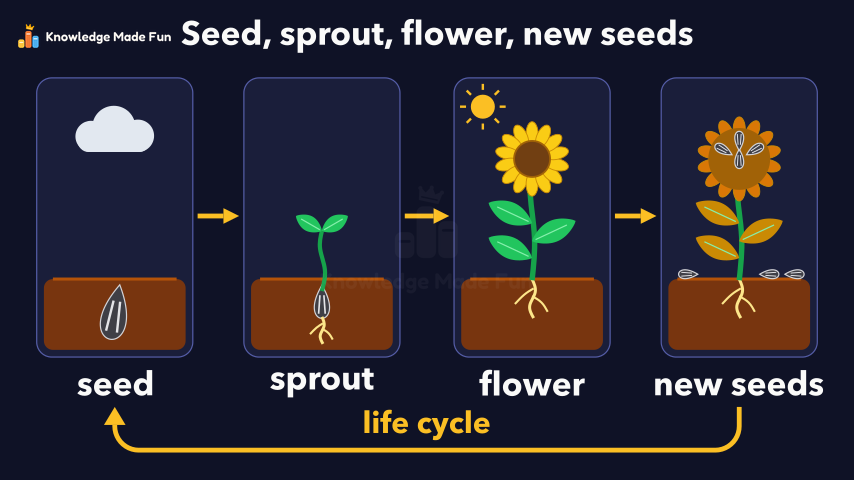
A Sunflower's Life Cycle: Seed, Sprout, Flower, Seed
Kindergarten · 1 min 3 s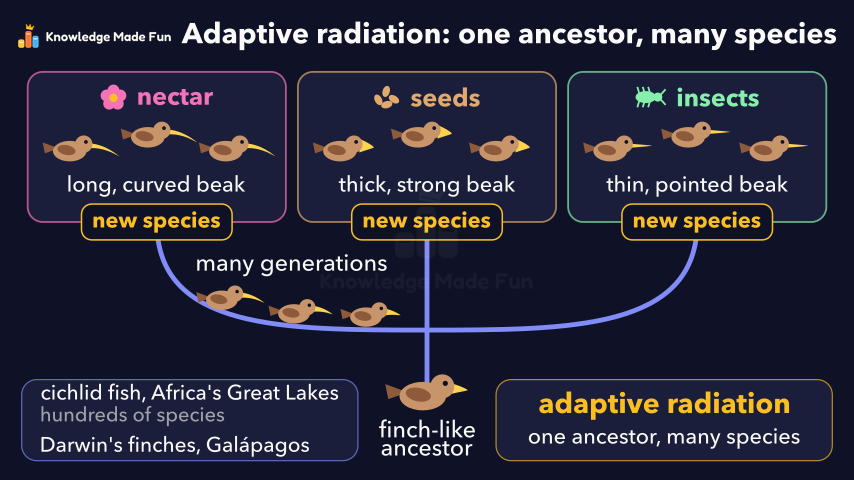 1 min 48 s
Adaptive radiation: one ancestor, many species
Grade 10 · 1 min 48 s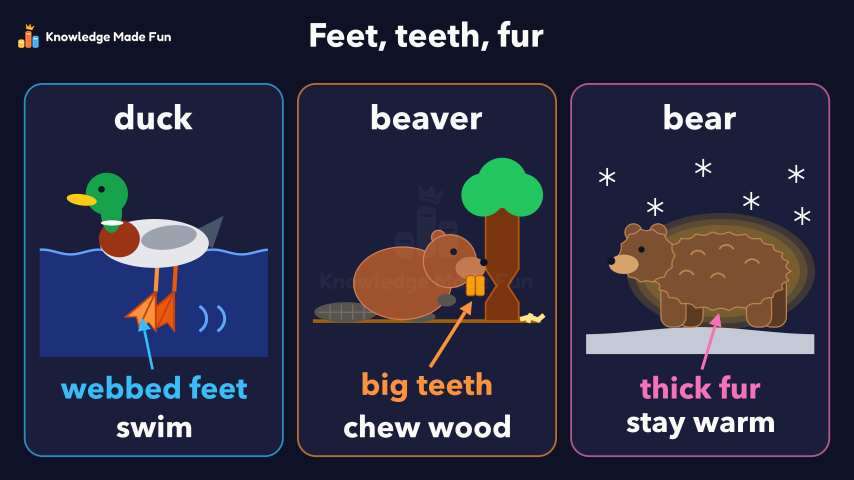 52 s
Animal Bodies That Help Them Live: Feet, Teeth and Fur
Kindergarten · 52 s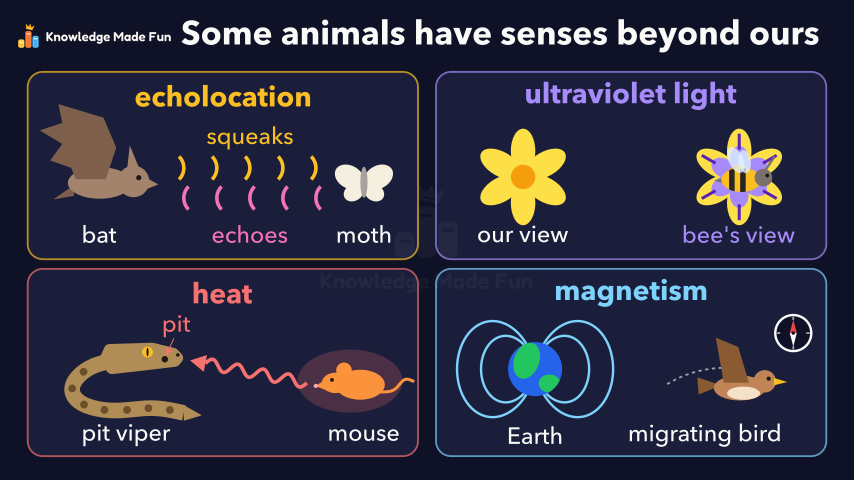 1 min 3 s
Animal senses beyond ours: echolocation, ultraviolet light, heat and magnetism
Grade 4 · 1 min 3 s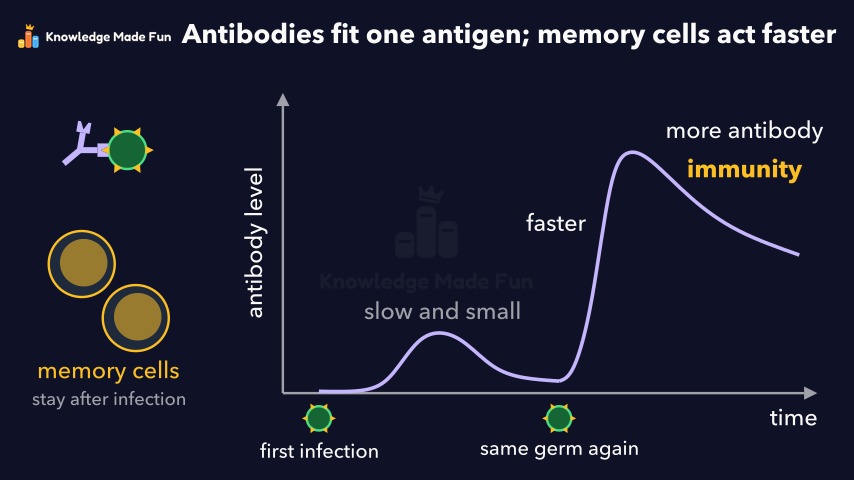 1 min 44 s
Antibodies and Memory Cells: The Body's Targeted Defence
Grade 8 · 1 min 44 s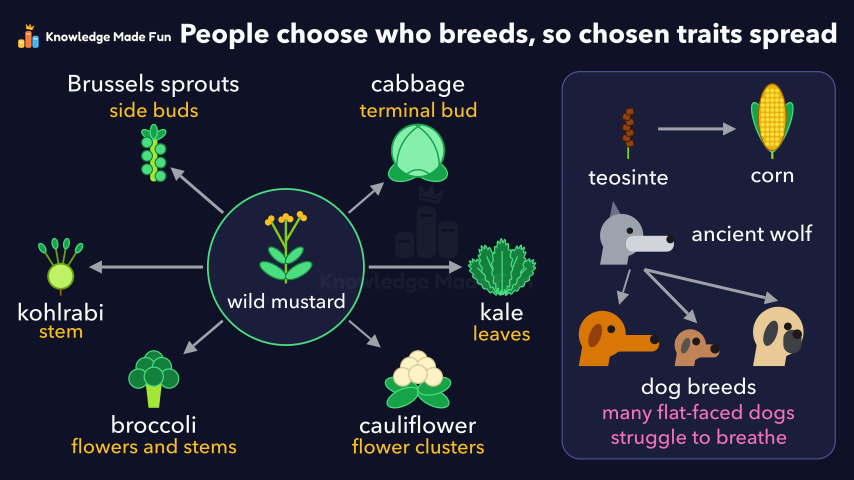 1 min 44 s
Artificial selection: people choose the traits
Grade 10 · 1 min 44 s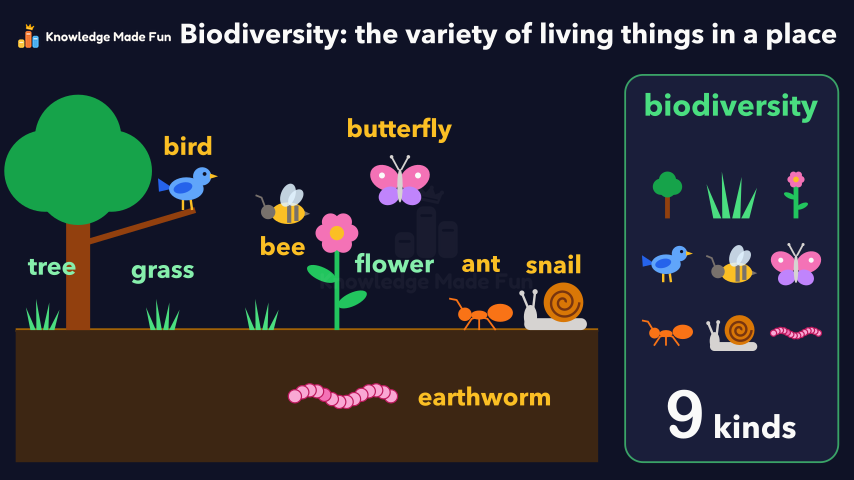 1 min 4 s
Biodiversity: The Variety of Living Things
Grade 3 · 1 min 4 s 1 min 8 s
Biomes: Sorted by Temperature and Precipitation
Grade 4 · 1 min 8 s
- All Grade 8 Science lessons
- Create a free account to watch three lessons a day, no payment and no card.