Lesson · Grade 10 · Science
Adaptive radiation: one ancestor, many species
- Grade 10
- Science
- 1 min 48 s
- British Columbia
- BC10-SC-12
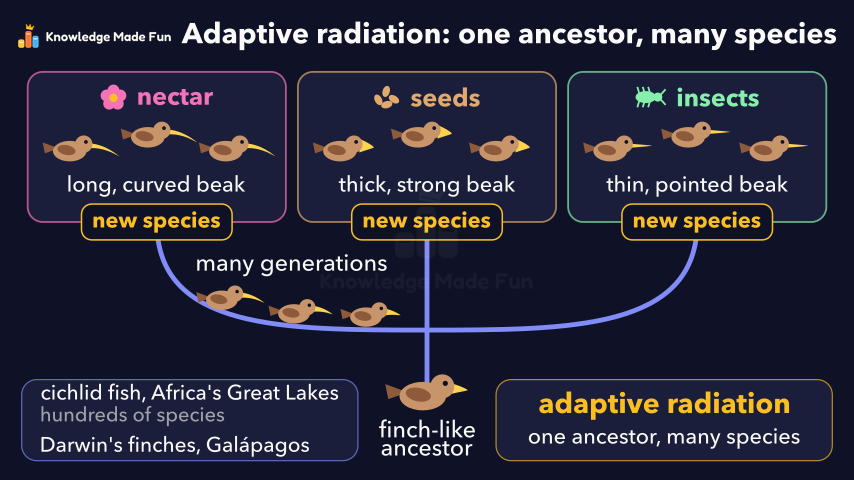
A branching tree grows from one finch-like ancestor into three Hawaiian habitats (nectar, seeds, insects): small beak differences within each population, natural selection, beaks changing over many generations, and the populations becoming separate species. A crossed-out one-step arrow and gradually changing birds along one branch correct the idea that a species changes in a single step, then the video names adaptive radiation, notes that the honeycreepers became dozens of species, many now extinct, and gives cichlid fish and Darwin's finches as other examples before the recap.
Anyone can watch two lessons on the website without an account. Signing in is free, no payment and no card, and opens three a day; Plus has no limit.
Loading
In one sentence
The question this lesson answers
How can one species of bird give rise to dozens of others?
Millions of years ago, finch-like birds reached the Hawaiian Islands. Their species is the ancestor, the one all the others came from.
Transcript
What the lesson says
How can one species of bird give rise to dozens of others?
Millions of years ago, finch-like birds reached the Hawaiian Islands. Their species is the ancestor, the one all the others came from.
The islands had habitats with different foods: nectar from flowers, seeds, and insects.
Groups of birds settled in each habitat. Each group is a population: birds of one species living in one area.
In each population, beaks vary a little, and young birds tend to inherit their parents' beak shape.
Birds with beaks that suit the local food are more likely to survive and breed. This is natural selection.
Generation after generation, the beaks changed: long and curved for nectar, thick and strong for seeds, thin and pointed for insects.
Eventually they became too different to breed with each other, so each is now a separate species.
These species did not appear in a single step: small changes built up over many generations.
One ancestor giving rise to many species, each adapted to its own way of life, is called adaptive radiation.
The Hawaiian honeycreepers formed dozens of species this way, though many are now extinct.
Cichlid fish in Africa's Great Lakes did the same, forming hundreds of species, and so did Darwin's finches in the Galápagos.
So adaptive radiation is one ancestor becoming many species, each adapted by natural selection to its own food.
Curriculum
Where this fits
- British Columbia, Grade 10
Science 10, Biology: mechanisms for the diversity of life: natural selection and artificial selectionBC10-SC-12
Previous: Selection pressure: what decides which traits spreadNext: Artificial selection: people choose the traits
- British Columbia, Grade 11
Life Sciences 11, Evolution and genetics: macroevolution: speciationBC11-SC-160
Previous: Sexual Selection: Traits That Win MatesNext: Fossils and Transitional Forms: Evidence for Macroevolution
- British Columbia, Grade 12
Geology 12, Geologic time: the local and global fossil record: evidence of evolutionBC12-SC-145
Previous: Fossils and Transitional Forms: Evidence for MacroevolutionNext: Gradualism and Punctuated Equilibrium
This lesson is also listed in Grade 11 and Grade 12.
The outcomes and strands follow the British Columbia curriculum.
Keep going
 1 min 3 s
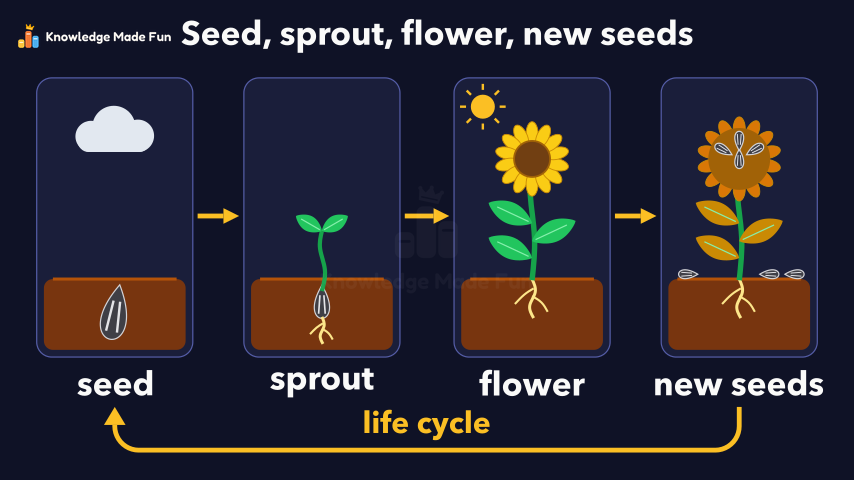
A Sunflower's Life Cycle: Seed, Sprout, Flower, Seed
Kindergarten · 1 min 3 s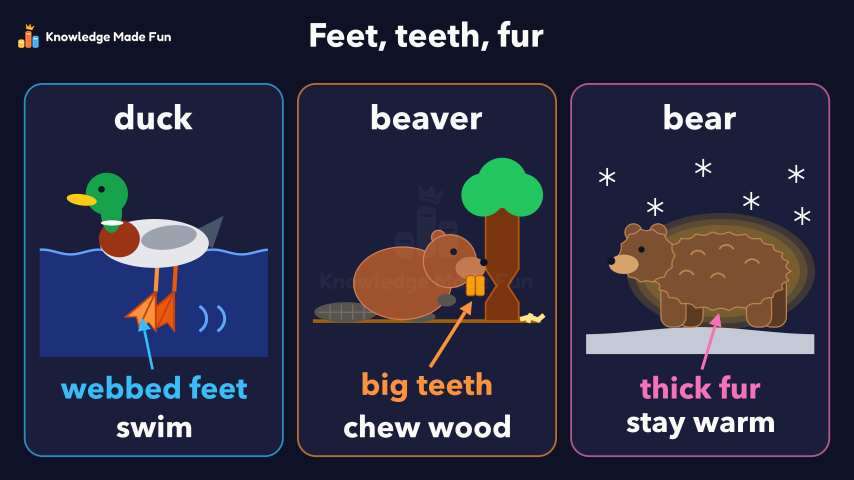 52 s
Animal Bodies That Help Them Live: Feet, Teeth and Fur
Kindergarten · 52 s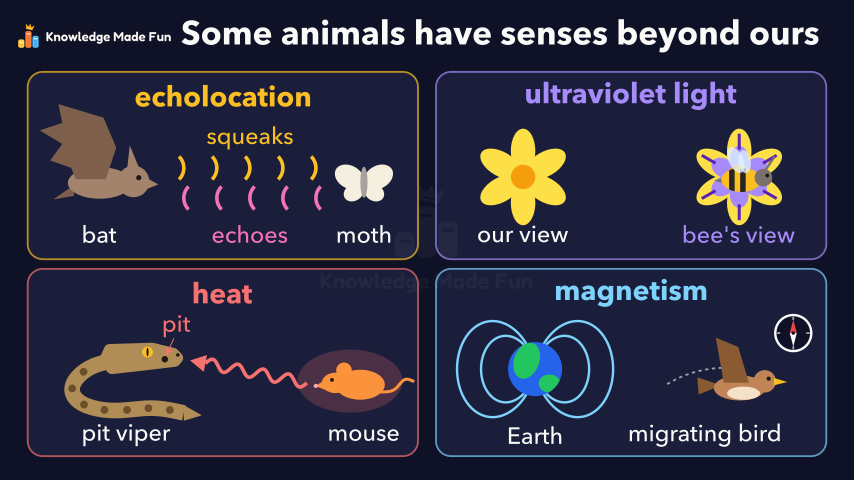 1 min 3 s
Animal senses beyond ours: echolocation, ultraviolet light, heat and magnetism
Grade 4 · 1 min 3 s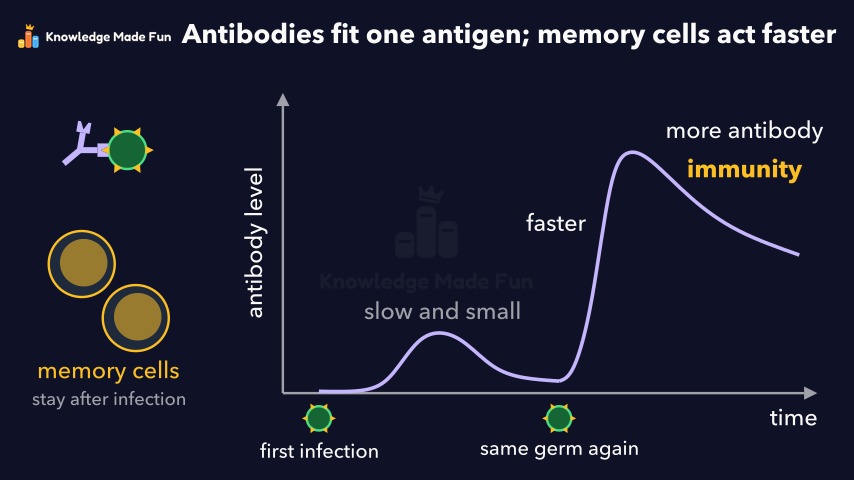 1 min 44 s
Antibodies and Memory Cells: The Body's Targeted Defence
Grade 8 · 1 min 44 s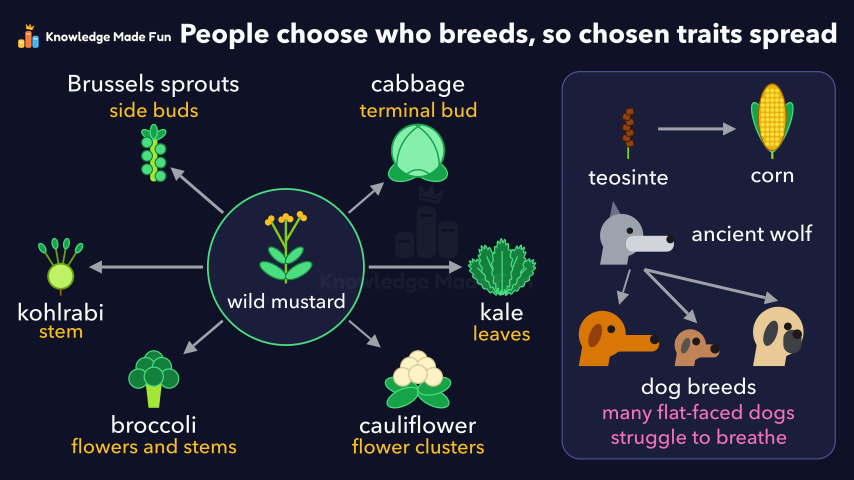 1 min 44 s
Artificial selection: people choose the traits
Grade 10 · 1 min 44 s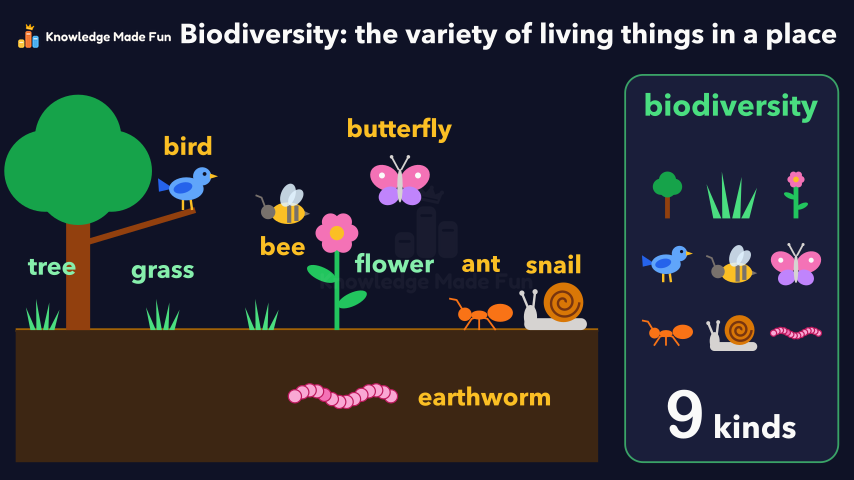 1 min 4 s
Biodiversity: The Variety of Living Things
Grade 3 · 1 min 4 s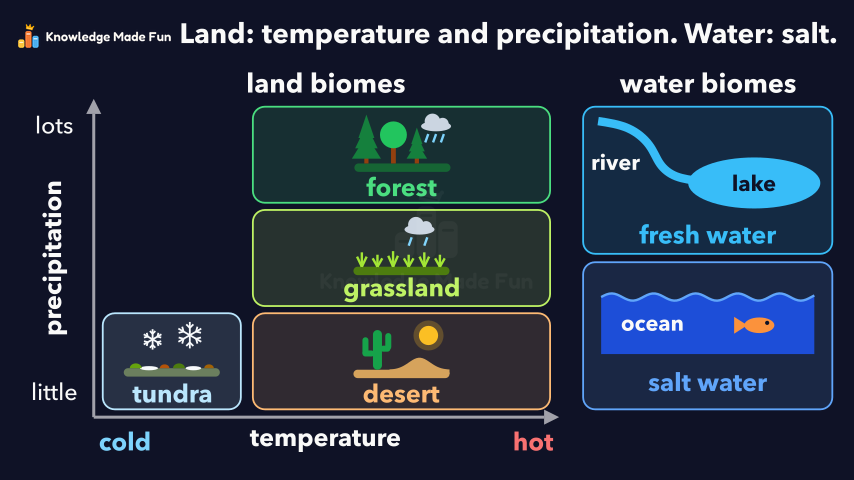 1 min 8 s
Biomes: Sorted by Temperature and Precipitation
Grade 4 · 1 min 8 s 1 min 6 s
Bones and Muscles: How Muscles Pull in Pairs
Grade 5 · 1 min 6 s
- All Grade 10 Science lessons
- Create a free account to watch three lessons a day, no payment and no card.