Lesson · Grade 11 · Life Sciences
Fossils and Transitional Forms: Evidence for Macroevolution
- Grade 11
- Life Sciences
- 1 min 54 s
- British Columbia
- BC11-SC-163
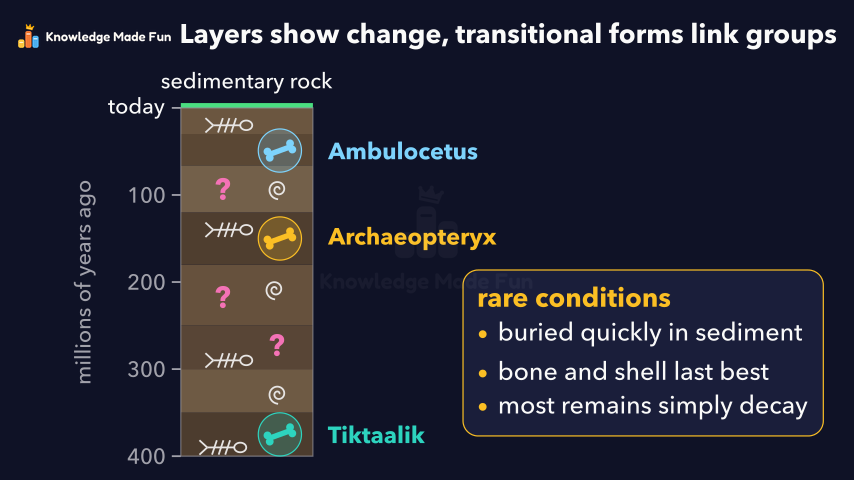
A column of sedimentary rock layers becomes a timeline where deeper is older, and three transitional fossils are placed at their ages: Tiktaalik (about 375 million years ago), Archaeopteryx (about 150) and the early whale Ambulocetus (about 49), each with its features from the older group and the newer group. The video then explains that gaps in the fossil record do not disprove evolution, because fossils form only in rare conditions, and that the fossils we do find come in the order evolution predicts.
Concept: Fossils and transitional forms as evidence of evolution
Anyone can watch two lessons on the website without an account. Signing in is free, no payment and no card, and opens three a day; Plus has no limit.
Loading
In one sentence
The question this lesson answers
Macroevolution is large-scale change, such as whole new groups of living things arising. What is the evidence for it?
Sedimentary rock forms as layers of mud and sand settle and harden, and it holds fossils: the preserved remains or traces of living things.
Transcript
What the lesson says
Macroevolution is large-scale change, such as whole new groups of living things arising. What is the evidence for it?
Sedimentary rock forms as layers of mud and sand settle and harden, and it holds fossils: the preserved remains or traces of living things.
In undisturbed rock, deeper layers formed first, so they are older. The layers work like a timeline.
Some fossils are transitional forms: not always direct ancestors, but with features of both an older group and a newer group.
Tiktaalik, about 375 million years ago, had fins and gills like a fish, but a neck and limb-like fins like a tetrapod, an animal with four limbs.
Archaeopteryx, about 150 million years ago, had feathers and wings like a bird, but teeth, claws and a bony tail like a dinosaur.
Early whales such as Ambulocetus, about 49 million years ago, had four legs like a land mammal, but ear bones like a whale's, and they swam in water.
The fossil record, all the fossils found so far, has gaps. But gaps do not disprove evolution.
Fossils form only in rare conditions: remains must be buried quickly in sediment, and hard parts like bone and shell last best. Most remains simply decay.
The fossils we do find fit the order evolution predicts: fish before tetrapods, and tetrapods before birds and whales.
Fossil layers show life changing over time, and transitional forms link the groups: strong evidence for macroevolution.
Curriculum
Where this fits
- British Columbia, Grade 11
Life Sciences 11, Evolution and genetics: macroevolution: evidence for macroevolutionBC11-SC-163
Previous: Adaptive radiation: one ancestor, many speciesNext: Artificial selection: people choose the traits
- British Columbia, Grade 12
Geology 12, Geologic time: the local and global fossil record: evidence of evolutionBC12-SC-144
This lesson is also listed in Grade 12.
The outcomes and strands follow the British Columbia curriculum.
Keep going
 1 min 39 s
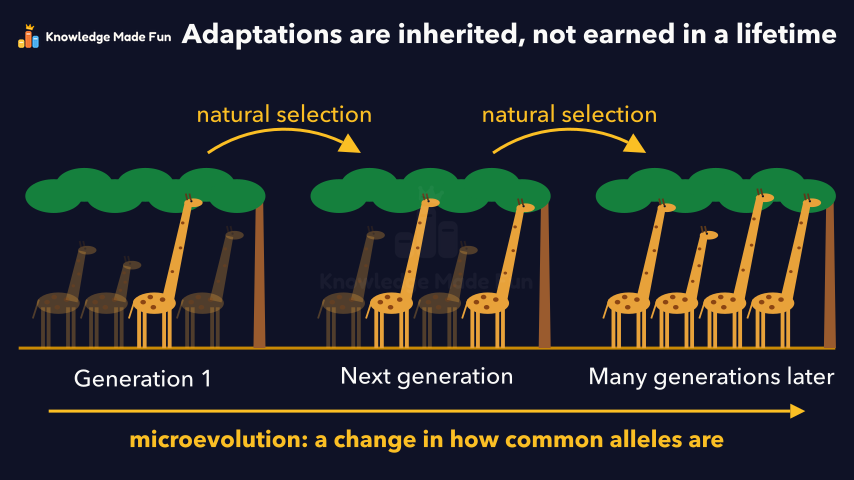
Adaptations Are Inherited, Not Earned in a Lifetime
Grade 11 · 1 min 39 s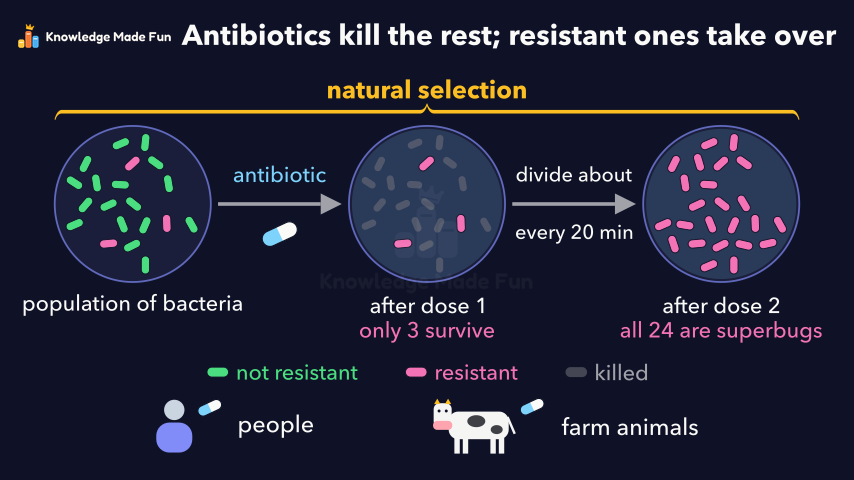 1 min 37 s
Antibiotic resistance: how superbugs evolve
Grade 8 · 1 min 37 s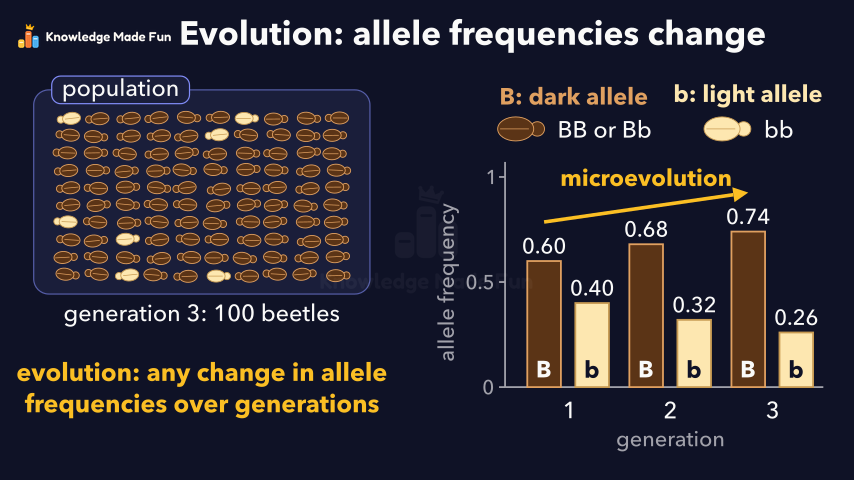 2 min
Evolution as Changing Allele Frequencies
Grade 11 · 2 min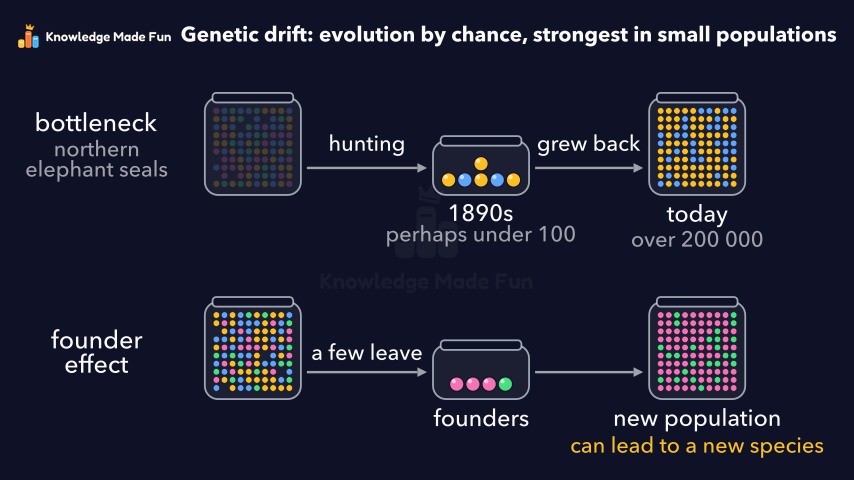 1 min 55 s
Genetic Drift: Evolution by Chance
Grade 11 · 1 min 55 s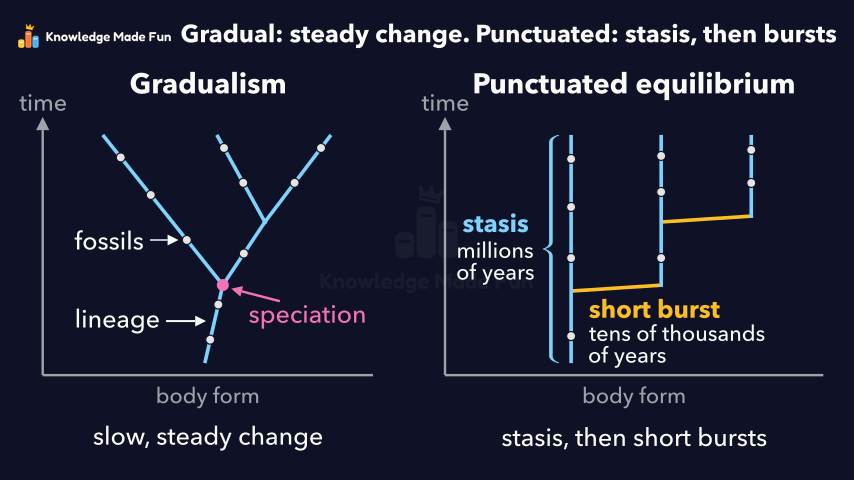 1 min 58 s
Gradualism and Punctuated Equilibrium
Grade 11 · 1 min 58 s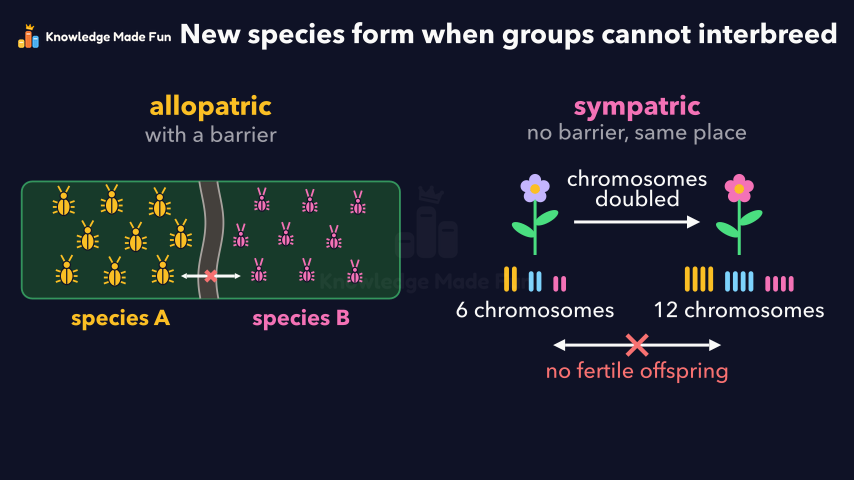 1 min 50 s
How New Species Form: Isolation and Speciation
Grade 11 · 1 min 50 s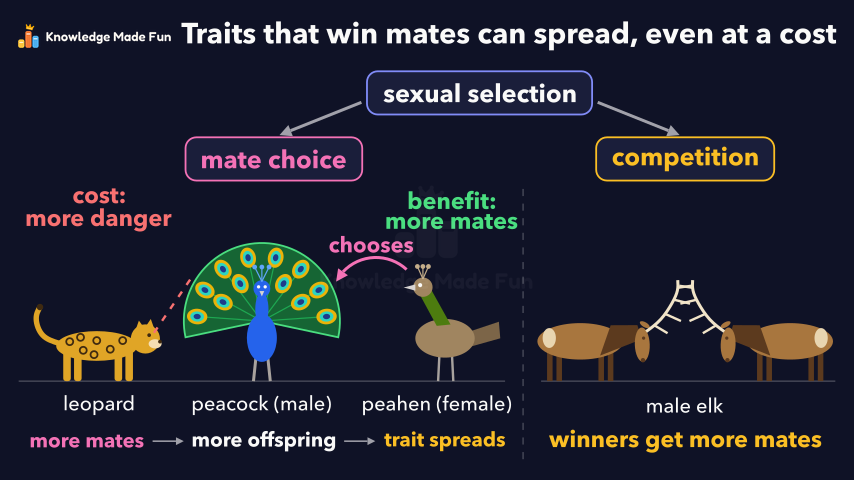 1 min 19 s
Sexual Selection: Traits That Win Mates
Grade 11 · 1 min 19 s 1 min 56 s
Three patterns of natural selection
Grade 11 · 1 min 56 s
- All Grade 11 Life Sciences lessons
- Create a free account to watch three lessons a day, no payment and no card.