Lesson · Grade 11 · Life Sciences
Sexual Selection: Traits That Win Mates
- Grade 11
- Life Sciences
- 1 min 19 s
- British Columbia
- BC11-SC-159
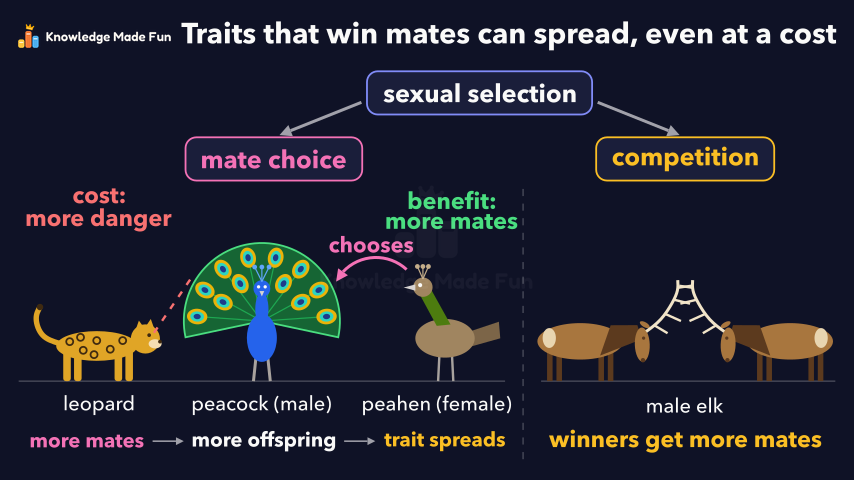
A labelled diagram shows the two main ways sexual selection works: peahens choosing males with showier tails, and male elk fighting with their antlers. A leopard spotting the bright tail shows the trade-off between more mates and more danger, and the video ends by explaining why such traits still spread: more mates means more offspring that inherit them.
Anyone can watch two lessons on the website without an account. Signing in is free, no payment and no card, and opens three a day; Plus has no limit.
Loading
In one sentence
The question this lesson answers
A peacock's huge, bright tail makes him easier for predators to spot. So how could a trait like this evolve?
The answer is sexual selection: a kind of natural selection in which inherited traits spread because they help animals win mates.
Transcript
What the lesson says
A peacock's huge, bright tail makes him easier for predators to spot. So how could a trait like this evolve?
The answer is sexual selection: a kind of natural selection in which inherited traits spread because they help animals win mates.
It works in two main ways: mate choice and competition.
In mate choice, members of one sex choose which partners to mate with.
Peahens, the females, tend to choose males with bigger, showier tails.
In competition, members of the same sex, like these male elk, battle each other for the chance to mate.
Male elk fight with their antlers, and the winners get more mates.
But the bright tail that attracts peahens also makes the peacock easier for predators, like leopards, to spot.
This is a trade-off: one trait brings both a benefit, more mates, and a cost, more danger.
More mates means more offspring that inherit the trait, so the trait spreads, even with the danger.
So sexual selection can spread traits that win mates, even when they cost survival.
Curriculum
Where this fits
- British Columbia, Grade 11
Life Sciences 11, Evolution and genetics: macroevolution: speciationBC11-SC-159
Previous: Genetic Drift: Evolution by ChanceNext: Adaptive radiation: one ancestor, many species
The outcomes and strands follow the British Columbia curriculum.
Keep going
 1 min 39 s
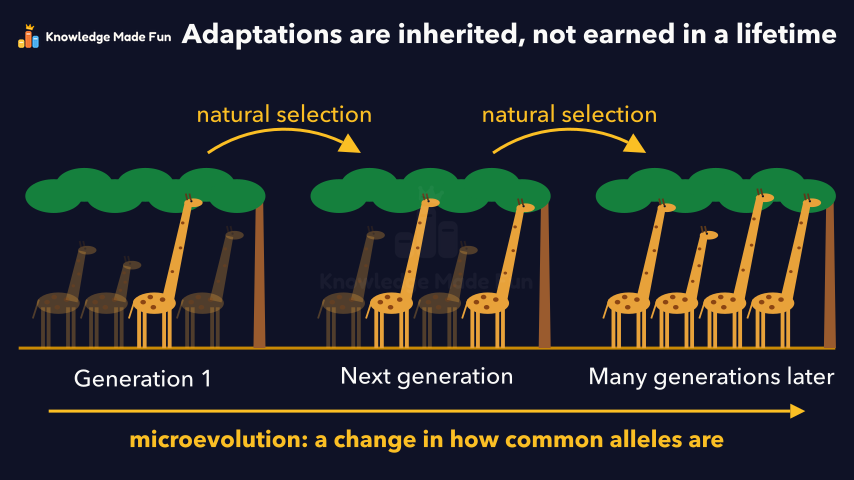
Adaptations Are Inherited, Not Earned in a Lifetime
Grade 11 · 1 min 39 s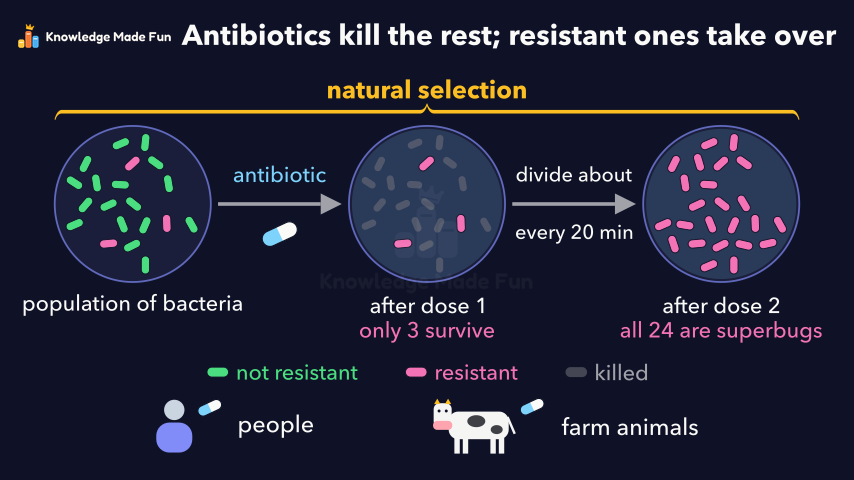 1 min 37 s
Antibiotic resistance: how superbugs evolve
Grade 8 · 1 min 37 s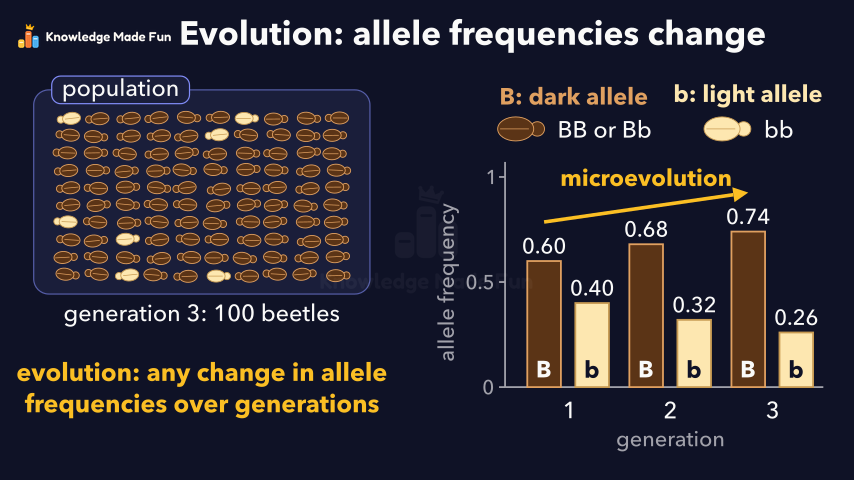 2 min
Evolution as Changing Allele Frequencies
Grade 11 · 2 min 1 min 54 s
Fossils and Transitional Forms: Evidence for Macroevolution
Grade 11 · 1 min 54 s 1 min 55 s
Genetic Drift: Evolution by Chance
Grade 11 · 1 min 55 s 1 min 58 s
Gradualism and Punctuated Equilibrium
Grade 11 · 1 min 58 s 1 min 50 s
How New Species Form: Isolation and Speciation
Grade 11 · 1 min 50 s 1 min 56 s
Three patterns of natural selection
Grade 11 · 1 min 56 s
- All Grade 11 Life Sciences lessons
- Create a free account to watch three lessons a day, no payment and no card.