Lesson · Grade 11 · Life Sciences
Three patterns of natural selection
- Grade 11
- Life Sciences
- 1 min 56 s
- British Columbia
- BC11-SC-155
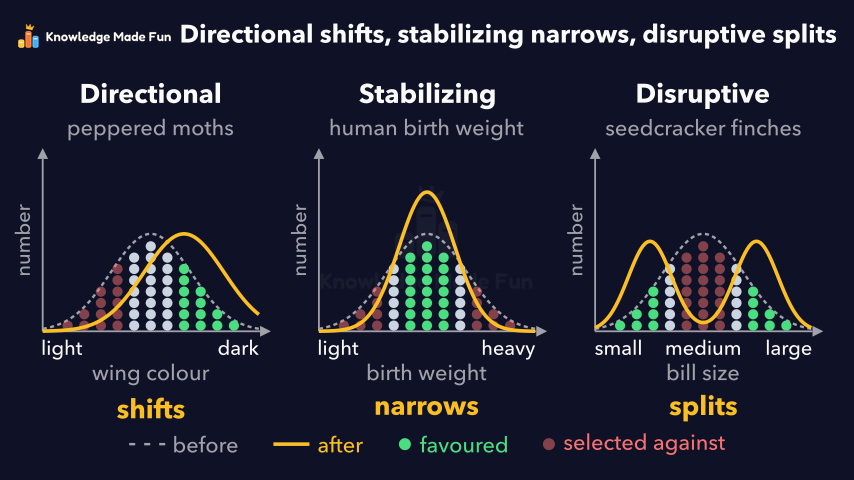
A graph of a trait distribution, with each dot one individual, shows that natural selection acts on individuals but changes the population's curve over many generations. Three panels then compare the curve before and after selection: directional selection shifts it (peppered moths), stabilizing selection narrows it (human birth weight), and disruptive selection can split it into two peaks (seedcracker finches).
Anyone can watch two lessons on the website without an account. Signing in is free, no payment and no card, and opens three a day; Plus has no limit.
Loading
In one sentence
The question this lesson answers
How does natural selection change a population?
Each dot is one individual, placed along the bottom by its value of one trait.
Transcript
What the lesson says
How does natural selection change a population?
Each dot is one individual, placed along the bottom by its value of one trait.
Their outline is the trait distribution: how common each value is.
For many traits, most are near the average and few are at the extremes, the far ends.
Natural selection acts on individuals: those with helpful inherited traits survive and reproduce more.
Over many generations the population changes, so we compare its curve before and after.
There are three common patterns: directional, stabilizing and disruptive selection.
In directional selection, one extreme is favoured: those individuals survive and reproduce best.
On soot-darkened bark, birds ate more light peppered moths, so light moths were selected against.
Over many generations, the whole curve shifted toward dark wings.
In stabilizing selection, the middle is favoured, and both extremes are selected against.
For human birth weight, very light and very heavy babies are less likely to survive.
Over generations, the average stays the same, but the curve gets narrower.
In disruptive selection, both extremes are favoured, and the middle is selected against.
In seedcracker finches, small bills suit soft seeds, large bills suit hard seeds, and medium bills do worse on both.
Over many generations, the middle shrinks and the curve can split into two peaks.
So directional selection shifts the curve, stabilizing narrows it, and disruptive splits it.
Curriculum
Where this fits
- British Columbia, Grade 11
Life Sciences 11, Evolution and genetics: microevolution: natural selectionBC11-SC-155
Previous: Evolution as Changing Allele FrequenciesNext: How New Species Form: Isolation and Speciation
The outcomes and strands follow the British Columbia curriculum.
Keep going
 1 min 39 s
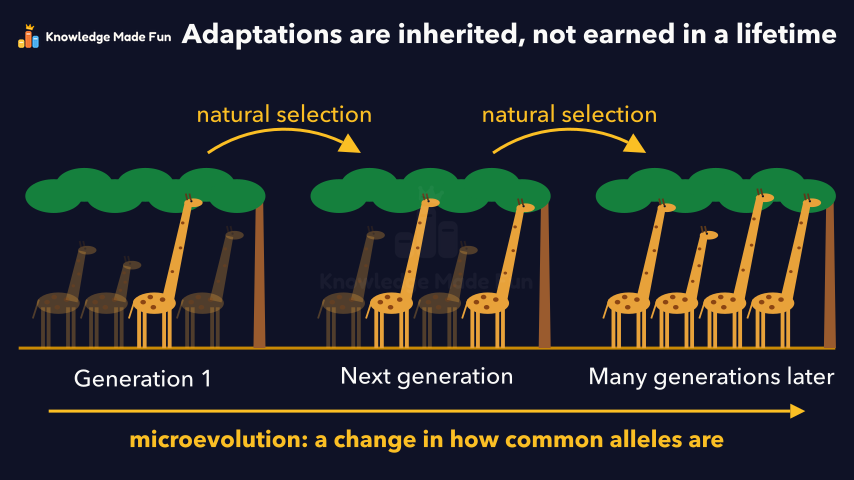
Adaptations Are Inherited, Not Earned in a Lifetime
Grade 11 · 1 min 39 s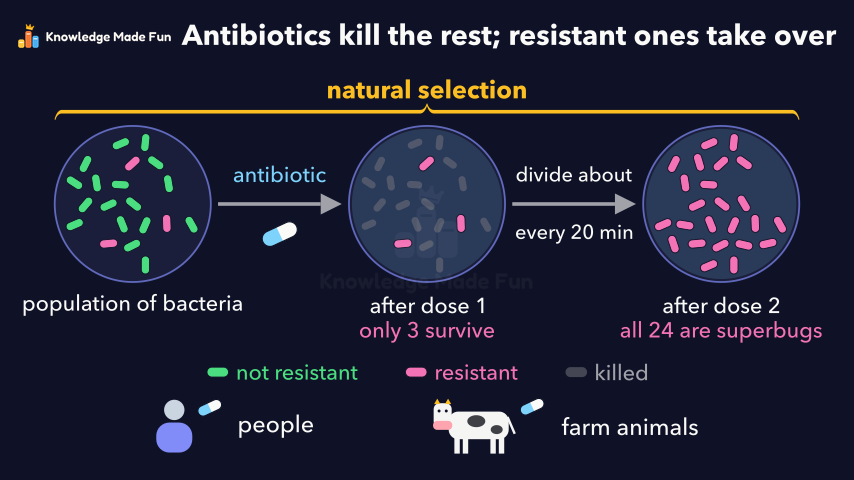 1 min 37 s
Antibiotic resistance: how superbugs evolve
Grade 8 · 1 min 37 s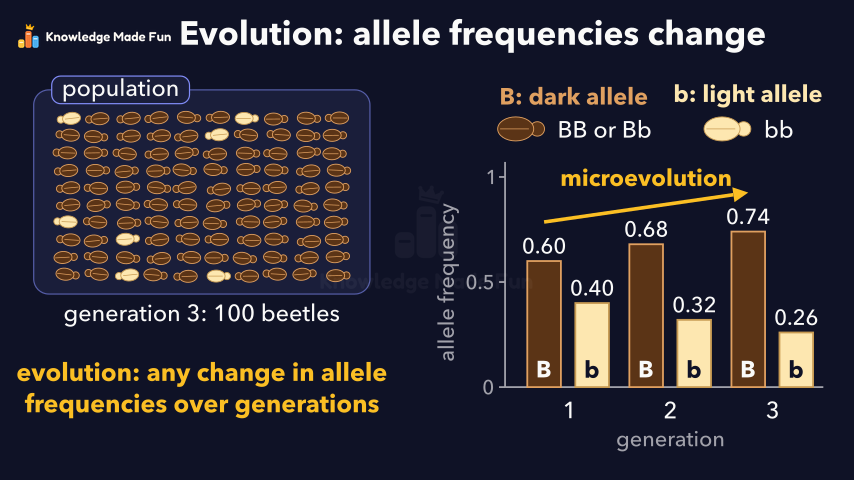 2 min
Evolution as Changing Allele Frequencies
Grade 11 · 2 min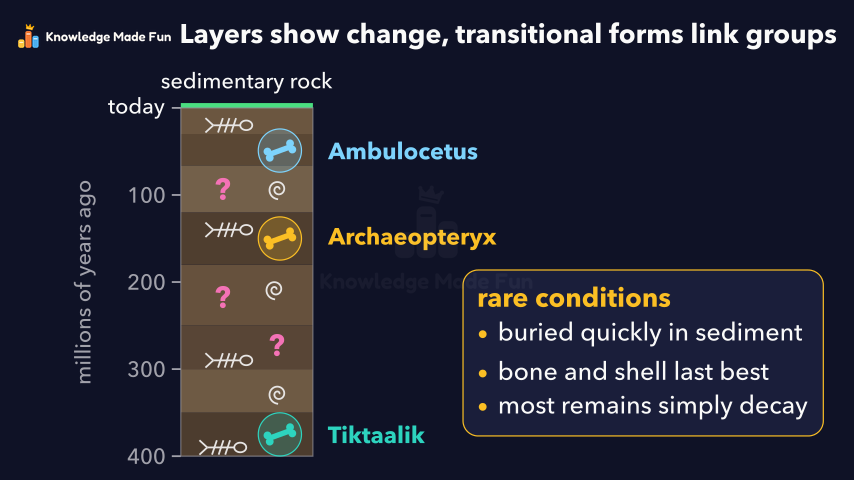 1 min 54 s
Fossils and Transitional Forms: Evidence for Macroevolution
Grade 11 · 1 min 54 s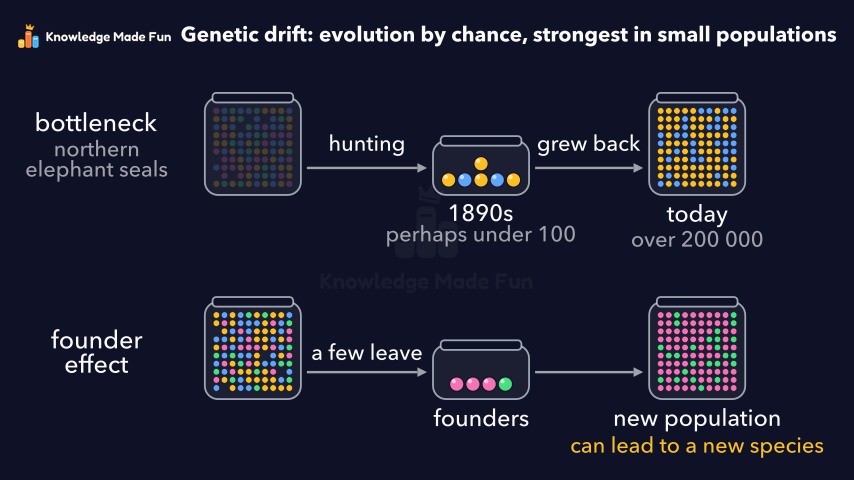 1 min 55 s
Genetic Drift: Evolution by Chance
Grade 11 · 1 min 55 s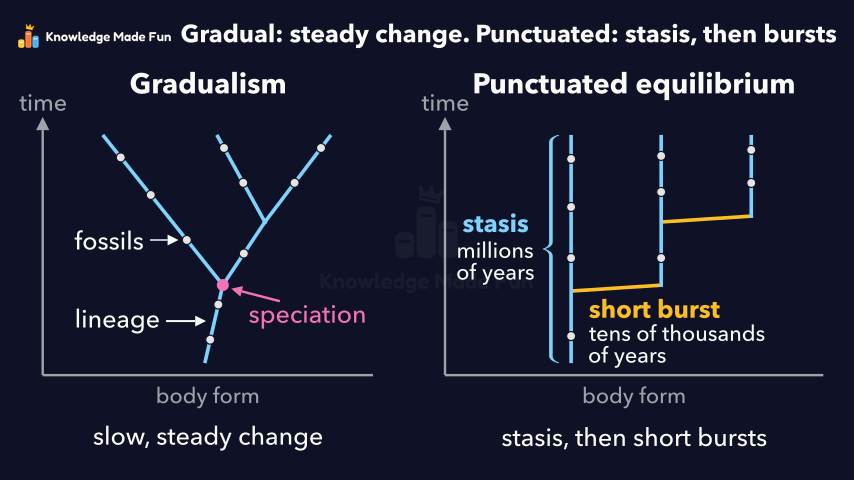 1 min 58 s
Gradualism and Punctuated Equilibrium
Grade 11 · 1 min 58 s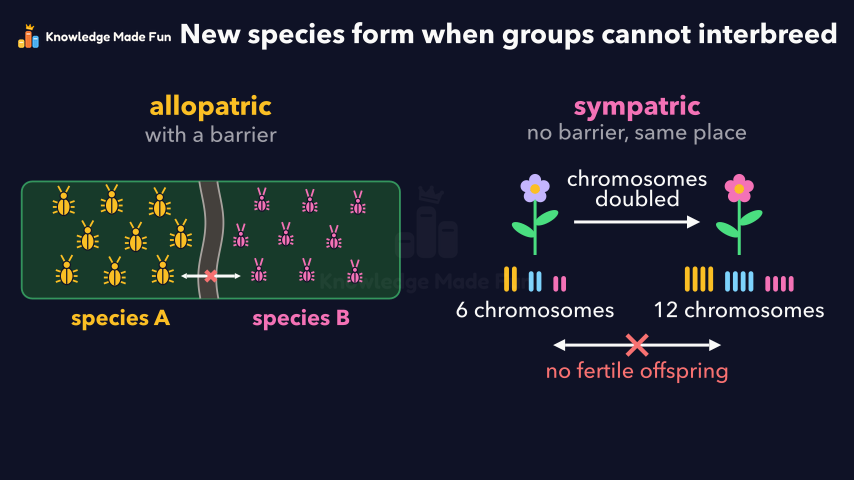 1 min 50 s
How New Species Form: Isolation and Speciation
Grade 11 · 1 min 50 s 1 min 19 s
Sexual Selection: Traits That Win Mates
Grade 11 · 1 min 19 s
- All Grade 11 Life Sciences lessons
- Create a free account to watch three lessons a day, no payment and no card.