Lesson · Grade 11 · Life Sciences
Adaptations Are Inherited, Not Earned in a Lifetime
- Grade 11
- Life Sciences
- 1 min 39 s
- British Columbia
- BC11-SC-151
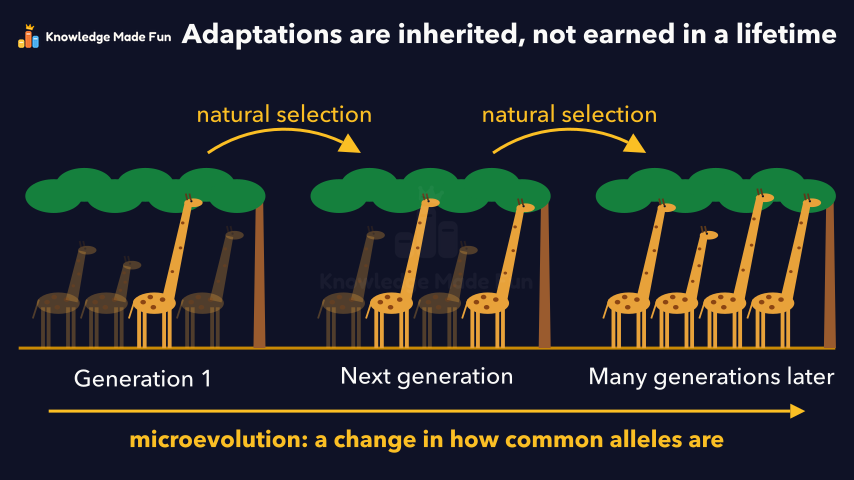
The video rules out the wrong idea that a giraffe stretching its neck, or a weightlifter building muscle, passes the change on, because traits are inherited through genes in sperm and egg cells. It then follows one population of giraffes through a drier climate, where longer-necked giraffes reach the high leaves, survive more often and leave more offspring, so long necks become more common over generations: natural selection producing microevolution.
Anyone can watch two lessons on the website without an account. Signing in is free, no payment and no card, and opens three a day; Plus has no limit.
Loading
In one sentence
The question this lesson answers
Giraffes have very long necks. How did they get them?
A long neck is an adaptation: an inherited trait that helps survival and reproduction.
Transcript
What the lesson says
Giraffes have very long necks. How did they get them?
A long neck is an adaptation: an inherited trait that helps survival and reproduction.
The wrong idea: a giraffe stretches up to high leaves, and its neck grows longer.
Then its offspring are born with that longer neck.
But traits are inherited through genes, DNA instructions passed on in sperm and egg cells, and stretching does not change them.
Likewise, a weightlifter's muscles are gained in life, so they are not inherited.
The right idea: in a population, a group of one species in one area, neck length varies, partly because genes differ.
Suppose the environment changes: the climate dries, and only high leaves are left.
Now longer necks are an advantage: they reach more food, so those giraffes are more likely to survive.
They leave more offspring and pass on their genes for longer necks.
This is natural selection: individuals with traits that suit the environment better leave more offspring.
Over many generations, long necks become more common.
This is microevolution: a change in how common alleles, versions of genes, are in a population.
No individual giraffe evolved. The population did.
Adaptations are inherited through genes and spread by natural selection, not earned in a lifetime.
Curriculum
Where this fits
- British Columbia, Grade 11
Life Sciences 11, Evolution and genetics: microevolution: adaptation to changing environmentsBC11-SC-151
The outcomes and strands follow the British Columbia curriculum.
Keep going
 1 min 37 s
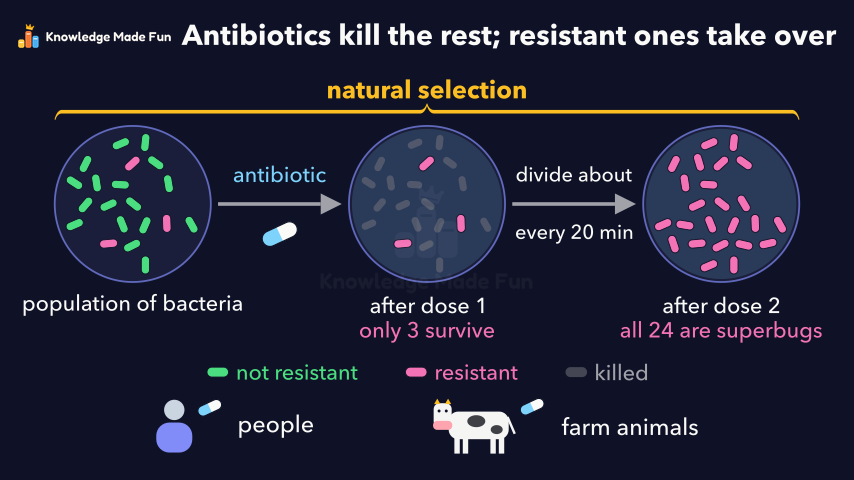
Antibiotic resistance: how superbugs evolve
Grade 8 · 1 min 37 s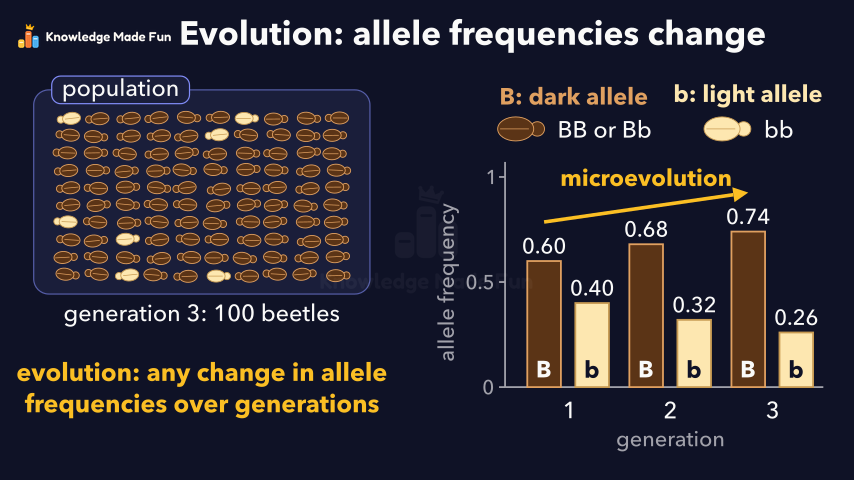 2 min
Evolution as Changing Allele Frequencies
Grade 11 · 2 min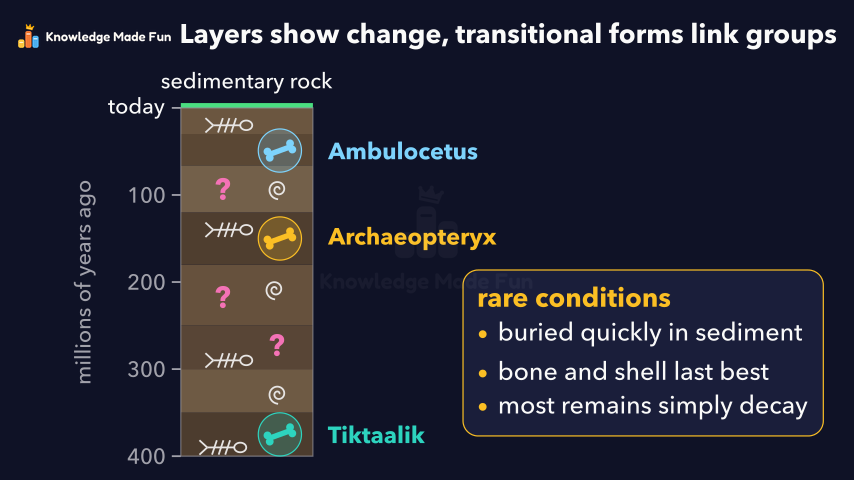 1 min 54 s
Fossils and Transitional Forms: Evidence for Macroevolution
Grade 11 · 1 min 54 s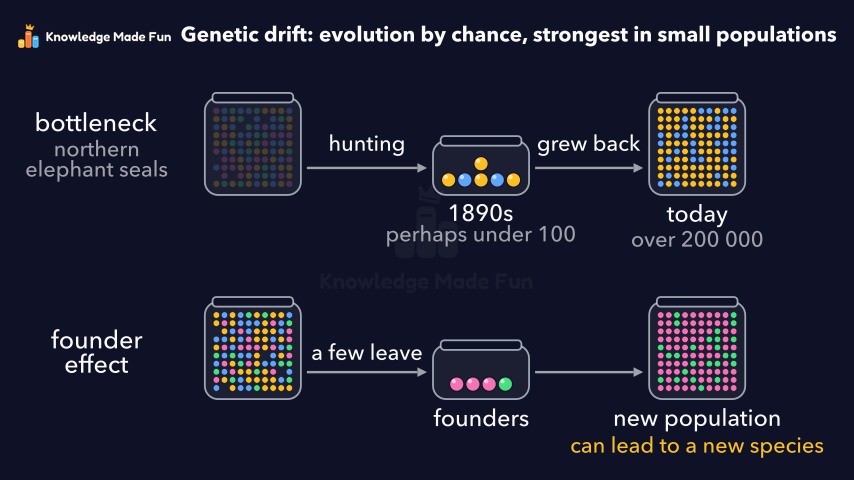 1 min 55 s
Genetic Drift: Evolution by Chance
Grade 11 · 1 min 55 s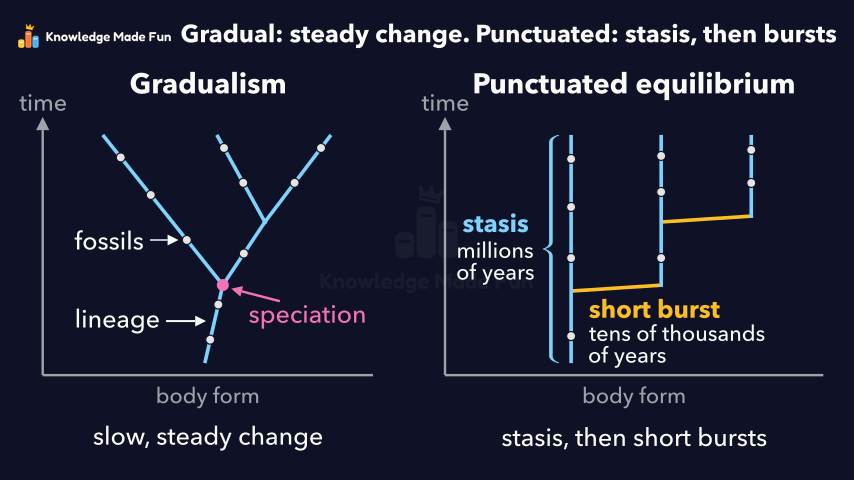 1 min 58 s
Gradualism and Punctuated Equilibrium
Grade 11 · 1 min 58 s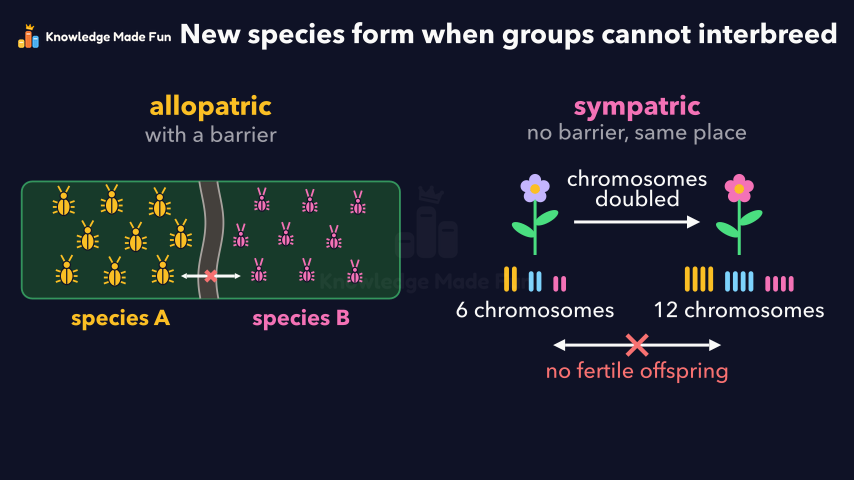 1 min 50 s
How New Species Form: Isolation and Speciation
Grade 11 · 1 min 50 s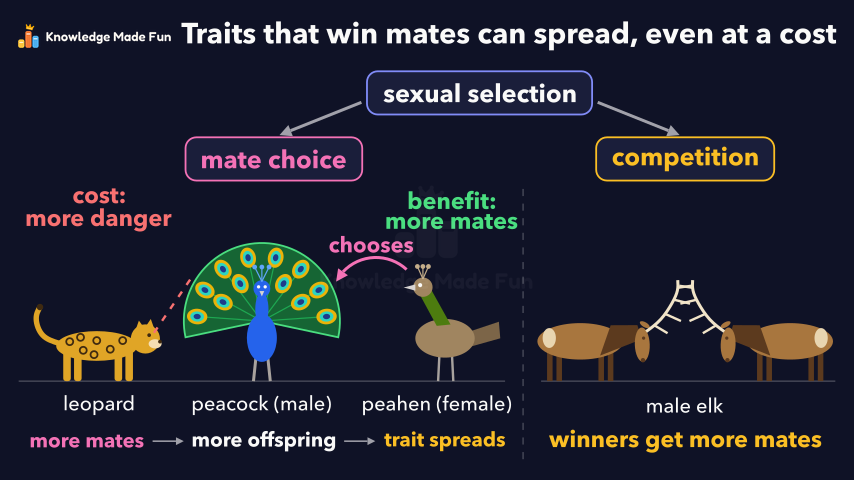 1 min 19 s
Sexual Selection: Traits That Win Mates
Grade 11 · 1 min 19 s 1 min 56 s
Three patterns of natural selection
Grade 11 · 1 min 56 s
- All Grade 11 Life Sciences lessons
- Create a free account to watch three lessons a day, no payment and no card.