Lesson · Grade 5 · Science
Bones and Muscles: How Muscles Pull in Pairs
- Grade 5
- Science
- 1 min 6 s
- British Columbia
- BC5-SC-02
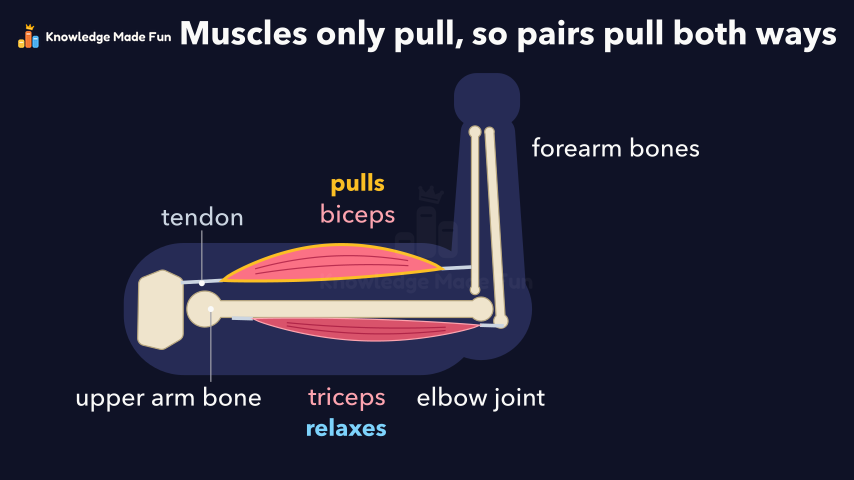
A labelled diagram of an arm builds up step by step: the upper arm bone and forearm bones meeting at the elbow joint, then the biceps and the tendons that join it to the bones. The biceps gets shorter and pulls the forearm up to bend the arm, the triceps on the back pulls it straight again, and the video ends on the idea that muscles can only pull, so a pair of muscles pulls a bone both ways.
Anyone can watch two lessons on the website without an account. Signing in is free, no payment and no card, and opens three a day; Plus has no limit.
Loading
In one sentence
The question this lesson answers
How do your muscles move your bones?
Your bones hold your body up and protect the soft parts inside.
Transcript
What the lesson says
How do your muscles move your bones?
Your bones hold your body up and protect the soft parts inside.
In your arm, the upper arm bone meets the forearm bones at the elbow.
A place where bones meet is called a joint.
The biceps muscle is on the front of your upper arm.
Tough cords called tendons join it to the bones.
A muscle can pull on a bone, but it cannot push.
When the biceps gets shorter, it pulls your forearm up.
Your arm bends at the elbow joint.
But the biceps cannot push your arm straight again.
The triceps muscle is on the back of your upper arm.
When the triceps gets shorter, it pulls your arm straight.
While one muscle pulls, the other one relaxes.
Many muscles work in pairs like this to move bones at joints.
Muscles can only pull, so a pair of muscles pulls a bone both ways.
Curriculum
Where this fits
- British Columbia, Grade 5
Science, Biology: basic structures and functions of body systems: musculo-skeletalBC5-SC-02
Previous: The Digestive System: The Path Food TakesNext: How We Breathe: Trachea, Lungs and Diaphragm
The outcomes and strands follow the British Columbia curriculum.
Keep going
 1 min 3 s
A Sunflower's Life Cycle: Seed, Sprout, Flower, Seed
Kindergarten · 1 min 3 s 1 min 48 s
Adaptive radiation: one ancestor, many species
Grade 10 · 1 min 48 s 52 s
Animal Bodies That Help Them Live: Feet, Teeth and Fur
Kindergarten · 52 s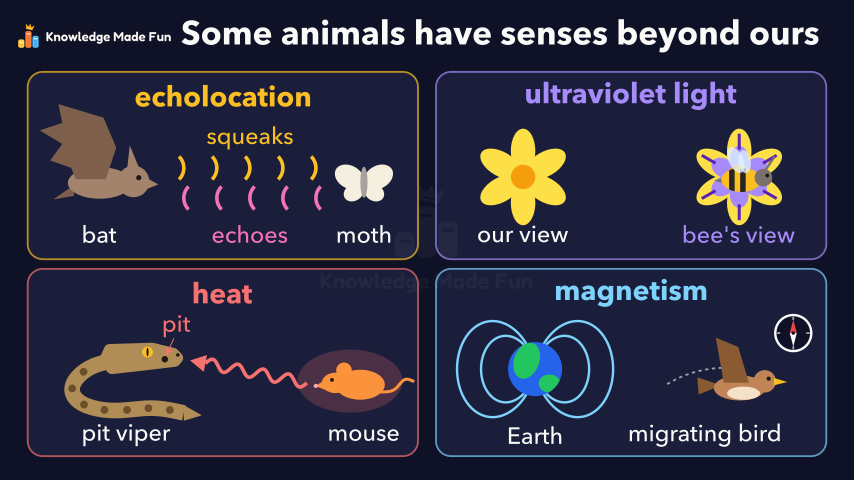 1 min 3 s
Animal senses beyond ours: echolocation, ultraviolet light, heat and magnetism
Grade 4 · 1 min 3 s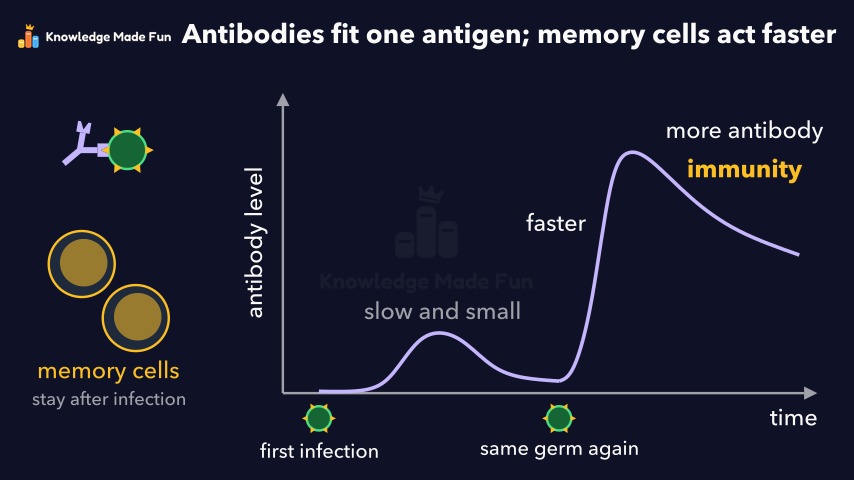 1 min 44 s
Antibodies and Memory Cells: The Body's Targeted Defence
Grade 8 · 1 min 44 s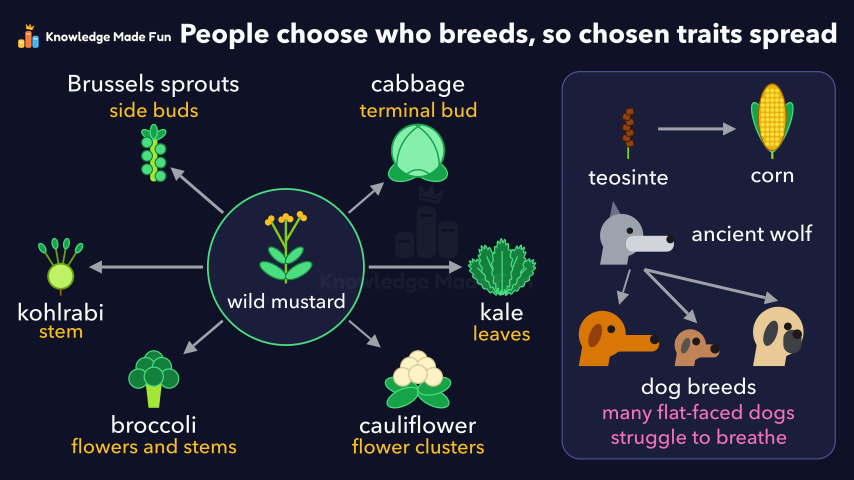 1 min 44 s
Artificial selection: people choose the traits
Grade 10 · 1 min 44 s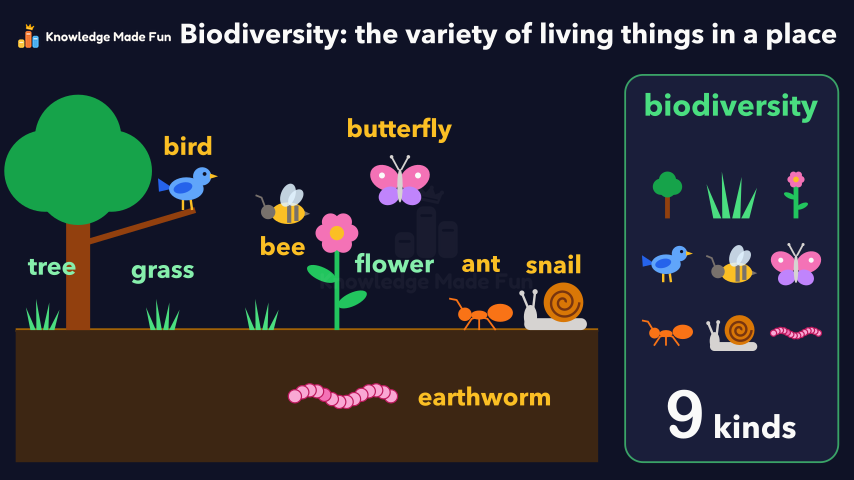 1 min 4 s
Biodiversity: The Variety of Living Things
Grade 3 · 1 min 4 s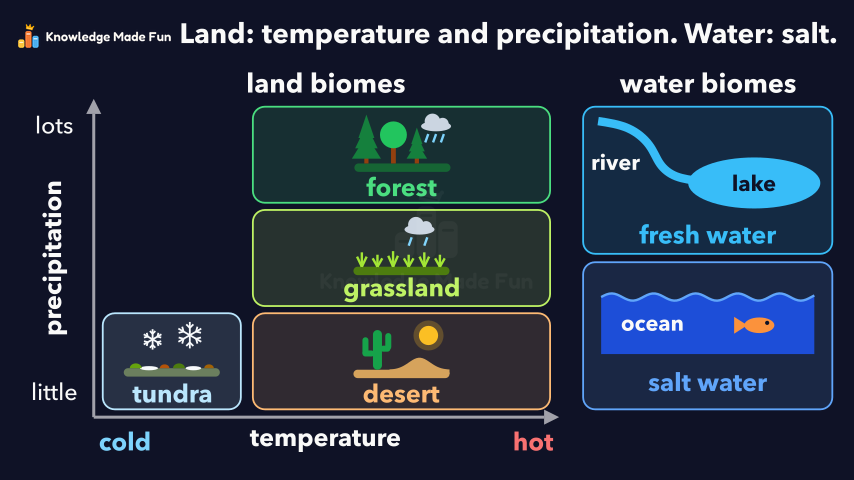 1 min 8 s
Biomes: Sorted by Temperature and Precipitation
Grade 4 · 1 min 8 s
- All Grade 5 Science lessons
- Create a free account to watch three lessons a day, no payment and no card.