Lesson · Grade 5 · Science
The Digestive System: The Path Food Takes
- Grade 5
- Science
- 1 min 20 s
- British Columbia
- BC5-SC-01
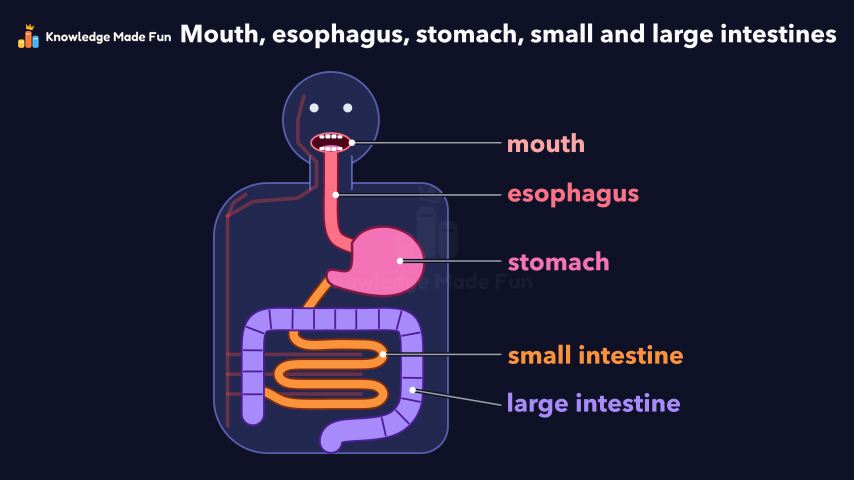
A bite of apple travels through a labelled diagram of the body: teeth and saliva in the mouth, down the esophagus, churned into a thick soup in the stomach, then through the small intestine, where nutrients pass into the blood and travel around the body. The large intestine soaks up water from the leftovers before the solid waste leaves the body, and the video ends by naming each part in order.
Anyone can watch two lessons on the website without an account. Signing in is free, no payment and no card, and opens three a day; Plus has no limit.
Loading
In one sentence
The question this lesson answers
Where does your food go after you eat it?
It takes a long trip through your digestive system.
Transcript
What the lesson says
Where does your food go after you eat it?
It takes a long trip through your digestive system.
First, in your mouth, your teeth chew the food into small pieces.
Saliva, or spit, makes the food wet and soft, so it is easy to swallow.
When you swallow, muscles squeeze the food down a tube called the esophagus.
The food drops into your stomach, a stretchy bag made of muscle.
Your stomach churns the food and mixes it with strong juices until it is a thick soup.
Next, the soup moves into the small intestine, a long, narrow tube coiled up in your belly.
Here, the useful parts of food, called nutrients, pass into your blood.
Your blood carries the nutrients all around your body.
What is left moves into the large intestine, which is wider but shorter.
The large intestine soaks up water from the leftovers.
The solid waste that is left leaves your body when you use the toilet.
So food travels from your mouth, down your esophagus, into your stomach, then through your small and large intestines.
Curriculum
Where this fits
The outcomes and strands follow the British Columbia curriculum.
Keep going
 1 min 3 s
A Sunflower's Life Cycle: Seed, Sprout, Flower, Seed
Kindergarten · 1 min 3 s 1 min 48 s
Adaptive radiation: one ancestor, many species
Grade 10 · 1 min 48 s 52 s
Animal Bodies That Help Them Live: Feet, Teeth and Fur
Kindergarten · 52 s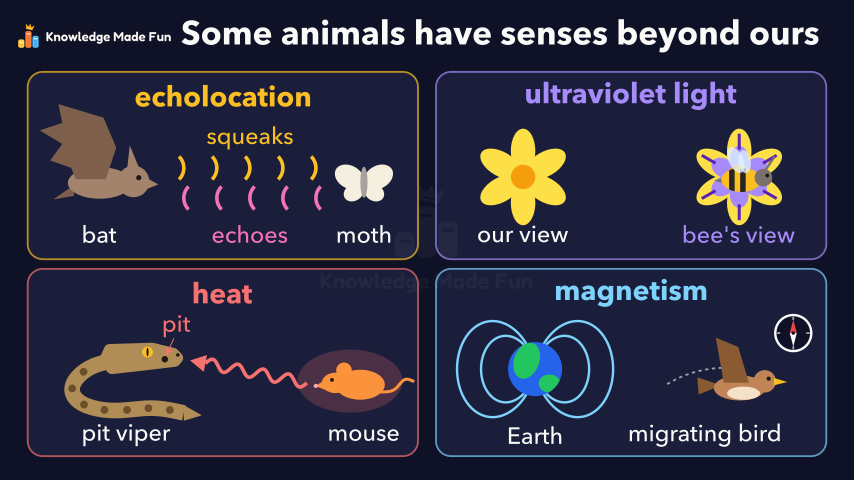 1 min 3 s
Animal senses beyond ours: echolocation, ultraviolet light, heat and magnetism
Grade 4 · 1 min 3 s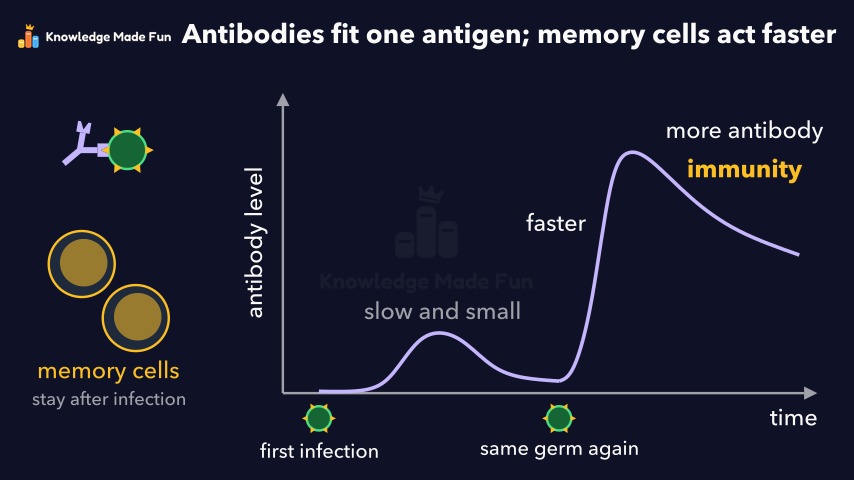 1 min 44 s
Antibodies and Memory Cells: The Body's Targeted Defence
Grade 8 · 1 min 44 s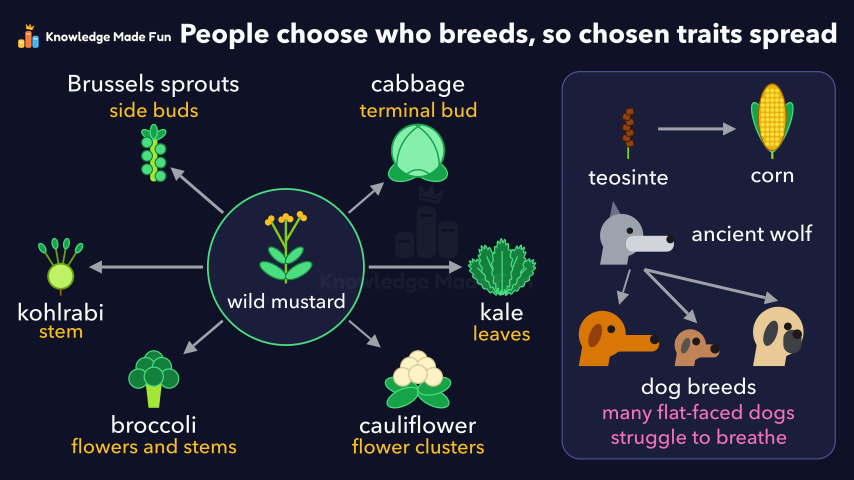 1 min 44 s
Artificial selection: people choose the traits
Grade 10 · 1 min 44 s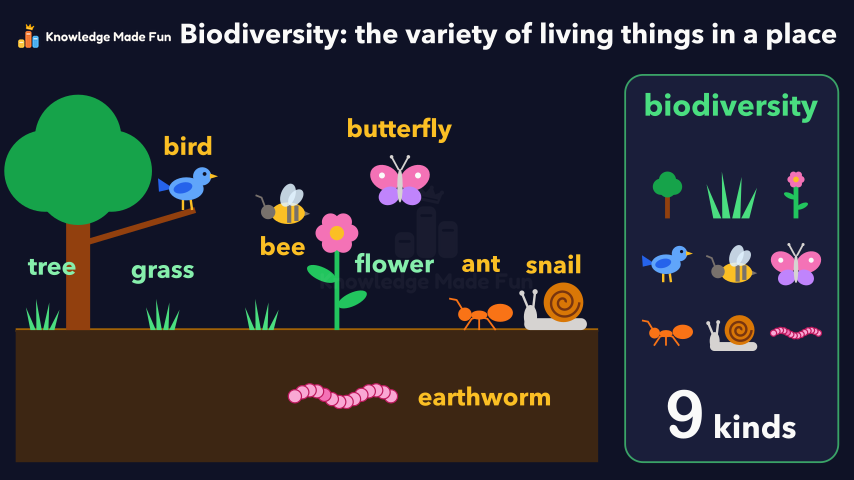 1 min 4 s
Biodiversity: The Variety of Living Things
Grade 3 · 1 min 4 s 1 min 8 s
Biomes: Sorted by Temperature and Precipitation
Grade 4 · 1 min 8 s
- All Grade 5 Science lessons
- Create a free account to watch three lessons a day, no payment and no card.