Lesson · Grade 4 · Science
Animal senses beyond ours: echolocation, ultraviolet light, heat and magnetism
- Grade 4
- Science
- 1 min 3 s
- British Columbia
- BC4-SC-02
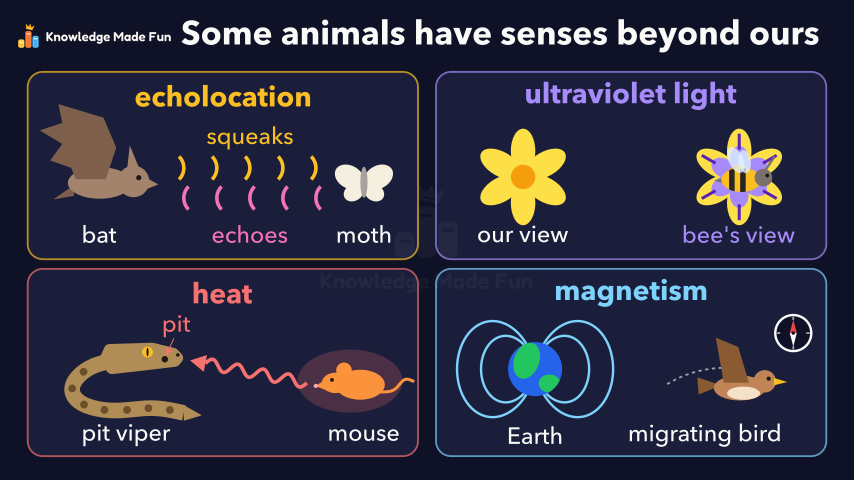
Four cards fill in one at a time: a bat finds a moth with echoes, a bee sees an ultraviolet pattern on a flower that looks plain to us, a pit viper senses a warm mouse in the dark, and a migrating bird senses Earth's magnetism. The video ends with the idea that some animals have senses beyond ours.
Anyone can watch two lessons on the website without an account. Signing in is free, no payment and no card, and opens three a day; Plus has no limit.
Loading
In one sentence
The question this lesson answers
Can some animals sense things that we cannot?
Many bats find food in the dark using echolocation.
Transcript
What the lesson says
Can some animals sense things that we cannot?
Many bats find food in the dark using echolocation.
The bat sends out very high squeaks.
The squeaks bounce off a moth and come back as echoes.
The echoes tell the bat where the moth is.
Bees can see ultraviolet light, but our eyes cannot.
Many flowers have ultraviolet patterns that lead bees to the nectar.
A pit viper has a small pit on each side of its face.
The pits sense the heat of a warm mouse, even in the dark.
Many migrating birds can sense Earth's magnetism.
Like a compass, it helps them find their way.
So, some animals have senses beyond ours.
Curriculum
Where this fits
- British Columbia, Grade 4
Science, Biology: sensing and responding: other animalsBC4-SC-02
Previous: How Your Body Senses and RespondsNext: How Plants Respond to Light, Gravity, Touch and Water
The outcomes and strands follow the British Columbia curriculum.
Keep going
 1 min 3 s
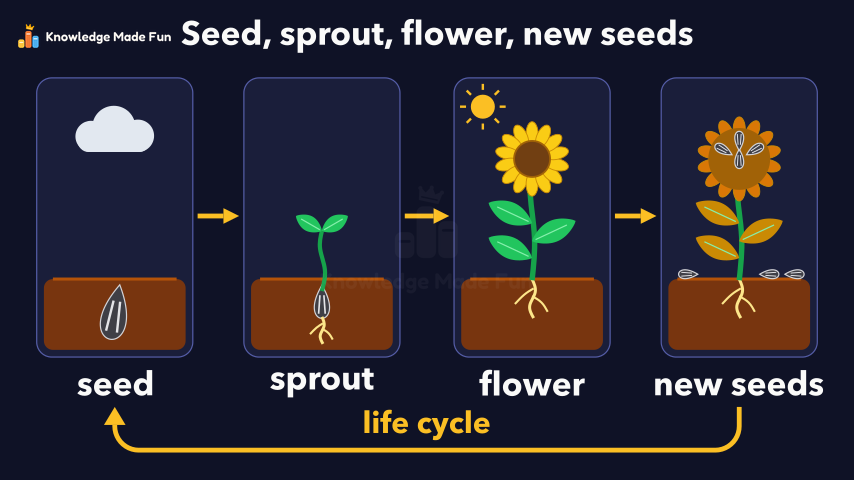
A Sunflower's Life Cycle: Seed, Sprout, Flower, Seed
Kindergarten · 1 min 3 s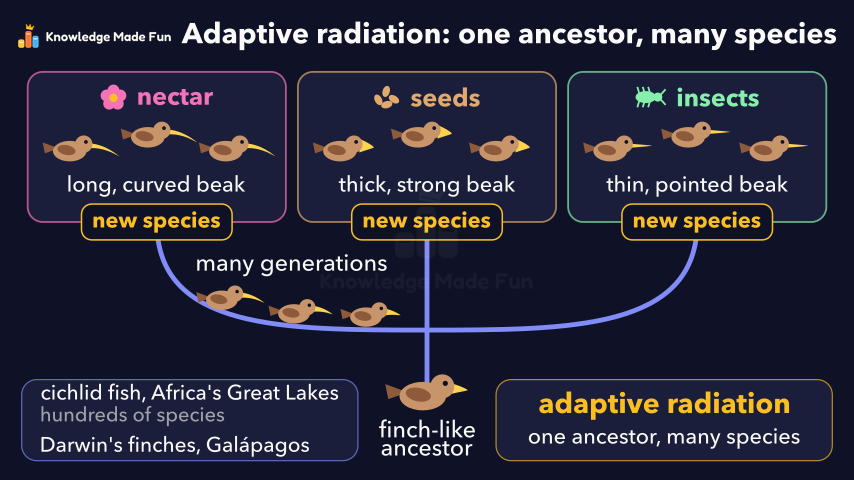 1 min 48 s
Adaptive radiation: one ancestor, many species
Grade 10 · 1 min 48 s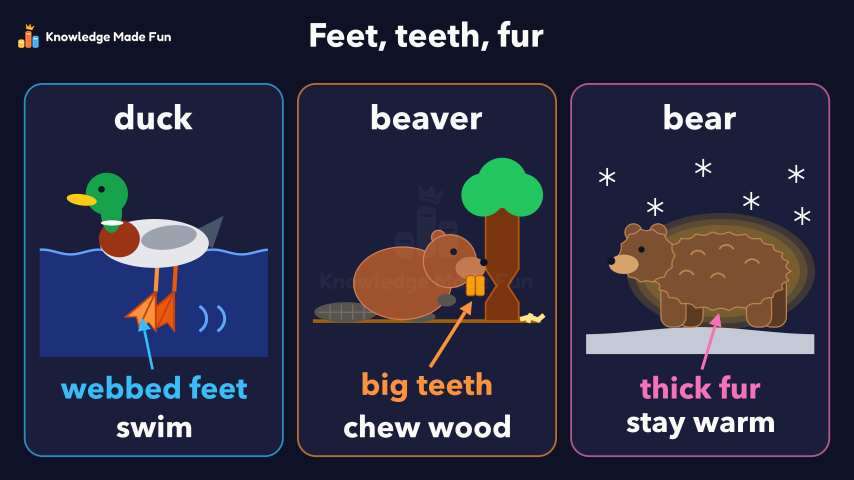 52 s
Animal Bodies That Help Them Live: Feet, Teeth and Fur
Kindergarten · 52 s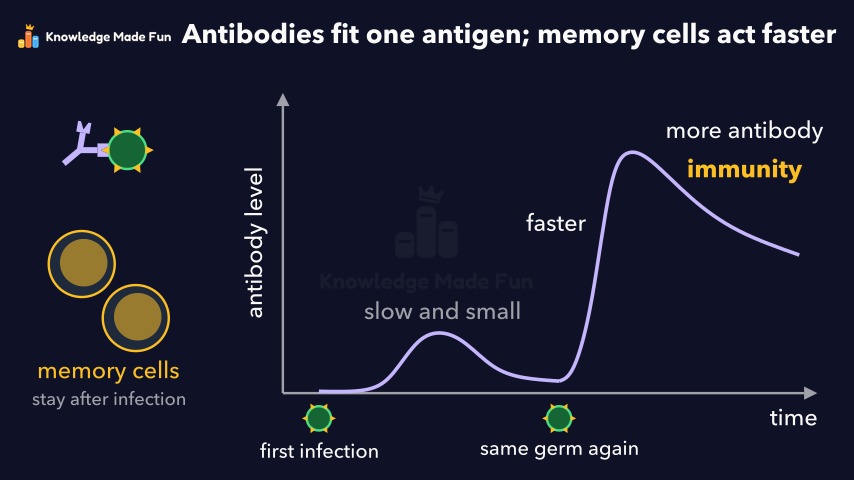 1 min 44 s
Antibodies and Memory Cells: The Body's Targeted Defence
Grade 8 · 1 min 44 s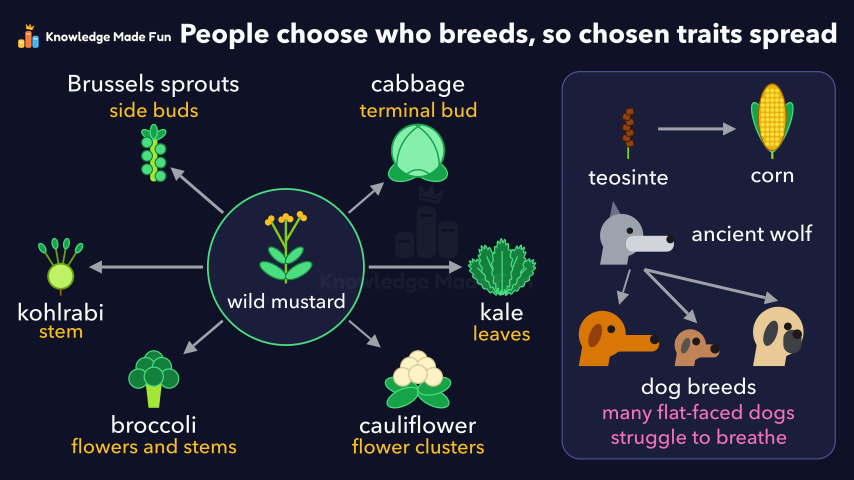 1 min 44 s
Artificial selection: people choose the traits
Grade 10 · 1 min 44 s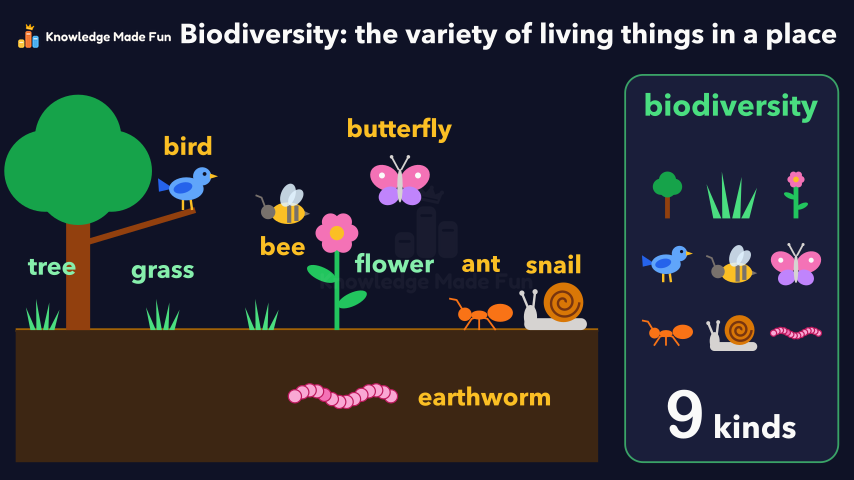 1 min 4 s
Biodiversity: The Variety of Living Things
Grade 3 · 1 min 4 s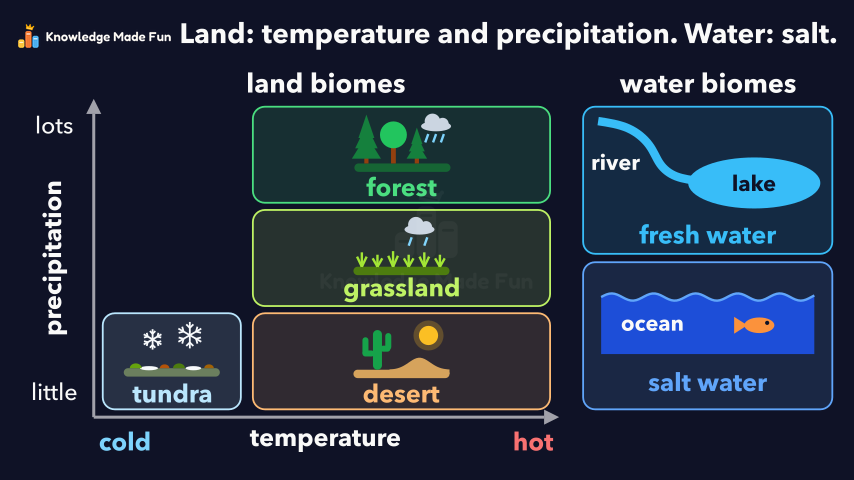 1 min 8 s
Biomes: Sorted by Temperature and Precipitation
Grade 4 · 1 min 8 s 1 min 6 s
Bones and Muscles: How Muscles Pull in Pairs
Grade 5 · 1 min 6 s
- All Grade 4 Science lessons
- Create a free account to watch three lessons a day, no payment and no card.