Lesson · Grade 4 · Science
How Your Body Senses and Responds
- Grade 4
- Science
- 56 s
- British Columbia
- BC4-SC-01
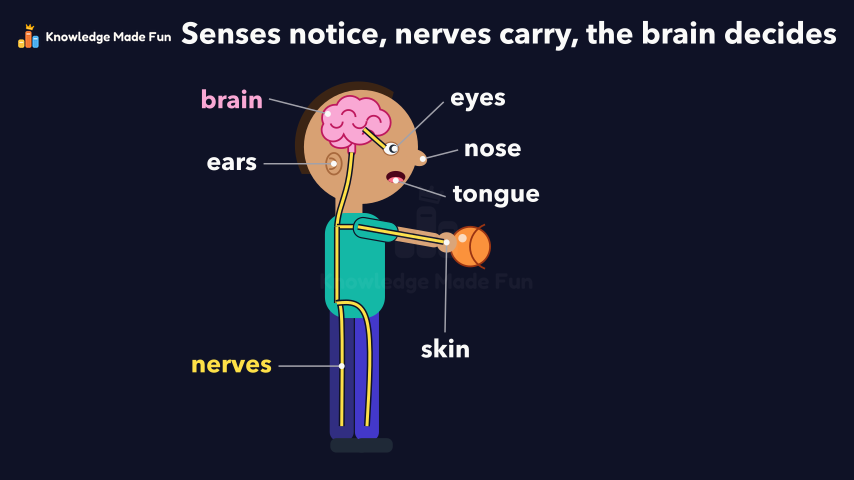
A labelled diagram of a child builds up step by step: the eyes, ears, nose, tongue and skin that sense the world, the brain as the control centre, and the nerves that link the brain to the body. As a ball flies in, glowing messages travel from the eyes along a nerve to the brain, then from the brain along nerves to the arm, which moves to catch the ball, and the skin on the hand sends a message back to the brain.
Concept: How the body senses and responds: senses, nerves and brain
Anyone can watch two lessons on the website without an account. Signing in is free, no payment and no card, and opens three a day; Plus has no limit.
Loading
In one sentence
The question this lesson answers
How does your body know what to do?
You sense the world with your eyes, ears, nose, tongue and skin.
Transcript
What the lesson says
How does your body know what to do?
You sense the world with your eyes, ears, nose, tongue and skin.
Inside your head is your brain, the body's control centre.
Nerves are like thin wires that link your brain to all parts of your body.
Imagine a ball is flying toward you.
Your eyes see the ball coming.
Your eyes send a message along a nerve to your brain.
Your brain works out what is happening and decides: catch the ball!
Then your brain sends a message along nerves to tell your arm to move.
Your arm moves, and you catch the ball!
The skin on your hand feels the ball and sends a message back to your brain.
Your senses notice things, your nerves carry messages, and your brain decides what to do.
Curriculum
Where this fits
- British Columbia, Grade 4
Science, Biology: sensing and responding: humansBC4-SC-01
Next: Animal senses beyond ours: echolocation, ultraviolet light, heat and magnetism
The outcomes and strands follow the British Columbia curriculum.
Keep going
 1 min 3 s
A Sunflower's Life Cycle: Seed, Sprout, Flower, Seed
Kindergarten · 1 min 3 s 1 min 48 s
Adaptive radiation: one ancestor, many species
Grade 10 · 1 min 48 s 52 s
Animal Bodies That Help Them Live: Feet, Teeth and Fur
Kindergarten · 52 s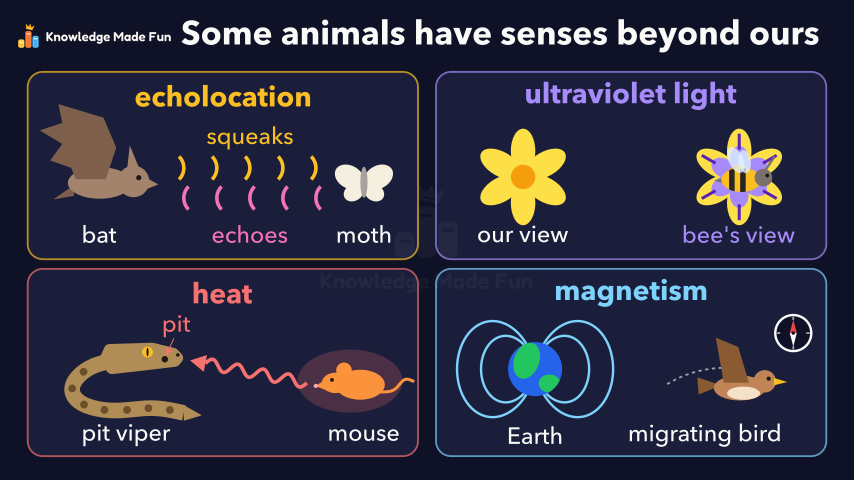 1 min 3 s
Animal senses beyond ours: echolocation, ultraviolet light, heat and magnetism
Grade 4 · 1 min 3 s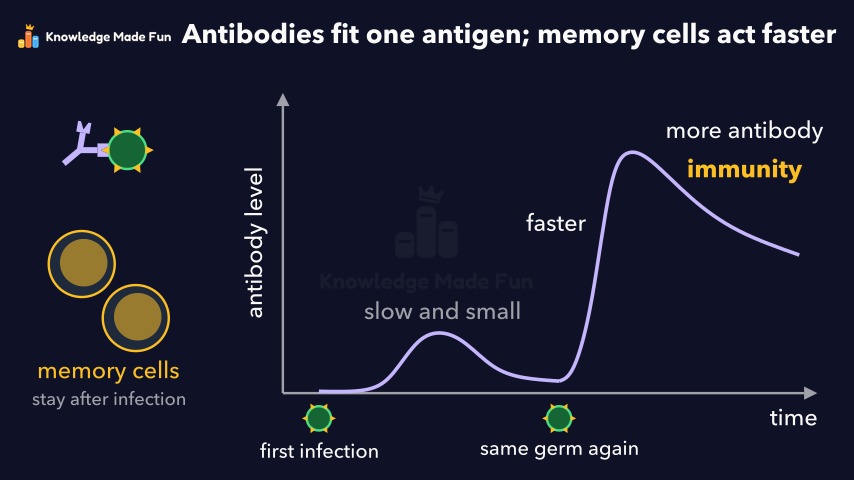 1 min 44 s
Antibodies and Memory Cells: The Body's Targeted Defence
Grade 8 · 1 min 44 s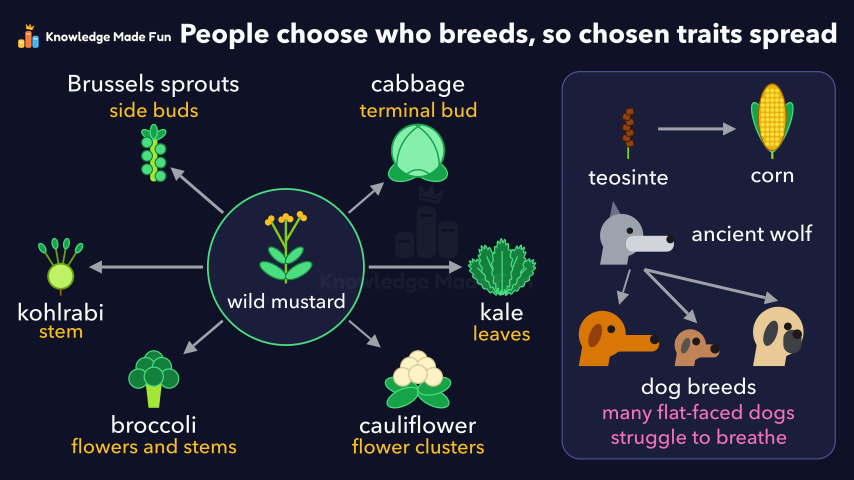 1 min 44 s
Artificial selection: people choose the traits
Grade 10 · 1 min 44 s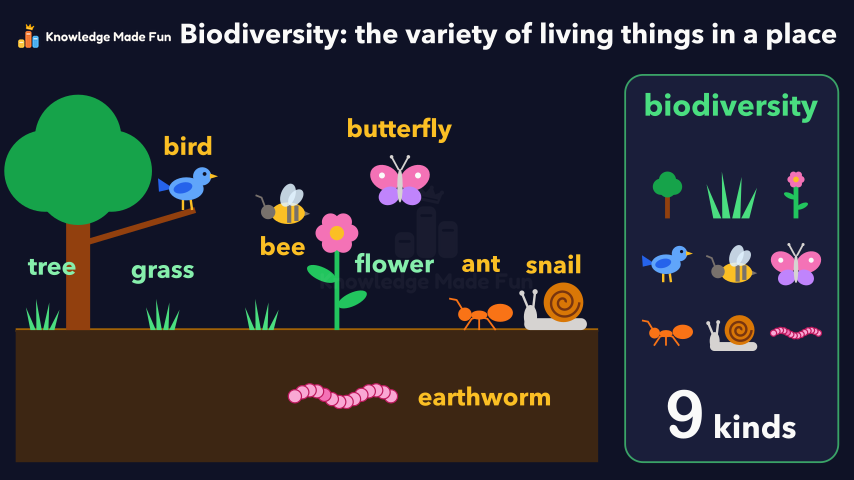 1 min 4 s
Biodiversity: The Variety of Living Things
Grade 3 · 1 min 4 s 1 min 8 s
Biomes: Sorted by Temperature and Precipitation
Grade 4 · 1 min 8 s
- All Grade 4 Science lessons
- Create a free account to watch three lessons a day, no payment and no card.