Lesson · Grade 8 · Science
Microbes as Decomposers: Recycling Nutrients
- Grade 8
- Science
- 1 min 33 s
- British Columbia
- BC8-SC-10
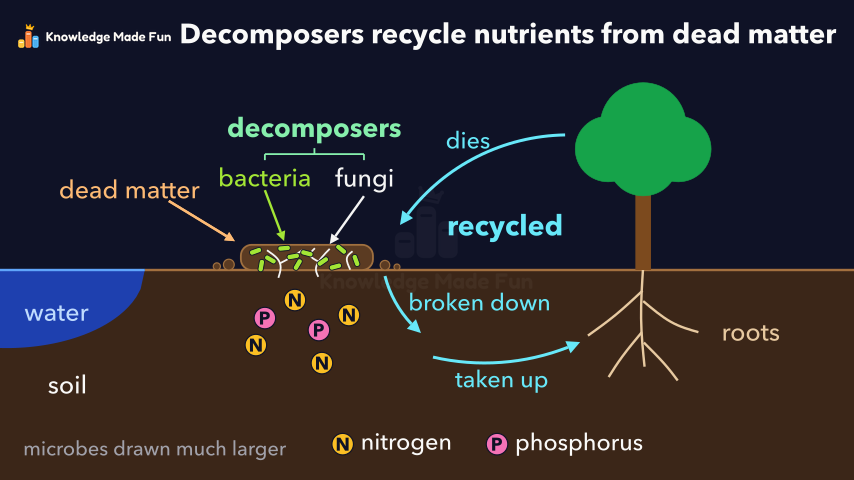
A fallen log on the forest floor is broken down in a time-lapse by bacteria and fungi, the main decomposers, which release nutrients such as nitrogen and phosphorus into the soil and water, where roots take them up so the same nutrients are recycled again and again. The same diagram then shows that without decomposers dead matter would pile up and its nutrients would stay locked away, so rot is not only harmful: it gives nutrients back to the soil.
Anyone can watch two lessons on the website without an account. Signing in is free, no payment and no card, and opens three a day; Plus has no limit.
Loading
In one sentence
The question this lesson answers
A fallen log on the forest floor slowly disappears over the years. Where does it go?
The log and the fallen leaves are dead matter, the remains of living things.
Transcript
What the lesson says
A fallen log on the forest floor slowly disappears over the years. Where does it go?
The log and the fallen leaves are dead matter, the remains of living things.
Microbes, also called micro-organisms, live on the log. Most are too small to see without a microscope.
Bacteria and fungi are the main decomposers: living things that break down dead matter to get their food.
Over months and years, they digest the log and the leaves and break them down into simpler substances.
This releases nutrients, substances that plants need to grow, such as nitrogen and phosphorus, into the soil and water.
Plant roots take up these nutrients, and the plant uses them to grow.
When the plant dies, it is broken down too, and its nutrients are taken up again. The nutrients are recycled.
Without decomposers, dead matter would pile up, and its nutrients would stay locked away inside it.
The soil would run short of nutrients, and plants could not grow well.
So rot is not only harmful. Rotting is decomposition, and it gives nutrients back to the soil.
Decomposers, mainly bacteria and fungi, break down dead matter and recycle its nutrients for living things to use again.
Curriculum
Where this fits
- British Columbia, Grade 8
Science, Biology: the relationship of micro-organisms with living thingsBC8-SC-10
Previous: Photosynthesis and Respiration: Two Halves of One CycleNext: Helpful and Harmful Microbes
The outcomes and strands follow the British Columbia curriculum.
Keep going
 1 min 3 s
A Sunflower's Life Cycle: Seed, Sprout, Flower, Seed
Kindergarten · 1 min 3 s 1 min 48 s
Adaptive radiation: one ancestor, many species
Grade 10 · 1 min 48 s 52 s
Animal Bodies That Help Them Live: Feet, Teeth and Fur
Kindergarten · 52 s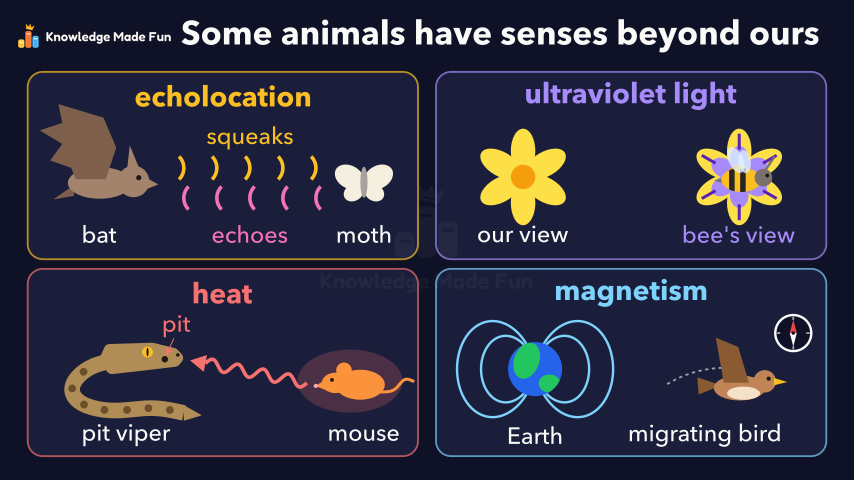 1 min 3 s
Animal senses beyond ours: echolocation, ultraviolet light, heat and magnetism
Grade 4 · 1 min 3 s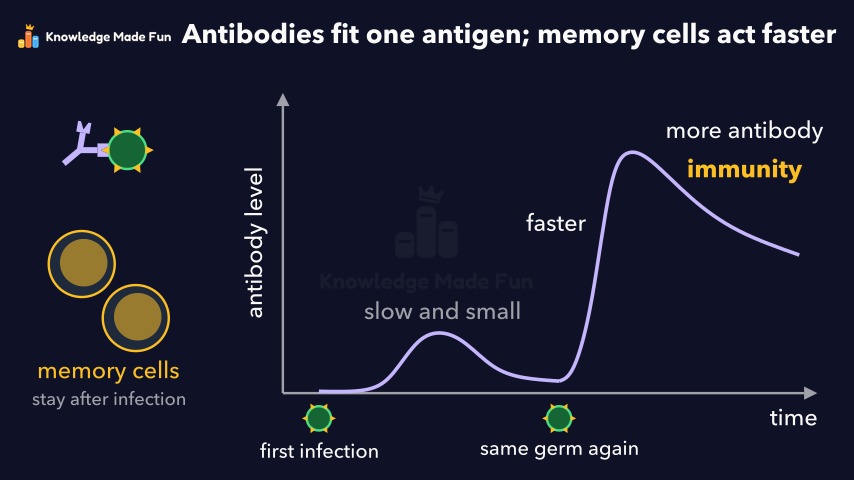 1 min 44 s
Antibodies and Memory Cells: The Body's Targeted Defence
Grade 8 · 1 min 44 s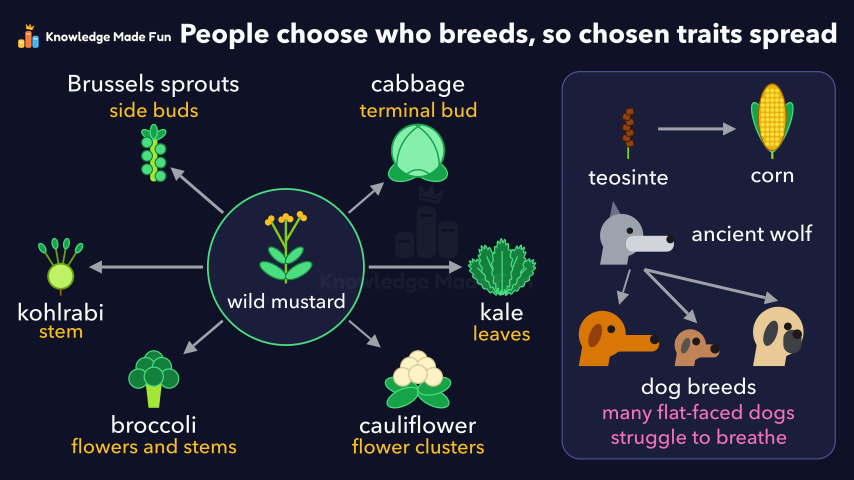 1 min 44 s
Artificial selection: people choose the traits
Grade 10 · 1 min 44 s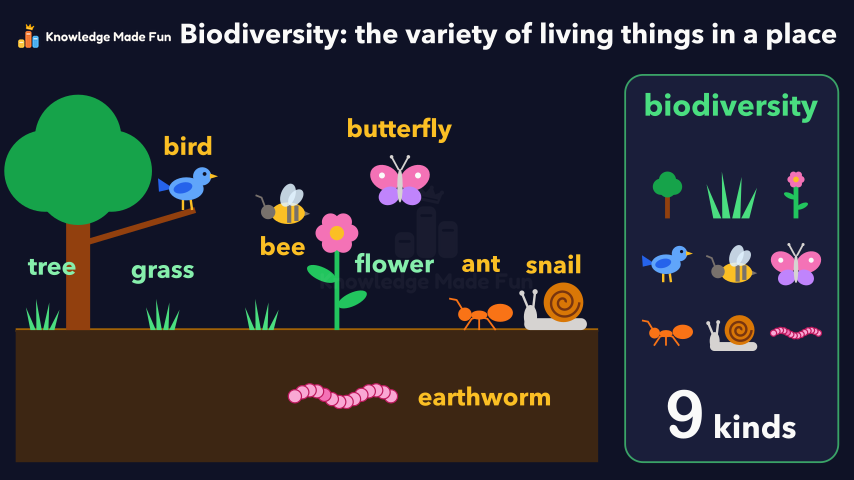 1 min 4 s
Biodiversity: The Variety of Living Things
Grade 3 · 1 min 4 s 1 min 8 s
Biomes: Sorted by Temperature and Precipitation
Grade 4 · 1 min 8 s
- All Grade 8 Science lessons
- Create a free account to watch three lessons a day, no payment and no card.