Lesson · Grade 9 · Science
The Stages of Mitosis: One Cell Becomes Two
- Grade 9
- Science
- 1 min 51 s
- British Columbia
- BC9-SC-02
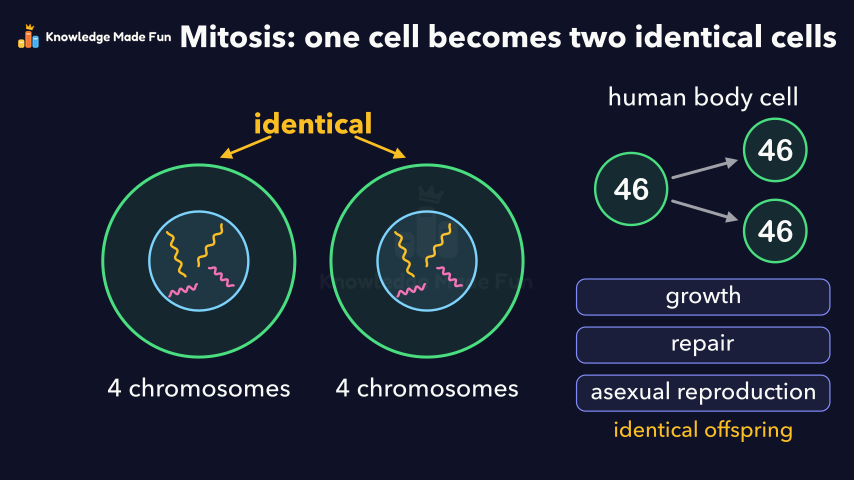
One cell with two colour-coded chromosome pairs copies its DNA in interphase, before mitosis begins. It then goes through prophase, metaphase, anaphase, telophase and cytokinesis to become two cells with the same chromosomes as the parent, which is how a human body cell with 46 chromosomes makes new cells for growth, repair and asexual reproduction.
Concept: Mitosis: one cell becomes two identical cells
Anyone can watch two lessons on the website without an account. Signing in is free, no payment and no card, and opens three a day; Plus has no limit.
Loading
In one sentence
The question this lesson answers
How does one cell divide to make two identical cells?
The answer is mitosis. Here is one cell: its cell membrane, cytoplasm and nucleus.
Transcript
What the lesson says
How does one cell divide to make two identical cells?
The answer is mitosis. Here is one cell: its cell membrane, cytoplasm and nucleus.
Inside the nucleus are chromosomes, long threads of DNA.
To keep it simple, this cell has just four chromosomes: a long pair and a short pair.
Before mitosis, in interphase, the cell copies every chromosome. DNA is not copied during mitosis.
First, in prophase, the copied chromosomes coil up and become short and thick.
Each is now two identical copies, called sister chromatids, joined together.
The nuclear membrane breaks down, and thin threads called spindle fibres form.
In metaphase, the chromosomes line up across the middle of the cell.
In anaphase, the fibres pull the sister chromatids apart, to opposite ends of the cell.
Each end now has one copy of every chromosome: two long and two short.
In telophase, a nuclear membrane forms around each set, and the chromosomes uncoil.
Then, in cytokinesis, the cytoplasm and cell membrane divide, making two cells.
Each new cell has the same four chromosomes as the parent, so they are identical.
A human body cell has 46 chromosomes, and each new cell from mitosis has 46 too.
Mitosis is used for growth, repair and asexual reproduction, which makes identical offspring.
In short, mitosis turns one cell into two cells with identical chromosomes.
Curriculum
Where this fits
- British Columbia, Grade 9
Science, Biology: asexual reproduction: mitosisBC9-SC-02
Previous: The cell cycle: growing, copying DNA and dividingNext: Fission, budding and spores: reproducing without a partner
- British Columbia, Grade 11
Life Sciences 11, Cells: sexual and asexual reproductionBC11-SC-138
Previous: Cell Specialization: Same DNA, Different JobsNext: Meiosis: Making Sex Cells with Half the Chromosomes
This lesson is also listed in Grade 11.
The outcomes and strands follow the British Columbia curriculum.
Keep going
 1 min 53 s
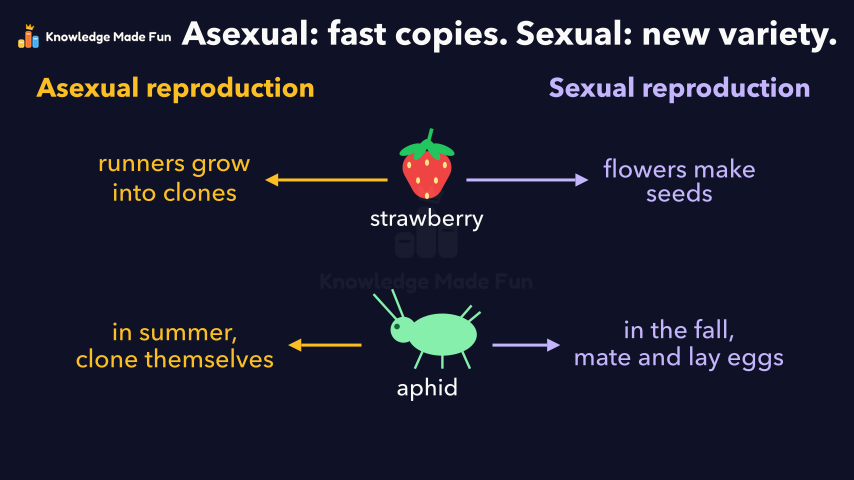
Asexual or Sexual Reproduction: Fast Copies or New Variety
Grade 9 · 1 min 53 s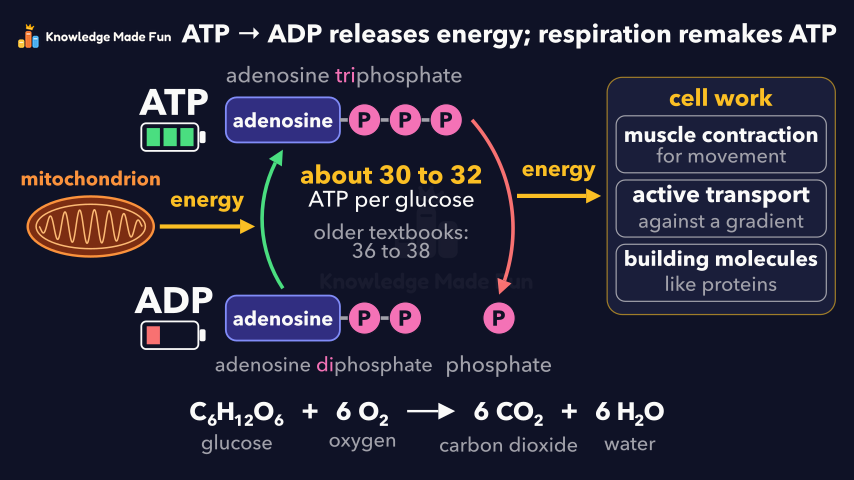 1 min 54 s
ATP: How Cells Store and Spend Energy
Grade 11 · 1 min 54 s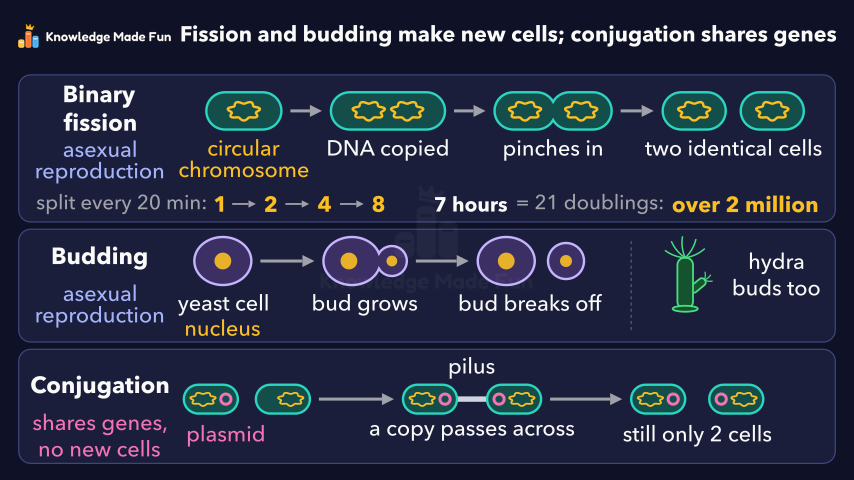 1 min 55 s
Binary Fission, Budding and Conjugation
Grade 11 · 1 min 55 s 1 min 49 s
Cell Specialization: Same DNA, Different Jobs
Grade 11 · 1 min 49 s 1 min 57 s
Levels of Organization: From Molecules to Ecosystems
Grade 11 · 1 min 57 s 1 min 53 s
Meiosis: Making Sex Cells with Half the Chromosomes
Grade 9 · 1 min 53 s 1 min 22 s
Organelles: The Jobs Inside a Cell
Grade 8 · 1 min 22 s 1 min 55 s
Prokaryotic and eukaryotic cells: is there a nucleus?
Grade 8 · 1 min 55 s
- All Grade 9 Science lessons
- Create a free account to watch three lessons a day, no payment and no card.