Lesson · Grade 8 · Science
Organelles: The Jobs Inside a Cell
- Grade 8
- Science
- 1 min 22 s
- British Columbia
- BC8-SC-06
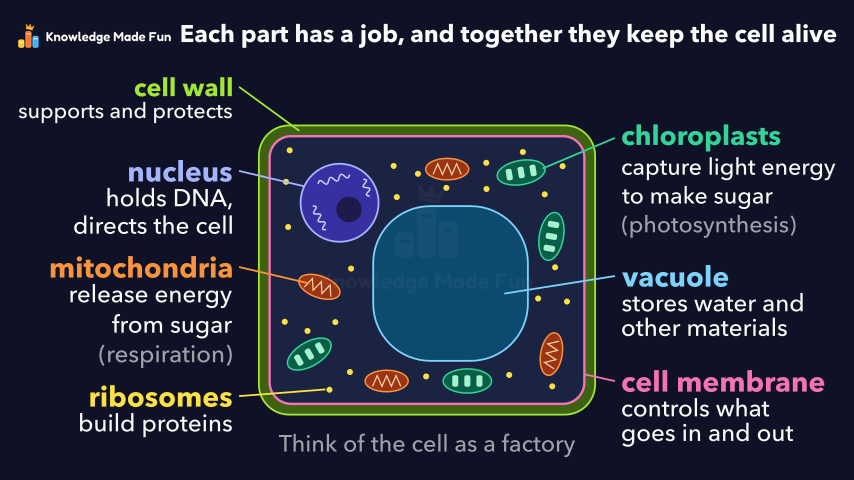
The video zooms from a patch of leaf cells into one plant cell, whose faded parts light up one at a time as the voice names each job. The nucleus, cell membrane, cell wall, mitochondria, ribosomes, chloroplasts and vacuole each get a labelled job, with a factory comparison in the captions, and the video ends on the recap that every part has a job and together they keep the cell alive.
Concept: Inside a eukaryotic cell: organelles and their jobs
Anyone can watch two lessons on the website without an account. Signing in is free, no payment and no card, and opens three a day; Plus has no limit.
Loading
In one sentence
The question this lesson answers
All living things are made of one or more cells, the basic units of life. So what goes on inside a cell?
Let's zoom in on one plant cell from a leaf.
Transcript
What the lesson says
All living things are made of one or more cells, the basic units of life. So what goes on inside a cell?
Let's zoom in on one plant cell from a leaf.
Inside are organelles, tiny structures that each do a job. Think of the cell as a factory.
The nucleus holds DNA, the cell's instructions, and directs the cell, like a factory's control room.
The cell membrane is a thin layer around the cell. It controls what goes in and out, like a security gate.
Plant cells also have a stiff cell wall outside the membrane. It supports and protects the cell, like a factory's strong outer walls.
Mitochondria release energy from sugar in a process called respiration. They work like a power station.
Ribosomes, the tiny dots, build proteins, like workers on an assembly line.
Chloroplasts capture light energy, like solar panels, and use it to make sugar. This is called photosynthesis.
The large vacuole stores water and other materials, like a storeroom.
Every part of a cell has its own job, and together they keep the cell alive.
Curriculum
Where this fits
- British Columbia, Grade 8
Science, Biology: cell theory and types of cellsBC8-SC-06
Previous: Plant and Animal Cells: What They Share and How They DifferNext: Photosynthesis: how plants make sugar from light
- British Columbia, Grade 11
Life Sciences 11, Cells: cell structure and functionBC11-SC-136
Previous: Prokaryotic and eukaryotic cells: is there a nucleus?Next: Cell Specialization: Same DNA, Different Jobs
This lesson is also listed in Grade 11.
The outcomes and strands follow the British Columbia curriculum.
Keep going
 1 min 53 s
Asexual or Sexual Reproduction: Fast Copies or New Variety
Grade 9 · 1 min 53 s 1 min 54 s
ATP: How Cells Store and Spend Energy
Grade 11 · 1 min 54 s 1 min 55 s
Binary Fission, Budding and Conjugation
Grade 11 · 1 min 55 s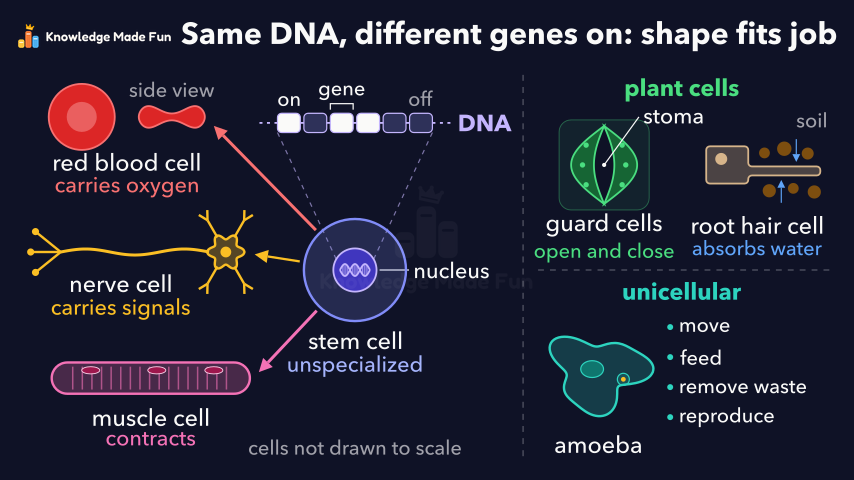 1 min 49 s
Cell Specialization: Same DNA, Different Jobs
Grade 11 · 1 min 49 s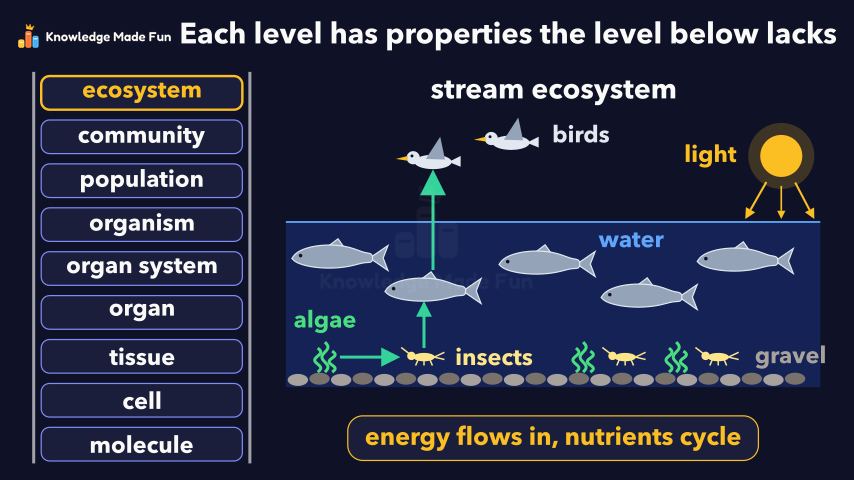 1 min 57 s
Levels of Organization: From Molecules to Ecosystems
Grade 11 · 1 min 57 s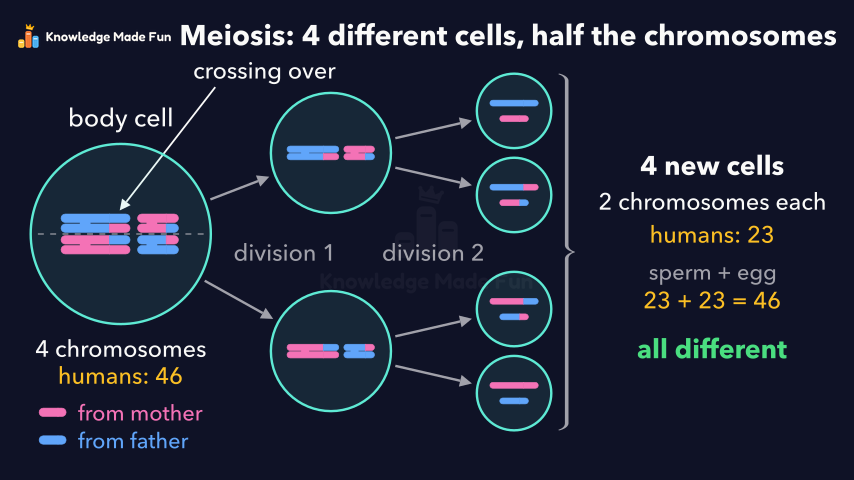 1 min 53 s
Meiosis: Making Sex Cells with Half the Chromosomes
Grade 9 · 1 min 53 s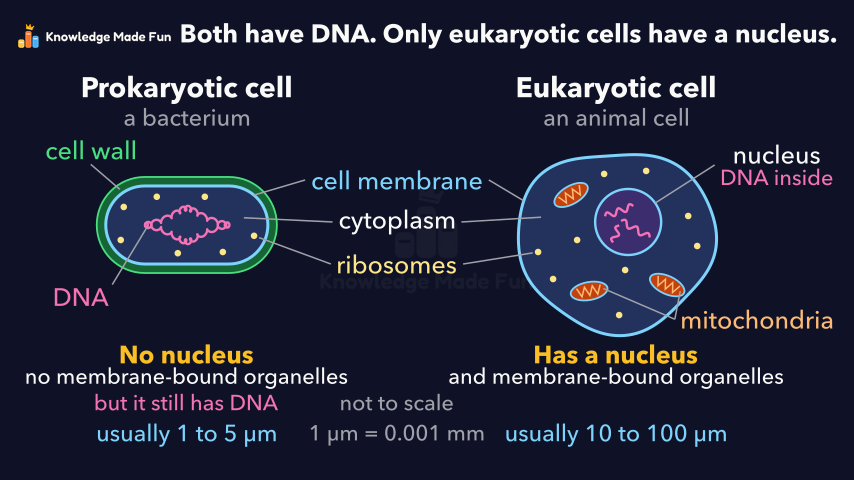 1 min 55 s
Prokaryotic and eukaryotic cells: is there a nucleus?
Grade 8 · 1 min 55 s 1 min 51 s
The Stages of Mitosis: One Cell Becomes Two
Grade 9 · 1 min 51 s
- All Grade 8 Science lessons
- Create a free account to watch three lessons a day, no payment and no card.