Lesson · Grade 11 · Life Sciences
Levels of Organization: From Molecules to Ecosystems
- Grade 11
- Life Sciences
- 1 min 57 s
- British Columbia
- BC11-SC-134
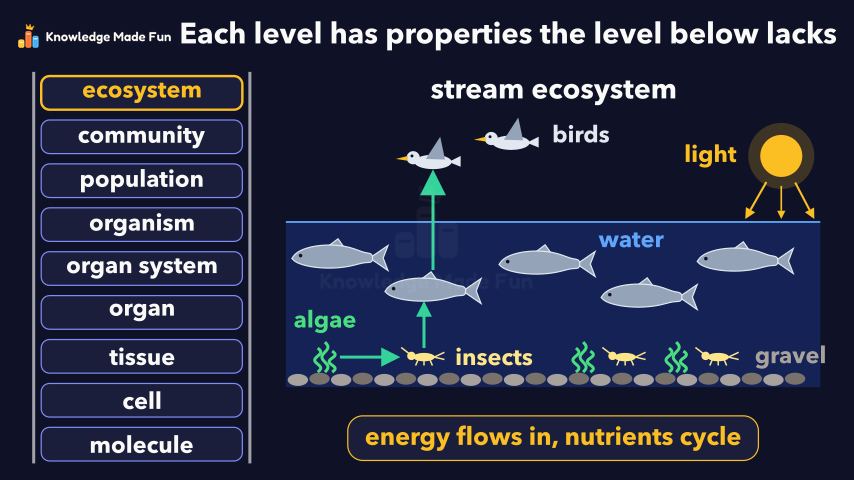
A ladder of the nine levels of organization builds up rung by rung while one example zooms out beside it: DNA, a heart muscle cell, cardiac muscle tissue, the heart, the circulatory system, a salmon, a salmon population, the stream community and the stream ecosystem with its water, gravel and light. At each level a labelled box shows one property the level below does not have, such as contracting as one, pumping blood, having a birth rate, or energy flowing in while nutrients cycle.
Anyone can watch two lessons on the website without an account. Signing in is free, no payment and no card, and opens three a day; Plus has no limit.
Loading
In one sentence
The question this lesson answers
Life is organized in levels, from tiny molecules up to whole ecosystems.
We will climb them like a ladder, with one example: a salmon in a stream.
Transcript
What the lesson says
Life is organized in levels, from tiny molecules up to whole ecosystems.
We will climb them like a ladder, with one example: a salmon in a stream.
At the bottom is a molecule, a group of atoms bonded together. DNA stores instructions, but it is not alive.
A cell is the smallest unit of life. This heart muscle cell is alive and can contract.
That is the key idea: each level has properties that the level below does not have.
Similar cells working together form a tissue. Heart muscle tissue, called cardiac muscle, contracts as one.
Different tissues working together form an organ, the heart. Only the whole heart can pump blood.
Organs working together form an organ system. The circulatory system is the heart, blood vessels and blood.
It carries oxygen and nutrients to cells all through the body.
Organ systems together make an organism, one living thing: a salmon. It can swim, feed and grow.
All the salmon of one species in one area form a population, with a size and a birth rate.
The salmon share their stream with algae, insects and birds. Together, these populations form a community.
In a community, species interact: insects eat algae, salmon eat insects, and birds eat salmon.
Add the non-living parts, the water, the gravel and the light, and you have an ecosystem.
Energy flows in as sunlight, while nutrients cycle and are used again and again.
From molecule to ecosystem, each level has properties that the level below does not have.
Curriculum
Where this fits
- British Columbia, Grade 11
Life Sciences 11, Cells: levels of organizationBC11-SC-134
- British Columbia, Grade 12
Anatomy and Physiology 12, Body systems: micro to macro organizationBC12-SC-24
This lesson is also listed in Grade 12.
The outcomes and strands follow the British Columbia curriculum.
Keep going
 1 min 53 s
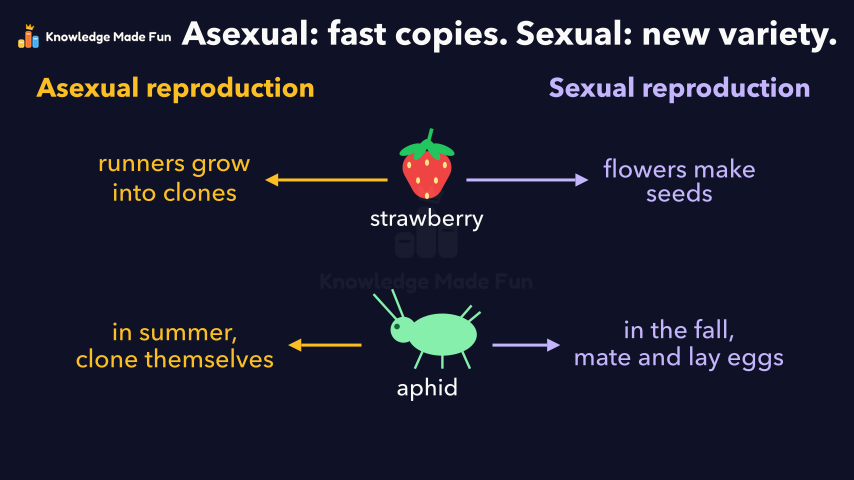
Asexual or Sexual Reproduction: Fast Copies or New Variety
Grade 9 · 1 min 53 s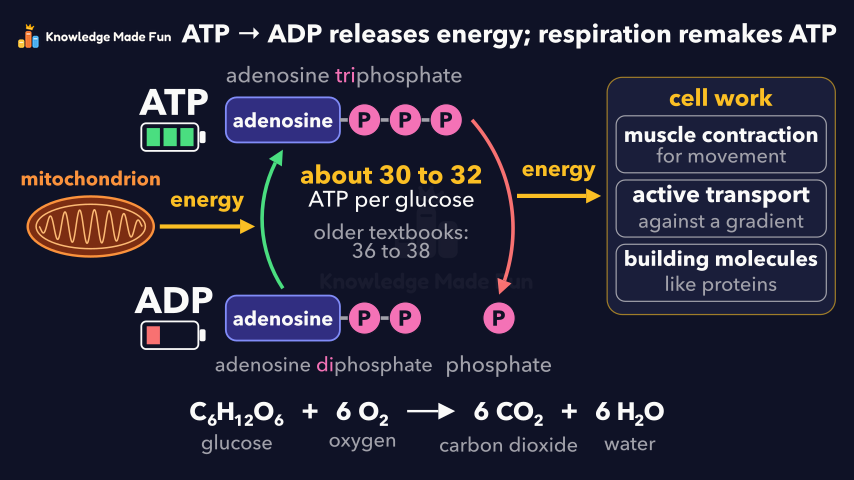 1 min 54 s
ATP: How Cells Store and Spend Energy
Grade 11 · 1 min 54 s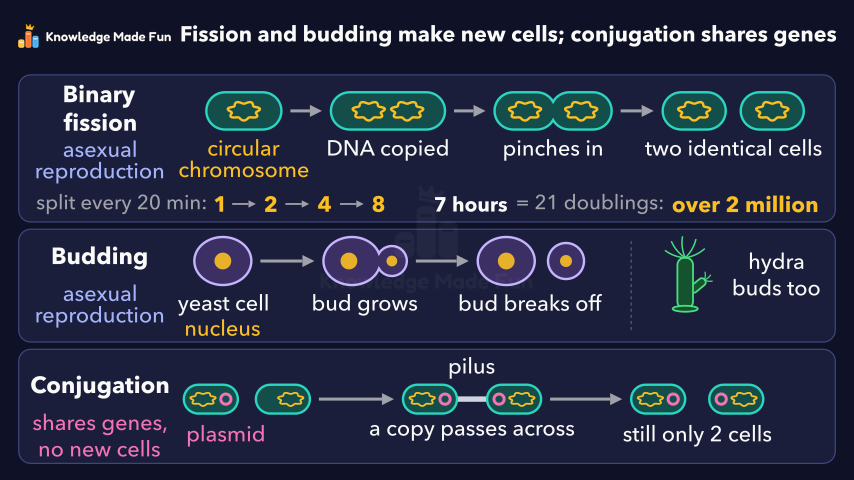 1 min 55 s
Binary Fission, Budding and Conjugation
Grade 11 · 1 min 55 s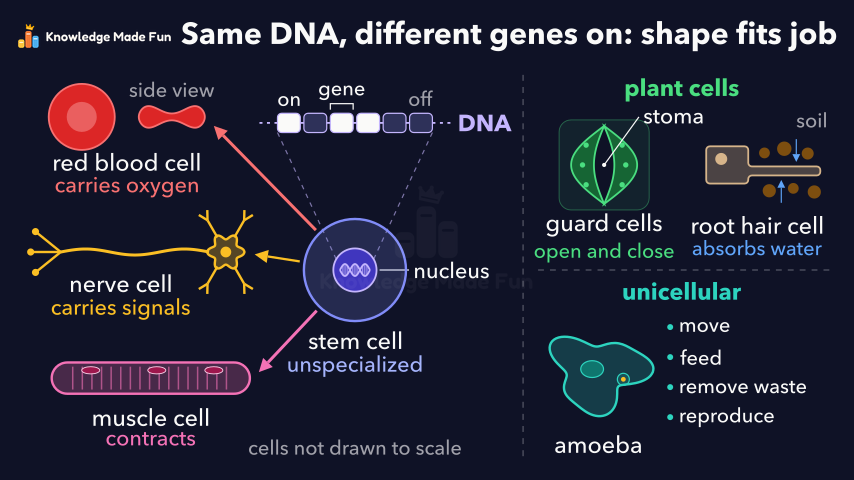 1 min 49 s
Cell Specialization: Same DNA, Different Jobs
Grade 11 · 1 min 49 s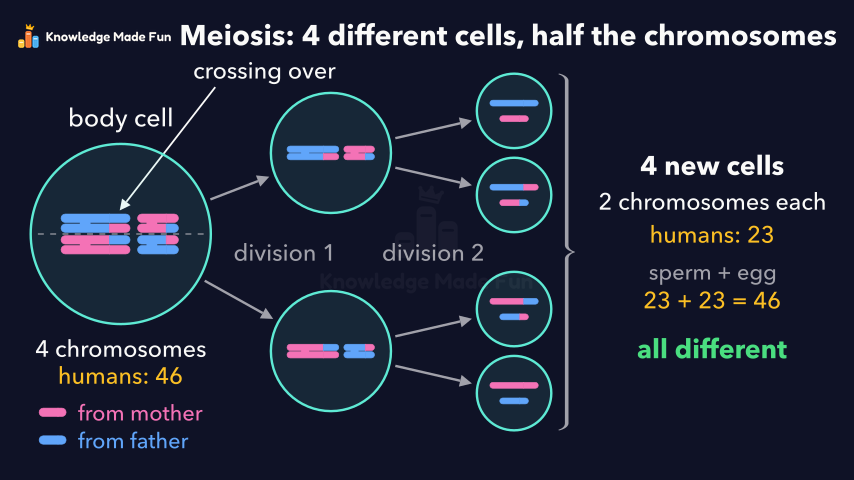 1 min 53 s
Meiosis: Making Sex Cells with Half the Chromosomes
Grade 9 · 1 min 53 s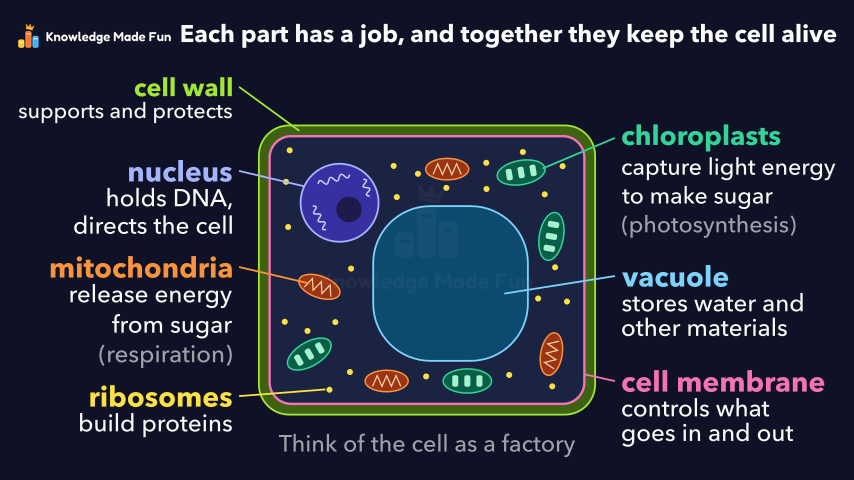 1 min 22 s
Organelles: The Jobs Inside a Cell
Grade 8 · 1 min 22 s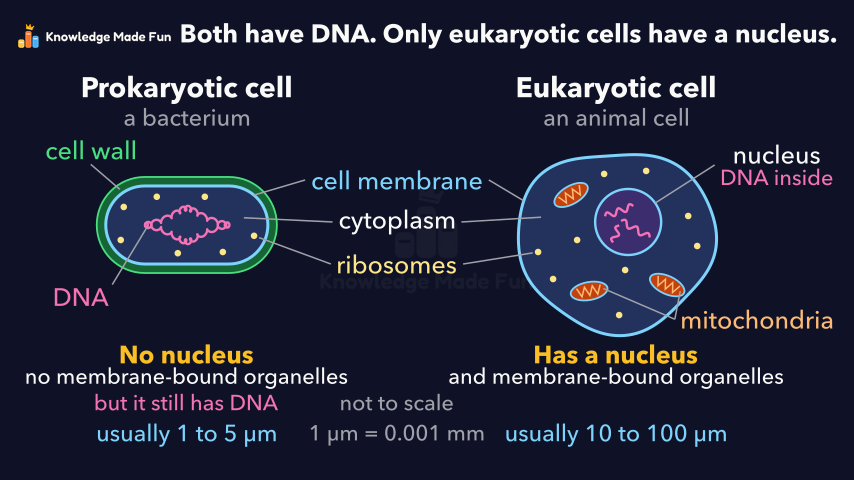 1 min 55 s
Prokaryotic and eukaryotic cells: is there a nucleus?
Grade 8 · 1 min 55 s 1 min 51 s
The Stages of Mitosis: One Cell Becomes Two
Grade 9 · 1 min 51 s
- All Grade 11 Life Sciences lessons
- Create a free account to watch three lessons a day, no payment and no card.