Lesson · Grade 8 · Science
Photosynthesis: how plants make sugar from light
- Grade 8
- Science
- 1 min 51 s
- British Columbia
- BC8-SC-07
A cross-section of a leaf builds up step by step, showing palisade cells packed with chloroplasts, light coming in from above, carbon dioxide entering through stomata into the air spaces, and water arriving in the xylem. Then one chloroplast is zoomed in to show chlorophyll absorbing mostly red and blue light, the reactants going in and the products coming out, the word and balanced symbol equations (6CO2 + 6H2O → C6H12O6 + 6O2), and that the carbon in glucose comes from the air, so most of a plant's dry mass comes from the air, not the soil.
Anyone can watch two lessons on the website without an account. Signing in is free, no payment and no card, and opens three a day; Plus has no limit.
Loading
In one sentence
The question this lesson answers
Plants do not eat. So where does a plant's food come from?
Plants make food in their leaves. This thin slice across a leaf is called a cross-section.
Transcript
What the lesson says
Plants do not eat. So where does a plant's food come from?
Plants make food in their leaves. This thin slice across a leaf is called a cross-section.
The tall cells near the top are palisade cells, packed with chloroplasts, where food is made.
Light shines in through the top of the leaf.
Carbon dioxide from the air enters through tiny pores called stomata, then spreads through air spaces.
Water comes up from the roots in tubes called xylem, inside the veins.
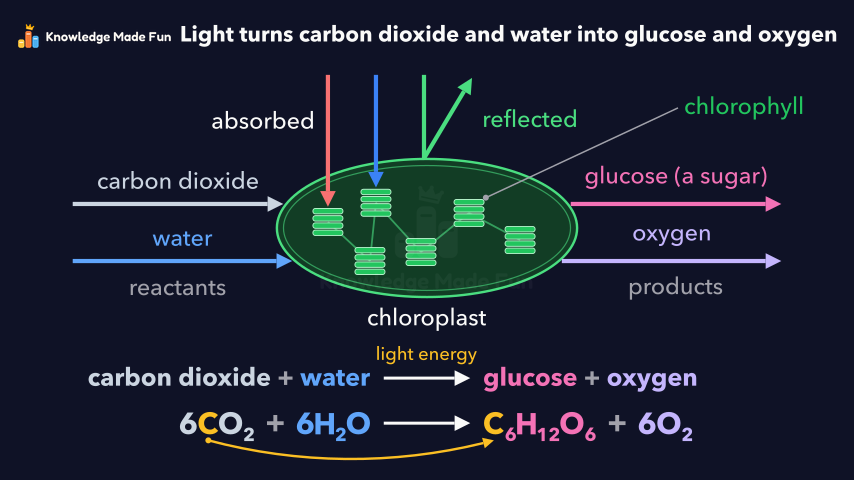
Now zoom in on one chloroplast. Here, light energy is used to make sugar. This is photosynthesis.
Chloroplasts contain chlorophyll, a green substance that absorbs light.
It absorbs mostly red and blue light. It reflects more green light, so leaves look green.
Carbon dioxide and water go in. These starting substances are the reactants.
Light energy turns them into glucose, a sugar, and oxygen. These are the products.
Carbon dioxide plus water, using light energy, makes glucose plus oxygen.
In symbols, six carbon dioxide and six water molecules make one glucose and six oxygen molecules.
Look at the carbon. Every carbon atom in glucose comes from carbon dioxide in the air.
A plant uses glucose to build its body, so most of its dry mass, the mass without water, comes from the air, not the soil.
Photosynthesis uses light energy to turn carbon dioxide and water into glucose and oxygen.
Curriculum
Where this fits
- British Columbia, Grade 8
Science, Biology: photosynthesis and cellular respirationBC8-SC-07
Previous: Organelles: The Jobs Inside a CellNext: Cellular Respiration: How Cells Release Energy from Sugar
The outcomes and strands follow the British Columbia curriculum.
Keep going
 1 min 3 s
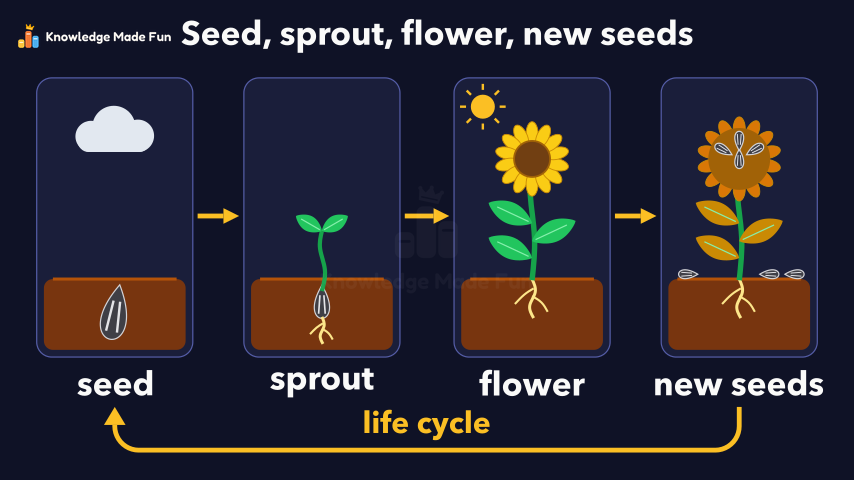
A Sunflower's Life Cycle: Seed, Sprout, Flower, Seed
Kindergarten · 1 min 3 s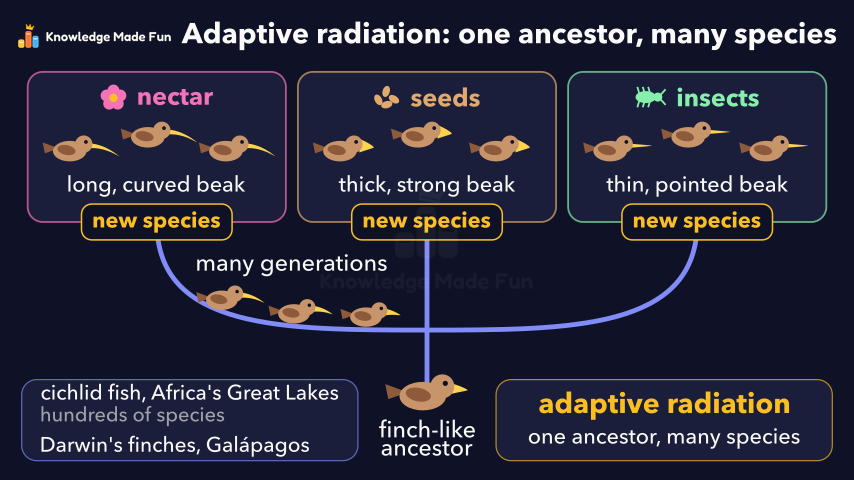 1 min 48 s
Adaptive radiation: one ancestor, many species
Grade 10 · 1 min 48 s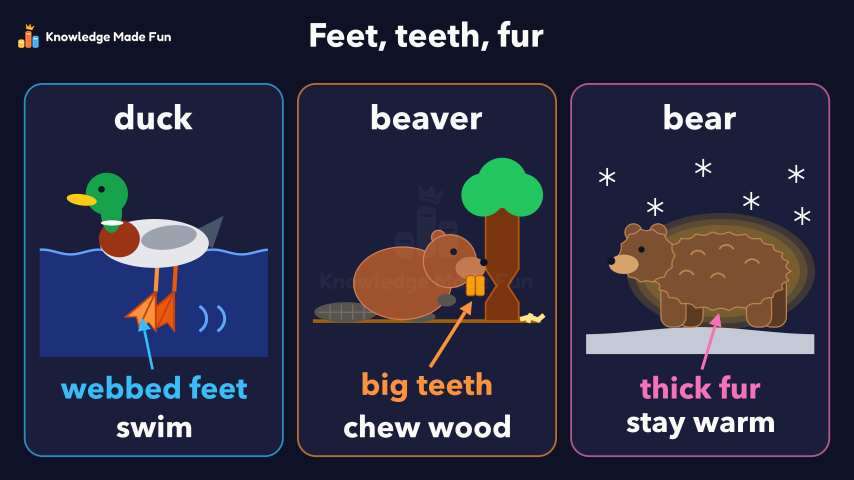 52 s
Animal Bodies That Help Them Live: Feet, Teeth and Fur
Kindergarten · 52 s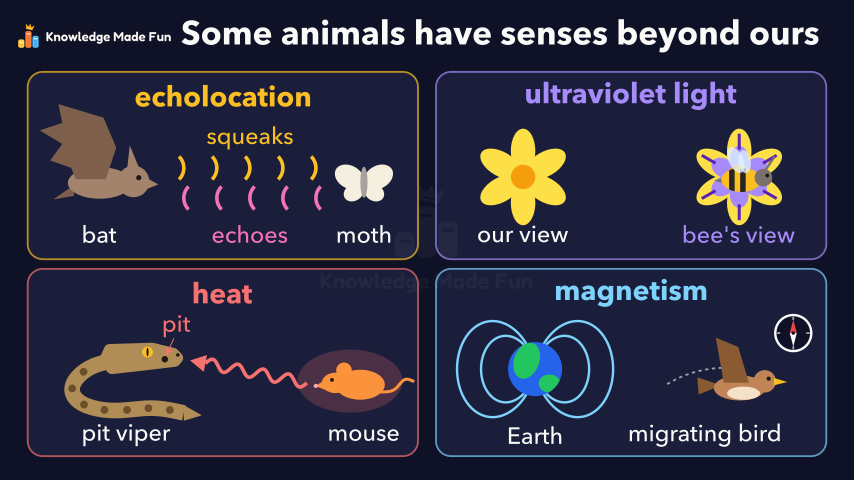 1 min 3 s
Animal senses beyond ours: echolocation, ultraviolet light, heat and magnetism
Grade 4 · 1 min 3 s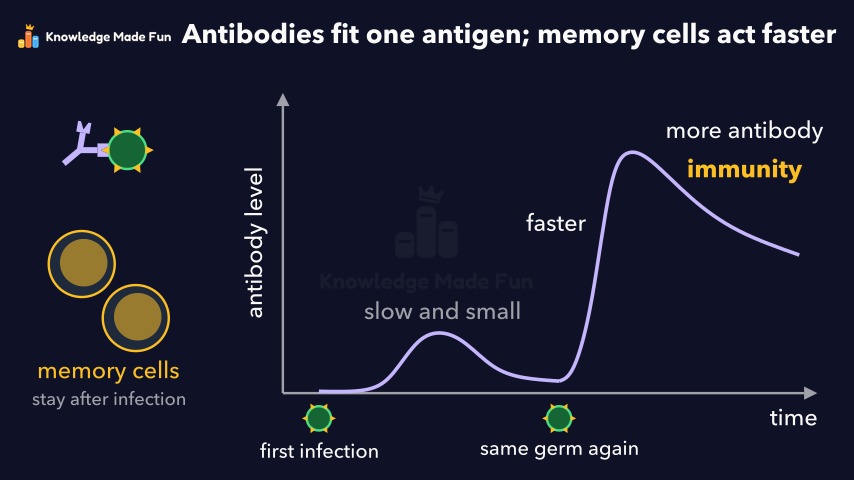 1 min 44 s
Antibodies and Memory Cells: The Body's Targeted Defence
Grade 8 · 1 min 44 s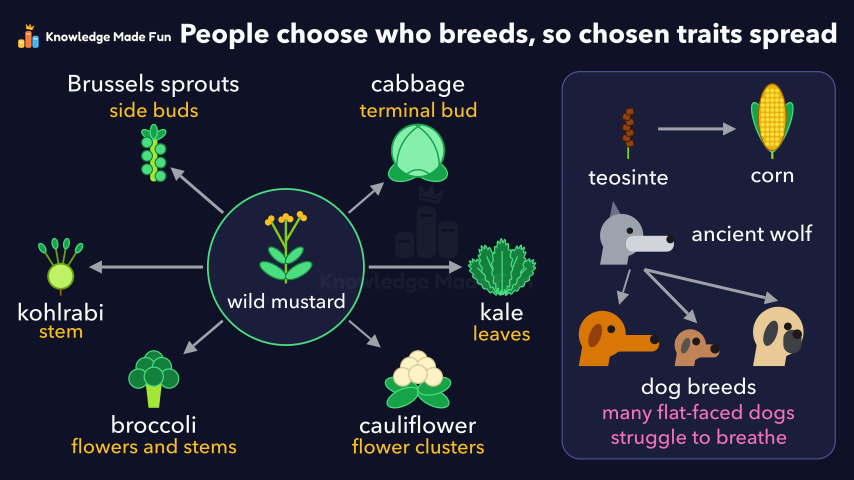 1 min 44 s
Artificial selection: people choose the traits
Grade 10 · 1 min 44 s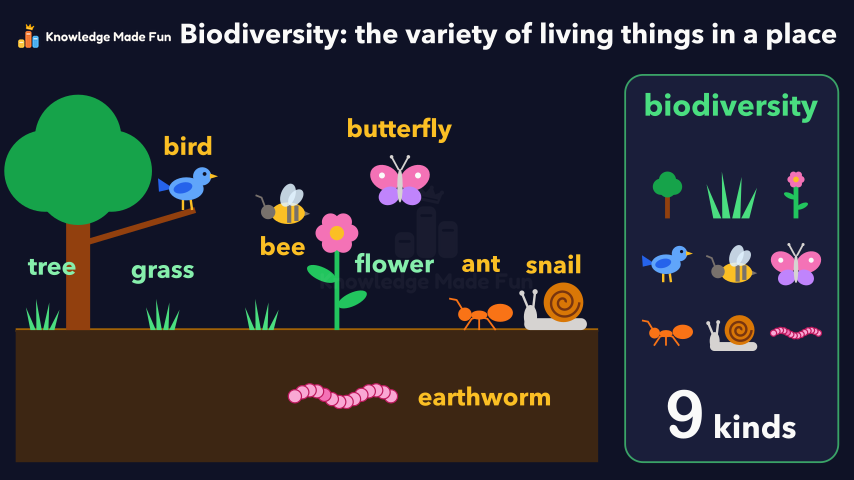 1 min 4 s
Biodiversity: The Variety of Living Things
Grade 3 · 1 min 4 s 1 min 8 s
Biomes: Sorted by Temperature and Precipitation
Grade 4 · 1 min 8 s
- All Grade 8 Science lessons
- Create a free account to watch three lessons a day, no payment and no card.