Lesson · Grade 8 · Science
Cellular Respiration: How Cells Release Energy from Sugar
- Grade 8
- Science
- 1 min 53 s
- British Columbia
- BC8-SC-08
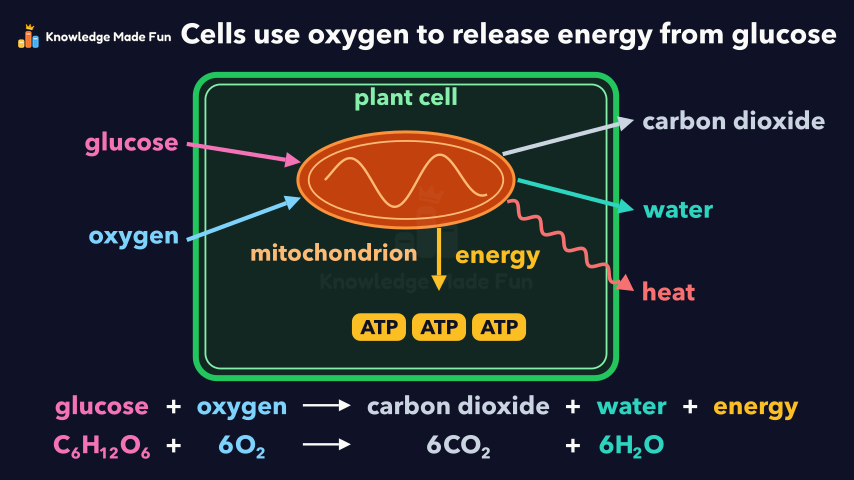
A labelled diagram of one cell builds up step by step: glucose and oxygen go into a mitochondrion, carbon dioxide and water come out, part of the released energy is stored in ATP and the rest is given off as heat, followed by the word equation and the balanced symbol equation (C6H12O6 + 6O2 → 6CO2 + 6H2O). It then clears up two common mix-ups: respiration is a reaction in cells, not breathing, and plant cells respire too, day and night, before a one-line recap.
Anyone can watch two lessons on the website without an account. Signing in is free, no payment and no card, and opens three a day; Plus has no limit.
Loading
In one sentence
The question this lesson answers
Every cell needs energy. How does a cell get energy from the sugar in food?
Here is an animal cell. Inside are tiny structures called mitochondria; this is one mitochondrion.
Transcript
What the lesson says
Every cell needs energy. How does a cell get energy from the sugar in food?
Here is an animal cell. Inside are tiny structures called mitochondria; this is one mitochondrion.
Releasing energy from sugar is called cellular respiration. Most of it happens in mitochondria.
The first input is glucose, a sugar. Animals get it from food; plants make it by photosynthesis.
The second input is oxygen, from the air you breathe, carried to the cell by your blood.
In a series of steps, glucose is broken down using oxygen, and energy is released.
The reaction makes two products: carbon dioxide and water.
Part of the energy is stored in ATP, a small molecule that powers the cell's work.
The rest is given off as heat, which helps keep your body warm.
As a word equation: glucose plus oxygen gives carbon dioxide plus water plus energy.
In symbols: one glucose and six oxygen molecules give six carbon dioxide and six water molecules.
Respiration is not breathing. Breathing moves air in and out of your lungs.
Respiration is the reaction in your cells that releases energy from glucose.
Plant cells have mitochondria too, so plants respire, just like animals.
In sunlight, plants also make glucose by photosynthesis, but they respire all the time, day and night.
Cells use oxygen to release energy from glucose, giving carbon dioxide and water.
Curriculum
Where this fits
- British Columbia, Grade 8
Science, Biology: photosynthesis and cellular respirationBC8-SC-08
Previous: Photosynthesis: how plants make sugar from lightNext: Photosynthesis and Respiration: Two Halves of One Cycle
The outcomes and strands follow the British Columbia curriculum.
Keep going
 1 min 3 s
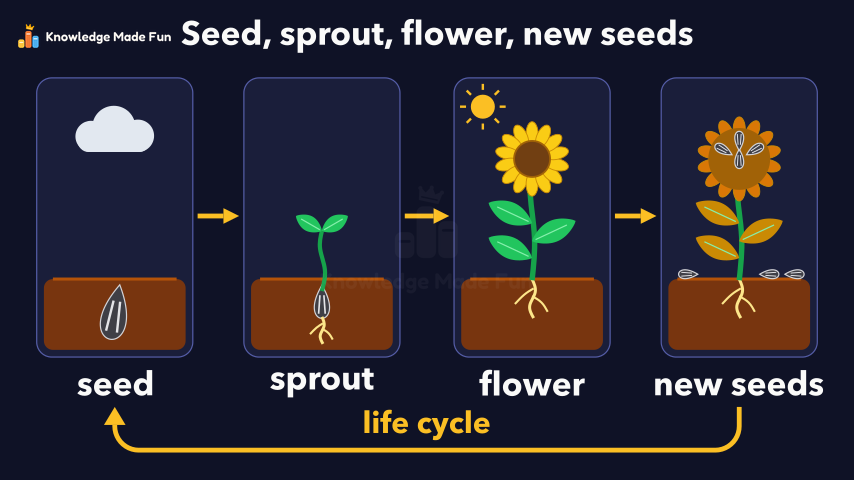
A Sunflower's Life Cycle: Seed, Sprout, Flower, Seed
Kindergarten · 1 min 3 s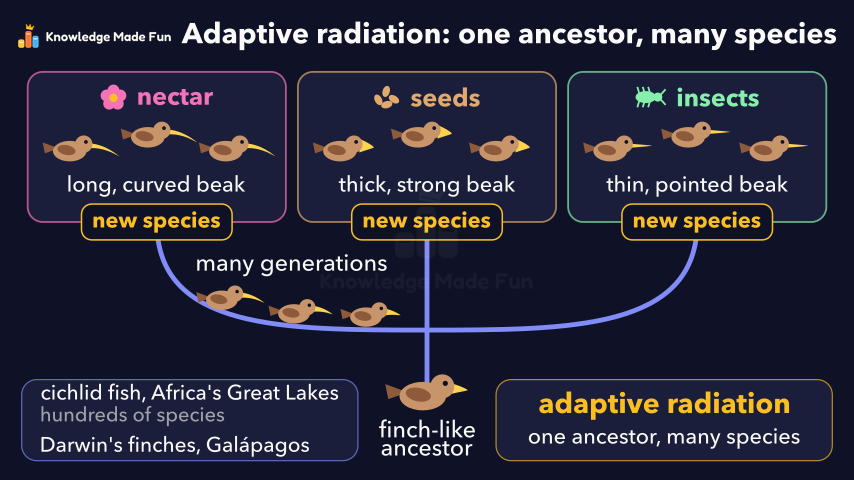 1 min 48 s
Adaptive radiation: one ancestor, many species
Grade 10 · 1 min 48 s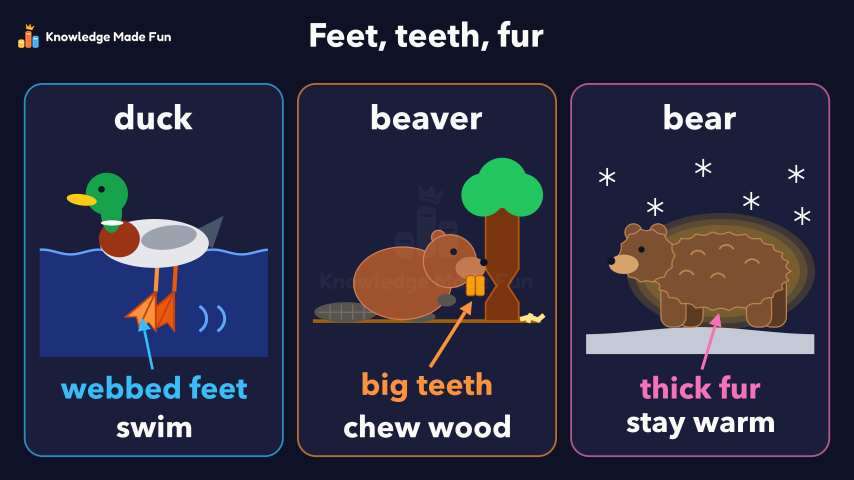 52 s
Animal Bodies That Help Them Live: Feet, Teeth and Fur
Kindergarten · 52 s 1 min 3 s
Animal senses beyond ours: echolocation, ultraviolet light, heat and magnetism
Grade 4 · 1 min 3 s 1 min 44 s
Antibodies and Memory Cells: The Body's Targeted Defence
Grade 8 · 1 min 44 s 1 min 44 s
Artificial selection: people choose the traits
Grade 10 · 1 min 44 s 1 min 4 s
Biodiversity: The Variety of Living Things
Grade 3 · 1 min 4 s 1 min 8 s
Biomes: Sorted by Temperature and Precipitation
Grade 4 · 1 min 8 s
- All Grade 8 Science lessons
- Create a free account to watch three lessons a day, no payment and no card.