Lesson · Grade 9 · Science
The Phosphorus Cycle: From Rock to Life and Back
- Grade 9
- Science
- 1 min 47 s
- British Columbia
- BC9-SC-29
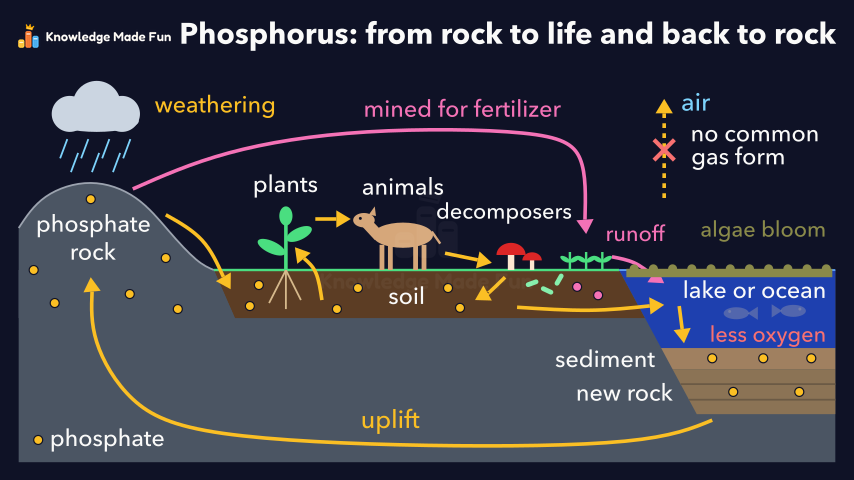
Phosphate weathers out of rock into the soil, passes through plants, animals and decomposers, then washes into a lake, where it settles as sediment, becomes new rock over millions of years and is lifted back up, with almost no part played by the air because phosphorus has no common gas form. The video ends with people mining phosphate for fertilizer, the runoff that causes an algae bloom, and the loss of oxygen that can kill fish.
Concept: The phosphorus cycle: a slow cycle through rock
Anyone can watch two lessons on the website without an account. Signing in is free, no payment and no card, and opens three a day; Plus has no limit.
Loading
In one sentence
The question this lesson answers
Every living thing needs phosphorus. Where does it come from?
Most phosphorus is stored in rock as phosphate, phosphorus joined to oxygen.
Transcript
What the lesson says
Every living thing needs phosphorus. Where does it come from?
Most phosphorus is stored in rock as phosphate, phosphorus joined to oxygen.
Rain slowly breaks down the rock. This is weathering, and it releases phosphate into the soil.
Plants absorb phosphate through their roots, and animals get it by eating plants or other animals.
All living things use it for DNA and cell membranes, and many animals for bones and teeth.
Decomposers, like bacteria and fungi, break down wastes and dead remains, returning phosphate to the soil.
Some phosphate washes into lakes and oceans.
It settles to the bottom as sediment, and over millions of years the layers are pressed into new rock.
Slow movements of Earth's crust, called uplift, raise this rock to the surface again.
Unlike carbon, phosphorus has no common gas form, so the air plays almost no part in its cycle.
So it moves through rock, soil, water and living things, and the full cycle is very slow.
People mine phosphate rock to make fertilizer for crops.
Rainwater flowing off the land, called runoff, carries extra phosphate into lakes.
The extra phosphate makes algae grow very fast. This is an algae bloom.
When the algae die, decomposers use up the oxygen in the water, so fish can die.
So phosphorus cycles slowly from rock to living things and back to rock.
Curriculum
Where this fits
- British Columbia, Grade 9
Science, Earth science: matter cycles within biotic and abiotic components of ecosystemsBC9-SC-29
Previous: The Nitrogen Cycle: From Air to Living ThingsNext: Dynamic equilibrium: balanced but always changing
- British Columbia, Grade 11
Environmental Science 11, Energy and matter cycles: matter cycles through and between living systemsBC11-SC-119
This lesson is also listed in Grade 11.
The outcomes and strands follow the British Columbia curriculum.
Keep going
 1 min 45 s
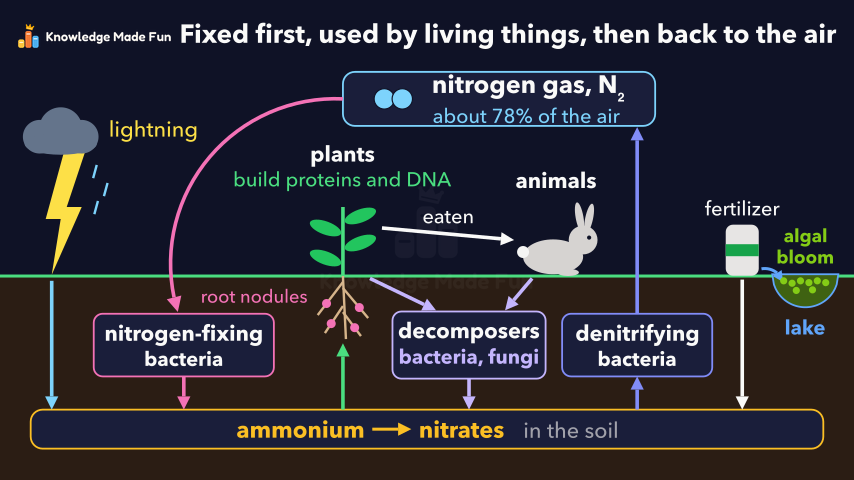
The Nitrogen Cycle: From Air to Living Things
Grade 9 · 1 min 45 s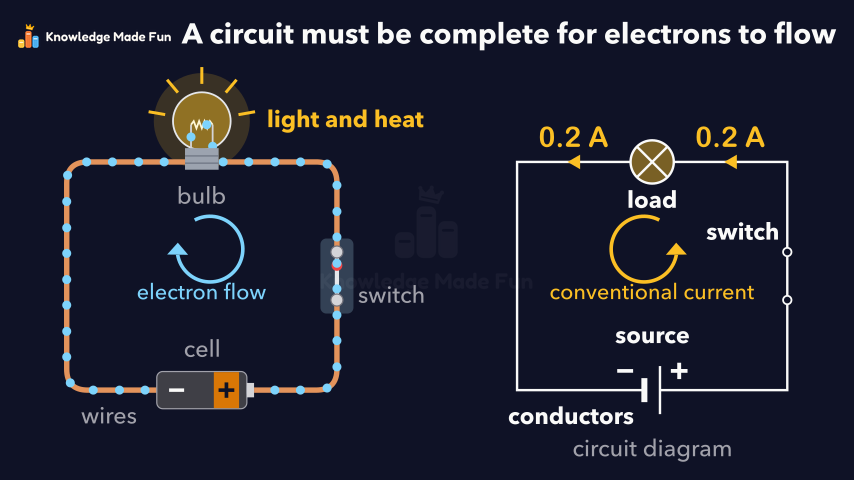 1 min 51 s
A Complete Circuit: Source, Load, Conductors and Switch
Grade 9 · 1 min 51 s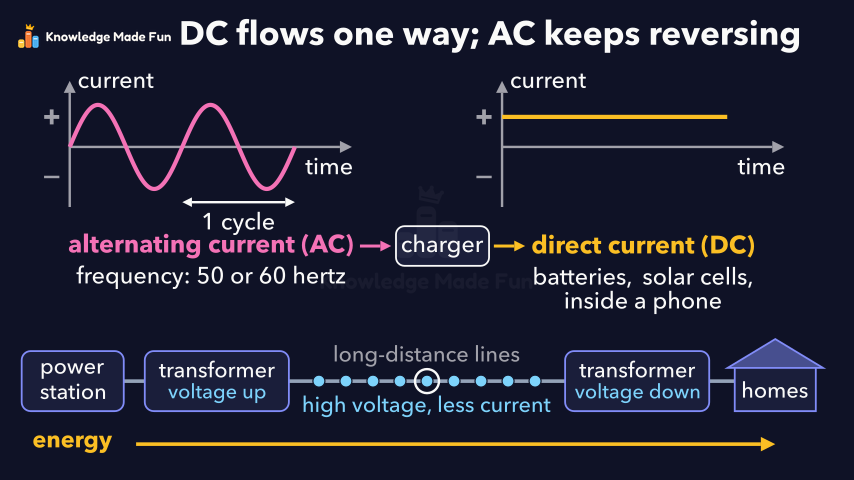 1 min 48 s
AC and DC: Two Ways Current Can Flow
Grade 9 · 1 min 48 s 1 min 40 s
Acids and bases: the pH scale
Grade 10 · 1 min 40 s 1 min 39 s
Adaptations Are Inherited, Not Earned in a Lifetime
Grade 11 · 1 min 39 s 1 min 48 s
Adaptive radiation: one ancestor, many species
Grade 10 · 1 min 48 s 1 min 39 s
Aerobic and anaerobic organisms
Grade 11 · 1 min 39 s 1 min 37 s
Antibiotic resistance: how superbugs evolve
Grade 8 · 1 min 37 s
- All Grade 9 Science lessons
- Create a free account to watch three lessons a day, no payment and no card.