Lesson · Grade 11 · Life Sciences
Aerobic and anaerobic organisms
- Grade 11
- Life Sciences
- 1 min 39 s
- British Columbia
- BC11-SC-171
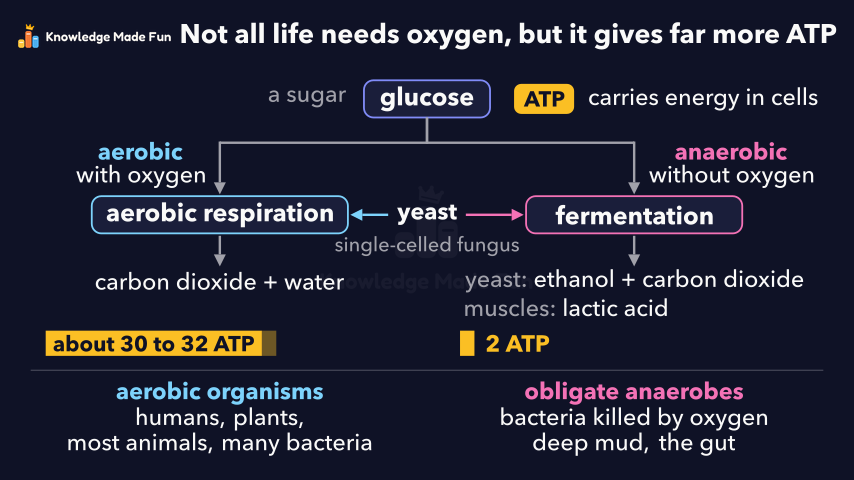
One diagram builds up step by step: glucose splits into aerobic respiration with oxygen, making carbon dioxide and water and about 30 to 32 ATP per glucose, and fermentation without oxygen, where yeast makes ethanol and carbon dioxide and sprinting muscles make lactic acid, for only 2 ATP. Underneath it lists aerobic organisms, shows that yeast can use both pathways, and introduces obligate anaerobes, bacteria killed by oxygen that live in deep mud and the gut, before ending on the recap that not all life needs oxygen but oxygen gives far more ATP.
Anyone can watch two lessons on the website without an account. Signing in is free, no payment and no card, and opens three a day; Plus has no limit.
Loading
In one sentence
The question this lesson answers
Do all living things need oxygen to get energy from their food?
Cells break down glucose, a sugar, to make ATP, the molecule that carries energy inside cells.
Transcript
What the lesson says
Do all living things need oxygen to get energy from their food?
Cells break down glucose, a sugar, to make ATP, the molecule that carries energy inside cells.
How a cell does this depends on oxygen. Aerobic means with oxygen; anaerobic means without it.
With oxygen, cells carry out aerobic respiration, breaking glucose down completely into carbon dioxide and water.
This releases about 30 to 32 ATP from each glucose.
Aerobic organisms include humans, plants, most animals and many bacteria.
Without oxygen, many cells use fermentation instead, which breaks glucose down only partly.
Yeast ferments sugar into ethanol and carbon dioxide, and the gas makes bread rise.
In a hard sprint, your muscles run short of oxygen and make lactic acid for a while.
Fermentation releases only 2 ATP per glucose, far less than with oxygen.
Yeast, a single-celled fungus, can use both pathways, so it can live with or without oxygen.
Some bacteria are obligate anaerobes: oxygen kills them, so they must live without it.
They live where there is little or no oxygen, such as deep mud or the gut.
So not all life needs oxygen, but using oxygen gets far more ATP from each glucose.
Curriculum
Where this fits
- British Columbia, Grade 11
Life Sciences 11, Diversity of life: single-celled and multi-celled organismsBC11-SC-171
The outcomes and strands follow the British Columbia curriculum.
Keep going
 1 min 46 s
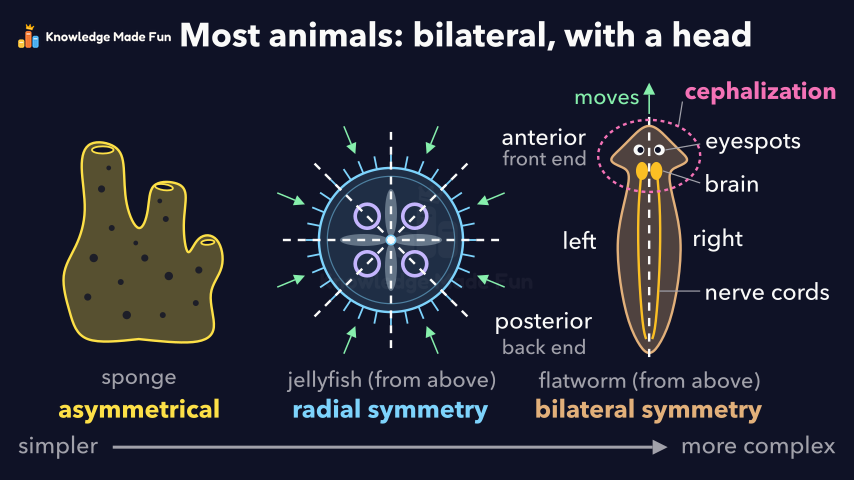
Body Symmetry and Cephalization in Animals
Grade 11 · 1 min 46 s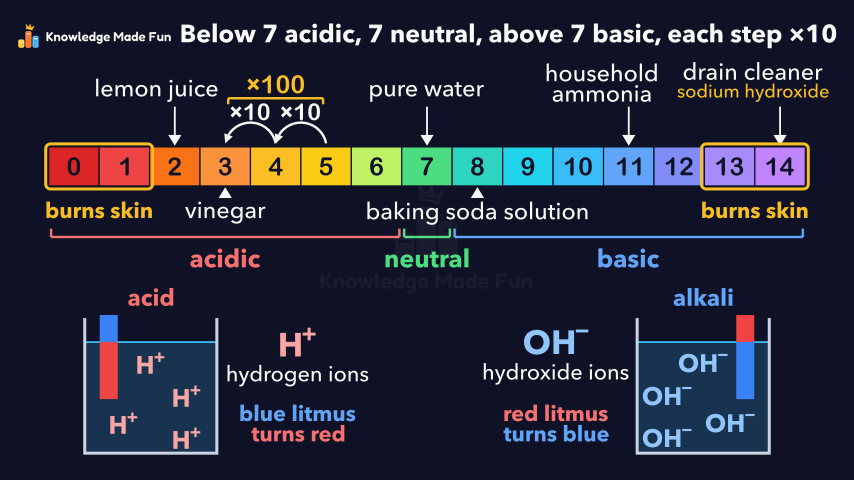 1 min 40 s
Acids and bases: the pH scale
Grade 10 · 1 min 40 s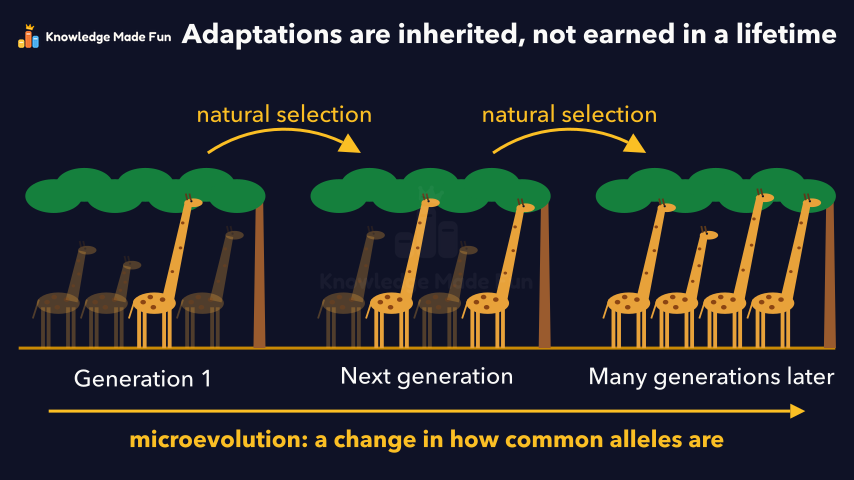 1 min 39 s
Adaptations Are Inherited, Not Earned in a Lifetime
Grade 11 · 1 min 39 s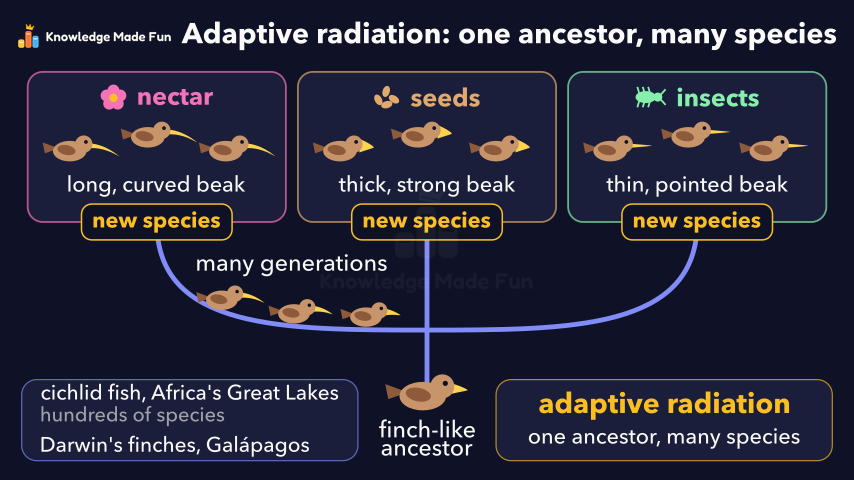 1 min 48 s
Adaptive radiation: one ancestor, many species
Grade 10 · 1 min 48 s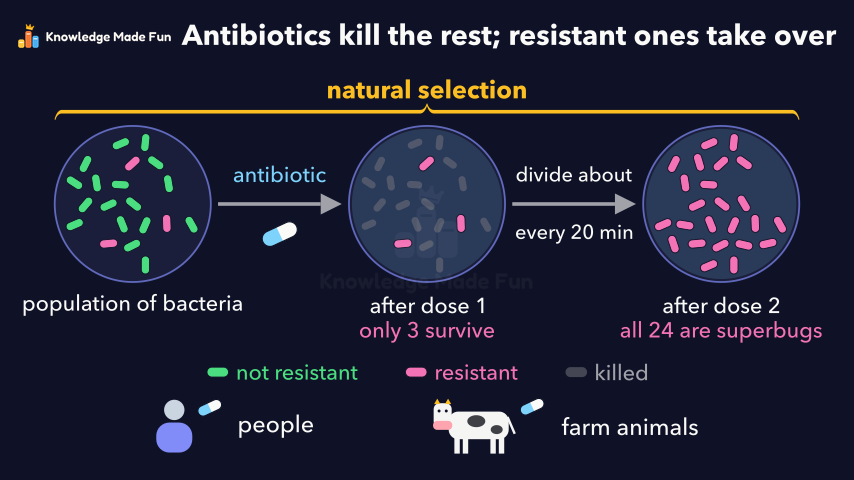 1 min 37 s
Antibiotic resistance: how superbugs evolve
Grade 8 · 1 min 37 s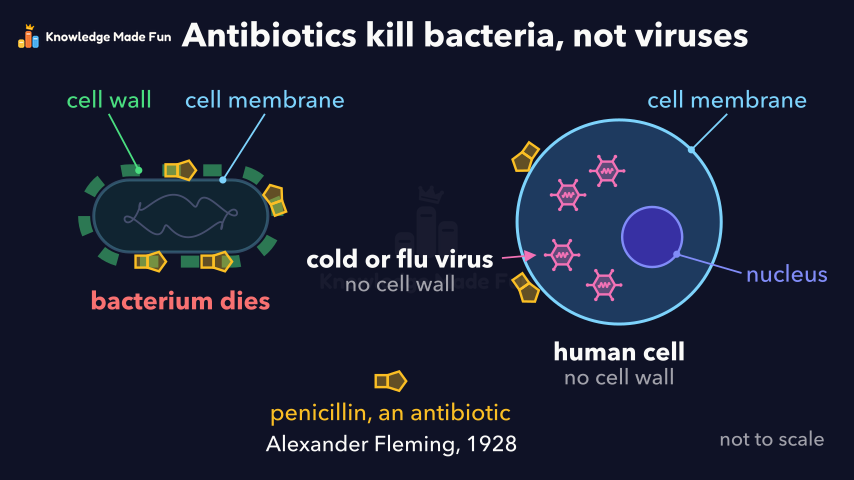 1 min 35 s
Antibiotics kill bacteria, not viruses
Grade 8 · 1 min 35 s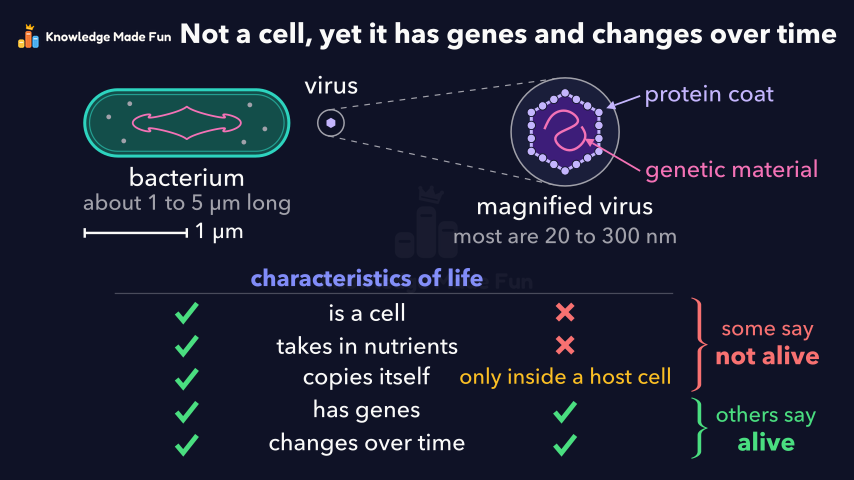 2 min
Are viruses alive? Why scientists disagree
Grade 8 · 2 min 1 min 44 s
Artificial selection: people choose the traits
Grade 10 · 1 min 44 s
- All Grade 11 Life Sciences lessons
- Create a free account to watch three lessons a day, no payment and no card.