Lesson · Grade 8 · Science
Are viruses alive? Why scientists disagree
- Grade 8
- Science
- 2 min
- British Columbia
- BC8-SC-02
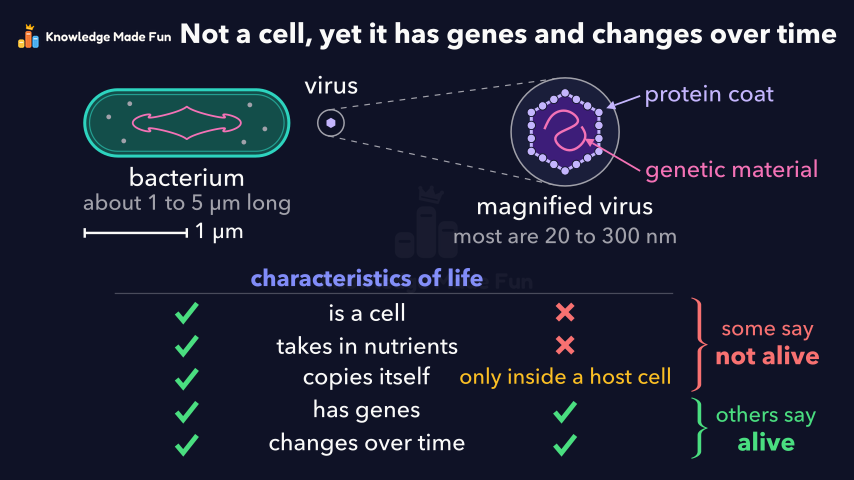
A bacterium and a virus are drawn side by side to scale with a 1 µm scale bar, then the virus is magnified to show its genetic material inside a protein coat, making clear it is not a tiny bacterium. A table of characteristics of life shows the virus is not a cell, takes in no nutrients and copies itself only inside a host cell, yet has genes and changes over time, and it lays out both scientific views without settling the debate.
Concept: Are viruses alive? Life at the boundary
Anyone can watch two lessons on the website without an account. Signing in is free, no payment and no card, and opens three a day; Plus has no limit.
Loading
In one sentence
The question this lesson answers
Are viruses alive? Let's compare a virus with a bacterium, and see why scientists disagree.
Drawn to the same scale, a bacterium is about 1 to 5 micrometres long.
Transcript
What the lesson says
Are viruses alive? Let's compare a virus with a bacterium, and see why scientists disagree.
Drawn to the same scale, a bacterium is about 1 to 5 micrometres long.
A micrometre is a thousandth of a millimetre, and a nanometre is a thousandth of a micrometre.
Let's zoom in on the virus. Most viruses are only 20 to 300 nanometres across.
Up close, a virus is not just a tiny bacterium. It is built very differently.
At its simplest, a virus is genetic material inside a protein coat.
To decide, scientists check the characteristics of life, the features that living things share.
A bacterium is a single living cell. A virus is not a cell at all.
A bacterium takes in nutrients, the substances it needs for energy and growth. A virus takes in none.
A bacterium usually copies itself by splitting in two. A virus can copy itself only inside a host cell, a living cell that it gets into and takes over.
Yet both have genes: instructions carried in their genetic material.
Both also evolve, which means they change over time as their genes change.
So some scientists say a virus is not alive: it is not a cell, takes in no nutrients, and cannot copy itself on its own.
Other scientists say a virus is alive, because it has genes and changes over time, like living things do.
Who is right depends on how we define life, so the debate goes on.
A virus is not a cell, yet it has genes and changes over time, so scientists disagree on whether it is alive.
Curriculum
Where this fits
- British Columbia, Grade 8
Science, Biology: characteristics of lifeBC8-SC-02
Previous: The Characteristics of Life: Six Signs of a Living ThingNext: Cell theory: three ideas about cells
- British Columbia, Grade 11
Life Sciences 11, Viruses: virusesBC11-SC-144
Next: Lytic and lysogenic cycles: how viruses copy themselves
This lesson is also listed in Grade 11.
The outcomes and strands follow the British Columbia curriculum.
Keep going
 1 min 40 s
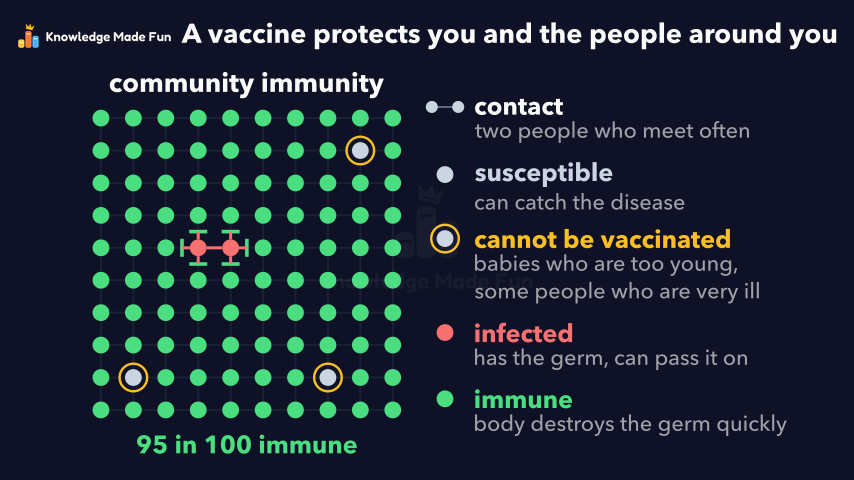
Community immunity: how vaccination stops a disease spreading
Grade 8 · 1 min 40 s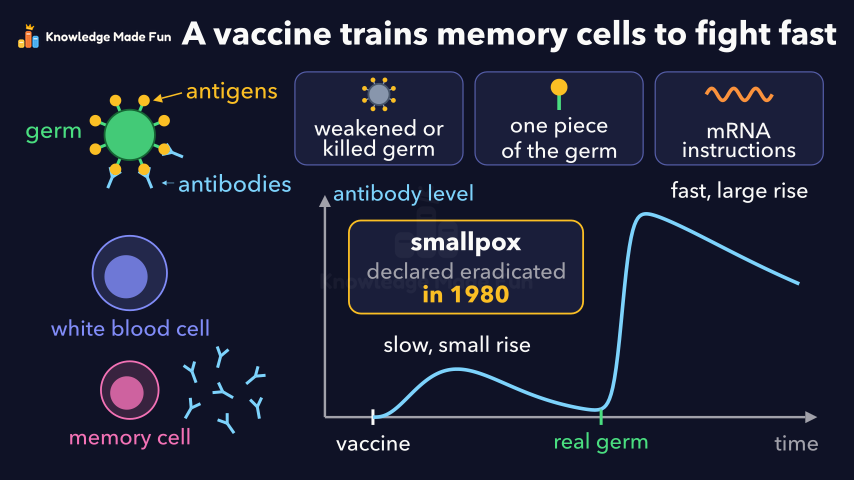 1 min 50 s
How Vaccines Train the Immune System
Grade 8 · 1 min 50 s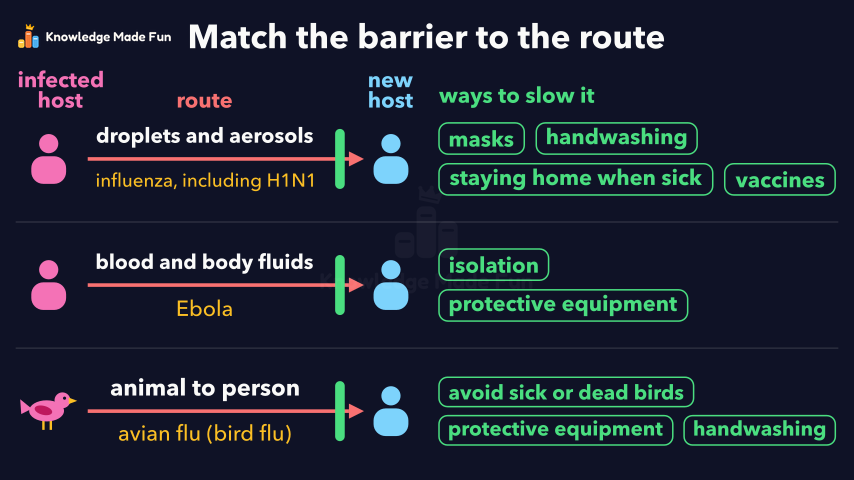 1 min 59 s
How Viral Diseases Spread and How to Slow Them
Grade 11 · 1 min 59 s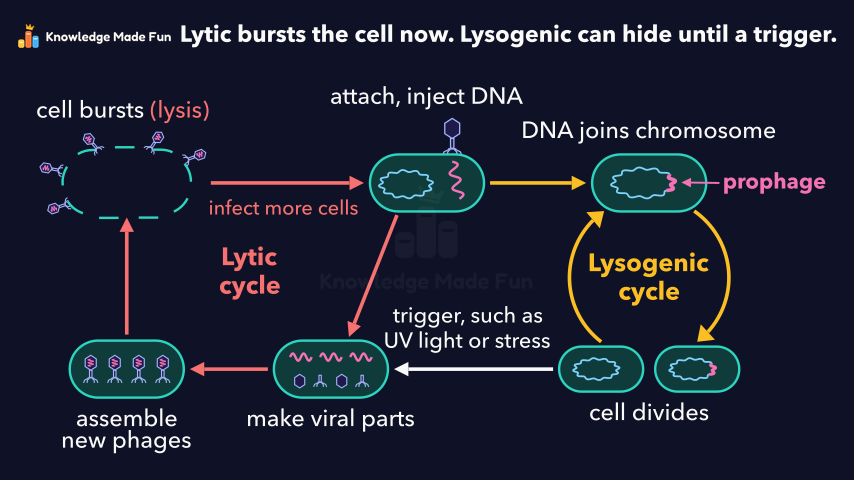 1 min 49 s
Lytic and lysogenic cycles: how viruses copy themselves
Grade 11 · 1 min 49 s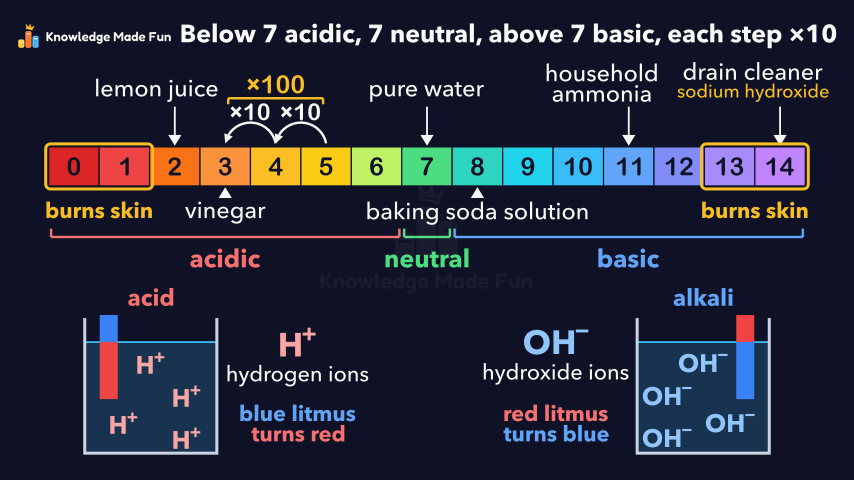 1 min 40 s
Acids and bases: the pH scale
Grade 10 · 1 min 40 s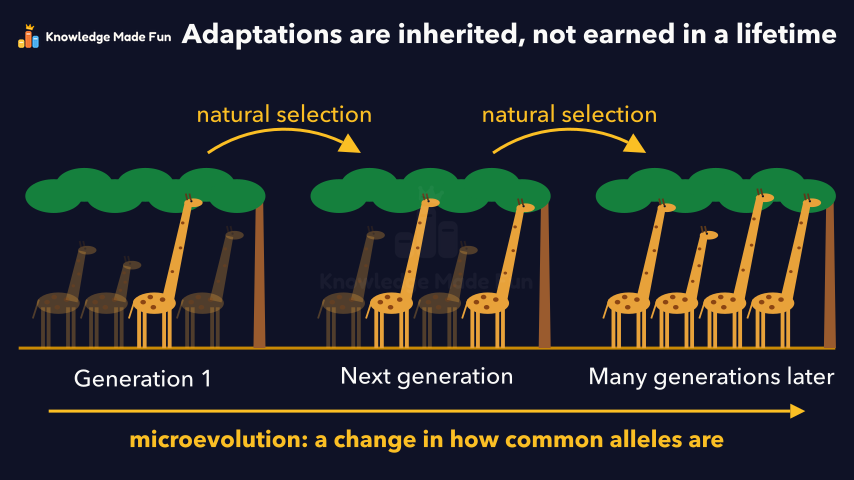 1 min 39 s
Adaptations Are Inherited, Not Earned in a Lifetime
Grade 11 · 1 min 39 s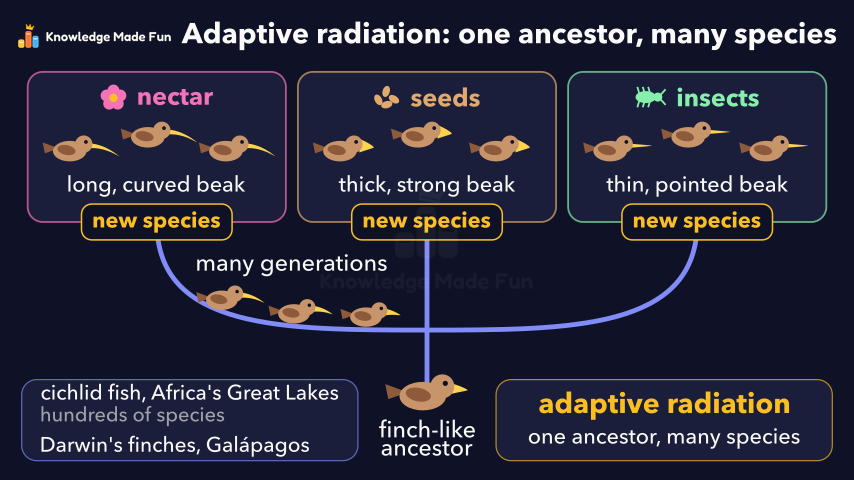 1 min 48 s
Adaptive radiation: one ancestor, many species
Grade 10 · 1 min 48 s 1 min 39 s
Aerobic and anaerobic organisms
Grade 11 · 1 min 39 s
- All Grade 8 Science lessons
- Create a free account to watch three lessons a day, no payment and no card.