Lesson · Grade 8 · Science
Cell theory: three ideas about cells
- Grade 8
- Science
- 1 min 46 s
- British Columbia
- BC8-SC-03
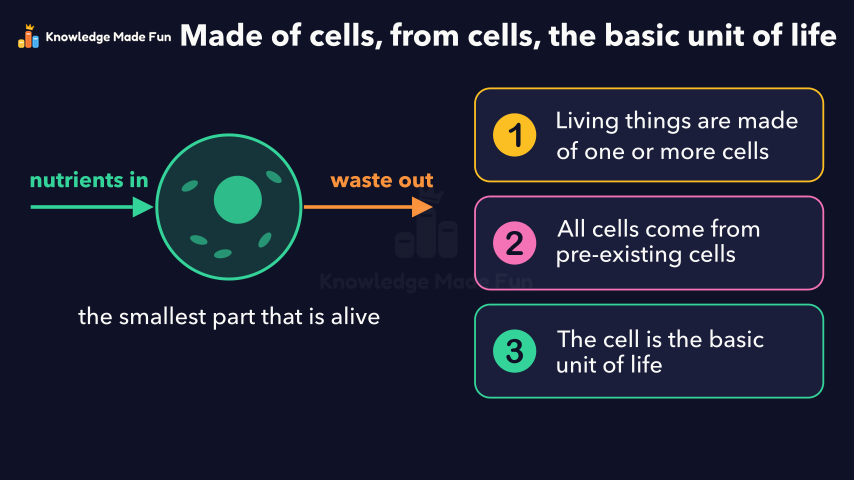
The video opens on a microscope view of cork, where Robert Hooke first saw and named cells in 1665, then fills three numbered cards in turn: living things are made of one or more cells, all cells come from pre-existing cells, and the cell is the basic unit of life. Each idea gets a labelled picture beside its card: a one-celled bacterium next to many cells, a cell growing and dividing in two, a crossed-out arrow showing that cells do not form from non-living matter, and a single cell taking in nutrients and giving out waste, before a one-line recap.
Anyone can watch two lessons on the website without an account. Signing in is free, no payment and no card, and opens three a day; Plus has no limit.
Loading
In one sentence
The question this lesson answers
What are all living things made of? The answer starts with a microscope.
In 1665, the scientist Robert Hooke looked at a thin slice of cork through a microscope.
Transcript
What the lesson says
What are all living things made of? The answer starts with a microscope.
In 1665, the scientist Robert Hooke looked at a thin slice of cork through a microscope.
He saw rows of tiny empty boxes and called them cells. They were the walls of dead plant cells.
Since then, scientists have found cells in every living thing. They summed this up in three ideas, called cell theory.
Idea one: living things are made of one or more cells.
A unicellular living thing, like a bacterium, is made of just one cell.
A multicellular living thing, like a plant or an animal, is made of many cells.
Idea two: all cells come from pre-existing cells. Pre-existing means cells that were already there.
A cell grows, then splits into two new cells. This is called cell division.
A common mistake is to think cells can form from non-living matter. They cannot.
Every new cell comes from a cell that already existed.
Idea three: the cell is the basic unit of life.
Basic unit means the cell is the smallest part of a living thing that is itself alive.
Each cell takes in nutrients, the substances it needs to live and grow, and gets rid of waste.
So, cell theory says: living things are made of cells, all cells come from pre-existing cells, and the cell is the basic unit of life.
Curriculum
Where this fits
- British Columbia, Grade 8
Science, Biology: cell theory and types of cellsBC8-SC-03
Previous: Are viruses alive? Why scientists disagreeNext: Prokaryotic and eukaryotic cells: is there a nucleus?
The outcomes and strands follow the British Columbia curriculum.
Keep going
 1 min 3 s
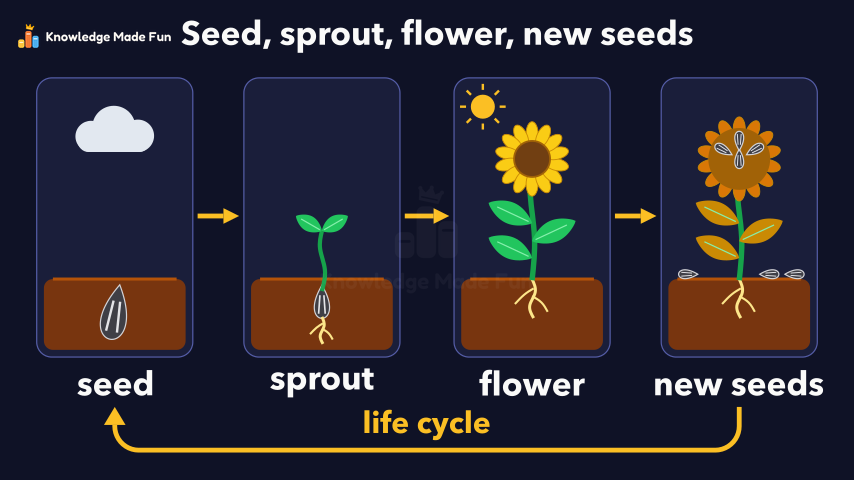
A Sunflower's Life Cycle: Seed, Sprout, Flower, Seed
Kindergarten · 1 min 3 s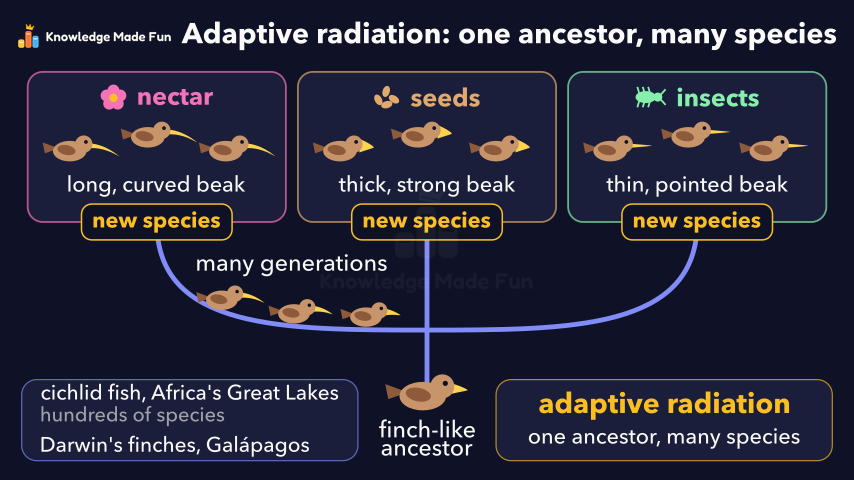 1 min 48 s
Adaptive radiation: one ancestor, many species
Grade 10 · 1 min 48 s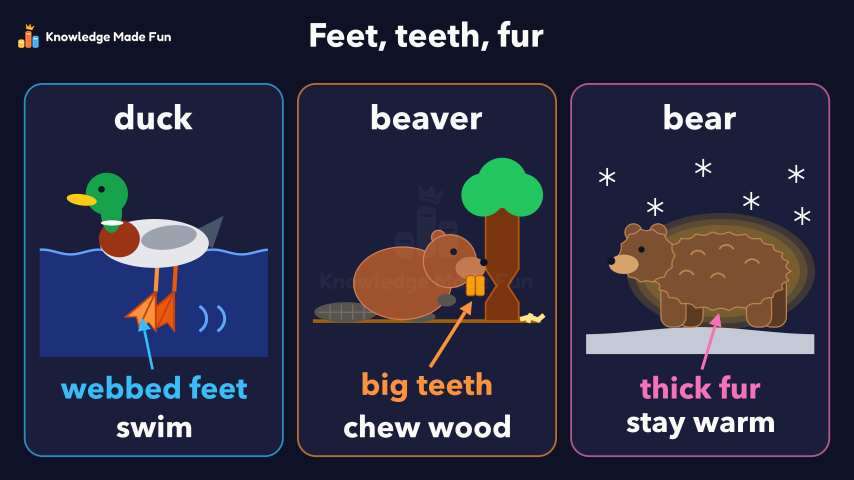 52 s
Animal Bodies That Help Them Live: Feet, Teeth and Fur
Kindergarten · 52 s 1 min 3 s
Animal senses beyond ours: echolocation, ultraviolet light, heat and magnetism
Grade 4 · 1 min 3 s 1 min 44 s
Antibodies and Memory Cells: The Body's Targeted Defence
Grade 8 · 1 min 44 s 1 min 44 s
Artificial selection: people choose the traits
Grade 10 · 1 min 44 s 1 min 4 s
Biodiversity: The Variety of Living Things
Grade 3 · 1 min 4 s 1 min 8 s
Biomes: Sorted by Temperature and Precipitation
Grade 4 · 1 min 8 s
- All Grade 8 Science lessons
- Create a free account to watch three lessons a day, no payment and no card.