Lesson · Grade 11 · Life Sciences
How Viral Diseases Spread and How to Slow Them
- Grade 11
- Life Sciences
- 1 min 59 s
- British Columbia
- BC11-SC-148
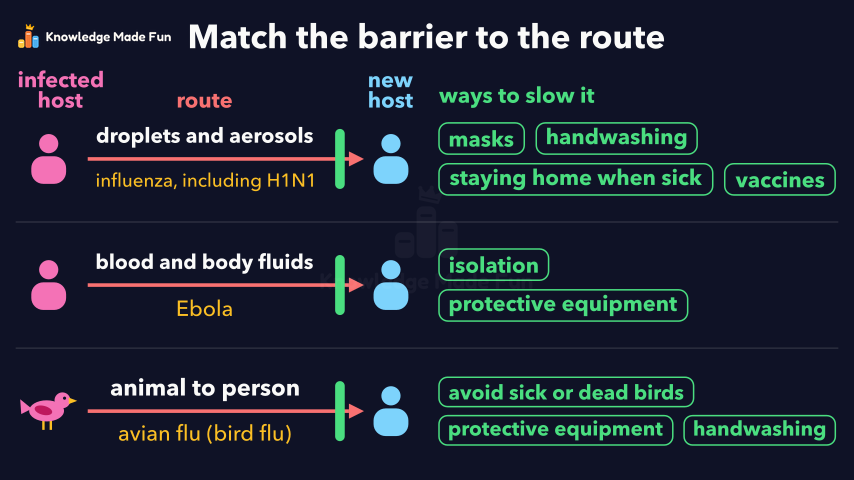
A three-row diagram builds up step by step, showing how a virus passes from an infected host to a new host along a route: droplets and aerosols (influenza, including H1N1), blood and body fluids (Ebola), and animal to person, called a zoonosis (avian flu). A green barrier then goes across each route, with the ways to slow it that match that route (masks, handwashing, staying home when sick and vaccines; isolation and protective equipment; avoiding sick or dead birds, protective equipment and handwashing), and the video ends on the recap "Match the barrier to the route."
Anyone can watch two lessons on the website without an account. Signing in is free, no payment and no card, and opens three a day; Plus has no limit.
Loading
In one sentence
The question this lesson answers
How do viral diseases spread, and how can we slow them?
A virus is a tiny particle that can only copy itself inside the cells of a host, the living thing it infects.
Transcript
What the lesson says
How do viral diseases spread, and how can we slow them?
A virus is a tiny particle that can only copy itself inside the cells of a host, the living thing it infects.
Passing to a new host is called transmission. Here are three common routes, or paths, it can take.
Route one: droplets and aerosols, tiny drops of fluid that an infected person breathes out.
Larger droplets soon fall to the ground. Smaller aerosols can float in the air for longer.
Influenza, or flu, spreads this way, including the H1N1 flu that spread around the world in 2009.
Route two: contact with blood and other body fluids. Ebola spreads this way, for example when infected blood gets into a cut.
Route three: a jump from animals to people, called a zoonosis. Avian flu, or bird flu, can spread this way from infected birds.
To slow a virus, put a barrier on its route. The barrier must match the route.
For droplets and aerosols: masks, handwashing, staying home when sick, and vaccines.
A vaccine trains the immune system, the body's defence, to recognize a virus, so fewer people catch it and pass it on.
For blood and body fluids: isolation, keeping sick patients apart, and protective equipment for health workers.
For bird flu: avoid sick or dead birds, and use protective equipment and handwashing when handling them.
No barrier is perfect, but each one cuts the spread, so fewer people get sick.
Viruses spread by different routes, so slow each one with a barrier that matches its route.
Curriculum
Where this fits
- British Columbia, Grade 11
Life Sciences 11, Viruses: virusesBC11-SC-148
Previous: Community immunity: how vaccination stops a disease spreading
The outcomes and strands follow the British Columbia curriculum.
Keep going
 2 min
Are viruses alive? Why scientists disagree
Grade 8 · 2 min 1 min 40 s
Community immunity: how vaccination stops a disease spreading
Grade 8 · 1 min 40 s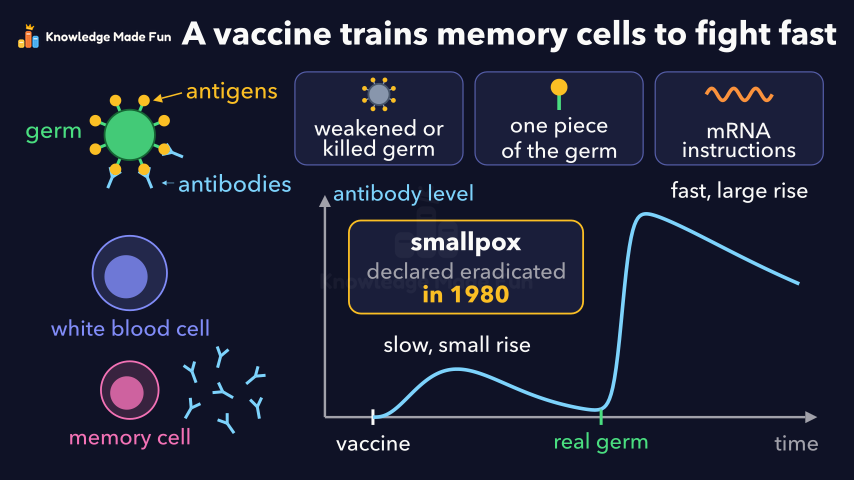 1 min 50 s
How Vaccines Train the Immune System
Grade 8 · 1 min 50 s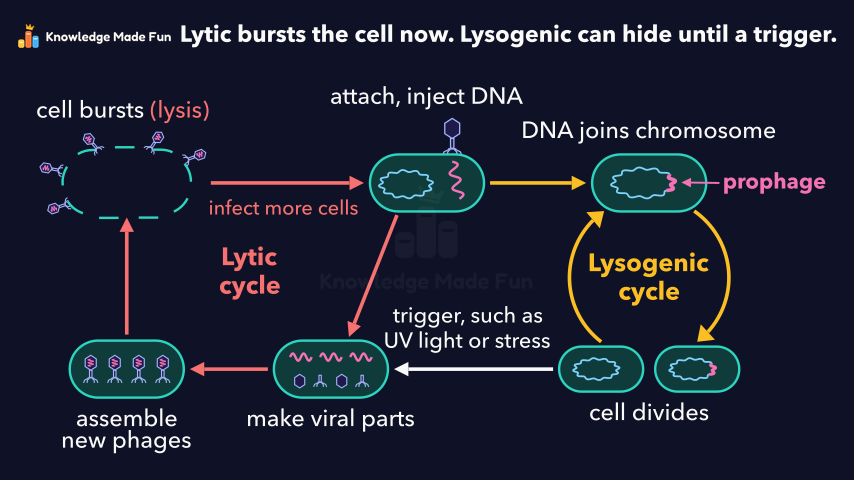 1 min 49 s
Lytic and lysogenic cycles: how viruses copy themselves
Grade 11 · 1 min 49 s 1 min 40 s
Acids and bases: the pH scale
Grade 10 · 1 min 40 s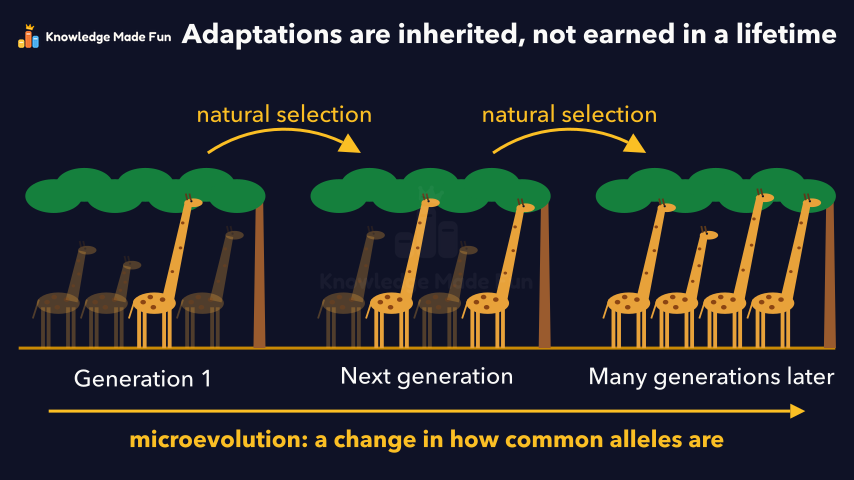 1 min 39 s
Adaptations Are Inherited, Not Earned in a Lifetime
Grade 11 · 1 min 39 s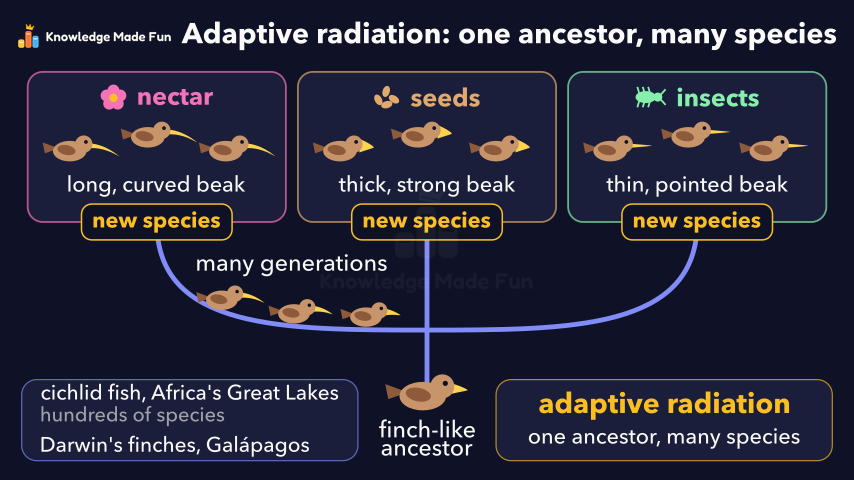 1 min 48 s
Adaptive radiation: one ancestor, many species
Grade 10 · 1 min 48 s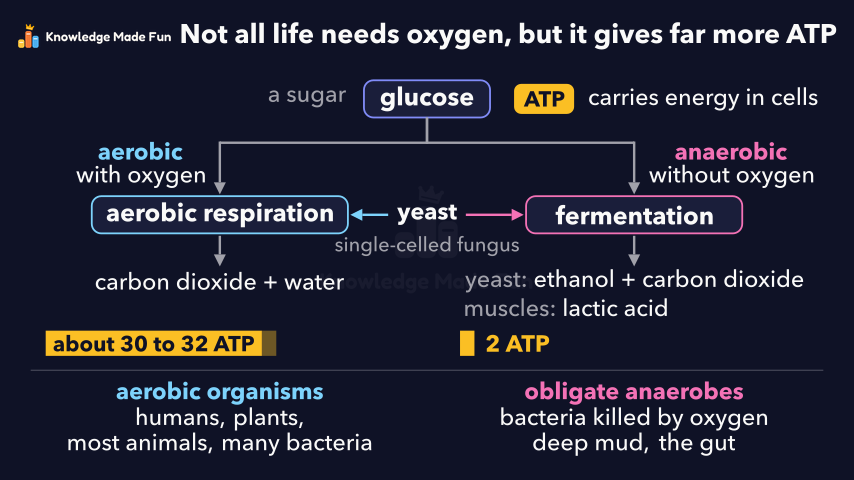 1 min 39 s
Aerobic and anaerobic organisms
Grade 11 · 1 min 39 s
- All Grade 11 Life Sciences lessons
- Create a free account to watch three lessons a day, no payment and no card.