Lesson · Grade 9 · Science
Dynamic equilibrium: balanced but always changing
- Grade 9
- Science
- 1 min 50 s
- British Columbia
- BC9-SC-31
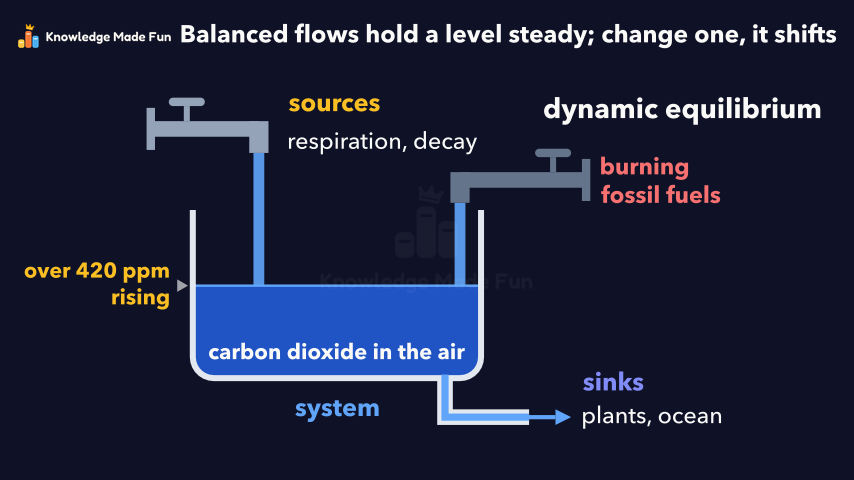
A bathtub with the tap running and the drain open stays at a steady level because the water flowing in matches the water flowing out, even though the water itself is always moving; turning the tap up makes the level rise until the deeper water drains just as fast, at a new, higher level. The same tub then stands for carbon dioxide in the air, which sources and sinks held near 280 ppm for thousands of years, until burning fossil fuels added a new source and pushed it past 420 ppm.
Anyone can watch two lessons on the website without an account. Signing in is free, no payment and no card, and opens three a day; Plus has no limit.
Loading
In one sentence
The question this lesson answers
If something stays steady, is nothing happening?
Picture a bathtub with the tap on and the drain open.
Transcript
What the lesson says
If something stays steady, is nothing happening?
Picture a bathtub with the tap on and the drain open.
Water flows in at 10 litres per minute and out at 10 litres per minute, so the level stays steady.
But the water never stops moving: new water pours in as old water drains away.
This is dynamic equilibrium: dynamic means always changing, and equilibrium means balanced.
Equilibrium does not mean nothing is happening; it means the flows in and out balance.
Now turn the tap up to 15 litres per minute.
More flows in than out, so the level rises.
Deeper water drains faster, so the level settles higher, where 15 litres per minute flow out.
The tub is a system with flows in and out: a source adds, and a sink removes.
Lakes, animal populations and carbon dioxide in the air all work the same way.
For carbon dioxide, sources include respiration and decay; sinks include plants and the ocean.
Before industry, they balanced, keeping carbon dioxide near 280 parts per million for thousands of years.
That is 280 molecules of carbon dioxide in every million molecules of air.
Burning fossil fuels added a new source, so now more flows in than out.
It has climbed to over 420 parts per million, and is still rising.
Dynamic equilibrium: balanced flows hold a level steady. Change one flow, and the level shifts.
Curriculum
Where this fits
- British Columbia, Grade 9
Science, Earth science: sustainability of systemsBC9-SC-31
Previous: The Phosphorus Cycle: From Rock to Life and BackNext: The Greenhouse Effect
The outcomes and strands follow the British Columbia curriculum.
Keep going
 1 min 43 s
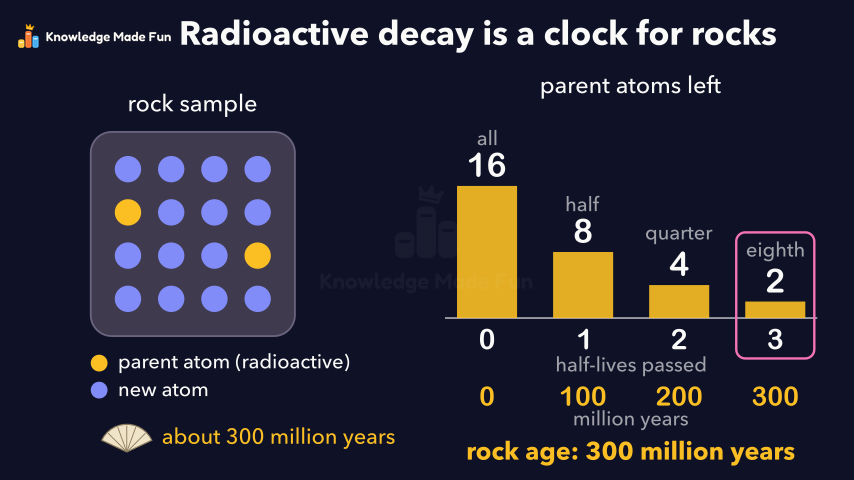
Absolute dating: radioactive decay is a clock for rocks
Grade 7 · 1 min 43 s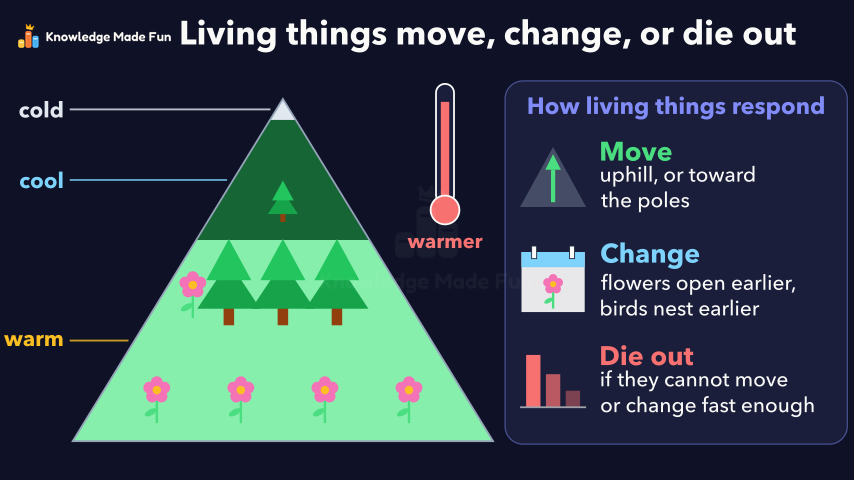 1 min 19 s
Climate Change and Living Things: Move, Change, or Die Out
Grade 7 · 1 min 19 s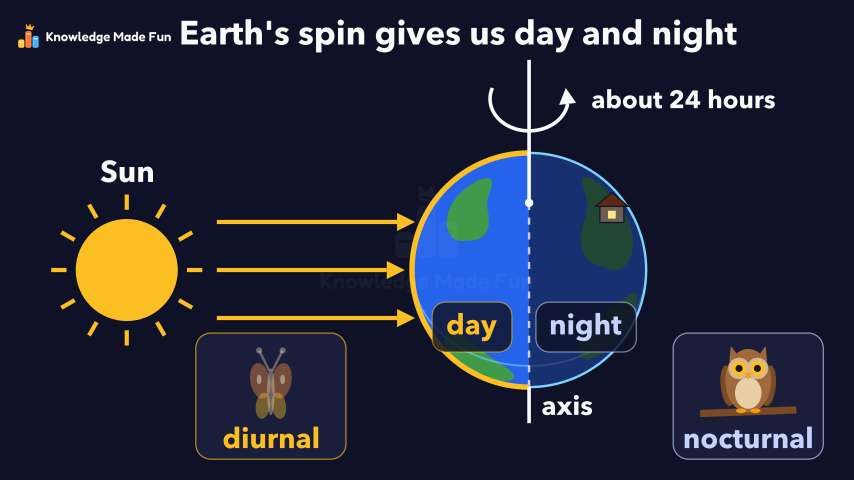 1 min 14 s
Day and Night: Earth Spins on Its Axis
Grade 4 · 1 min 14 s 1 min 11 s
Earth Materials: From Boulders to Clay
Grade 5 · 1 min 11 s 1 min 11 s
Erosion and Deposition: How Wind, Water and Ice Move Land
Grade 3 · 1 min 11 s 1 min 53 s
From quarks to galaxies: how the universe's matter formed
Grade 10 · 1 min 53 s 47 s
Hot, Warm, Cool and Cold: What Do We Wear?
Kindergarten · 47 s 1 min 25 s
How Fossils Form
Grade 7 · 1 min 25 s
- All Grade 9 Science lessons
- Create a free account to watch three lessons a day, no payment and no card.