Lesson · Grade 10 · Science
The Fire Triangle: Heat, Fuel and Oxygen
- Grade 10
- Science
- 1 min 53 s
- British Columbia
- BC10-SC-29
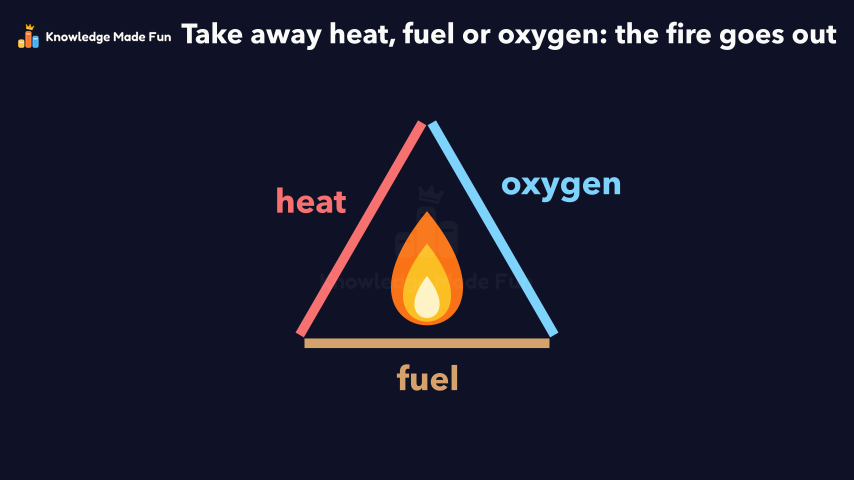
A labelled triangle builds up around a flame, one side at a time: fuel, heat (with the ignition temperature, roughly 200 to 250 °C for paper) and oxygen (about 21% of air). Combustion is shown as a chemical reaction whose heat keeps the fire going. Each way of putting a fire out then slides one side away so the flame dies: water removes heat; a lid, blanket or CO₂ extinguisher removes oxygen; firebreaks and First Peoples' controlled burns remove fuel. The video also shows that more oxygen makes fire burn faster and why water must never go on a grease fire, then ends on a one-line recap.
Anyone can watch two lessons on the website without an account. Signing in is free, no payment and no card, and opens three a day; Plus has no limit.
Loading
In one sentence
The question this lesson answers
What does a fire need to keep burning?
First, fuel: anything that can burn, like wood, paper or natural gas.
Transcript
What the lesson says
What does a fire need to keep burning?
First, fuel: anything that can burn, like wood, paper or natural gas.
Second, heat: enough to bring the fuel to its ignition temperature.
The ignition, or kindling, temperature is the lowest temperature at which a material catches fire.
For paper, that is roughly 200 to 250 degrees Celsius.
Third, oxygen. Air is about 21 percent oxygen.
Burning, or combustion, is a chemical reaction of fuel with oxygen that releases heat and light.
That heat ignites more fuel, so the fire keeps going.
Together, heat, fuel and oxygen make the fire triangle: take away any side, and the fire goes out.
Water removes heat, cooling the fuel below its ignition temperature.
To cut off the oxygen, use a lid, a fire blanket or a carbon dioxide extinguisher.
A firebreak, a strip cleared of plants, takes away fuel from a forest fire.
Many First Peoples have long used small, controlled burns to clear away dry fuel.
Air is about 21 percent oxygen. With more oxygen, fire burns much faster.
But water is not safe on every fire: never use it on a grease fire.
Water sinks under the hot oil, flashes to steam and throws burning oil out.
Instead, turn off the stove and slide a lid on to cut off the oxygen.
Fire needs heat, fuel and oxygen; take away any one, and it goes out.
Curriculum
Where this fits
- British Columbia, Grade 10
Science 10, Chemistry: practical applications and implications of chemical processes, including First Peoples knowledgeBC10-SC-29
Previous: Why You Must Never Mix CleanersNext: Polymers: Long Chains of Repeating Units
The outcomes and strands follow the British Columbia curriculum.
Keep going
 1 min 40 s
Acids and bases: the pH scale
Grade 10 · 1 min 40 s 1 min 39 s
Activation energy: the push a reaction needs to start
Grade 10 · 1 min 39 s 1 min 54 s
Atomic Size: Bigger Down a Group, Smaller Across a Period
Grade 9 · 1 min 54 s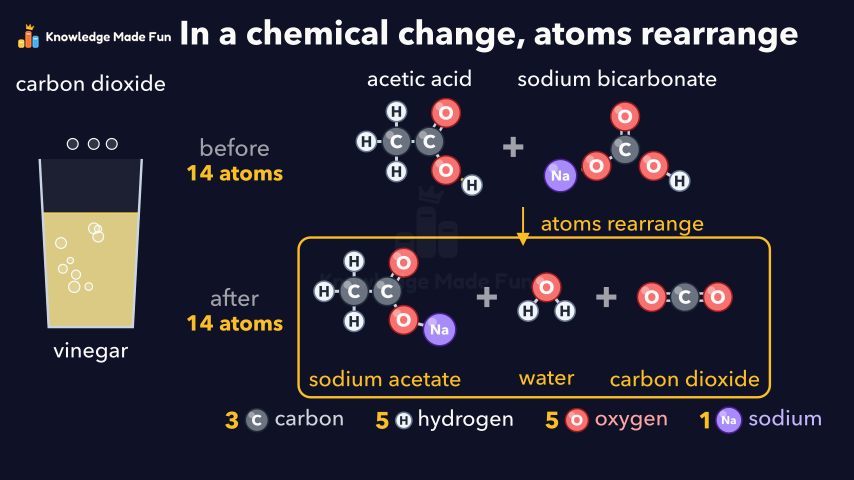 1 min 18 s
Atoms rearrange: vinegar and baking soda
Grade 7 · 1 min 18 s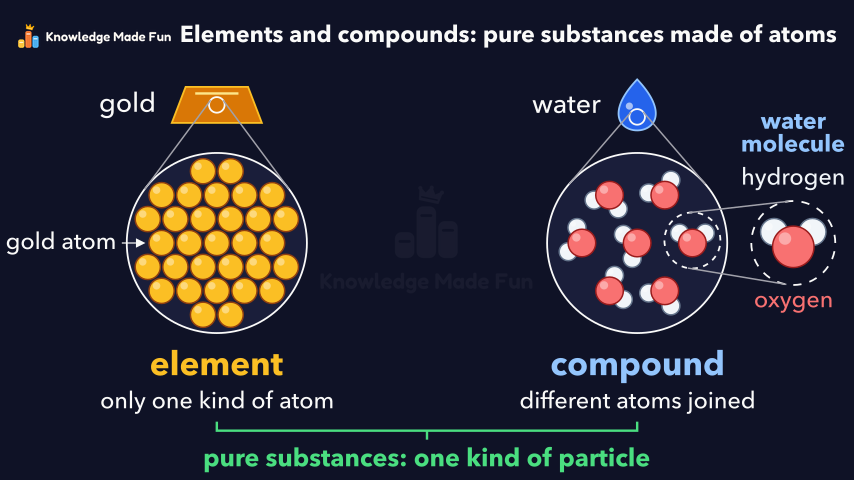 1 min 16 s
Atoms: What Everything Is Made Of
Grade 7 · 1 min 16 s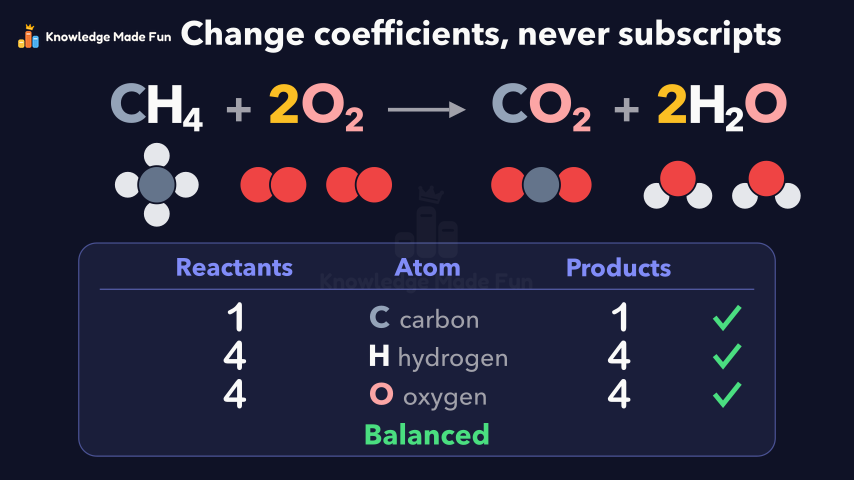 2 min 3 s
Balancing Chemical Equations
Grade 10 · 2 min 3 s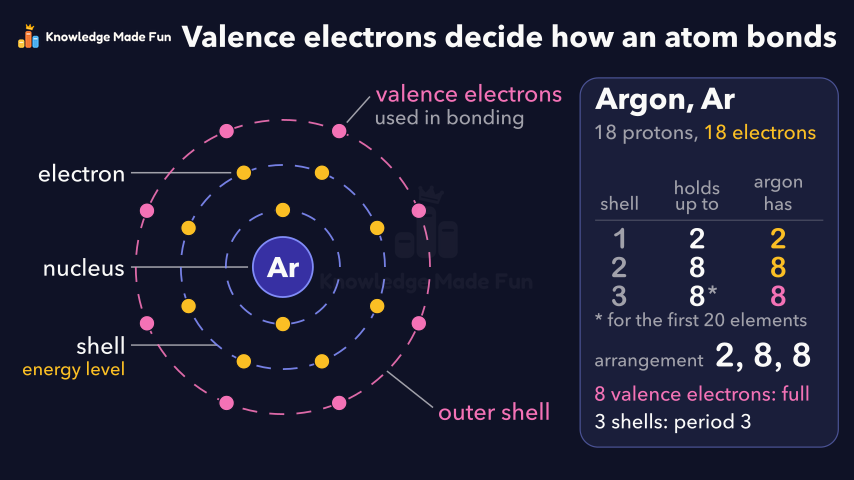 1 min 54 s
Bohr Diagrams: Electrons in Shells and Valence Electrons
Grade 9 · 1 min 54 s 1 min 45 s
Brownian motion: evidence that molecules exist
Grade 8 · 1 min 45 s
- All Grade 10 Science lessons
- Create a free account to watch three lessons a day, no payment and no card.