Lesson · Grade 9 · Science
Bohr Diagrams: Electrons in Shells and Valence Electrons
- Grade 9
- Science
- 1 min 54 s
- British Columbia
- BC9-SC-13
A labelled Bohr diagram builds up for sodium (2, 8, 1), filling shells of 2, 8 and 8 from the inside out, then changes into chlorine (2, 8, 7) and argon (2, 8, 8). It shows that the valence electrons in the outer shell decide bonding: sodium loses one, chlorine gains one to form sodium chloride, and argon's full shell hardly ever reacts. It also shows that the number of shells gives the period, and that the diagram is only a model.
Anyone can watch two lessons on the website without an account. Signing in is free, no payment and no card, and opens three a day; Plus has no limit.
Loading
In one sentence
The question this lesson answers
How are an atom's electrons arranged, and why does it matter?
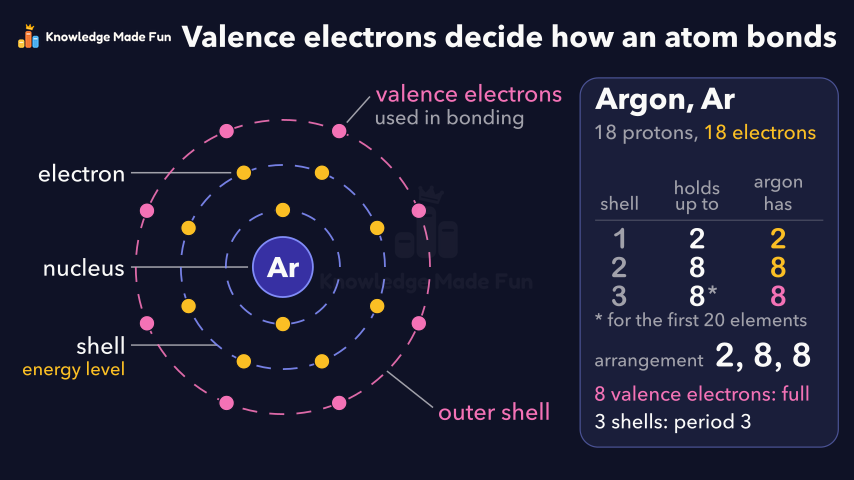
Take a sodium atom. Its nucleus, in the centre, holds 11 protons.
Transcript
What the lesson says
How are an atom's electrons arranged, and why does it matter?
Take a sodium atom. Its nucleus, in the centre, holds 11 protons.
An atom has as many electrons as protons, so sodium has 11 electrons.
A Bohr diagram draws them in shells, rings around the nucleus that fill from the inside out.
The first shell holds up to 2 electrons, and the second holds up to 8.
The third shell holds up to 8 for the first 20 elements. Sodium's last electron goes there.
So sodium's electron arrangement is 2, 8, 1.
Electrons in the outer shell are called valence electrons. Sodium has 1.
Valence electrons are the ones used in bonding, so they decide which compounds an atom forms.
Chlorine has 17 electrons, arranged 2, 8, 7, so it has 7 valence electrons.
So sodium tends to lose its 1 valence electron, chlorine tends to gain 1, and they form sodium chloride.
Argon has 18 electrons, arranged 2, 8, 8, so its outer shell is full.
With a full outer shell, argon hardly ever reacts.
The number of shells gives the period, the row of the periodic table: argon has 3 shells, so it is in period 3.
This is only a model: electrons do not really travel in fixed circles. Each shell stands for an energy level.
In short, the valence electrons in the outer shell decide how an atom bonds.
Curriculum
Where this fits
- British Columbia, Grade 9
Science, Chemistry: The arrangement of electrons determines the compounds formed by elementsBC9-SC-13
Previous: Atomic Size: Bigger Down a Group, Smaller Across a PeriodNext: Ionic bonds: when atoms give and take electrons
The outcomes and strands follow the British Columbia curriculum.
Keep going
 1 min 40 s
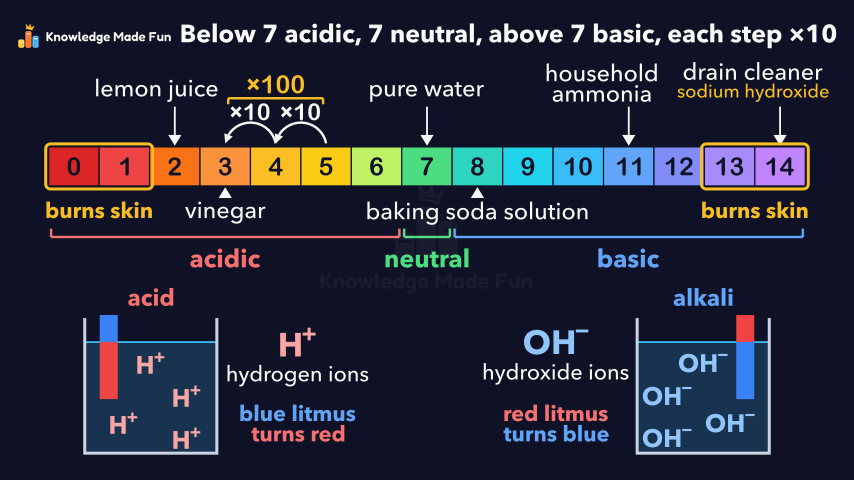
Acids and bases: the pH scale
Grade 10 · 1 min 40 s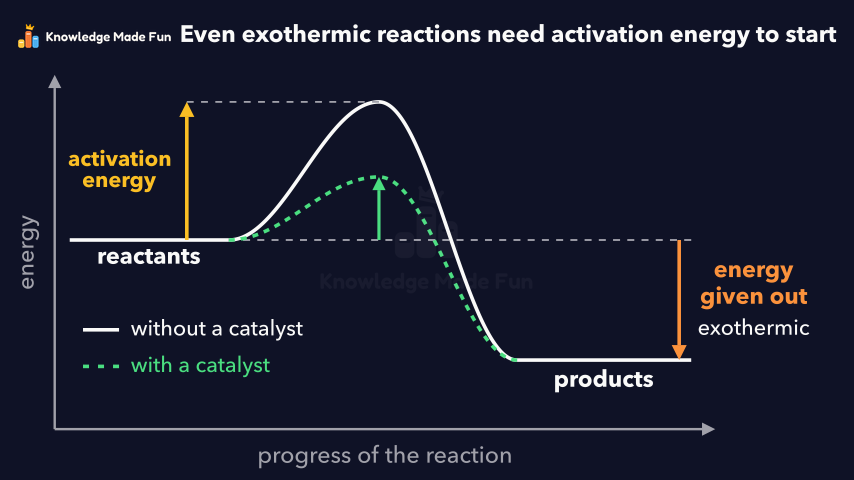 1 min 39 s
Activation energy: the push a reaction needs to start
Grade 10 · 1 min 39 s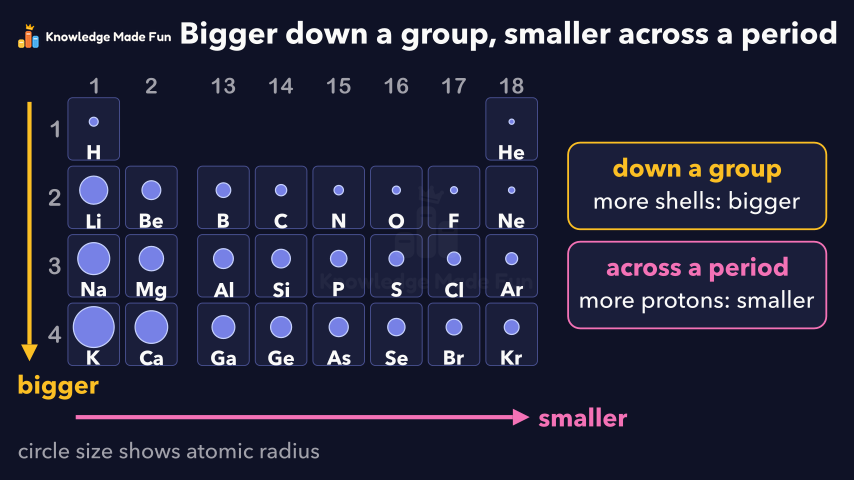 1 min 54 s
Atomic Size: Bigger Down a Group, Smaller Across a Period
Grade 9 · 1 min 54 s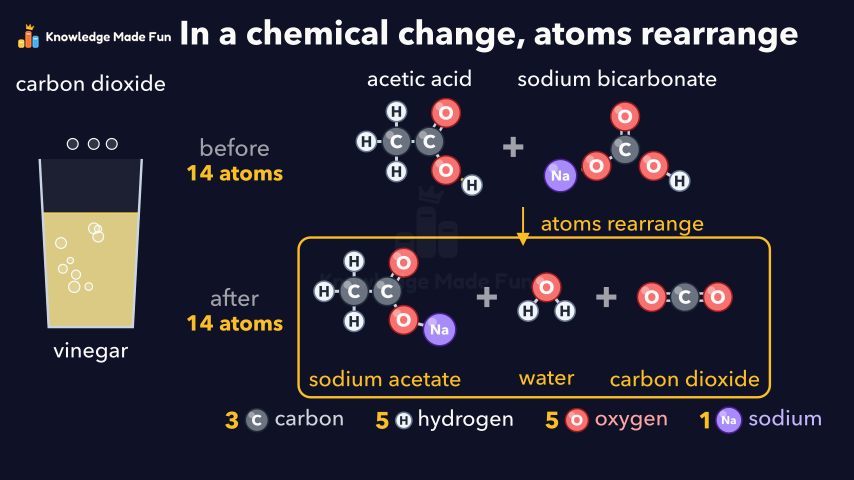 1 min 18 s
Atoms rearrange: vinegar and baking soda
Grade 7 · 1 min 18 s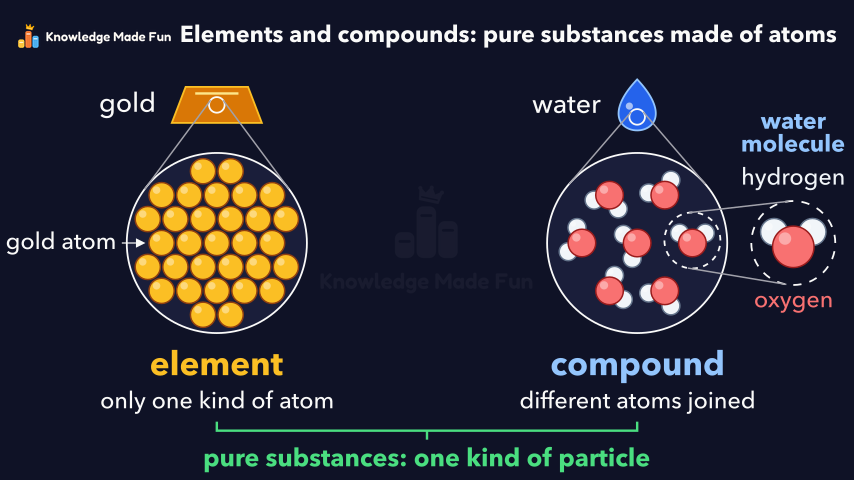 1 min 16 s
Atoms: What Everything Is Made Of
Grade 7 · 1 min 16 s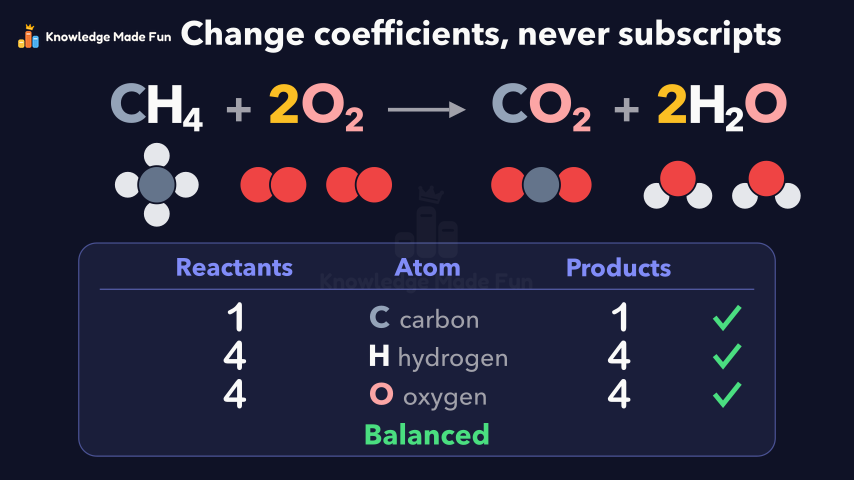 2 min 3 s
Balancing Chemical Equations
Grade 10 · 2 min 3 s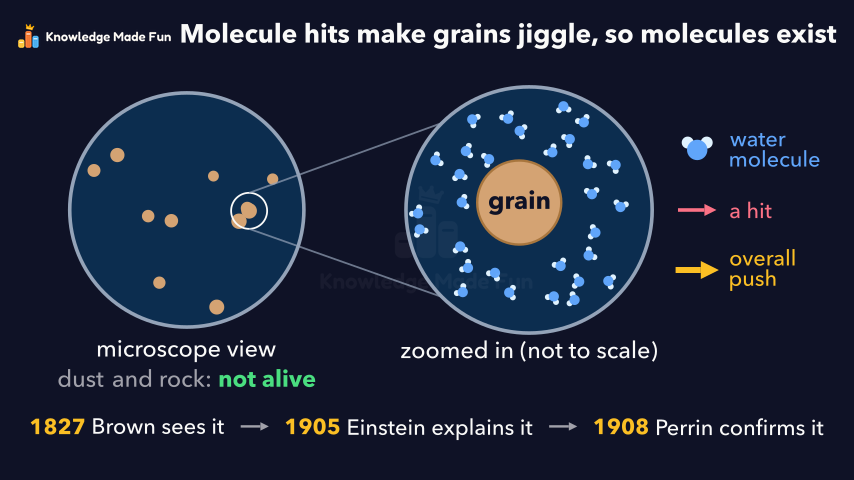 1 min 45 s
Brownian motion: evidence that molecules exist
Grade 8 · 1 min 45 s 1 min 49 s
Changes of State: Why the Temperature Stops Rising
Grade 8 · 1 min 49 s
- All Grade 9 Science lessons
- Create a free account to watch three lessons a day, no payment and no card.