Lesson · Grade 10 · Science
Sex-linked traits: why more males are colour blind
- Grade 10
- Science
- 1 min 57 s
- British Columbia
- BC10-SC-08
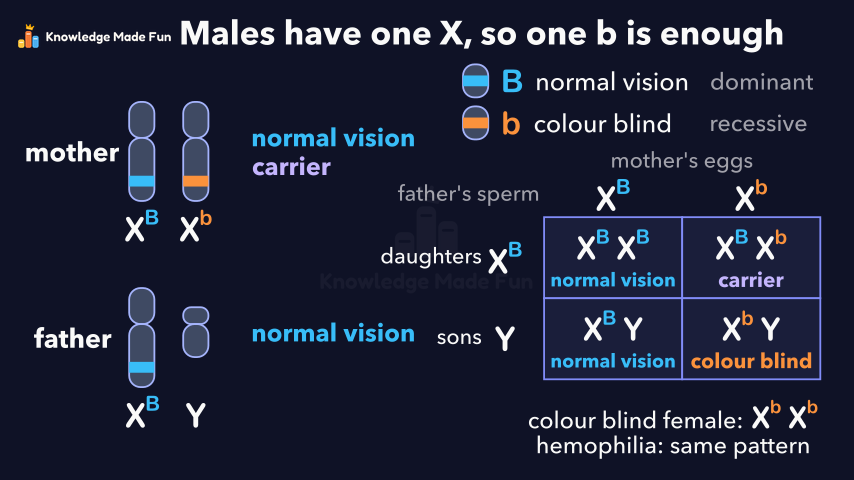
Labelled X and Y chromosomes show that the gene for red-green colour vision is on the X with no copy on the Y, so a male with one recessive b is colour blind while a female with one b is a carrier. A Punnett square for a carrier mother and a father with normal vision shows that no daughter is colour blind and each son has a 1 in 2 chance, because a son's X always comes from his mother.
Concept: Sex-linked traits: why colour blindness is more common in males
Anyone can watch two lessons on the website without an account. Signing in is free, no payment and no card, and opens three a day; Plus has no limit.
Loading
In one sentence
The question this lesson answers
In people of northern European ancestry, red-green colour blindness affects about 1 in 12 males but only about 1 in 200 females. Why?
Most females have two X chromosomes, and most males have one X and one Y.
Transcript
What the lesson says
In people of northern European ancestry, red-green colour blindness affects about 1 in 12 males but only about 1 in 200 females. Why?
Most females have two X chromosomes, and most males have one X and one Y.
A gene for red-green colour vision sits on the X but not on the Y. Genes on the sex chromosomes, X and Y, are called sex-linked.
Versions of a gene are called alleles: capital B for normal vision, small b for colour blindness.
Capital B is dominant: it masks small b. Small b is recessive: it only shows without capital B.
A female with one of each has normal vision but is a carrier, who can pass small b on.
A male with small b on his X has no copy on his Y to mask it, so he is colour blind.
A Punnett square shows the possible children of this carrier mother and a father with normal vision.
Each egg gets one of the mother's X chromosomes; each sperm gets the father's X or his Y.
Every daughter gets her father's capital B, so she has normal vision, but may be a carrier.
Every son gets his father's Y, so each son has a 1 in 2 chance of being colour blind.
So a colour blind son gets small b from his mother, not from his father.
A female needs small b on both X chromosomes to be colour blind, which is much rarer.
Hemophilia, where blood clots poorly, follows the same pattern.
Males have only one X, so one recessive allele is enough to show the trait.
Curriculum
Where this fits
- British Columbia, Grade 10
Science 10, Biology: patterns of inheritanceBC10-SC-08
Previous: Incomplete Dominance and CodominanceNext: Mutations: DNA Changes That Help, Harm or Do Nothing
The outcomes and strands follow the British Columbia curriculum.
Keep going
 1 min 3 s
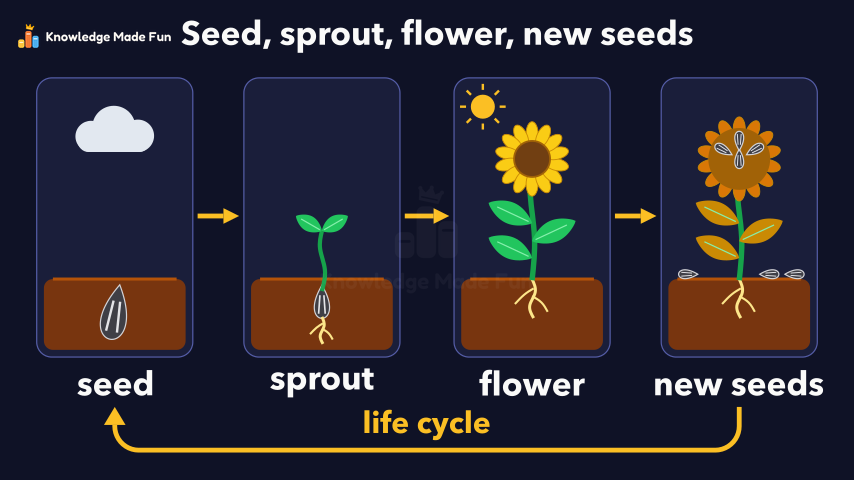
A Sunflower's Life Cycle: Seed, Sprout, Flower, Seed
Kindergarten · 1 min 3 s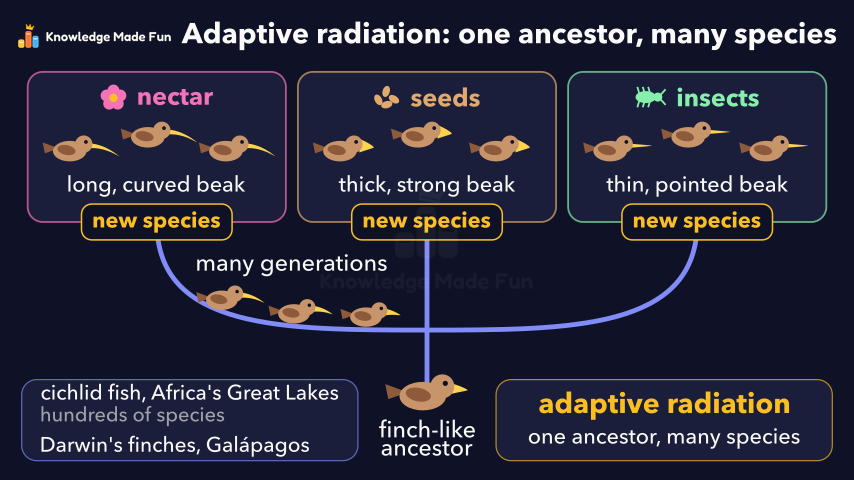 1 min 48 s
Adaptive radiation: one ancestor, many species
Grade 10 · 1 min 48 s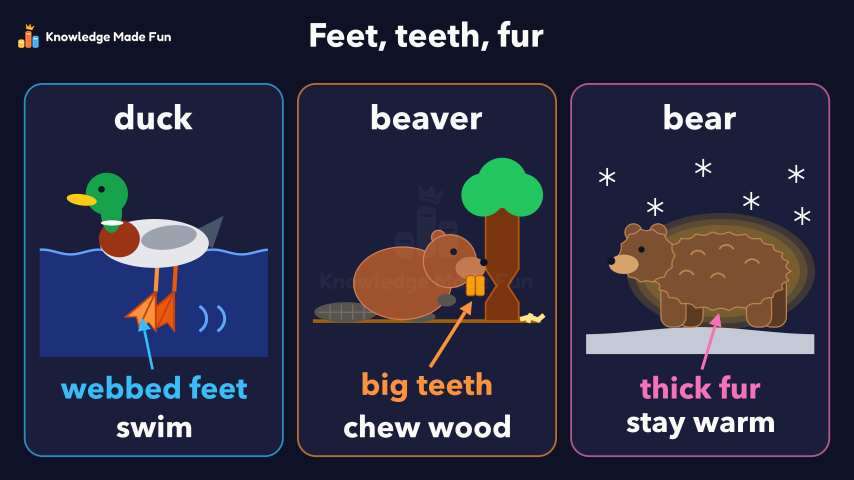 52 s
Animal Bodies That Help Them Live: Feet, Teeth and Fur
Kindergarten · 52 s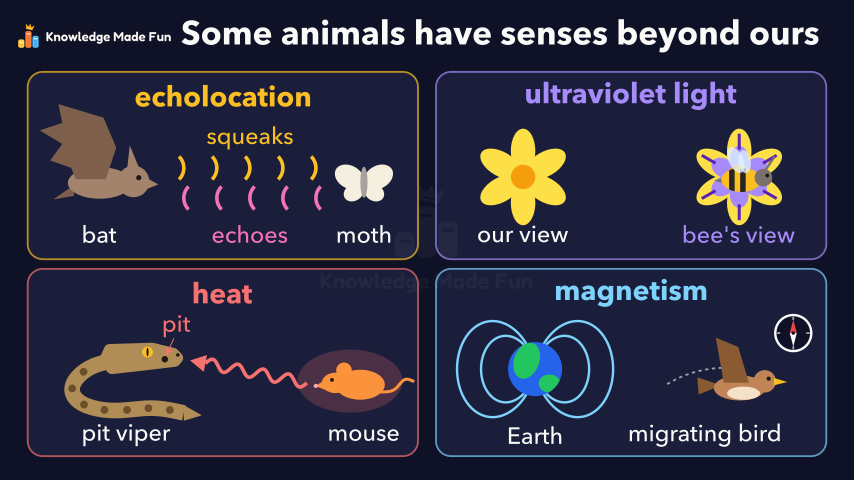 1 min 3 s
Animal senses beyond ours: echolocation, ultraviolet light, heat and magnetism
Grade 4 · 1 min 3 s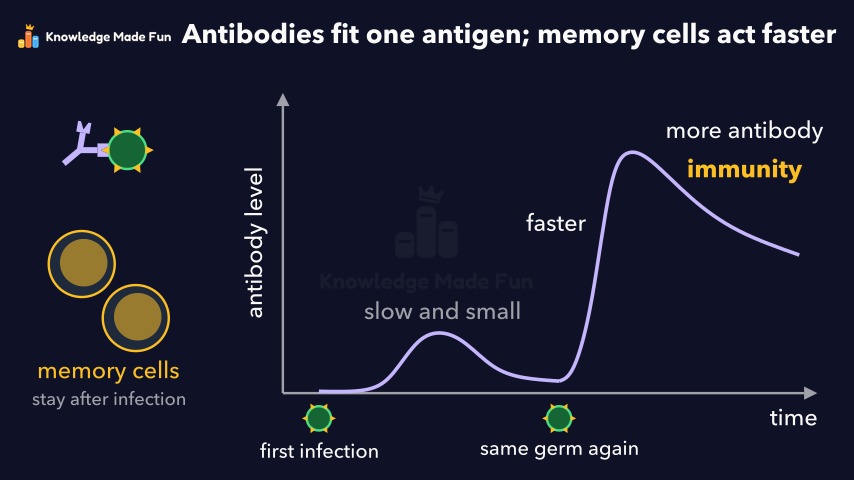 1 min 44 s
Antibodies and Memory Cells: The Body's Targeted Defence
Grade 8 · 1 min 44 s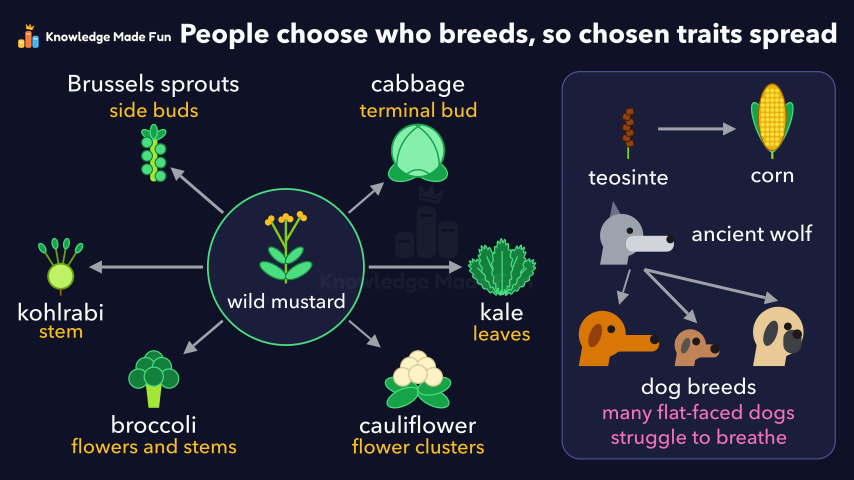 1 min 44 s
Artificial selection: people choose the traits
Grade 10 · 1 min 44 s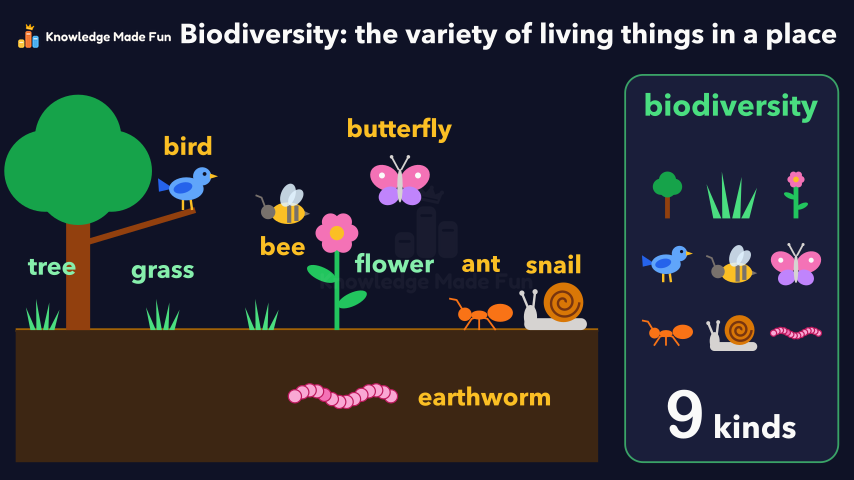 1 min 4 s
Biodiversity: The Variety of Living Things
Grade 3 · 1 min 4 s 1 min 8 s
Biomes: Sorted by Temperature and Precipitation
Grade 4 · 1 min 8 s
- All Grade 10 Science lessons
- Create a free account to watch three lessons a day, no payment and no card.