Lesson · Grade 6 · Science
Separating a mixture by density
- Grade 6
- Science
- 1 min 12 s
- British Columbia
- BC6-SC-07
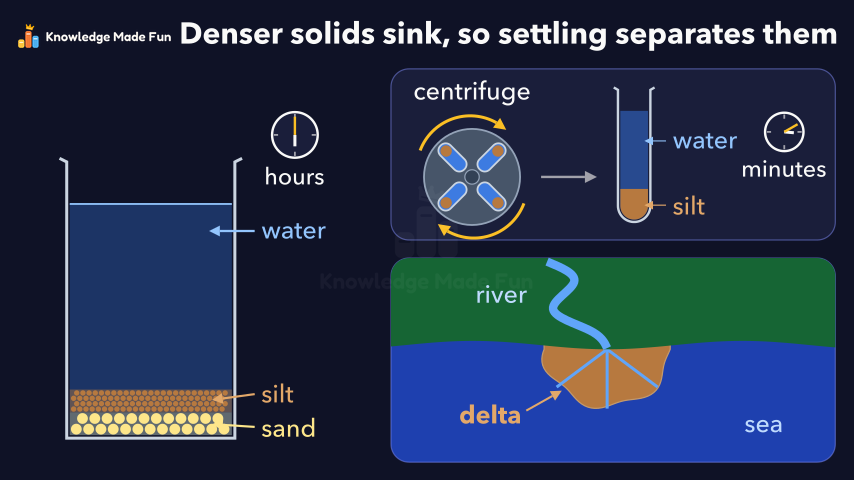
A jar of muddy water settles step by step: the sand and silt are denser than water, so they sink, with the bigger sand grains landing first and the fine silt slowly settling on top until there are labelled layers of sand, silt and clearer water. A centrifuge then does the same thing in minutes instead of hours, and a river map shows silt settling where the river slows at the sea to build a delta, ending on the recap that denser solids sink, so settling separates them from the water.
Anyone can watch two lessons on the website without an account. Signing in is free, no payment and no card, and opens three a day; Plus has no limit.
Loading
In one sentence
The question this lesson answers
Muddy water is a mixture of water, sand and tiny grains of rock called silt.
How can we get the sand and silt out of the water?
Transcript
What the lesson says
Muddy water is a mixture of water, sand and tiny grains of rock called silt.
How can we get the sand and silt out of the water?
Sand and silt are denser than water, so they sink in it.
When we leave the jar to stand, the bigger sand grains sink to the bottom first.
The fine silt sinks more slowly, so it settles on top of the sand.
The finest silt can take hours to settle.
Now the mixture has separated into layers of sand, silt and clearer water.
To speed this up, a centrifuge spins tubes of cloudy water very fast.
Spinning sends the denser silt to the bottom of each tube in minutes.
In nature, rivers carry silt along in their fast-moving water.
Where a river slows down at the sea, its silt settles and can build new land called a delta.
Solids that are denser than water sink, so settling separates them from the water.
Curriculum
Where this fits
- British Columbia, Grade 6
Science, Chemistry: mixtures: separated using a difference in component propertiesBC6-SC-07
Previous: Suspensions, Emulsions and ColloidsNext: Sieves and Filters: Separating a Mixture by Particle Size
The outcomes and strands follow the British Columbia curriculum.
Keep going
 1 min 40 s
Acids and bases: the pH scale
Grade 10 · 1 min 40 s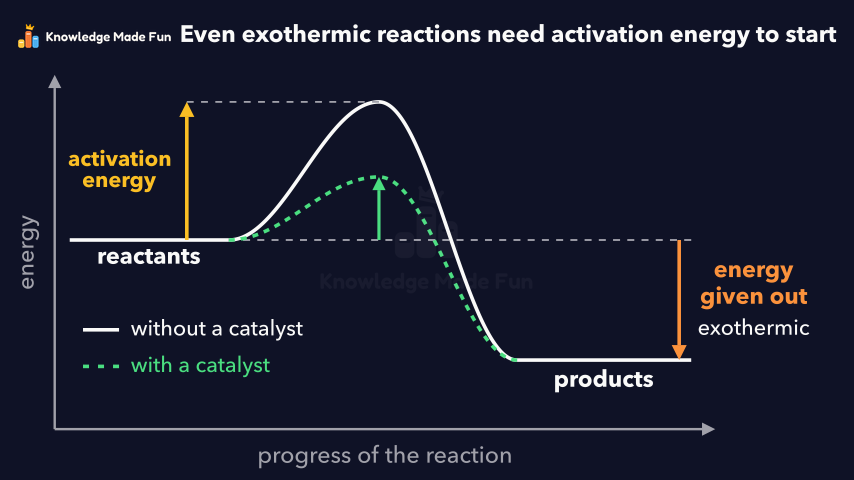 1 min 39 s
Activation energy: the push a reaction needs to start
Grade 10 · 1 min 39 s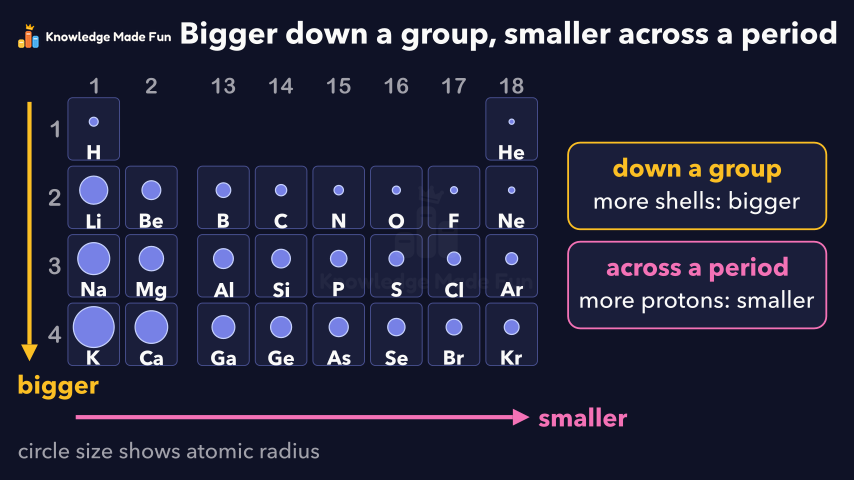 1 min 54 s
Atomic Size: Bigger Down a Group, Smaller Across a Period
Grade 9 · 1 min 54 s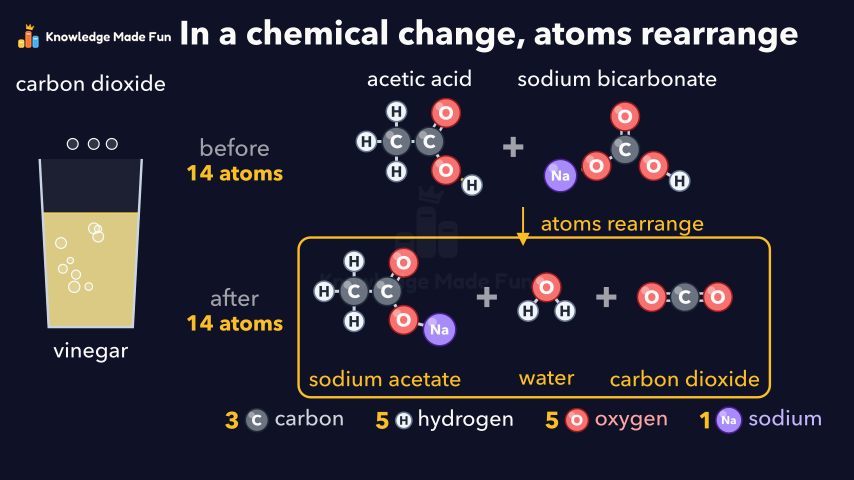 1 min 18 s
Atoms rearrange: vinegar and baking soda
Grade 7 · 1 min 18 s 1 min 16 s
Atoms: What Everything Is Made Of
Grade 7 · 1 min 16 s 2 min 3 s
Balancing Chemical Equations
Grade 10 · 2 min 3 s 1 min 54 s
Bohr Diagrams: Electrons in Shells and Valence Electrons
Grade 9 · 1 min 54 s 1 min 45 s
Brownian motion: evidence that molecules exist
Grade 8 · 1 min 45 s
- All Grade 6 Science lessons
- Create a free account to watch three lessons a day, no payment and no card.