Lesson · Grade 6 · Science
Sieves and Filters: Separating a Mixture by Particle Size
- Grade 6
- Science
- 1 min 2 s
- British Columbia
- BC6-SC-08
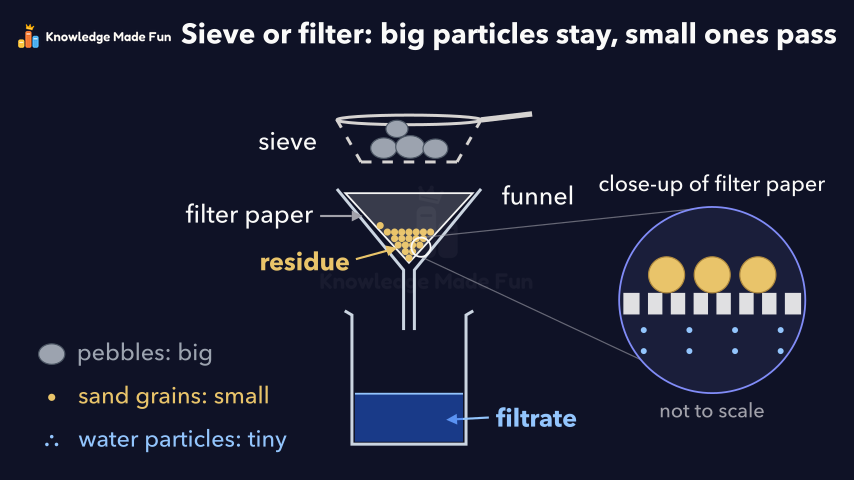
A mixture of pebbles, sand and water is poured through a sieve and then filter paper. The pebbles are too big for the sieve's holes, and the sand grains are too big for the paper's tiny holes, but the water particles pass through. The sand left in the paper is named the residue and the water collected below is the filtrate, ending on the idea that big particles stay and small ones pass through.
Concept: Separating a mixture by particle size
Anyone can watch two lessons on the website without an account. Signing in is free, no payment and no card, and opens three a day; Plus has no limit.
Loading
In one sentence
The question this lesson answers
How can we separate a mixture of pebbles, sand and water?
The pebbles are big, the sand grains are small, and the water particles are far too tiny to see.
Transcript
What the lesson says
How can we separate a mixture of pebbles, sand and water?
The pebbles are big, the sand grains are small, and the water particles are far too tiny to see.
We hold a sieve above a funnel lined with filter paper.
The sieve is a mesh with holes big enough to see.
Filter paper has holes that are far too tiny to see.
We pour in the mixture, and the pebbles are too big to fit through the sieve.
The sand grains and the water are small enough to fall through.
But the sand grains are too big to pass through the filter paper.
The tiny water particles pass through the paper and drip into the beaker.
The solid left behind in the filter paper is called the residue.
The liquid that passes through the filter is called the filtrate.
In a sieve or a filter, big particles stay behind and small ones pass through.
Curriculum
Where this fits
The outcomes and strands follow the British Columbia curriculum.
Keep going
 1 min 40 s
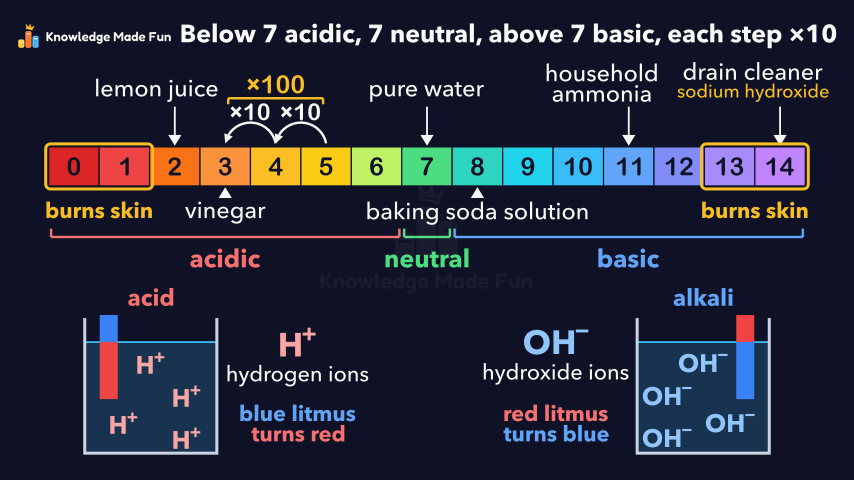
Acids and bases: the pH scale
Grade 10 · 1 min 40 s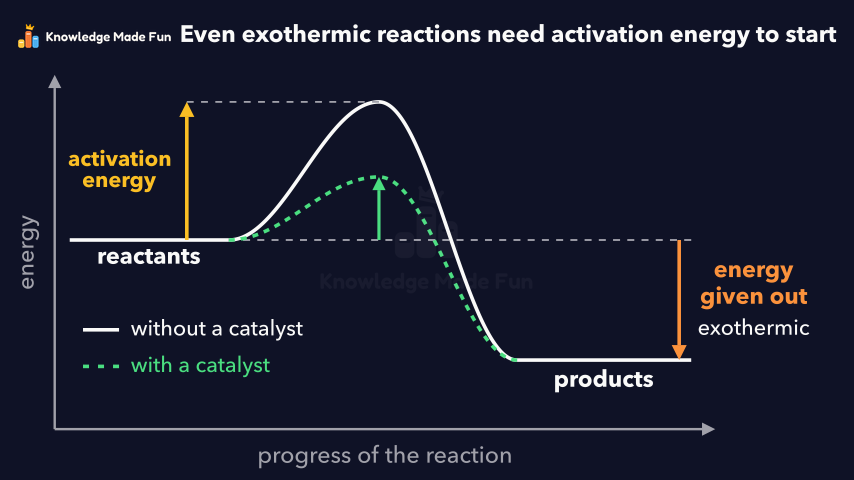 1 min 39 s
Activation energy: the push a reaction needs to start
Grade 10 · 1 min 39 s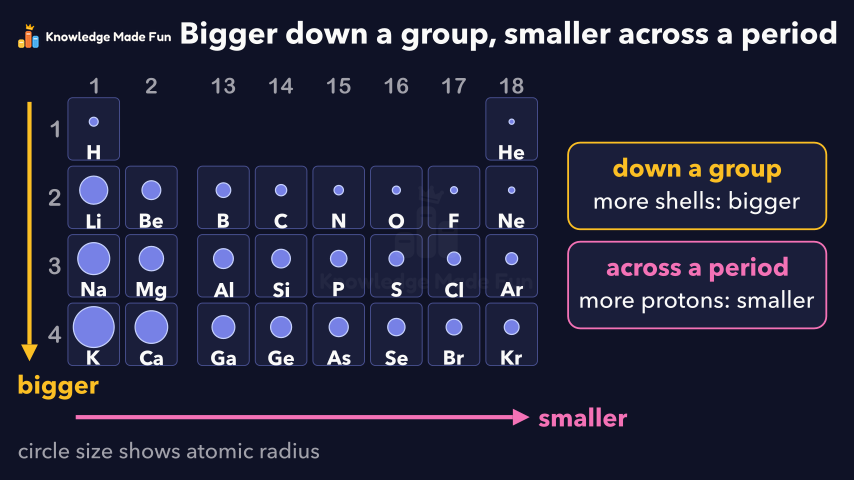 1 min 54 s
Atomic Size: Bigger Down a Group, Smaller Across a Period
Grade 9 · 1 min 54 s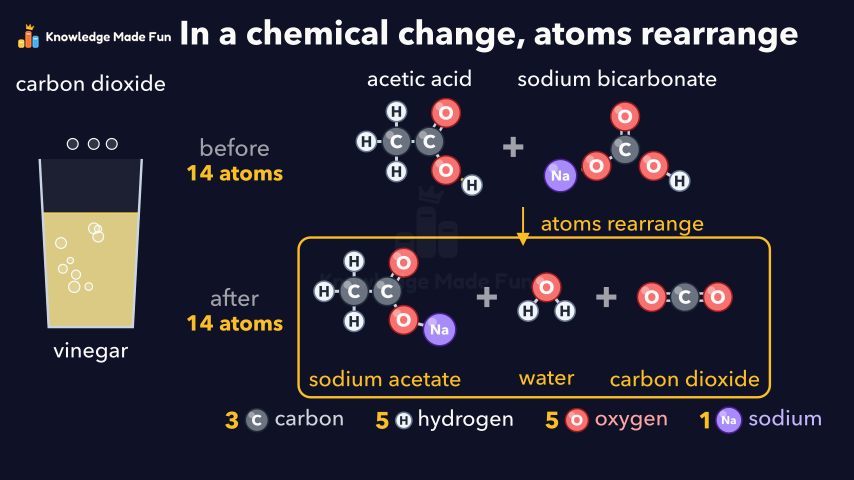 1 min 18 s
Atoms rearrange: vinegar and baking soda
Grade 7 · 1 min 18 s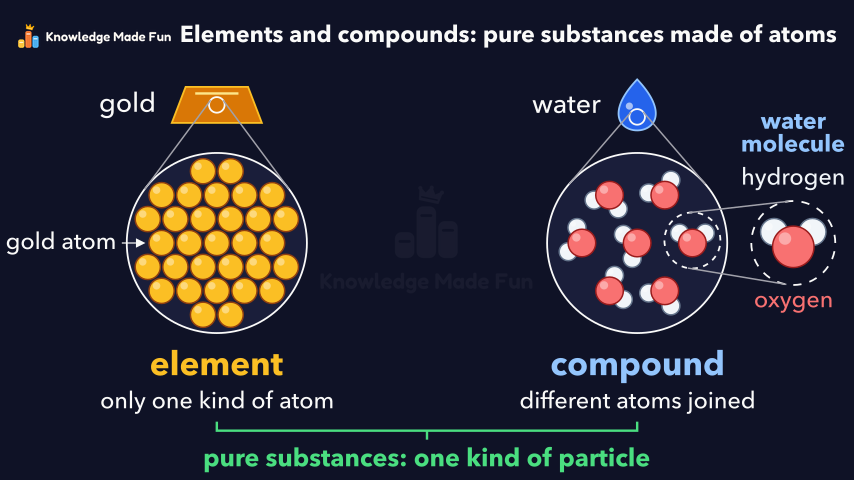 1 min 16 s
Atoms: What Everything Is Made Of
Grade 7 · 1 min 16 s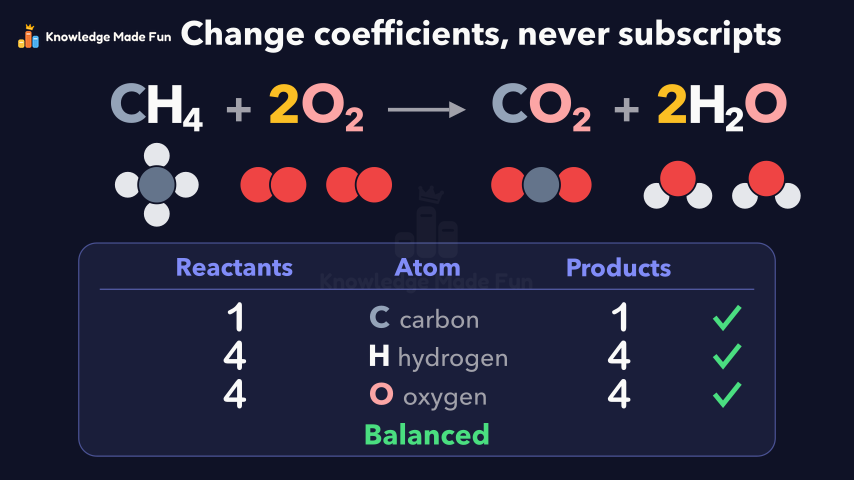 2 min 3 s
Balancing Chemical Equations
Grade 10 · 2 min 3 s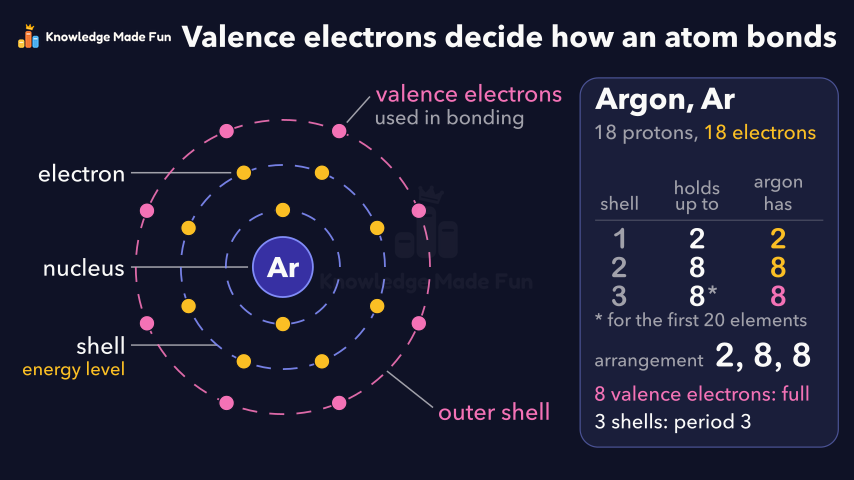 1 min 54 s
Bohr Diagrams: Electrons in Shells and Valence Electrons
Grade 9 · 1 min 54 s 1 min 45 s
Brownian motion: evidence that molecules exist
Grade 8 · 1 min 45 s
- All Grade 6 Science lessons
- Create a free account to watch three lessons a day, no payment and no card.