Lesson · Grade 7 · Science
Natural Selection Step by Step: The Peppered Moth
- Grade 7
- Science
- 1 min 15 s
- British Columbia
- BC7-SC-06
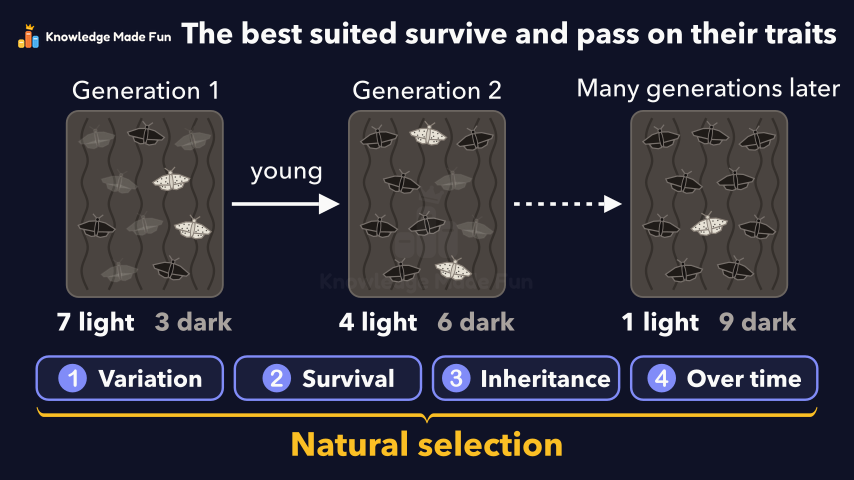
Peppered moths on tree bark show the four steps of natural selection: the moths vary in colour, soot darkens the trunks and birds eat the light moths they can spot, and the survivors pass their colour on to their young. Over three generations shown side by side, the dark moths go from 3 out of 10 to 9 out of 10, and four numbered cards along the bottom come together under the name natural selection.
Concept: Natural selection step by step
Anyone can watch two lessons on the website without an account. Signing in is free, no payment and no card, and opens three a day; Plus has no limit.
Loading
In one sentence
The question this lesson answers
How does natural selection work? Let us follow some peppered moths, step by step.
Peppered moths rest on tree bark during the day.
Transcript
What the lesson says
How does natural selection work? Let us follow some peppered moths, step by step.
Peppered moths rest on tree bark during the day.
Step one: the moths are not all the same. Most are light and speckled, but a few are dark.
In places with lots of factory smoke, soot made the tree trunks dark.
Step two: birds hunt the moths. On dark bark, the light moths are much easier to spot.
The dark moths are better camouflaged, so more of them survive.
Step three: the survivors have young, and the young inherit their colour from their parents.
So the next generation has more dark moths than before.
Step four: this happens again and again, in every generation.
After many generations, most of the moths are dark.
These four steps, working together, are called natural selection.
So in natural selection, the living things best suited to their surroundings are more likely to survive, and pass their traits on to their young.
Curriculum
Where this fits
- British Columbia, Grade 7
Science, Biology: natural selectionBC7-SC-06
Previous: Variation: no two individuals are the sameNext: How an Arctic Fox Survives: Adaptations of Body and Behaviour
The outcomes and strands follow the British Columbia curriculum.
Keep going
 1 min 3 s
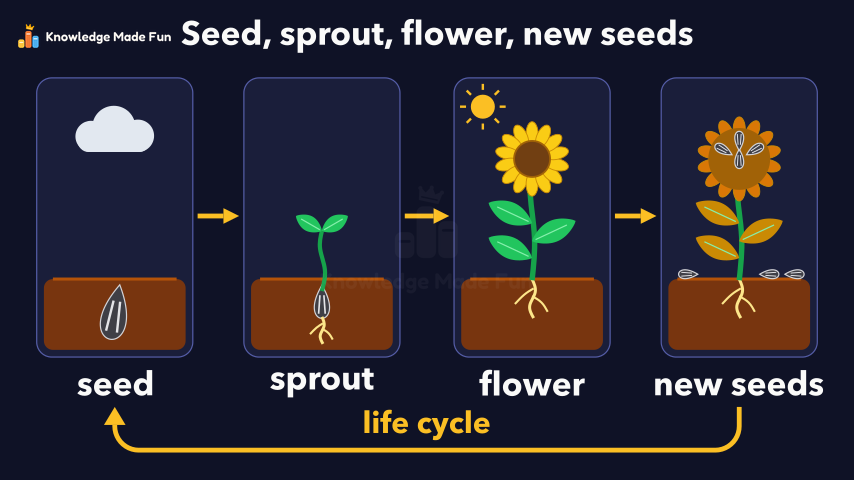
A Sunflower's Life Cycle: Seed, Sprout, Flower, Seed
Kindergarten · 1 min 3 s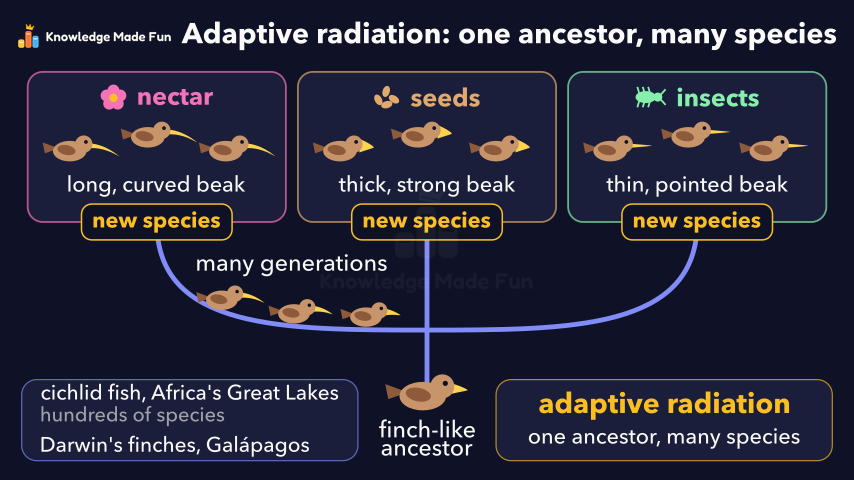 1 min 48 s
Adaptive radiation: one ancestor, many species
Grade 10 · 1 min 48 s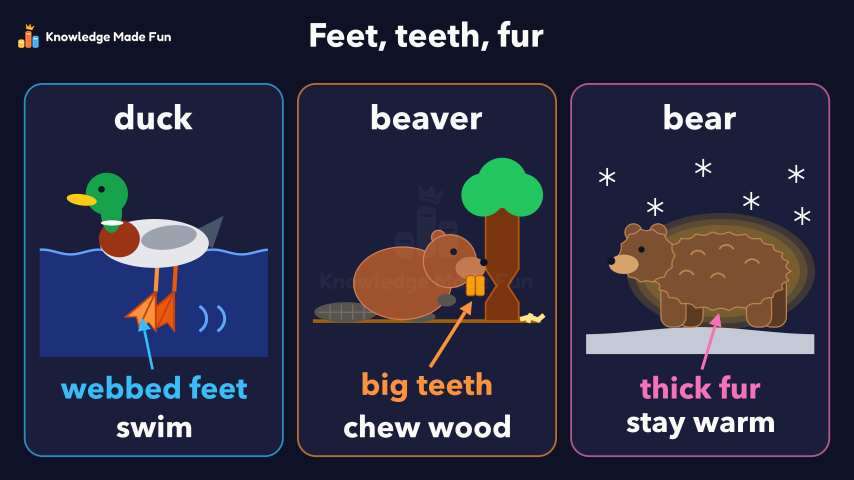 52 s
Animal Bodies That Help Them Live: Feet, Teeth and Fur
Kindergarten · 52 s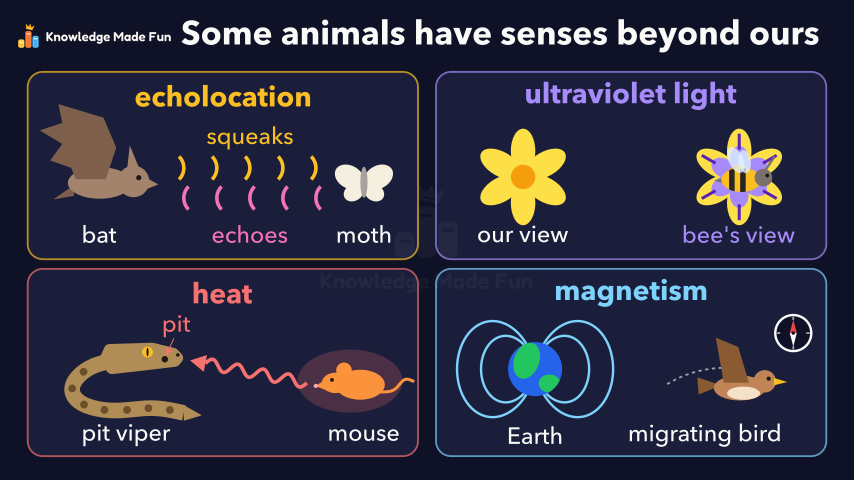 1 min 3 s
Animal senses beyond ours: echolocation, ultraviolet light, heat and magnetism
Grade 4 · 1 min 3 s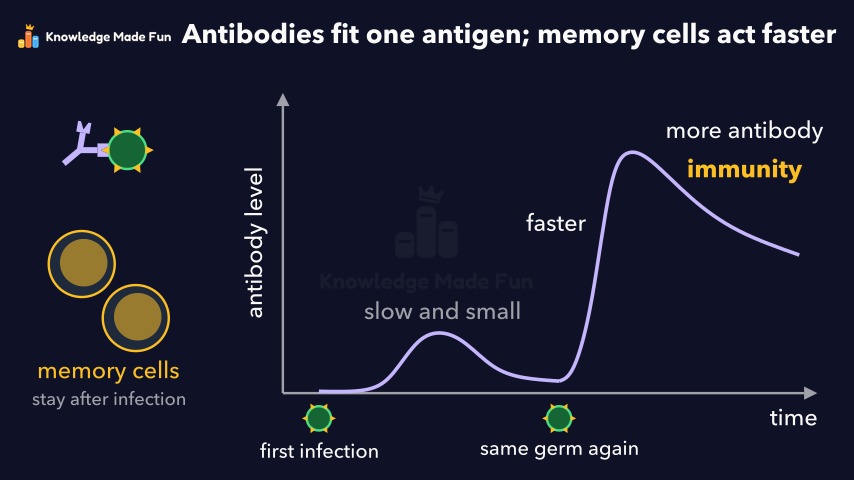 1 min 44 s
Antibodies and Memory Cells: The Body's Targeted Defence
Grade 8 · 1 min 44 s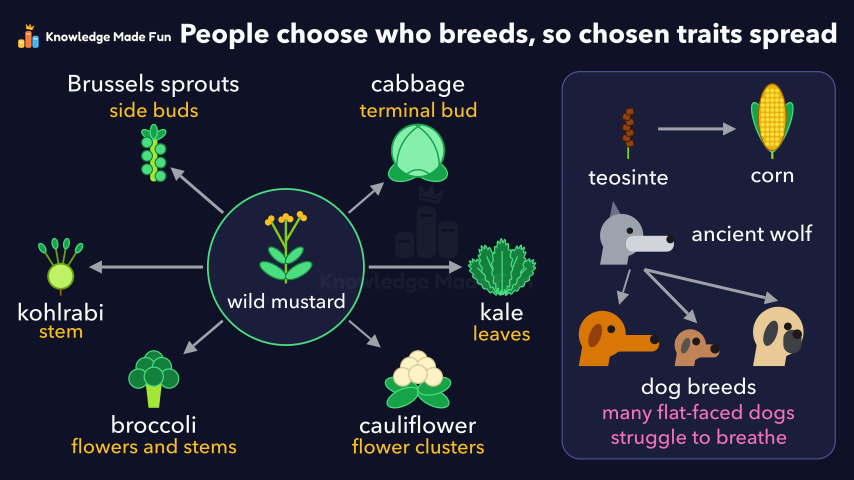 1 min 44 s
Artificial selection: people choose the traits
Grade 10 · 1 min 44 s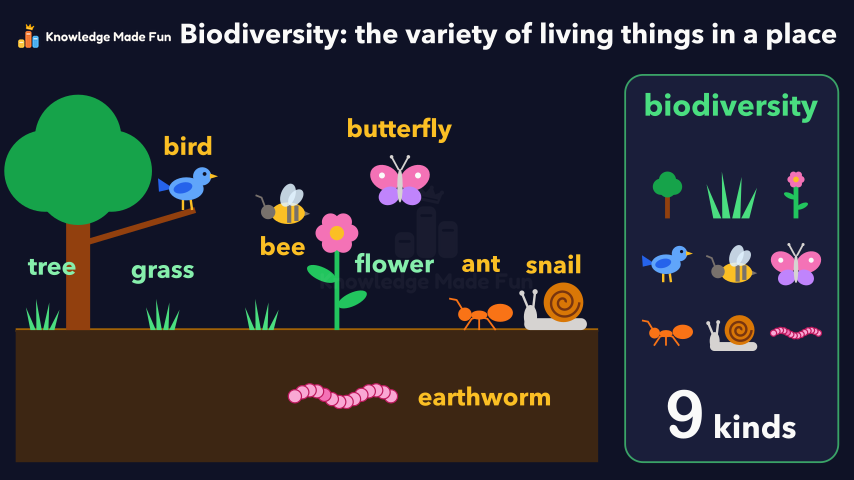 1 min 4 s
Biodiversity: The Variety of Living Things
Grade 3 · 1 min 4 s 1 min 8 s
Biomes: Sorted by Temperature and Precipitation
Grade 4 · 1 min 8 s
- All Grade 7 Science lessons
- Create a free account to watch three lessons a day, no payment and no card.