Lesson · Grade 7 · Science
How an Arctic Fox Survives: Adaptations of Body and Behaviour
- Grade 7
- Science
- 1 min 10 s
- British Columbia
- BC7-SC-07
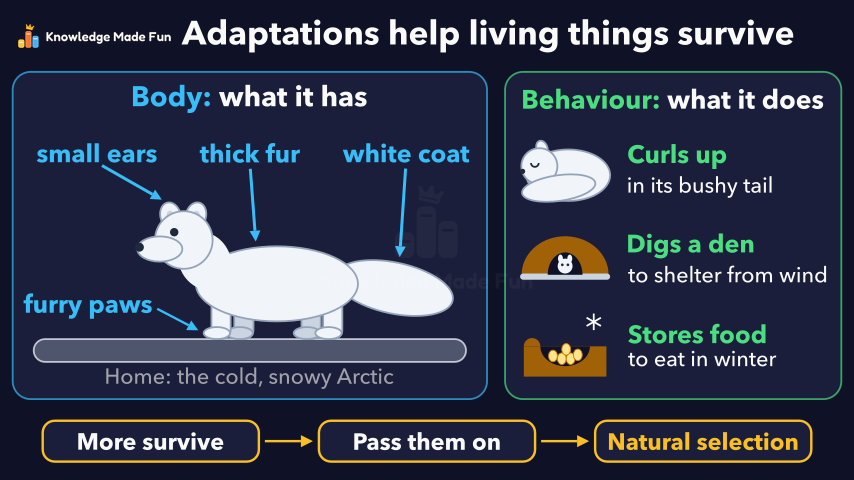
An Arctic fox on the snow gets labels for its body adaptations: thick fur, small ears, furry paws and a white coat. Beside it, three behaviours appear: curling up in its tail, digging a den and storing food. A row of cards then links these adaptations to natural selection: foxes that have them are more likely to survive and pass them on, so over many generations they become common.
Concept: Adaptations of body and behaviour
Anyone can watch two lessons on the website without an account. Signing in is free, no payment and no card, and opens three a day; Plus has no limit.
Loading
In one sentence
The question this lesson answers
How does an Arctic fox survive the freezing cold?
It has adaptations, which are features that help it survive where it lives.
Transcript
What the lesson says
How does an Arctic fox survive the freezing cold?
It has adaptations, which are features that help it survive where it lives.
Some adaptations are body parts, and some are behaviours, which are things it does.
Its thick fur traps warm air and keeps the heat in.
Its small, rounded ears lose less heat than big ears would.
Fur on the bottoms of its paws keeps its feet warm on the snow.
In winter, its white fur blends in with the snow.
In a storm, it curls up and wraps its bushy tail around itself like a blanket.
It digs a den to shelter from the cold wind.
In summer, it hides extra food to eat later in winter.
Foxes with these adaptations are more likely to survive.
They have young and pass these adaptations on to them.
Over many generations, natural selection makes these adaptations common.
Adaptations of body and behaviour help living things survive where they live.
Curriculum
Where this fits
- British Columbia, Grade 7
Science, Biology: natural selectionBC7-SC-07
Previous: Natural Selection Step by Step: The Peppered MothNext: Natural selection in action: Darwin's finches
The outcomes and strands follow the British Columbia curriculum.
Keep going
 1 min 3 s
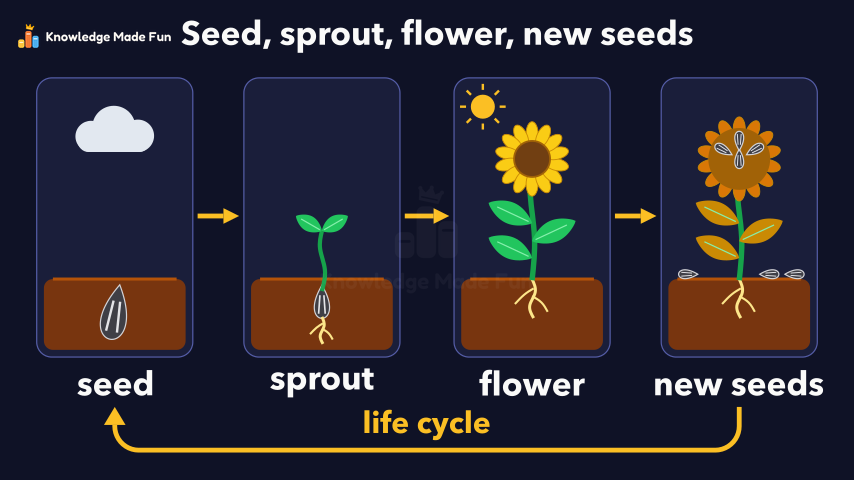
A Sunflower's Life Cycle: Seed, Sprout, Flower, Seed
Kindergarten · 1 min 3 s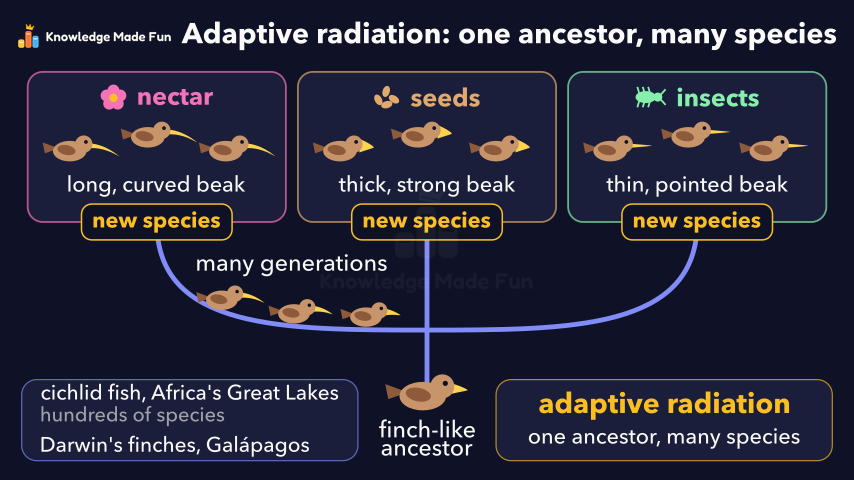 1 min 48 s
Adaptive radiation: one ancestor, many species
Grade 10 · 1 min 48 s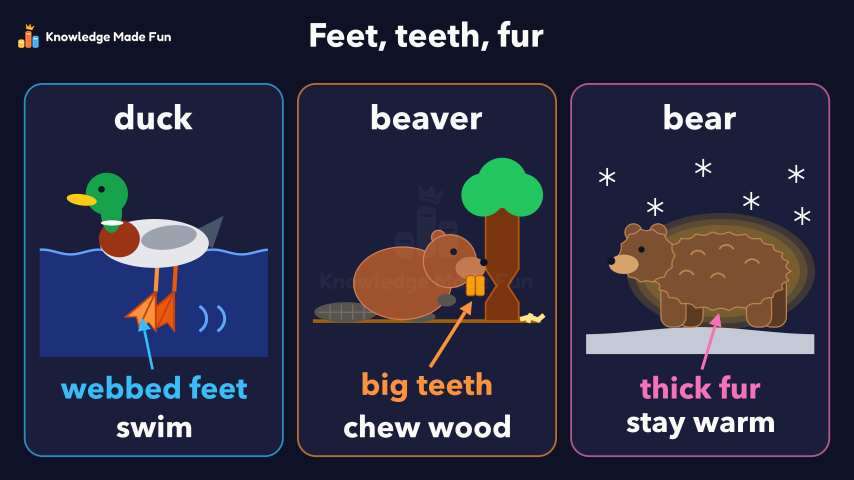 52 s
Animal Bodies That Help Them Live: Feet, Teeth and Fur
Kindergarten · 52 s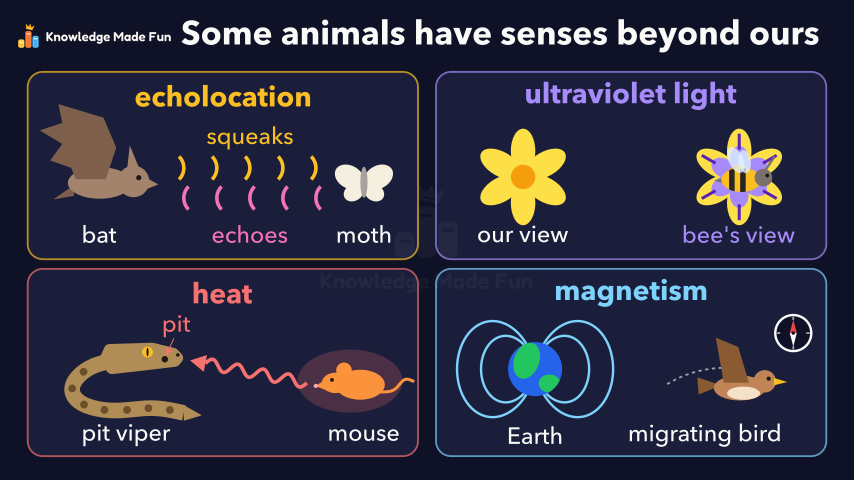 1 min 3 s
Animal senses beyond ours: echolocation, ultraviolet light, heat and magnetism
Grade 4 · 1 min 3 s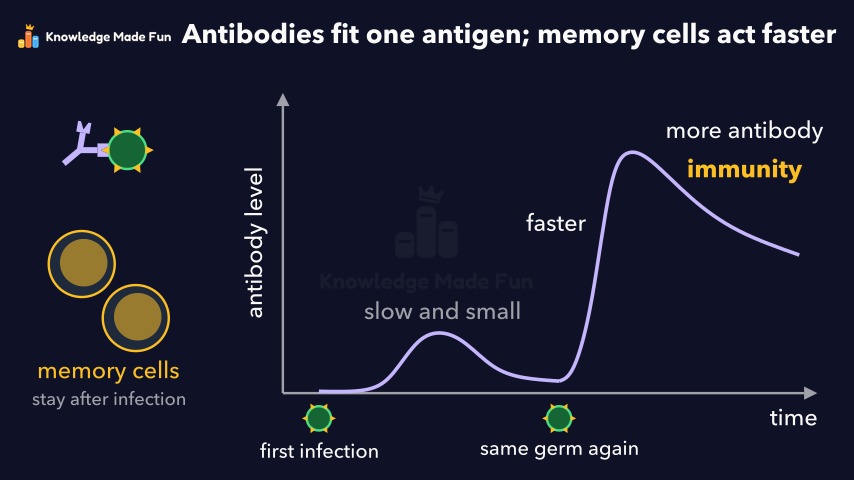 1 min 44 s
Antibodies and Memory Cells: The Body's Targeted Defence
Grade 8 · 1 min 44 s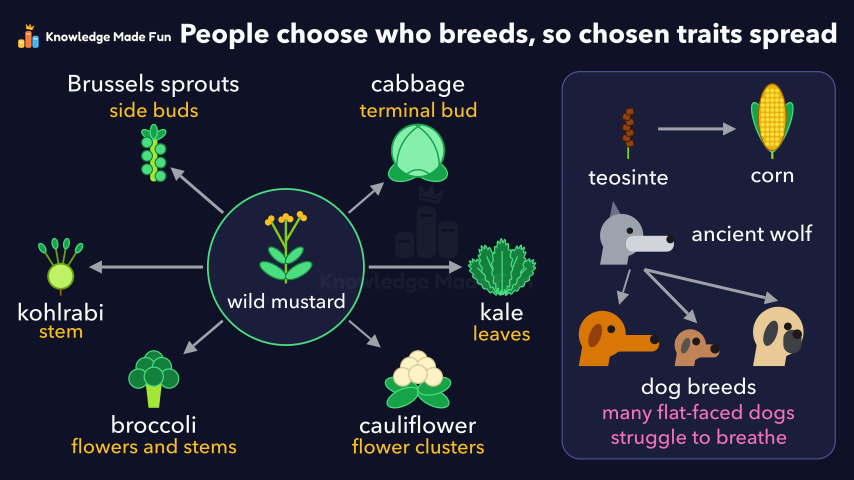 1 min 44 s
Artificial selection: people choose the traits
Grade 10 · 1 min 44 s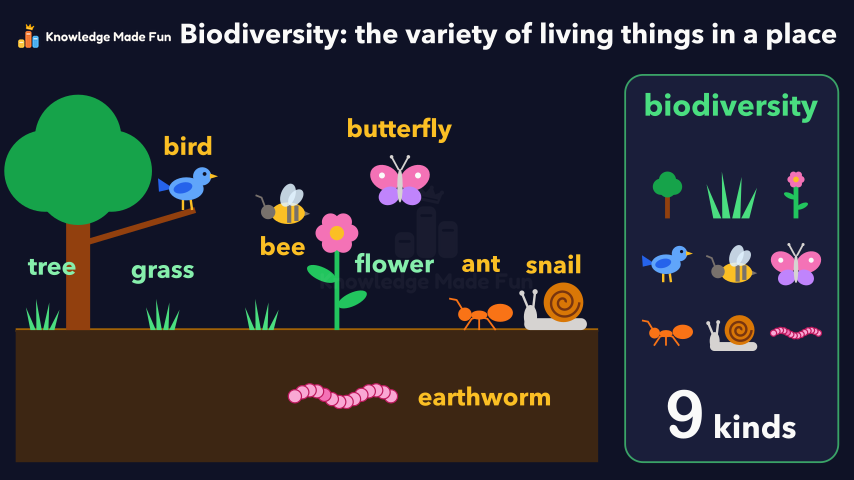 1 min 4 s
Biodiversity: The Variety of Living Things
Grade 3 · 1 min 4 s 1 min 8 s
Biomes: Sorted by Temperature and Precipitation
Grade 4 · 1 min 8 s
- All Grade 7 Science lessons
- Create a free account to watch three lessons a day, no payment and no card.